What a Ø159 Impact Idler Does at the Loading Point
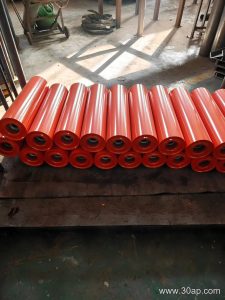
In a quarry, coal preparation plant, or cement plant, the conveyor belt often takes a beating where material first lands. A Ø159 impact idler is a heavy-duty roller with a 159 mm diameter shell, designed to sit under the loading chute and absorb the force of falling rock, clinker, or aggregate. It is sometimes called a 159 mm buffer roller or shock-absorbing idler, but the function stays the same: protect the belt, keep the load moving, and reduce downtime in the toughest part of the conveying line.
Unlike standard carrying idlers, this roller uses a larger diameter and resilient surface to cushion impact. That extra size matters when the drop height is significant or when lump sizes are large. The idler still fits into the same frame as a conventional troughing set, but its role is to take the hit so the rest of the conveyor can run smoothly.
Construction and Surface Options
A Ø159 impact idler is built around a heavy steel tube, usually with a wall thickness greater than a standard roller. The shaft is supported by deep-groove ball bearings, commonly 6305, 6306, or 6308, though the exact bearing depends on the load and speed. The sealing arrangement is critical: dust, grit, and moisture from materials like limestone, iron ore, or sinter can destroy a bearing quickly. Look for a multi-labyrinth seal or a contact seal with a protective cap.
The outer surface is where impact idlers differ from standard rollers. Common options include:
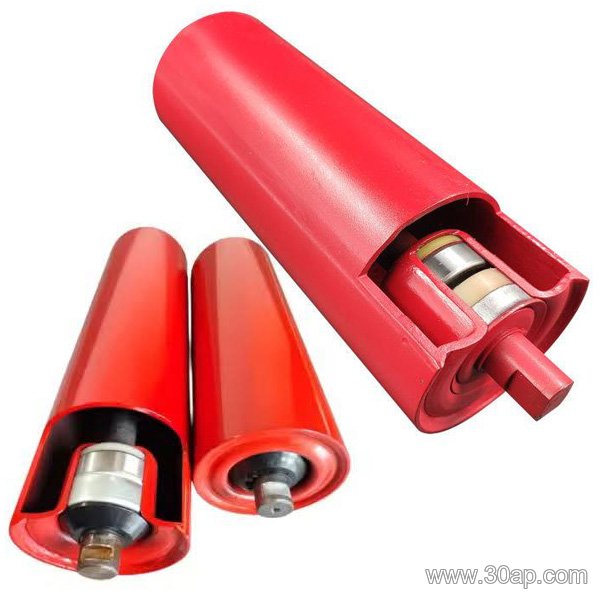
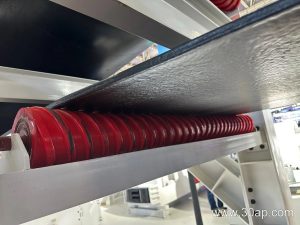
- Rubber rings or rubber discs mounted on the steel shell
- Nylon or ceramic coatings for abrasive materials
- Plain steel tube for less demanding applications
Rubber ring impact rollers are popular in aggregate and coal handling because the rubber flexes under load and absorbs shock. The 159 mm diameter allows more rubber thickness without making the roller too stiff. Roller length is not fixed to the belt width alone; it varies with trough angle and idler arrangement. For a three-roll troughing set, common roller lengths are around 200 mm for B500, 250 mm for B650, 315 mm for B800, 380 mm for B1000, 465 mm for B1200, 530 mm for B1400, 600 mm for B1600, 670 mm for B1800, and 750 mm for B2000. Side rollers and the center roller can have different lengths, so these are examples, not guarantees.
Where It Fits in the Conveyor System
Impact idlers are placed at the loading zone, directly under the chute or hopper. In a sand and gravel line, a Ø159 impact idler might be used after a primary crusher where the drop height is high. In a power plant coal yard, it protects the belt from large lumps of coal. In a steel mill sinter plant, it handles hot, abrasive material. The idler works alongside the conveyor belt, conveyor pulley, and conveyor bracket, but it does not replace the drive pulley or tail pulley. Those are different components with different functions.
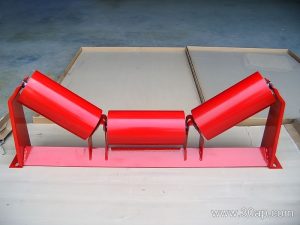
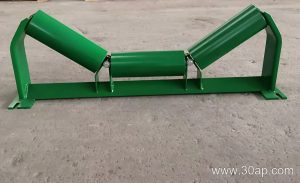
Some operations use a three-roll troughing set with 35-degree or 45-degree trough angles to contain the load. The impact idler can be the center roll or all three rolls, depending on the design. A 20-degree trough is sometimes chosen for wider belts or sticky materials, but the impact idler itself remains the same type.
Selection and Buyer Checklist
When choosing a Ø159 impact idler, don’t assume that one size fits every conveyor. Consider the following:
- Belt width and trough angle: These determine the roller length and the number of rolls in the set.
- Material lump size and drop height: Larger lumps and higher drops call for more impact resistance, often with rubber rings.
- Bearing and seal quality: In dusty or wet conditions, a good seal extends service life.
- Shaft diameter and fixing method: The shaft must match the conveyor bracket or frame. Shaft diameter is not determined by belt width alone; it depends on the load and the idler manufacturer’s design.
- Environmental conditions: Temperature, corrosion, and abrasiveness influence the choice of roller surface.
For a mobile crushing plant or a tunnel boring operation, a lighter impact idler might be sufficient. For a primary crushing station in a copper mine, a heavier rubber-ring version is more suitable. The key is to match the idler to the actual impact energy, not just the belt width.
Maintenance Notes
A Ø159 impact idler usually lasts longer than a standard idler in the same position because it is built for abuse. However, it still needs inspection. Check for worn rubber rings, loose bearings, or a seized roller. A failed impact idler can cause belt damage, so replace it before the shell wears through. Keep the loading chute aligned so material lands centrally on the idler, not on one side. In a cement plant or coal handling system, routine checks every few weeks can prevent unexpected stoppages.
If you are comparing an impact idler to a standard carrying idler, remember that the impact version is not a direct replacement for a troughing idler elsewhere on the conveyor. It is a specialized component for the loading zone. For the rest of the line, standard rollers, return rollers, and training idlers do their own jobs. Use the Ø159 impact idler where the punishment is highest, and let the other idlers handle the steady haul.