What a Vertical Roller Does on a Conveyor
A vertical roller is a idler roller mounted with its axis upright rather than horizontal. Instead of supporting the belt from below, it stands at the side of the belt path and contacts the belt edge or the vertical face of the load. In practice it is often used where a conveyor changes direction, where the belt must be held in line over a long unsupported span, or where the belt tends to drift sideways. The name describes the mounting orientation, not a different bearing or shell technology: the same basic components found in a horizontal idler roller can be used in a vertical unit.
Because the roller stands on end, the load direction is mainly radial and lateral. That makes the vertical roller useful as a guide or edge control device rather than as a primary belt support. It is not a drive pulley, a tail pulley or a bend pulley, and it should not be asked to carry the same duties as those components.
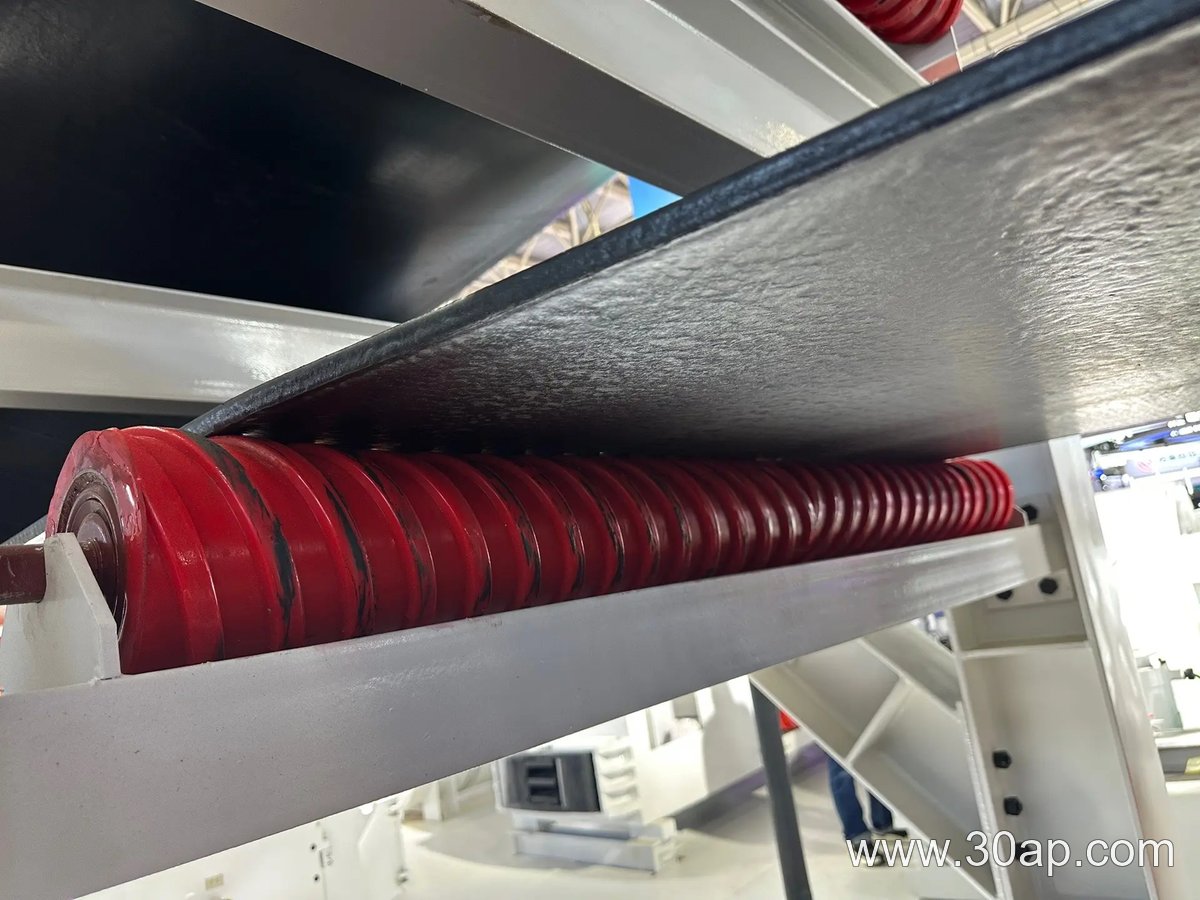
How the Unit Is Built
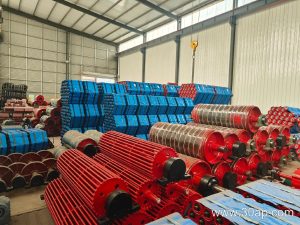
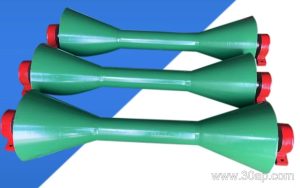
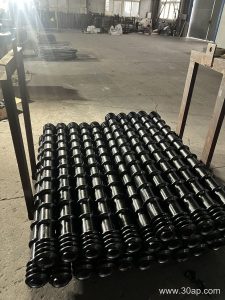
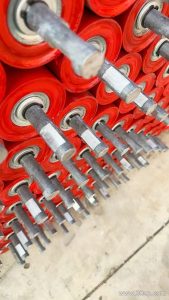
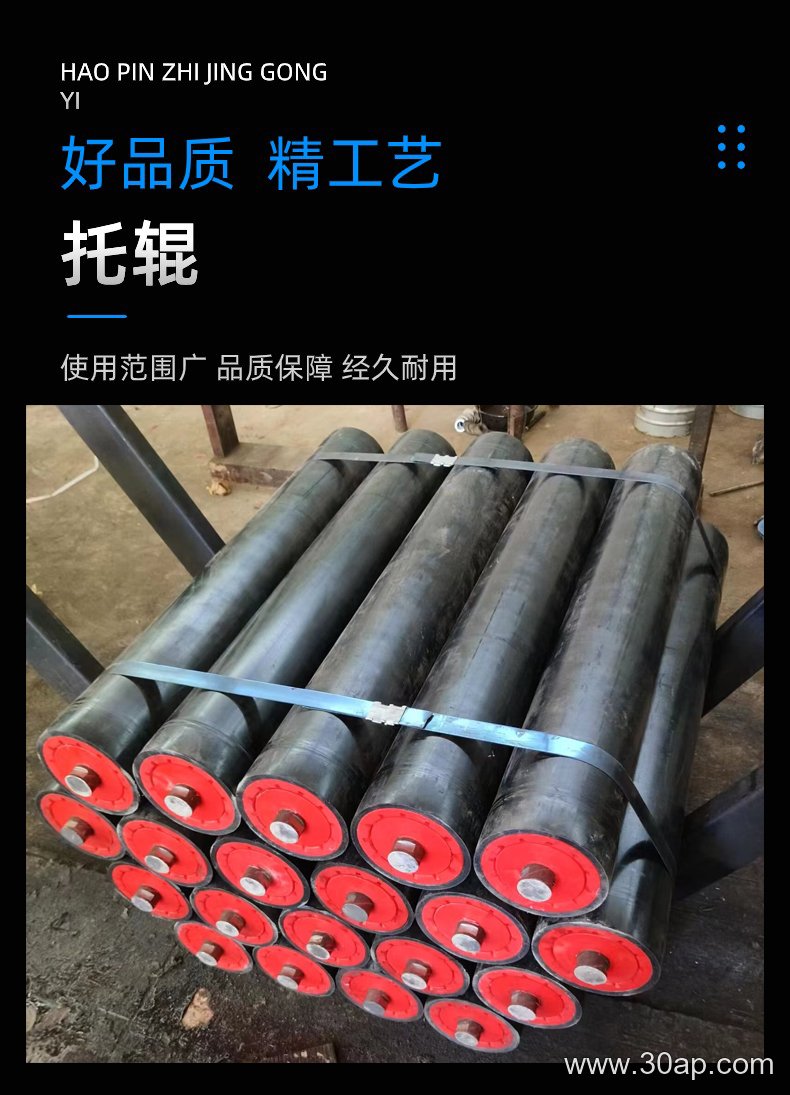
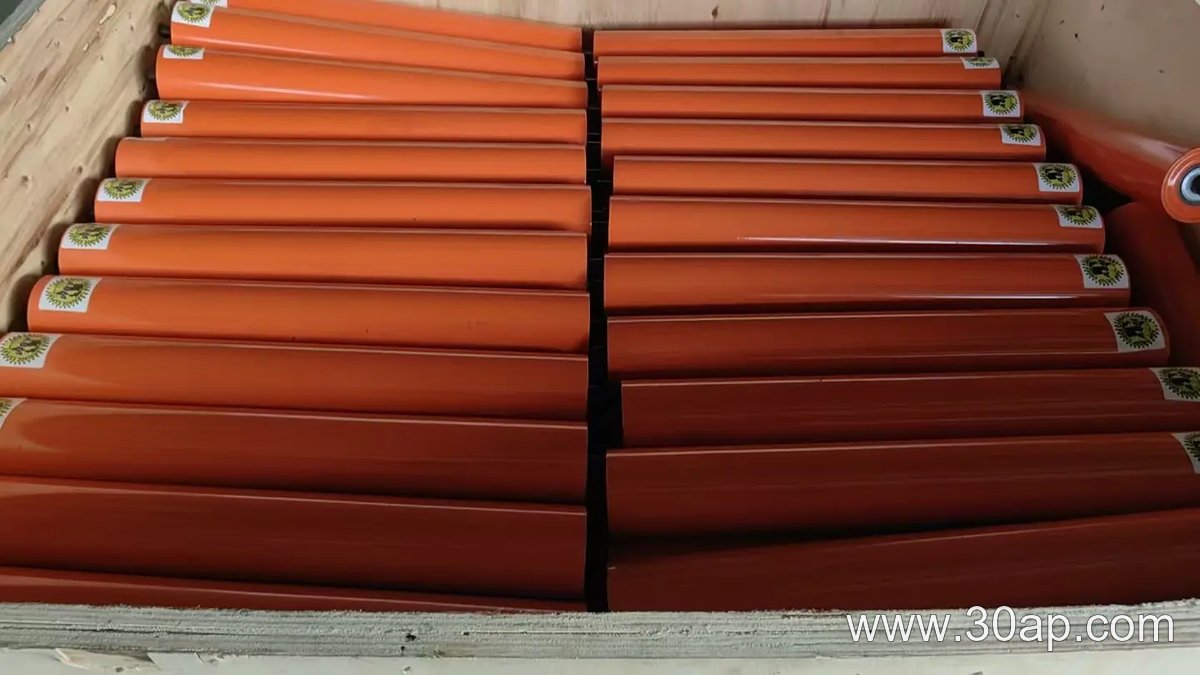
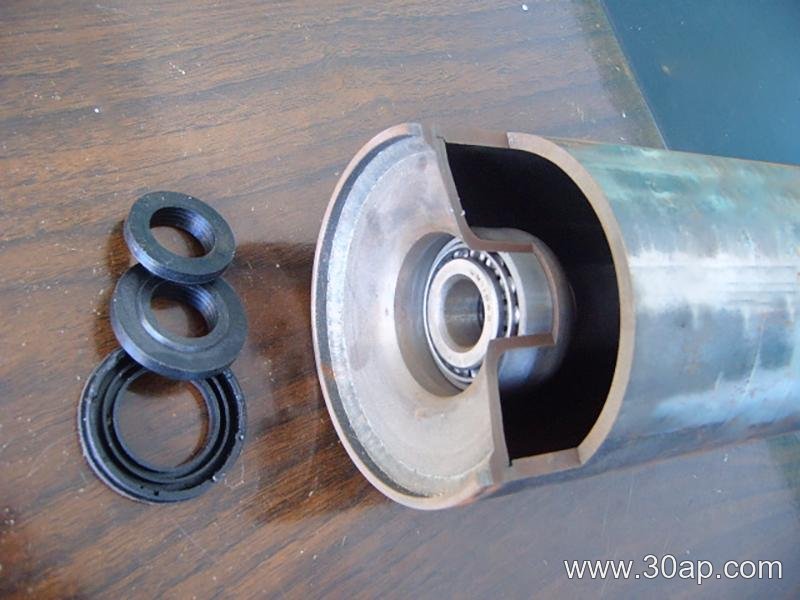
A typical vertical roller consists of a cylindrical shell, a shaft, bearing housings, seals and a mounting bracket. The shell is usually steel tube, but nylon, ceramic or rubber-covered surfaces are also available for special conditions. Rubber rings are useful where impact or noise reduction matters, while ceramic or nylon can help in abrasive or sticky service. Bearings are commonly deep-groove ball types such as 6204, 6205, 6305, 6306, 6308 or 6310, matched to the shaft and load by the manufacturer. The seal arrangement is important because fine dust and water are the main causes of early bearing failure.
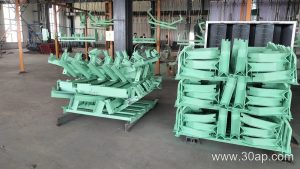
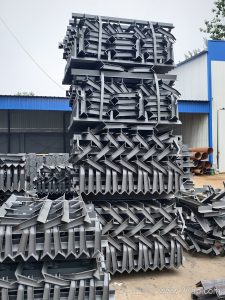
The mounting bracket must hold the roller square to the belt path. A weak or misaligned conveyor bracket will tilt the roller, create edge wear and reduce its guiding effect. For this reason, the bracket and the roller are usually selected as a pair, even though they are separate parts.
Where It Fits in a Conveyor
Vertical rollers are common at transfer points, at the entry and exit of enclosed sections, and along the edges of long overland conveyors. In a quarry or a sand and gravel line, they help keep the belt centred when the load is uneven. In a coal handling plant or a cement plant, they are often used together with a troughing idler roller set to control belt tracking. They are also seen near the head and tail of a conveyor, where a small amount of edge guidance can prevent the belt from rubbing the structure.
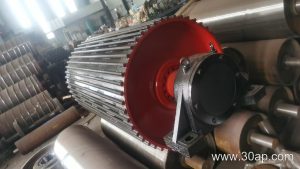
They are not a replacement for a conveyor pulley. A conveyor pulley transmits power or changes belt direction around a drum, while a vertical roller only guides or supports. Likewise, a return roller and a vertical roller work in different positions and should not be interchanged without checking the design.
Matching the Roller to the Belt
Selection starts with the conveyor belt width and the space available at the mounting point. Belt widths such as B500, B650, B800, B1000, B1200 or B1400 are common in medium-duty systems, and larger widths up to B2000 or B2400 appear in high-capacity lines. The roller diameter is usually chosen from a range such as Ø63, Ø76, Ø89, Ø102, Ø108, Ø127, Ø133 or Ø159, depending on the load and the shaft size. A larger diameter can reduce rotation speed and improve service life, but it also needs more space.
Belt width does not decide pulley diameter by itself, and one belt width can work with more than one roller diameter. Do not assume a fixed shaft size from belt width alone; the shaft is determined by the bearing, the bracket and the actual radial load. Troughing angle, belt speed, material weight and ambient conditions all influence the final choice.
What Buyers Should Check
- Confirm the mounting orientation and the bracket interface before ordering.
- Check the seal type for dusty or wet environments.
- Match the bearing and shaft to the actual load, not only to the belt width.
- Ask whether the shell surface should be plain steel, nylon, ceramic or rubber covered.
- Verify that the roller is being used as a guide, not as a substitute for a drive or bend pulley.
A vertical roller is a small component, but it affects belt tracking, edge wear and downtime. Choosing it with the same care given to a troughing idler roller or a return roller will keep the whole conveyor running straighter for longer.