What a Conveyor Belt Self-Aligning Idler Does
In any bulk handling line, the conveyor belt has a natural tendency to drift sideways. A conveyor belt self-aligning idler solves this problem by steering the belt back to the center line automatically. Also called a self-aligning roller or training idler, this component is mounted at points where misalignment is most likely, such as after the loading zone or along long straight sections. Unlike standard carrying or return rollers, the self-aligning idler has a pivoted frame that reacts to belt edge contact and rotates slightly to correct the tracking.
Construction and Key Components
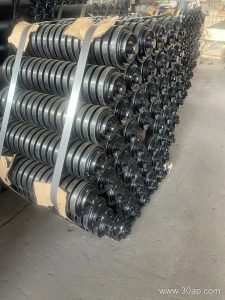
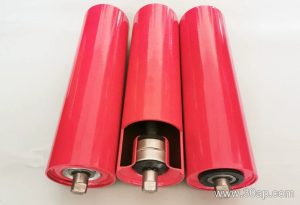
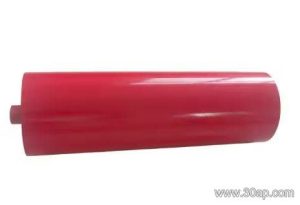
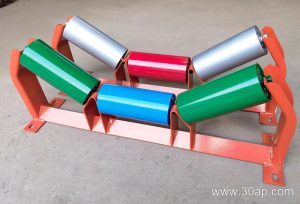
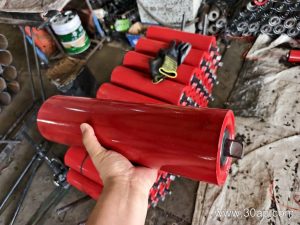
The typical design includes a base frame, a rotating pivot, and two or three rollers arranged in a trough or V shape. The rollers may be steel, nylon, or rubber covered, depending on the material being conveyed. Common roller diameters for this type include Ø89, Ø108, Ø127, and Ø133, though larger sizes like Ø159 or Ø178 are used on wider belts. The pivot mechanism usually relies on a vertical shaft or a friction disc that allows the assembly to swing when the belt pushes against a side roller.
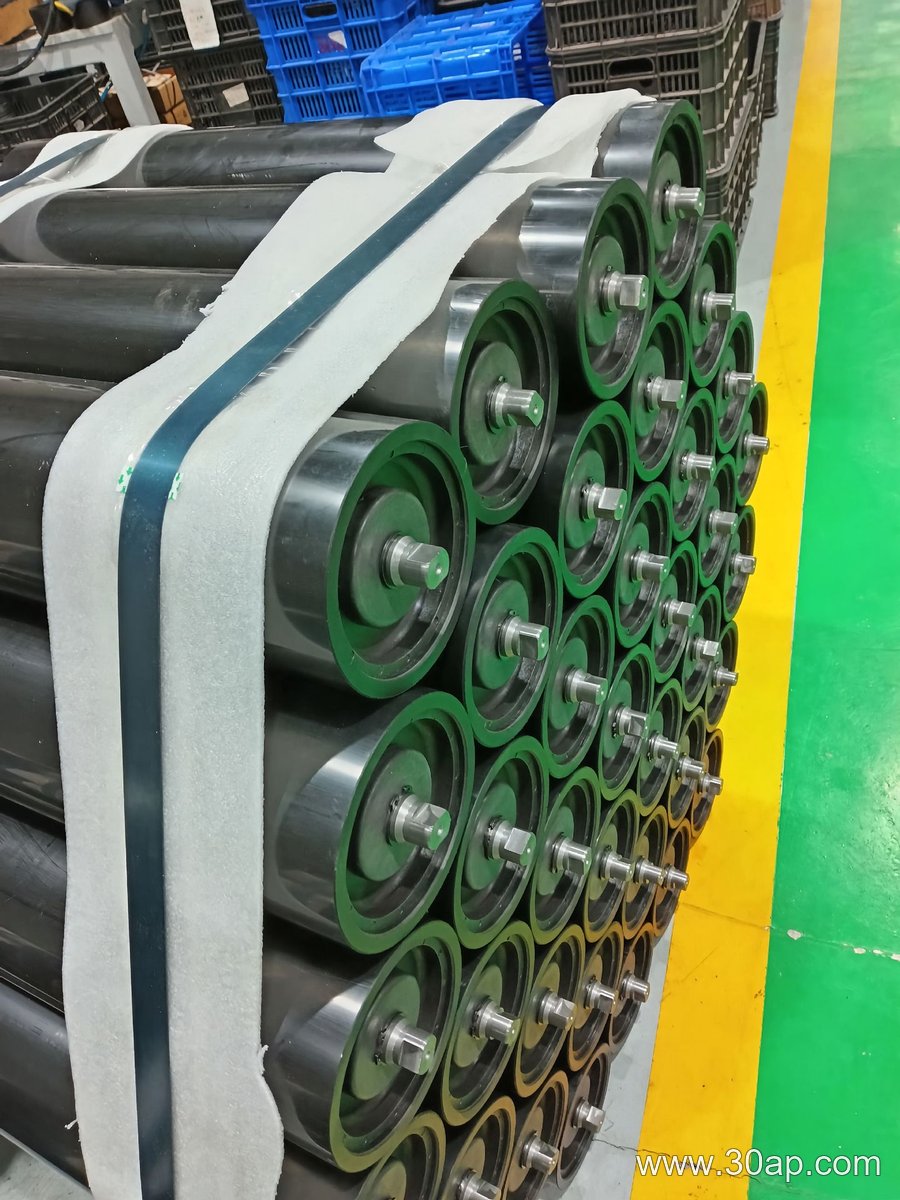
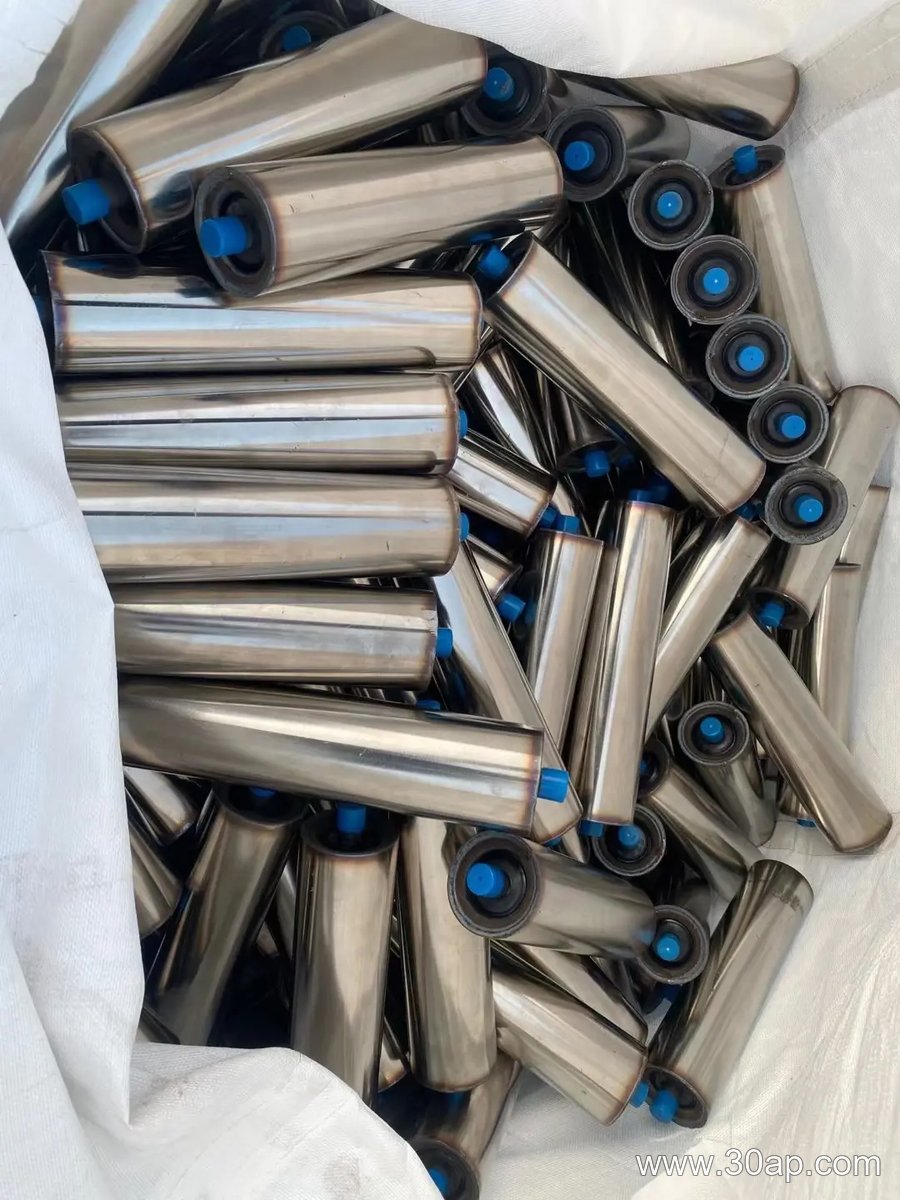
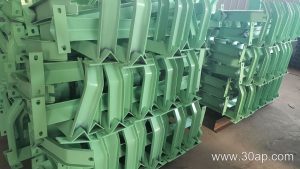
Bearing selection is matched to the load and speed. Bearings such as 6205, 6306, or 6310 are frequently used, but no single bearing is tied to one roller diameter. The roller length varies with belt width and trough angle. For a three-roll troughing set, common roller lengths are roughly 200 mm for B500, 315 mm for B800, 465 mm for B1200, and 600 mm for B1600. These are examples only; side rollers and center rollers often differ. The self-aligning idler is mounted on a conveyor bracket that allows the pivot to move freely.
Where Self-Aligning Idlers Are Used
These idlers appear in many industries where belt tracking is critical. In a coal handling system at a power plant, a self-aligning idler after the crusher discharge prevents the belt from rubbing the structure. In a cement plant, the same component keeps clinker or limestone on track through long transfer points. Sand and gravel pits, iron ore concentrators, and port loading facilities also rely on them. They are especially useful on conveyors with reversing belts or uneven loading, where a standard idler roller cannot correct drift on its own.
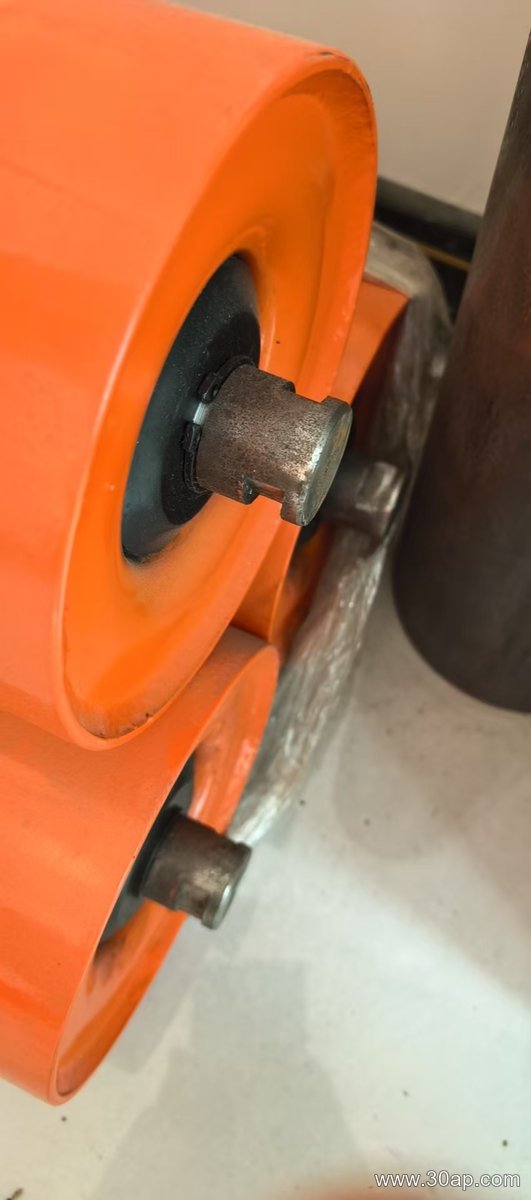
For extreme conditions, such as high-impact zones, a buffer idler or impact roller may be used instead, but those are different products. The self-aligning idler focuses on steering, not on absorbing impact energy. Similarly, a training idler on the return strand may use a V-shaped or flat return roller arrangement, while the carrying side often uses a three-roll troughing set.
Selection and Sizing Notes
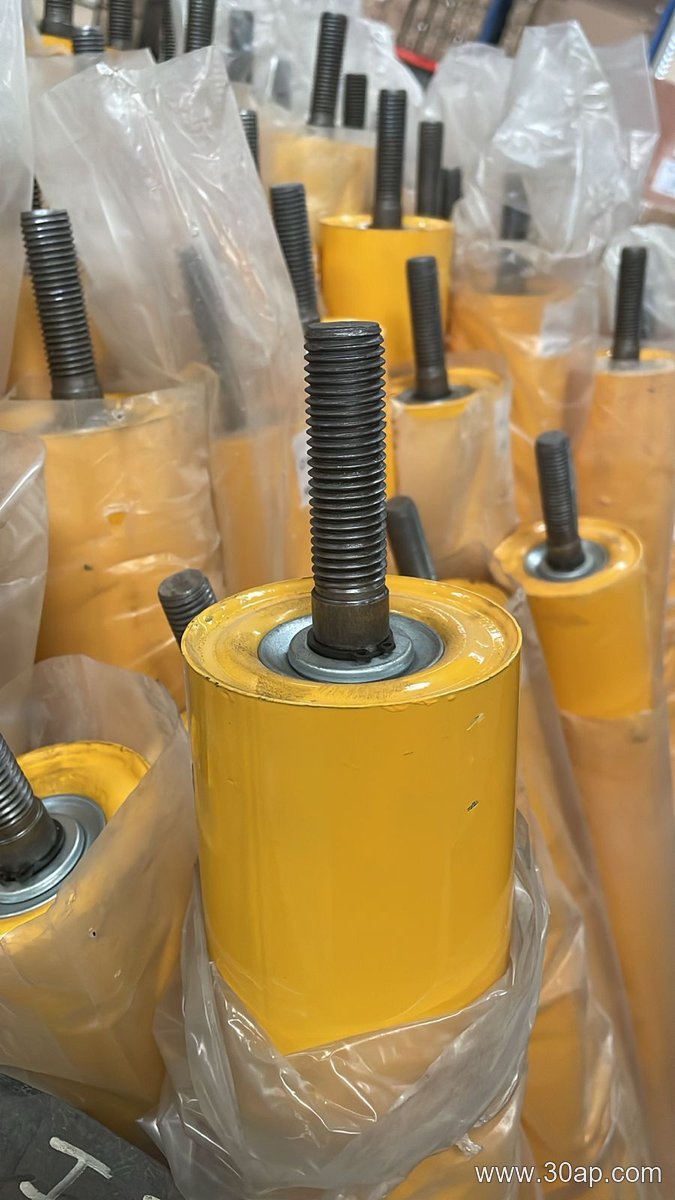
Buyers should match the self-aligning idler to the conveyor belt width, trough angle, and load. Common trough angles include 20°, 30°, 35°, and 45°. A forward tilt of about 1.5° to 2° is sometimes built into the rollers to help centering, but this is a design detail, not a universal rule. The table below shows typical reference values; actual dimensions are determined by the conveyor design.
| Belt Width | Common Roller Diameter | Typical Roller Length (three-roll set) | Common Bearing |
|---|---|---|---|
| B500 | Ø63 – Ø89 | 200 mm | 6204 / 6205 |
| B800 | Ø89 – Ø108 | 315 mm | 6205 / 6305 |
| B1200 | Ø108 – Ø133 | 465 mm | 6306 / 6308 |
| B1600 | Ø133 – Ø159 | 600 mm | 6308 / 6310 |
| B2000 | Ø159 – Ø194 | 750 mm | 6310 |
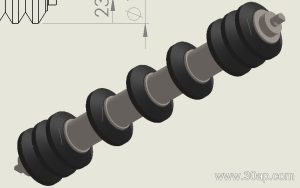
Do not assume that one belt width can only use one pulley diameter or one shaft size. The self-aligning idler must be compatible with the conveyor bracket and the overall idler frame. Roller surface options include steel pipe, nylon, ceramic, and rubber rings. Rubber rings are common in dusty or wet conditions, while ceramic may be chosen for abrasive materials.
Maintenance and Buyer Checklist
- Check pivot freedom regularly; a seized pivot defeats the self-aligning function.
- Inspect roller rotation and bearing noise. Replace any roller that drags or overheats.
- Verify that the idler is mounted square to the belt center line.
- Confirm the roller diameter and length match the existing conveyor bracket and belt width.
- For dusty or corrosive environments, choose sealed bearings and appropriate roller surface.
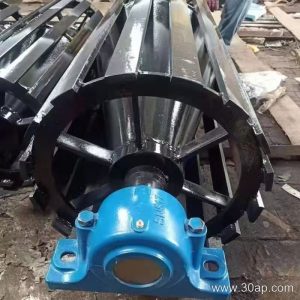
When ordering, specify the belt width, trough angle, roller diameter, roller length, bearing type, and mounting bracket pattern. A self-aligning idler is not a drive pulley, tail pulley, or bend pulley; it is a tracking device that keeps the belt centered. Used correctly, it reduces edge damage, spillage, and unscheduled downtime in mines, quarries, cement plants, and power stations.