Addressing Edge Wear on a Manufacturing Line Idler Roller
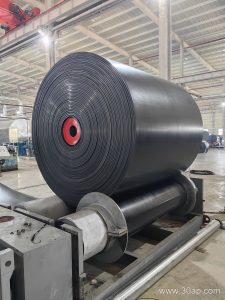
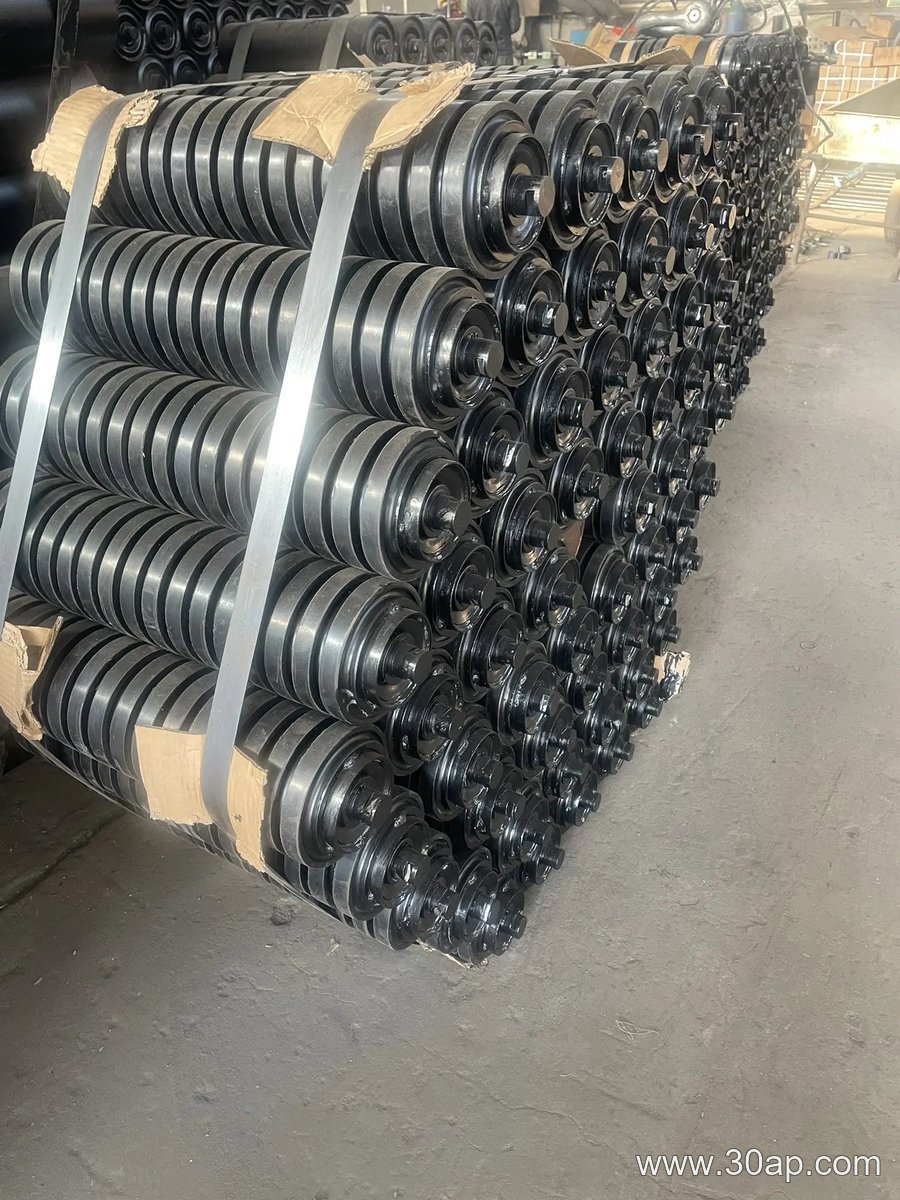
An idler roller operating on a high-speed general manufacturing line often encounters tracking discrepancies that concentrate heavy lateral forces against its rotating end flanges. When a moving belt drifts continuously to one side, the edge of the fabric or rubber carcass grinds against the housing. This friction generates localized heat, accelerates shell wear, and eventually damages the belt edge. Solving this conveying-line challenge requires a systematic integration of precise tracking hardware and properly aligned support components.
Identifying the Mechanical Roots of Lateral Belt Drift
Belt tracking issues rarely stem from a single source. On continuous-duty transport lines moving finished goods or component boxes, minor structural imperfections can compound over distance. Recognizing the primary causes helps plant engineers apply targeted corrections before premature component failure halts production.
- Uneven tensioning across the take-up pulley, causing the belt to pull diagonally toward the looser side.
- Accumulation of manufacturing debris or adhesive residue on intermediate roller surfaces, altering the effective outer diameter.
- Structural frame misalignment resulting from thermal expansion or uncalibrated floor anchors during installation.
- Off-center loading where heavy workpieces drop repeatedly onto one side of the moving surface.
Integrating Corrective Hardware into Existing Layouts
To neutralize the side-to-side forces acting upon an idler roller, engineering teams must deploy corrective measures that gently steer the belt back to center without damaging its edges. Standard fixed-position cylindrical units cannot compensate for severe tracking errors, which necessitates the integration of specialized assemblies.
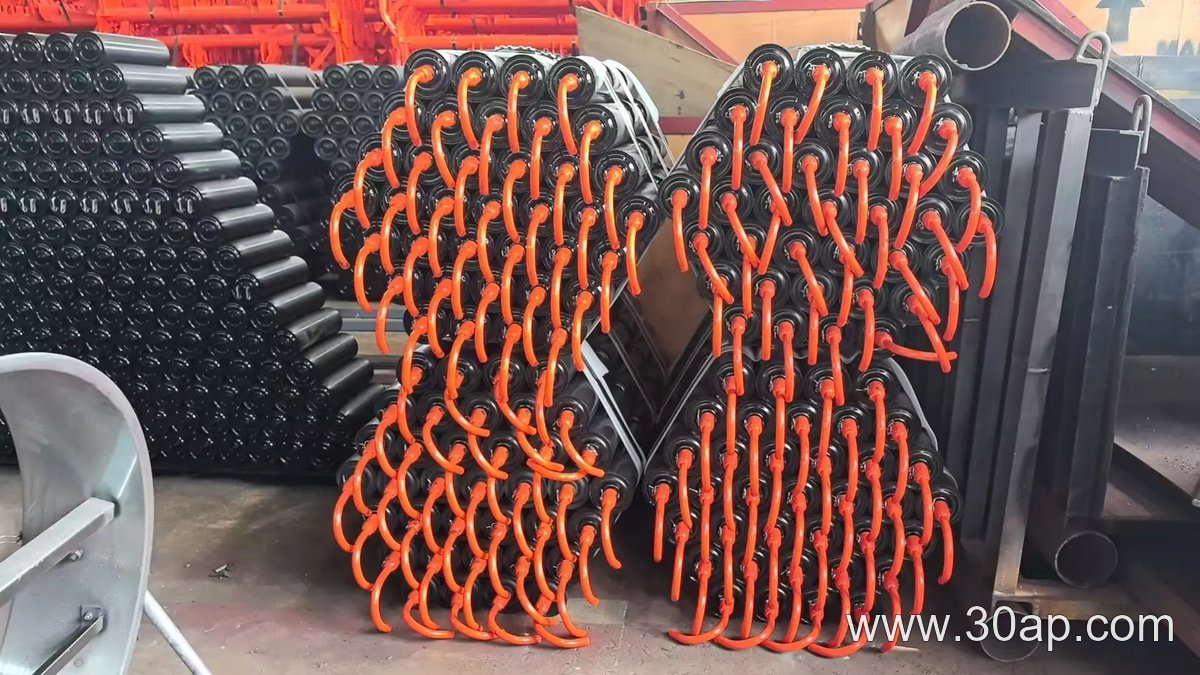
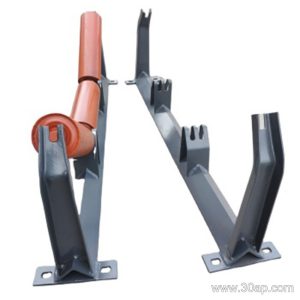
Self-aligning training stations use pivoting frames activated by lateral guide rollers. When the belt drifts and touches a side guide, the entire assembly swivels slightly on a vertical axis. This angular adjustment creates a steering force that guides the belt back to the centerline automatically. Positioning these units at regular intervals along long conveyor runs prevents progressive drift from reaching destructive levels.
Optimizing Installation Tolerances for Long-Term Reliability
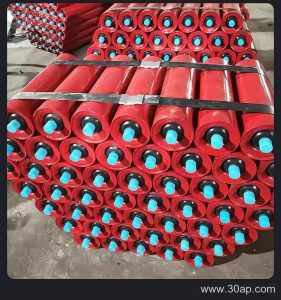
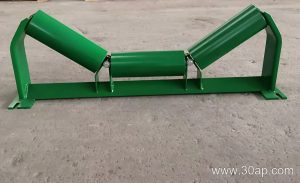
Successfully integrating alignment solutions depends heavily on accurate mechanical setup during installation and routine overhauls. Technicians should verify that every idler roller sits perfectly square to the longitudinal axis of the stringer frame. Even a fractional angular deviation can impart a continuous steering vector that fights against the central tracking path.
Furthermore, checking bearing rotational freedom and seal integrity ensures that correcting forces operate smoothly without unnecessary internal resistance. By combining rigorous alignment checks with responsive training hardware, facilities can protect each idler roller from eccentric side loads and maintain efficient, uninterrupted material transport across the entire manufacturing floor.