What the Feed-End Pulley Does
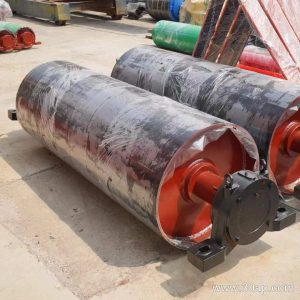
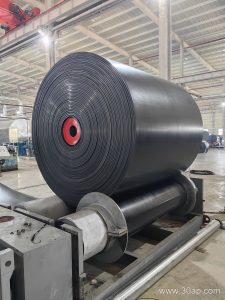
The feed-end pulley is the drum at the loading end of a belt conveyor. It supports and redirects the conveyor belt as material is deposited onto the belt, and it works together with the drive pulley, which transmits power, and the tail pulley, which handles return-side tracking. In many layouts the feed-end pulley also acts as a bend or snub point that controls belt wrap around the adjacent drive drum. Because it sits close to the loading zone, it must tolerate impact, dust, and occasional spillage without losing alignment.
Construction and Surface Choices
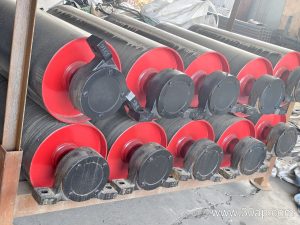
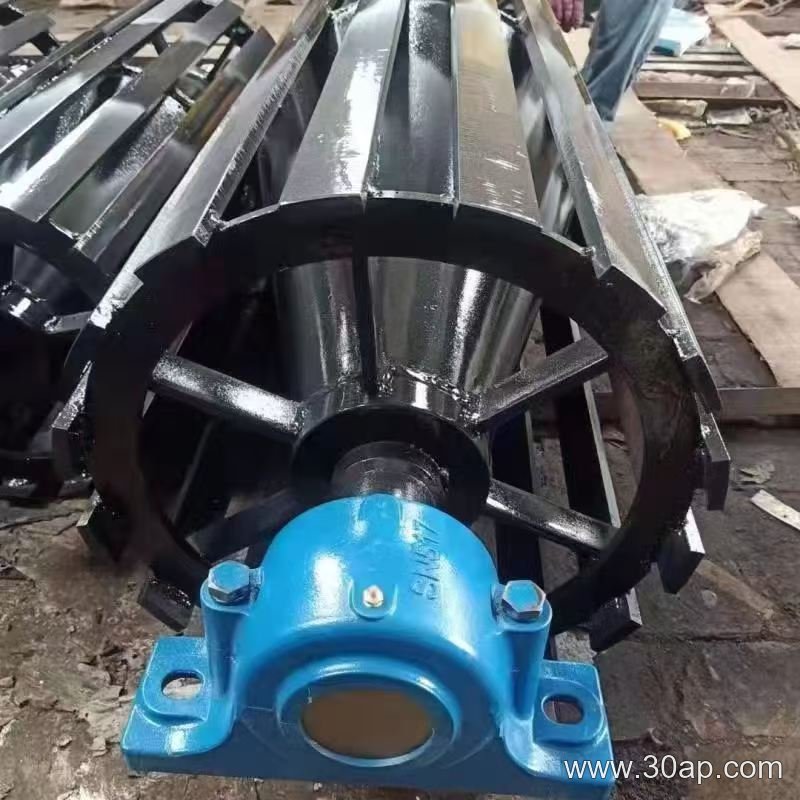
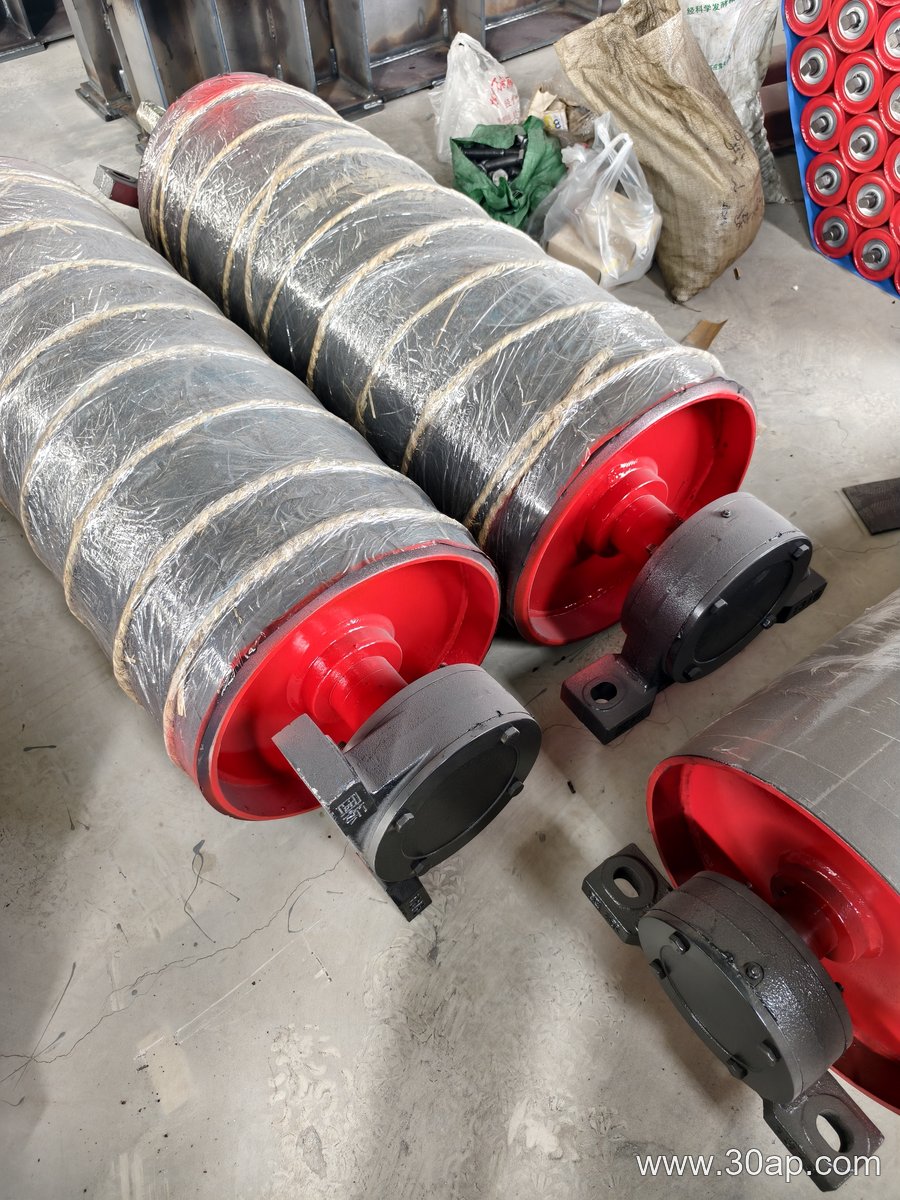
A typical unit is built around a steel tube with welded end discs and a shaft that runs through sealed bearing housings. The shaft diameter is selected from torque and radial load, not from belt width alone. Common shaft sizes include Ø80, Ø100, Ø120, and Ø140 mm, while larger assemblies may use Ø160 mm or more. The shell is often machined to a slight crown so the belt self-centers, then covered with a lagging selected for the application.
- Plain steel finish for dry, low-abrasion duties
- Cold-bonded or hot-vulcanized rubber for grip and wear protection
- Diamond or herringbone grooving to shed water and fines
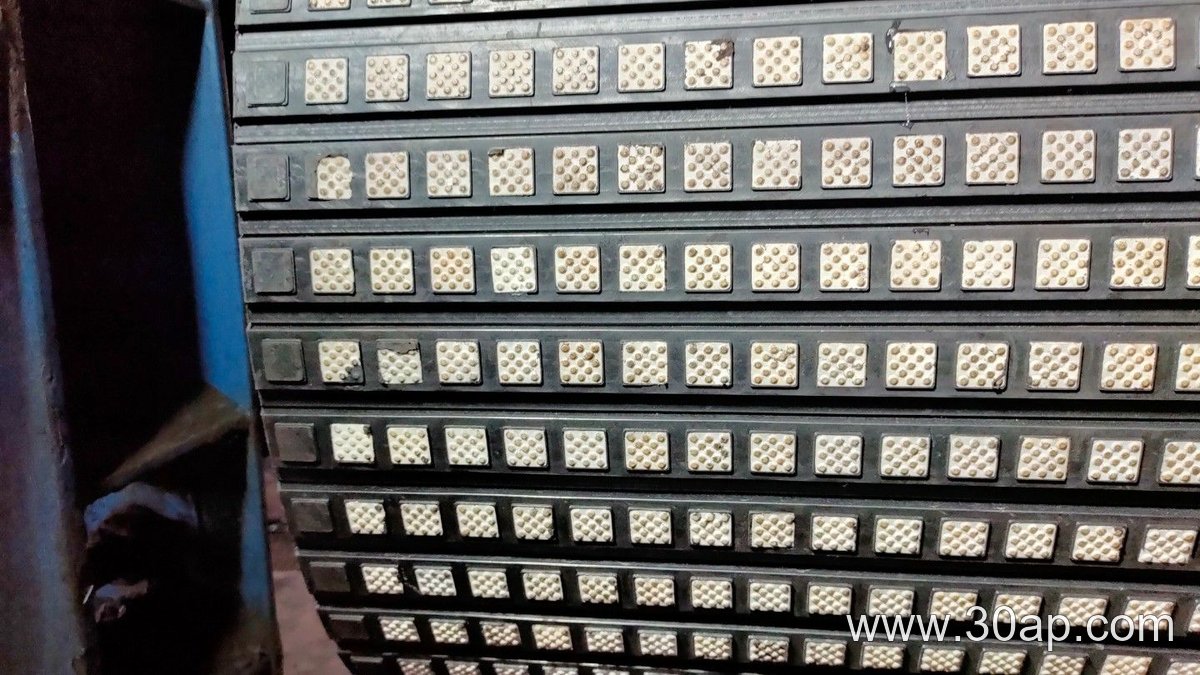
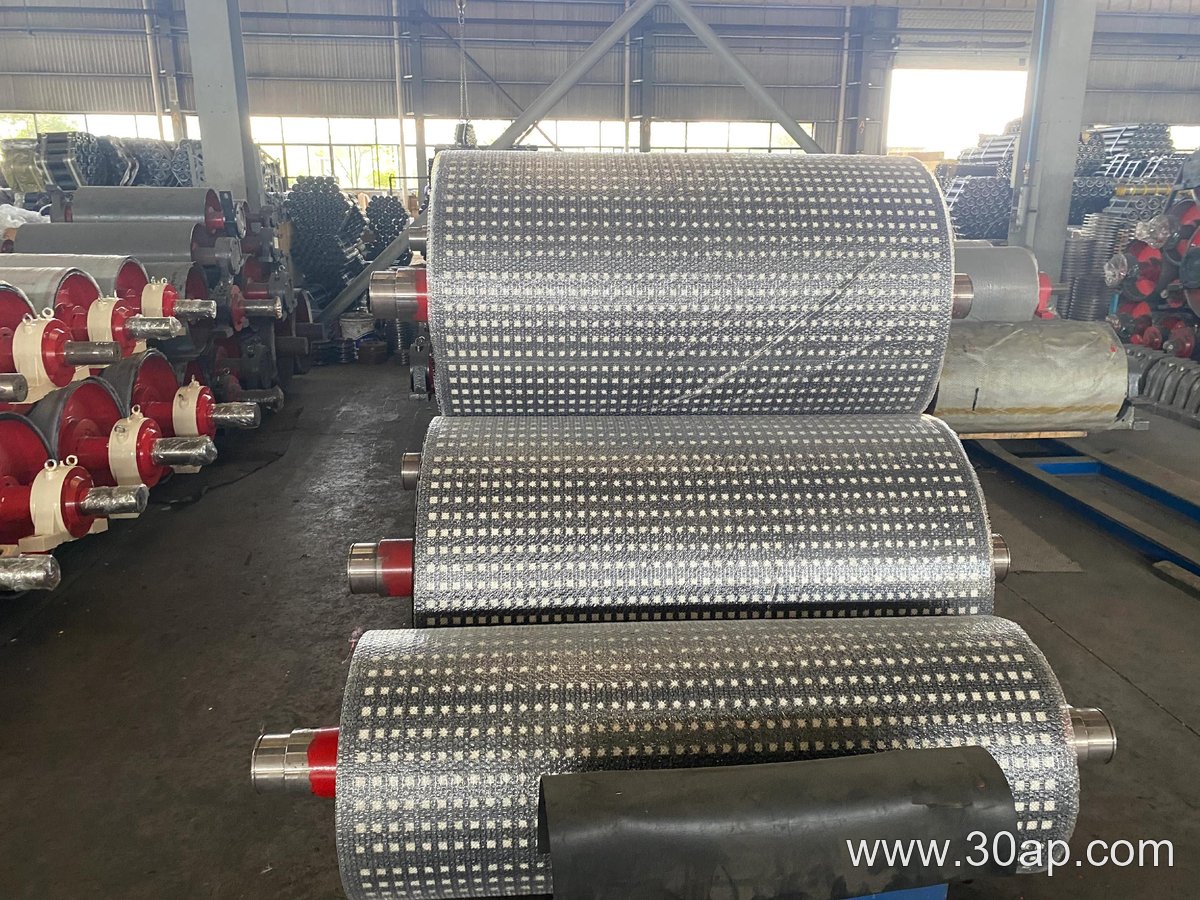
- Ceramic lagging where abrasive slurry or sharp aggregate is present
Lagging thickness commonly ranges from 8 mm to 20 mm. A thicker cover extends service life in harsh conditions but adds weight and may affect the required shaft size. The pulley face width is normally wider than the belt; for example, a B800 belt often runs on a face around 950 mm, and a B1200 belt may use a face near 1400 mm. These are reference relationships, not fixed pairings, because the final dimensions follow the conveyor design.
Where It Fits in the System
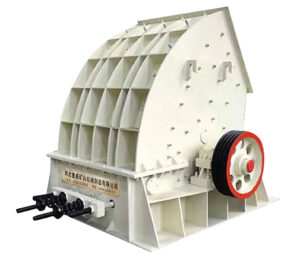
Feed-end pulleys appear in quarry and aggregate plants, coal handling circuits, and mineral processing lines. At a crushing station the pulley may sit directly under the discharge chute, where it receives a continuous stream of rock. In a sand and gravel operation it can serve as a snub pulley that increases contact angle on the drive drum. The same hardware may also be found in a tunnel muck removal conveyor or a fertilizer handling line, provided the lagging and bearings suit the material.
Position matters. If the feed-end pulley is also a bend pulley, it changes belt direction without driving the belt. That is different from a drive pulley, which is the power source, and from a tail pulley, which usually handles tension and return tracking. A feed-end pulley can be a tail pulley in some compact layouts, but the two roles should not be treated as interchangeable when specifying bearings or lagging.
Selection and Maintenance Notes
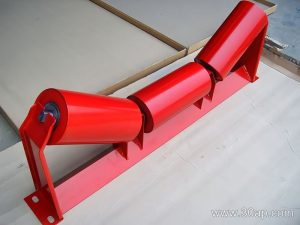
Buyers should confirm the belt width, the required face width, the shaft diameter from the torque calculation, and the lagging type for the material. A conveyor bracket or idler roller nearby may influence access for inspection, so plan clearance around the bearing housings. During operation, watch for belt mistracking at the loading point, abnormal noise from bearings, and uneven lagging wear. Re-lagging or replacing the drum is usually cheaper than repairing a damaged belt, so keep a spare or schedule periodic inspection.
For a reliable feed-end pulley, match the shell diameter to the belt speed and the load profile, not to a single catalog number. Common diameters such as Ø400, Ø500, Ø630, and Ø800 mm cover many duties, while larger drums like Ø1000 mm or Ø1250 mm appear in high-tension systems. The right combination of shaft, lagging, and face width comes from the conveyor design, and it should be reviewed whenever the duty changes.