What a Large-Diameter Pulley Does on a Conveyor
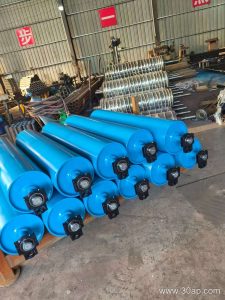
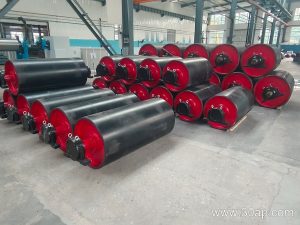
A large-diameter pulley is a cylindrical assembly used to turn and support a conveyor belt at key points along a bulk material handling line. It is also called a large conveyor drum, and the name simply reflects that the shell diameter is generous relative to the belt width. That extra diameter changes how the belt bends, how much contact area the belt gets, and how much torque the shaft must carry. Drive, tail and bend pulleys are not interchangeable names; each position has its own job, and a large-diameter pulley can appear in any of them when the duty calls for it.
In a quarry or a limestone mine, a large-diameter pulley often sits at the head or tail of a long incline where the belt tension is high. The larger shell reduces the bending stress in the belt carcass and spreads the load over more of the shaft and bearing assembly.
How the Shell, Shaft and Lagging Fit Together
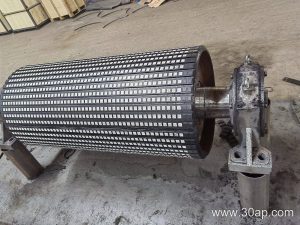
The main body is a rolled steel shell, usually machined at the ends and welded to dished end plates. The shaft passes through the center and is secured by keyed hubs or shrink discs. Bearings sit on the shaft ends and are held by a conveyor bracket or pillow block. Surface finish matters as much as size.
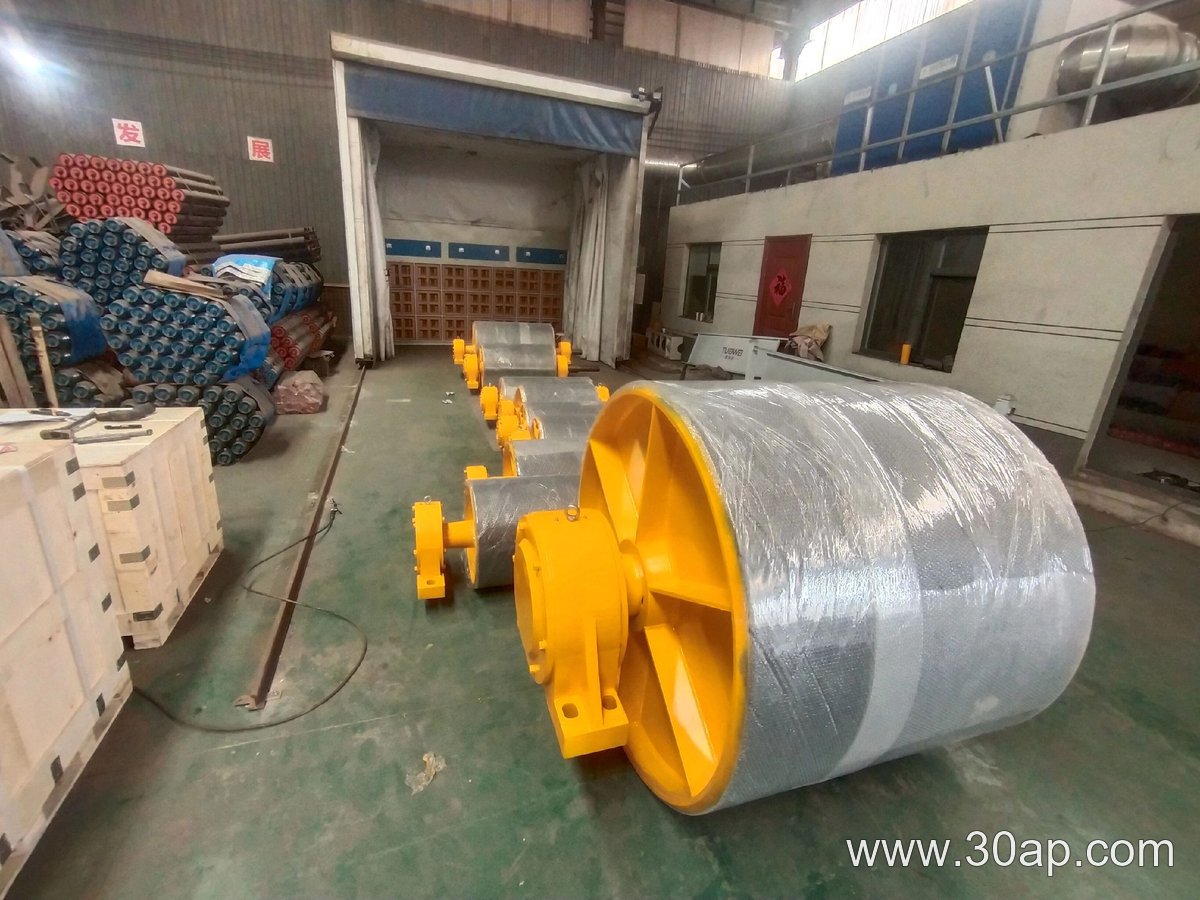
- Plain or smooth finish for light duty and low slip risk
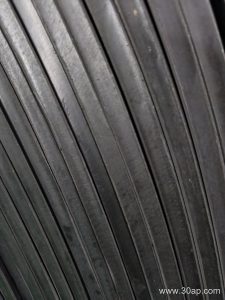
- Diamond rubber lagging for general grip and water shedding
- Herringbone lagging for reversible belts that need centering
- Ceramic lagging for abrasive, wet or oily conditions
Lagging thickness is commonly 8, 10, 12, 15 or 20 mm, applied by hot vulcanizing, cold bonding or casting. The right surface form depends on the material being carried and the amount of moisture present, not on diameter alone.
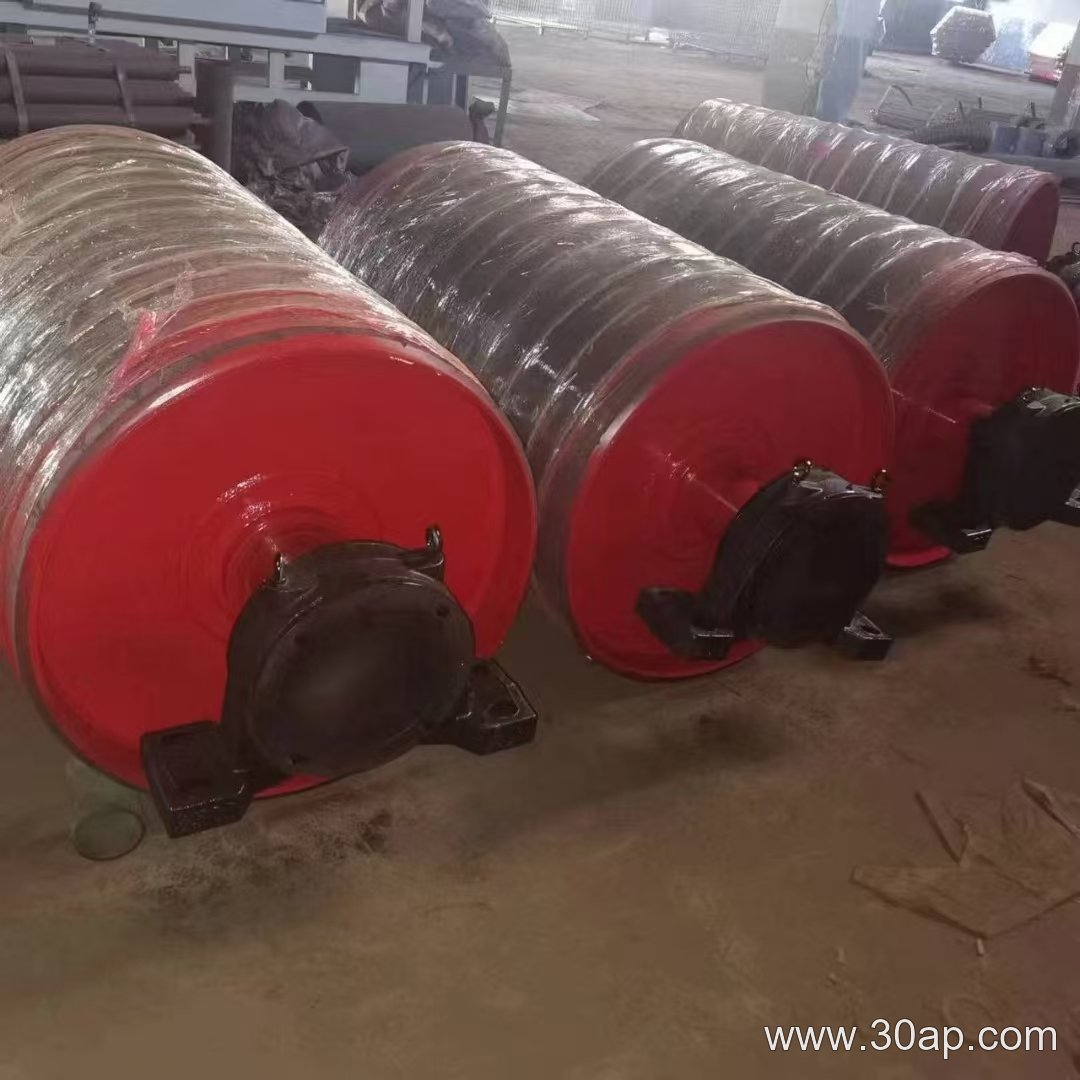
Matching Diameter to Belt Width and Duty
There is no rule that one belt width can only match one pulley diameter. A B800 belt might run on a Ø500 large-diameter pulley in a short transfer, or on a Ø800 or Ø1000 drum in a high-tension main line. The shell width is normally wider than the belt, for example B650 around 750 mm, B1000 around 1150 mm, and B1400 around 1600 mm, but final dimensions come from the conveyor design.
Shaft diameter is set by torque and load, not by belt width. Common shaft sizes include Ø50, Ø60, Ø70, Ø80, Ø90, Ø100, Ø120, Ø140, Ø160, Ø180 and Ø200. A designer calculates the bending moment from belt tension and the torque from drive power, then selects the shaft. A B1200 × Ø1000 large-diameter pulley will not automatically use the same shaft as a B1200 × Ø630 unit.
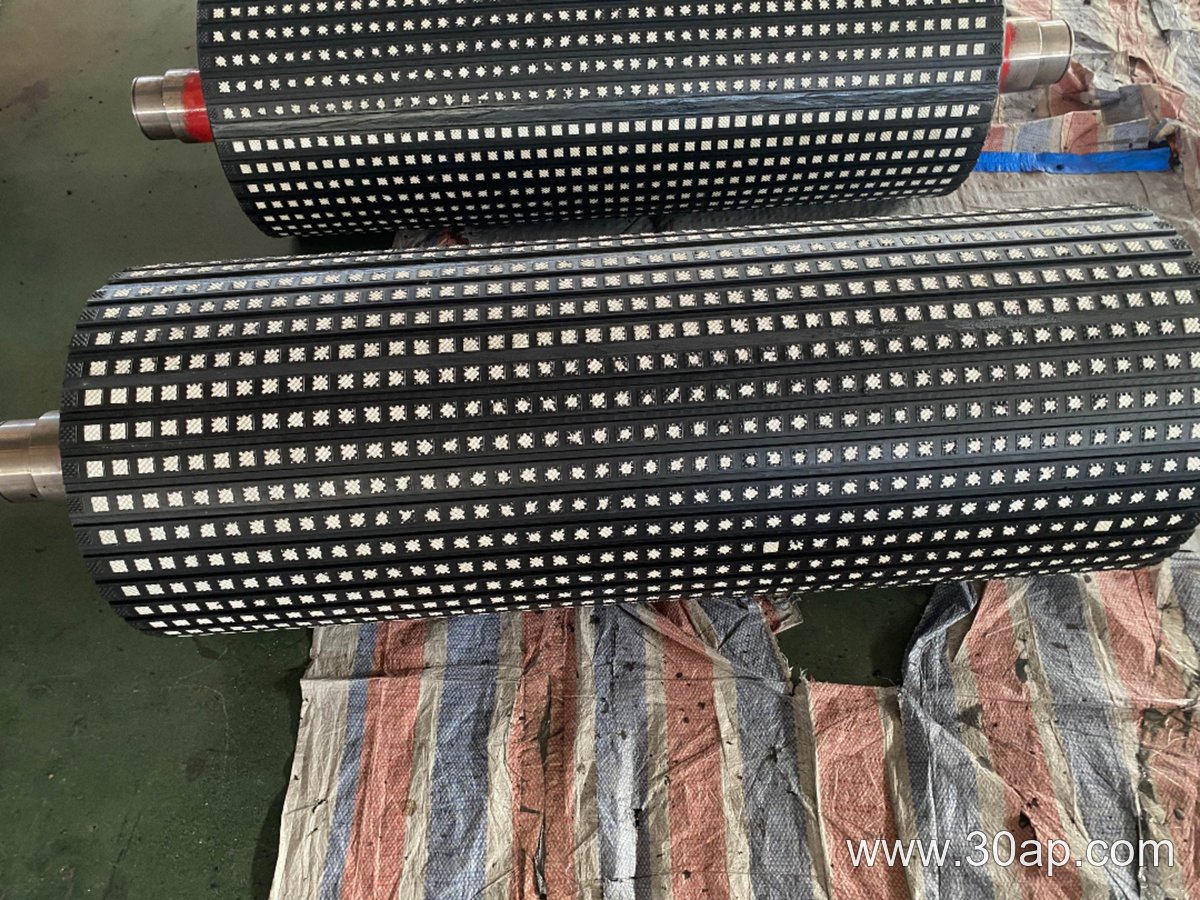
Specification Reference for Common Sizes
The table below shows common combinations seen in conveyor projects. These are reference values, not a universal supply promise, and every line should be confirmed against the actual duty.
| Belt width | Shell width (approx.) | Common diameters | Typical shaft range |
|---|---|---|---|
| B400 | 500 mm | Ø200, Ø250, Ø315 | Ø50, Ø60 |
| B500 | 600 mm | Ø250, Ø315, Ø400 | Ø60, Ø70 |
| B650 | 750 mm | Ø315, Ø400, Ø500 | Ø70, Ø80, Ø90 |
| B800 | 950 mm | Ø400, Ø500, Ø630 | Ø80, Ø90, Ø100 |
| B1000 | 1150 mm | Ø500, Ø630, Ø800 | Ø100, Ø120, Ø140 |
| B1200 | 1400 mm | Ø630, Ø800, Ø1000 | Ø120, Ø140, Ø160 |
| B1400 | 1600 mm | Ø800, Ø1000, Ø1250 | Ø140, Ø160, Ø180 |
| B1600 | 1800 mm | Ø1000, Ø1250, Ø1400 | Ø160, Ø180, Ø200 |
| B1800 | 2000 mm | Ø1250, Ø1400, Ø1600 | Ø180, Ø200 |
| B2000 | 2200 mm | Ø1400, Ø1600, Ø1800 | Ø200 and above |
Values such as B1200 × Ø1000 or B800 × Ø500 appear in real projects, but they are examples, not mandatory pairings. A large-diameter pulley for a B2400 belt would sit at the upper end of the range and be engineered case by case.
Where Large-Diameter Pulleys Are Used
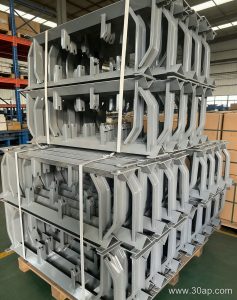
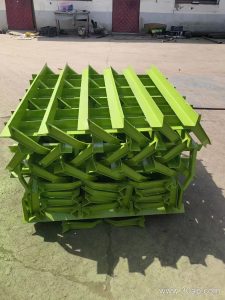
These drums show up in a handful of demanding locations. One is the head end of a primary crushing circuit, where the belt carries run-of-mine rock and the pulley must resist impact and abrasion. Another is a coal handling system at a power station, where wet coal and fines demand good lagging and a shell that will not flex under load. In both cases the large-diameter pulley works with the conveyor belt, idler rollers and conveyor brackets to keep the line tracking and turning.
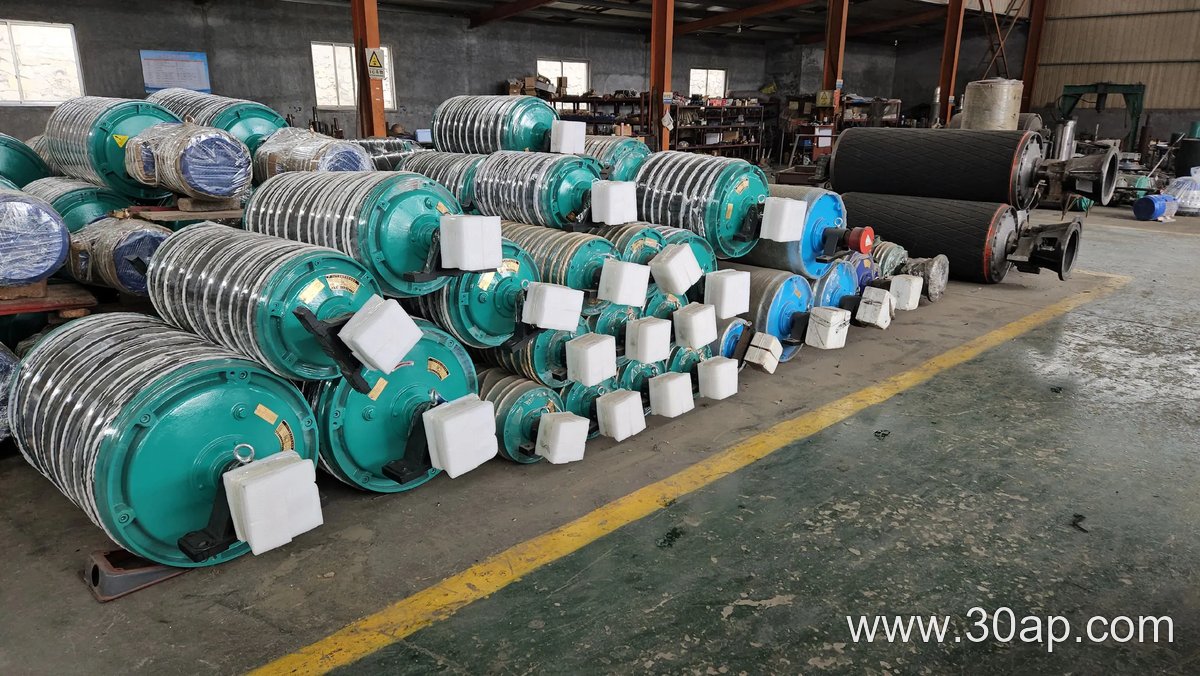
Tail and tension positions also use large drums when the take-up travel is long, because a bigger shell gives more wrap angle and reduces the chance of belt slip. A bend pulley in the same line is usually smaller; it only changes direction, so it does not need the same diameter or lagging.
What Buyers Should Confirm Before Ordering
Start with the belt width, the actual belt tension and the drive power. From those, the supplier can propose a shell diameter, shaft size, lagging type and bearing arrangement. Ask for the balancing grade, the runout tolerance and the welding inspection record if the pulley will run at high speed. Confirm the mounting interface with the conveyor bracket early, because a large-diameter pulley takes more space and may need a different bearing center distance than the original unit.
Finally, treat every size as a design choice. A Ø1250 drum on a B1400 belt is reasonable in one plant and oversized in another. The correct large-diameter pulley is the one that matches the calculated torque, the belt speed and the material being carried.