What a 1500mm Wide Conveyor Belt Is
A 1500mm wide conveyor belt is a heavy-duty rubber belt with a nominal width of 1500 millimeters, which is 1.5 meters across the carcass. It sits in the middle-to-large end of common belt widths, above B1200 and B1400 but below B1600 and B1800. Because of that width, it is usually chosen for high-tonnage bulk handling rather than for small package lines.
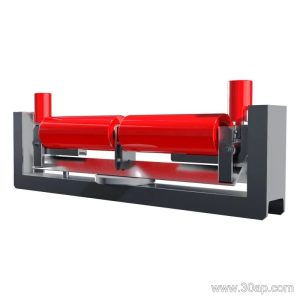
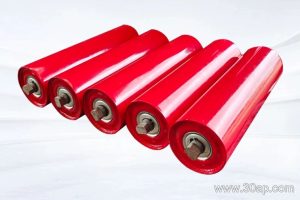
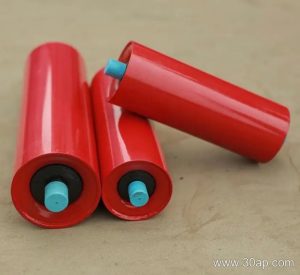
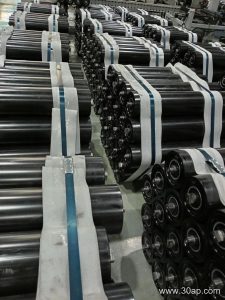
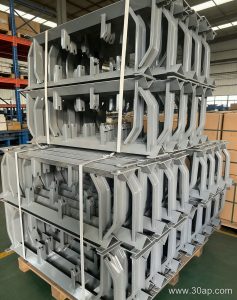
In practice, the belt is one part of a complete conveyor system that also includes idler rollers, a head or drive pulley, a tail pulley, bend pulleys, and conveyor brackets that hold the structure together. The belt carries the load, but the pulleys and rollers determine how smoothly that load moves.
How the Belt Is Built
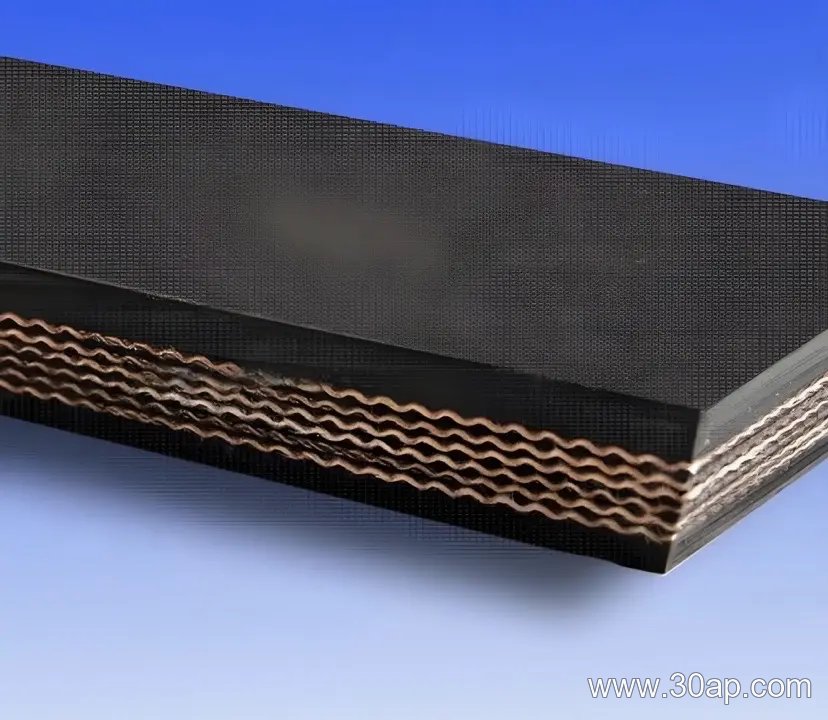
A belt of this width is normally a composite product. The carcass provides tensile strength and resistance to stretching, while the rubber covers protect the carcass from abrasion, impact, and moisture. Common carcass options include EP fabric, NN nylon fabric, and steel cord construction.
Strength grades are written as EP200, EP315, EP400, EP500, EP630, EP800, EP1000, EP1250, EP1600, and EP2000. These are reference grades, not a fixed match for every 1500mm belt. A buyer should choose the grade according to the actual belt tension, the load, the incline, and the drive arrangement.
Cover thickness is usually described in pairs such as 3+1.5, 4+2, 5+2, 6+2, or 8+3 mm, where the first number is the top cover and the second is the bottom cover. The carcass may have two to six plies, depending on the required strength and the belt construction type.
Special grades can be added when the working environment demands them. These include abrasion-resistant, heat-resistant, oil-resistant, flame-retardant, antistatic, cold-resistant, and acid-alkali-resistant belts. Surface forms such as patterned, chevron, and corrugated sidewall belts are separate variants, and they are not interchangeable with a smooth standard belt.
Where a 1500mm Belt Is Used
This width fits bulk material systems where a narrower belt would need to run too fast or handle too little tonnage. Typical duties include crushed stone, coal, ore, sand, gravel, cement clinker, and similar loose materials on large conveyors.
Mining, quarrying, port loading, power generation, and heavy bulk terminals are common settings. The belt can also appear in large in-plant conveying systems where the conveyor runs continuously and the load is heavy.
It is worth comparing this width with a 1400mm or 1600mm belt when designing a new line. A slightly narrower belt may suit a lower tonnage, while a wider belt may be needed for a higher capacity. The right choice depends on the conveyor profile, the material, and the required throughput.
Pulley, Roller, and Bracket Points
One common mistake is to assume that a 1500mm belt must always match one particular pulley diameter or shaft size. That is not correct. The drive pulley, tail pulley, and bend pulley are different components with different functions, and their diameters are set by the conveyor design, the belt tension, and the required wrap angle.
A drive pulley transmits power to the belt. A tail pulley turns at the loading end, and a bend pulley changes the belt path. They are not interchangeable names, and their sizes are not automatically fixed by belt width alone.
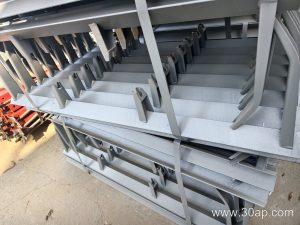
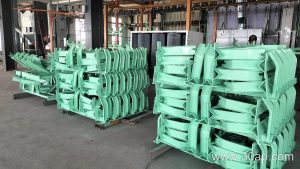
The same applies to idler rollers. Their diameter, spacing, and trough angle are selected from the load and the belt speed. Conveyor brackets and frames must be strong enough to keep the structure aligned, but the exact bracket type is a design decision.
What Buyers Should Check
- Confirm the actual belt width, strength grade, cover thickness, and carcass type rather than relying on the width alone.
- Match the belt to the material, temperature, and any chemical exposure.
- Review the pulley and idler roller layout with the conveyor designer.
- Check whether a special surface, such as chevron or corrugated sidewall, is genuinely required.
- Ask for the manufacturer’s data sheet, since values vary between suppliers.
A 1500mm wide conveyor belt can be a reliable choice for heavy conveying, but it works best when the whole system is designed as one unit. The belt, pulleys, rollers, and brackets should be selected together, not treated as separate parts with fixed sizes.