What a Rotating Self-Aligning Idler Does
A rotating self-aligning idler is a belt training roller that pivots on a vertical axis when the conveyor belt drifts to one side. Instead of sitting in a fixed frame like a standard troughing idler, this roller is mounted on a rotating base or bracket that responds to belt misalignment. When the belt edge contacts the steering roller or the offset rollers, the assembly swings slightly, and the skewed angle of the rolls pushes the belt back toward the center line.
The same product is also called a self-training idler, a belt training idler, or a swivel self-aligning roller. All of these names describe the same function: correcting belt tracking without manual adjustment. It is not a drive pulley, tail pulley, or bend pulley. Those are conveyor pulleys that transmit power or change belt direction, and they are not interchangeable with a training idler.
How the Assembly Is Built
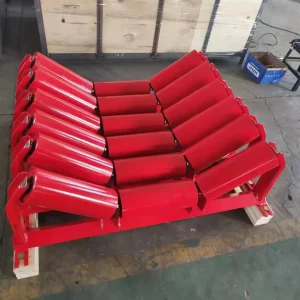
A typical rotating self-aligning idler combines a roller set with a rotating frame. The frame usually carries two or three rolls arranged in a trough or flat pattern. The base sits on a pivot shaft or sleeper plate, allowing the whole carriage to turn a few degrees left or right. A small amount of vertical play can help the unit follow belt irregularities without binding.
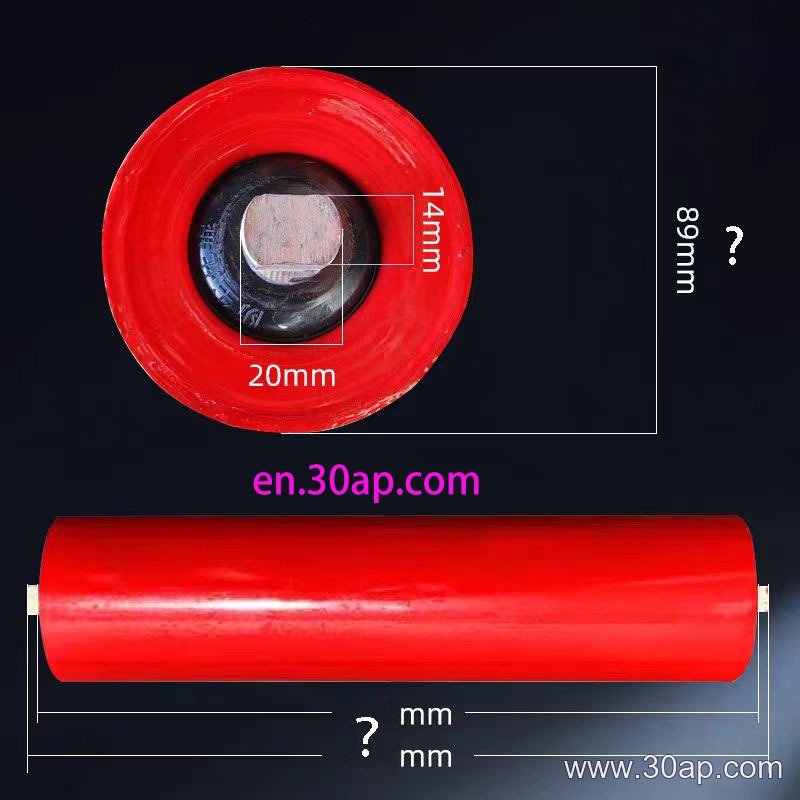
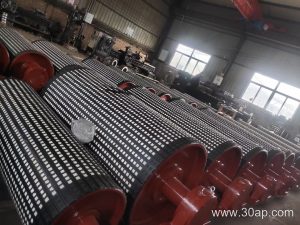
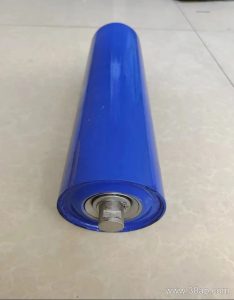
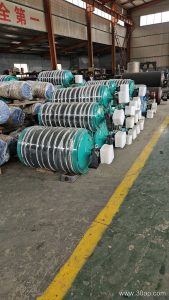
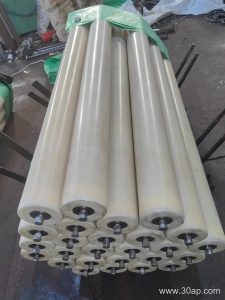
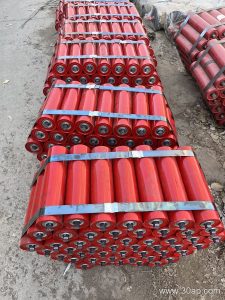
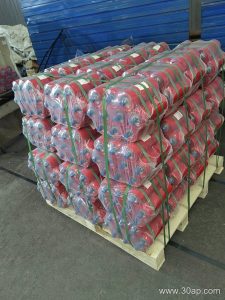
The rolls themselves are built like standard idler rollers. They may use a steel tube shell, a nylon shell, a rubber-covered shell, or ceramic tiles on the surface. Common bearing sizes include 6204, 6205, 6305, 6306, 6308, and 6310, matched to the load and speed of the conveyor. The roller diameter is chosen from a range that includes Ø63, Ø76, Ø89, Ø102, Ø108, Ø127, Ø133, Ø159, Ø178, Ø194, and Ø219. None of these diameters is tied to one belt width. A B800 belt, for example, might run with Ø89 or Ø108 idlers depending on the conveyor design and the load carried.
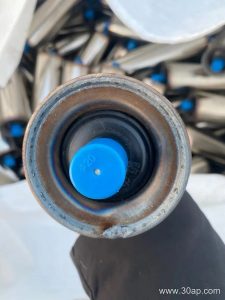
Some self-aligning units use tapered rollers to create a steering effect. Others use a pair of vertical guide rollers that contact the belt edge. The rotating base can be fitted with a grease nipple for the pivot bearing, while the roller bearings are usually sealed for life or regreased through the end cap. The frame may be welded or bolted, and it often includes a stop to limit the swing angle.
Where It Fits on a Conveyor
Training idlers are placed where belt misalignment is most likely to appear. On a long overland conveyor, they may be installed on the carrying side every few hundred meters, and on the return side at similar intervals. They are also common near the head end, before the discharge pulley, and after the loading point where material impact can knock the belt off center.
In a quarry or sand and gravel line, a rotating self-aligning idler helps keep the belt centered after a crusher discharge. In a coal handling plant, it can be used on the return strand to correct drift caused by sticky material or uneven loading. The same roller type appears in cement plants, port bulk terminals, and tunnel mucking conveyors. It is not a substitute for a bend pulley at a transfer tower, nor for a drive pulley at the head. Those components have different duties.
Choosing the Right Training Idler
Selection starts with the belt width and the trough angle. Common belt widths run from B400 up to B2400. Trough angles are often 20, 30, 35, or 45 degrees. A three-roll troughing set at 35 degrees is a frequent choice for bulk materials, while a 20-degree set may suit lighter or more rounded loads. The training idler should match the trough angle of the adjacent standard idlers so the belt does not twist as it passes from one station to the next.
Roller length depends on belt width, trough angle, and the number of rolls in the set. For a three-roll troughing arrangement, typical roll lengths are about 200 mm for B500, 250 mm for B650, 315 mm for B800, 380 mm for B1000, 465 mm for B1200, 530 mm for B1400, 600 mm for B1600, 670 mm for B1800, and 750 mm for B2000. These are common examples, not fixed rules. The side rolls and the center roll can have different lengths, and the design should be confirmed with the conveyor layout.
Bearing selection follows the load and speed. A 6204 bearing may be adequate for a small diameter roller on a light-duty line, while a 6308 or 6310 bearing is more likely on a large diameter roller carrying heavy ore. The bearing size is not determined by belt width alone, and a single belt width can accept several bearing and shaft combinations.
Installation and Maintenance Notes
A rotating self-aligning idler needs a flat, square mounting surface. If the conveyor bracket is twisted or the stringer is out of line, the training roller will fight the belt instead of guiding it. The pivot should turn freely by hand before the belt is started. After installation, observe the belt for a full revolution and check that the training idler swings in the correct direction. If it swings the wrong way, the roller set may be installed backward.
Lubrication intervals depend on the seal type and the environment. In a dusty quarry or a coal yard, sealed bearings are often preferred. In a wet or corrosive location, a nylon or rubber-covered shell can reduce material buildup. A worn roller shell or a seized bearing will prevent the training idler from responding, so it should be inspected during routine conveyor maintenance.
What Buyers Should Confirm
- Belt width and trough angle of the existing idler stations
- Roller diameter and shell material suitable for the material and environment
- Bearing size and sealing arrangement for the expected dust or moisture
- Mounting dimensions that match the conveyor bracket or frame
- Whether the training idler is for the carrying side or the return side
A rotating self-aligning idler is a practical tracking solution when a conveyor belt tends to drift. It does not replace a conveyor pulley, and it does not correct every tracking problem. But when the structure is square and the belt is loaded reasonably, a well-chosen training idler can reduce edge damage and keep the conveyor running centered.