What a Cement Plant Conveyor Belt Has to Handle
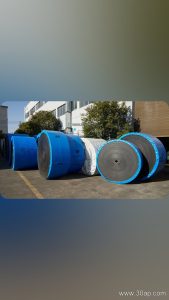
A cement plant conveyor belt works in one of the harshest bulk handling environments in heavy industry. Limestone arrives from the quarry in large lumps, raw meal is fine and abrasive, clinker leaves the kiln hot, and gypsum, clay, and additives all pass over the same conveying routes. The belt has to survive dust, impact at transfer points, and long operating hours without frequent stoppages. That is why the Cement Plant Conveyor Belt is usually specified as a system component rather than a generic rubber item.
Across cement, mining, quarry, aggregate, and power plant circuits, the same principle applies: match the belt construction to the material and the duty. A belt that performs well carrying dry raw meal may fail quickly under hot clinker, and a heavy abrasion resistant conveyor belt that suits limestone may be unnecessarily stiff on a small transfer line.
Construction and Common Belt Types
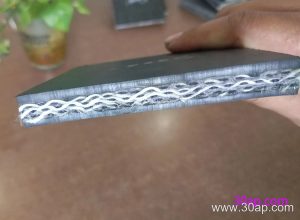
The carcass carries the load, the cover rubber protects it, and the grade of each layer decides how the belt behaves in service. Fabric core conveyor belt uses plies of EP or NN fabric; EP conveyor belt (polyester-nylon) is common for its low stretch and moisture resistance, while NN conveyor belt offers high tensile strength and good shock absorption. Steel cord conveyor belt is chosen for long, high-tension trunk lines such as quarry-to-crusher or kiln feed routes.
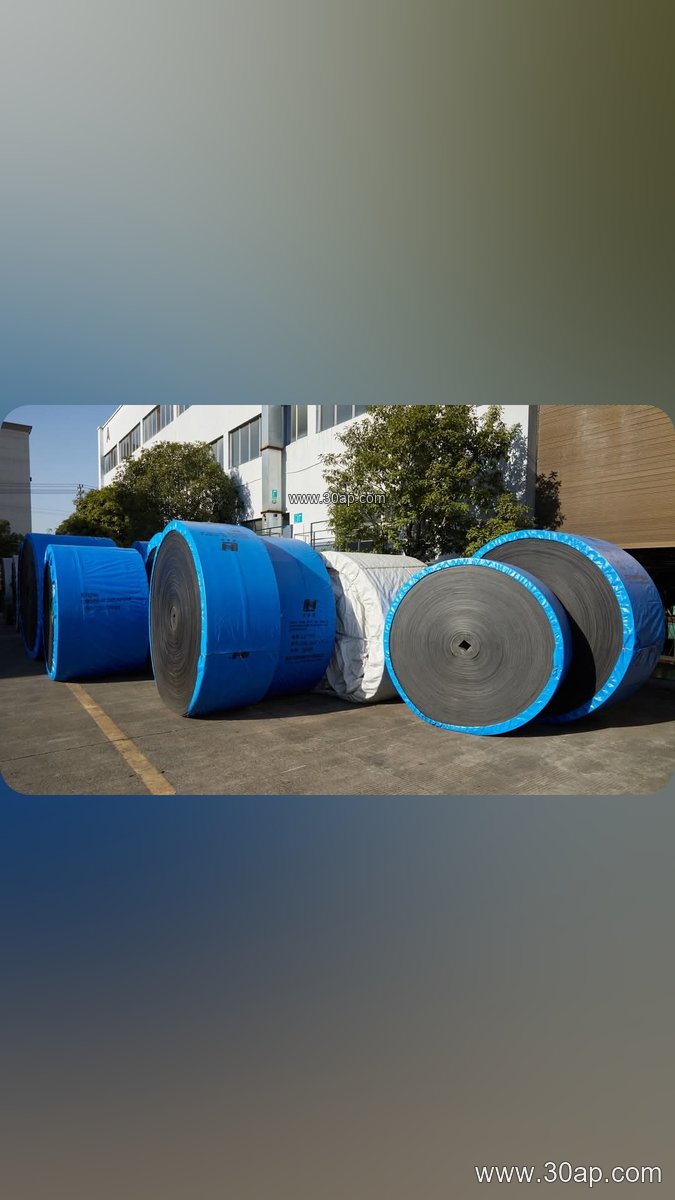
Typical reference values for cement-related belts are listed below. These are common ranges, not fixed supply promises; each project should confirm the final specification by design.
- Tensile grades: EP200, EP315, EP400, EP500, EP630, EP800, EP1000, EP1250, EP1600, EP2000
- Belt widths: B500, B650, B800, B1000, B1200, B1400, B1600, B1800, B2000
- Cover thickness: 3+1.5, 4+2, 5+2, 6+2, 8+3 mm
- Ply count: usually 2 to 6 layers for fabric core constructions
Cover Grades and Surface Forms
Heat resistant conveyor belt and high temperature conveyor belt grades are used behind the kiln and clinker cooler, where surface temperature is the main risk. Abrasion resistant conveyor belt and high abrasion resistant conveyor belt covers suit limestone, clinker, and coke. Flame retardant conveyor belt and fire resistant conveyor belt grades are specified for coal handling and enclosed galleries, where a PVC or PVG conveyor belt may also be used underground. Oil resistant conveyor belt, acid resistant conveyor belt, chemical resistant conveyor belt, cold resistant conveyor belt, anti-static conveyor belt, and impact resistant conveyor belt grades address other specific conditions.
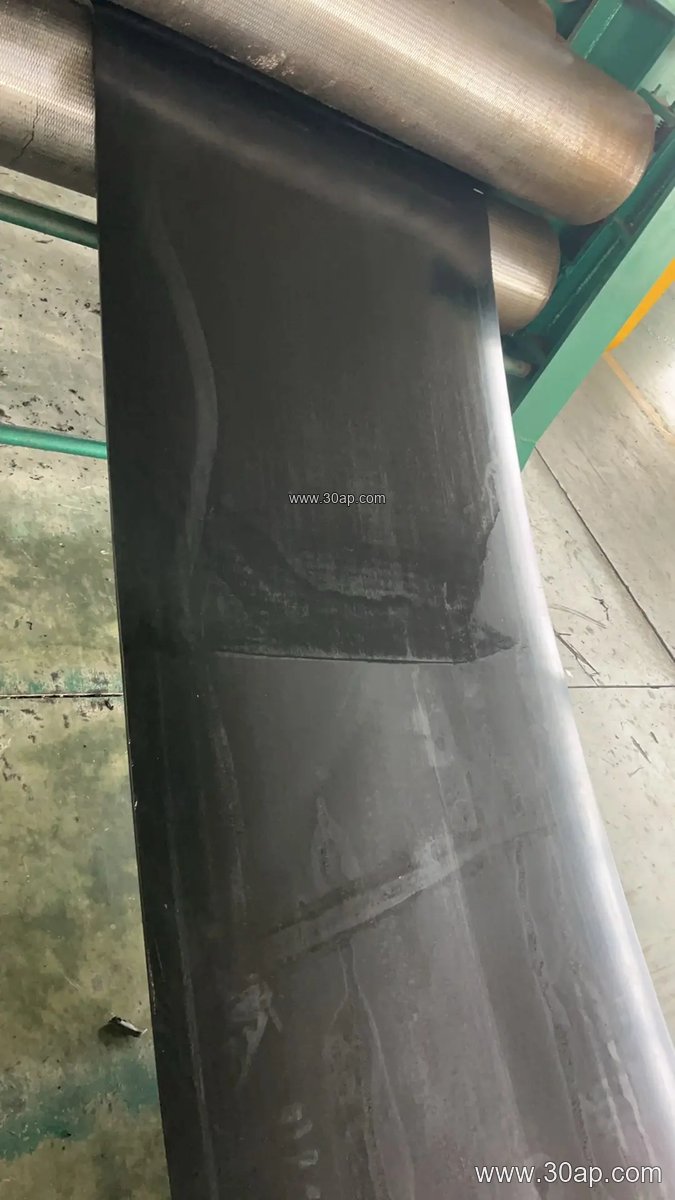
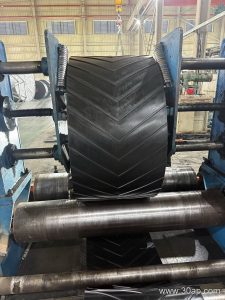
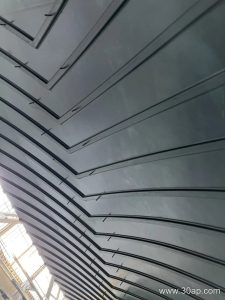
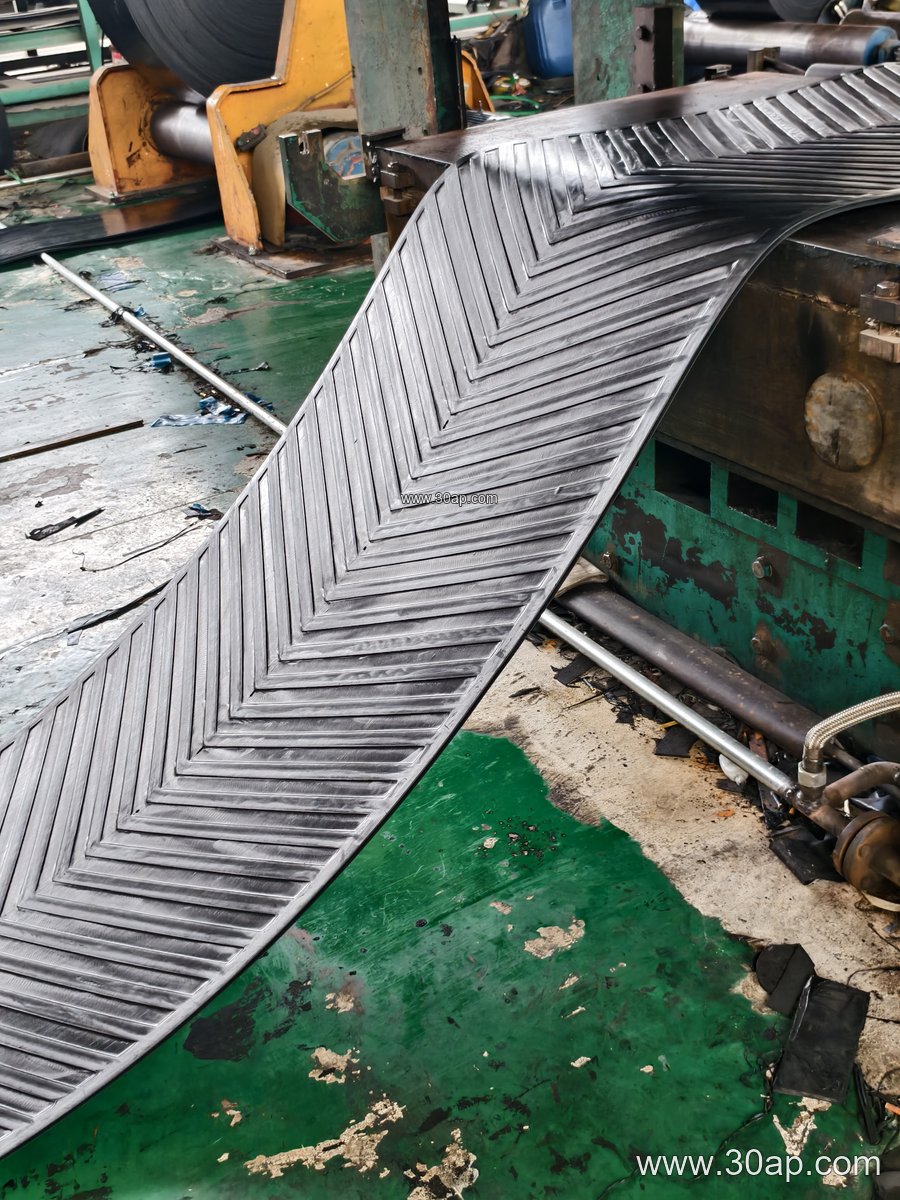
Surface forms also matter. Chevron conveyor belt and corrugated sidewall conveyor belt help control material on steep inclines, while skirted conveyor belt designs contain spillage at loading points. Pipe conveyor belt encloses the material for dust control and route flexibility, and endless conveyor belt is used where a joint-free loop is preferred. Food grade conveyor belt is outside the main cement flow but appears in some additive handling lines.
Where the Belt Sits in the Conveying System
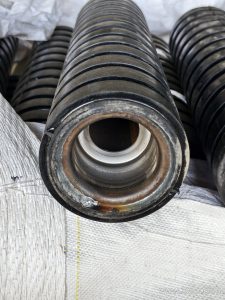
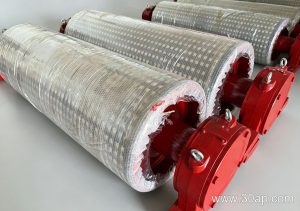
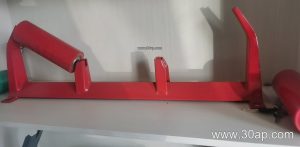
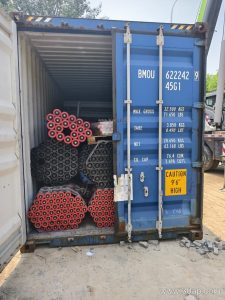
A cement plant conveyor belt does not work alone. It runs on idler roller sets, turns over conveyor pulley assemblies, and is held in line by conveyor bracket and frame structures. Drive, tail, and bend pulleys each perform different duties and are not interchangeable; the belt specification must account for the smallest pulley in contact and the transition geometry. For heavy-duty mining conveyor belt and heavy-duty conveyor belt routes feeding the crusher, impact idlers and adequate cover thickness reduce damage at the loading zone.
Typical duty points include:
- Quarry and crusher conveyor belt lines handling run-of-mine limestone
- Raw mill feed and blending silo circuits with fine, dusty material
- Clinker transport after the cooler, where heat resistance is essential
- Coal and fuel preparation areas requiring flame retardant conveyor belt
- Cement mill and packing plant lines with moderate abrasion
For more on compatible components, see conveyor idler roller and conveyor pulley references on our site, along with heat resistant conveyor belt options for hot clinker service.
Specification and Buying Checklist
Buyers should collect the material description, lump size, temperature, moisture, and any chemical exposure before selecting a belt. Width and speed determine capacity; tensile grade and safety factor determine the carcass; cover grade and thickness determine wear life. A 1200mm wide conveyor belt or 1500mm wide conveyor belt may be standard on main lines, but no single width is mandatory for every conveyor, and belt width alone does not define pulley shaft size.
Other practical points include joint method, troughability, and the required fire or anti-static properties. For underground coal mining conveyor belt or underground mining conveyor belt service, flame retardant and anti-static grades are usually mandatory. For long overland routes, steel cord conveyor belt such as ST1000, ST1250, ST1600, ST2000, ST2500, or ST3150 grades may be considered, but the final selection should follow the conveyor design.
Maintenance Notes
Inspect the belt regularly for edge damage, cover wear, and splice condition. Keep idler roller and conveyor pulley alignment accurate, since misalignment accelerates belt edge wear. Track loading conditions at transfer points and adjust skirt rubber or impact beds as needed. A well-matched cement plant conveyor belt paired with correct conveyor bracket support and maintained components will deliver longer service than a premium belt run on neglected hardware.