What a Trough Idler Does on the Carry Side
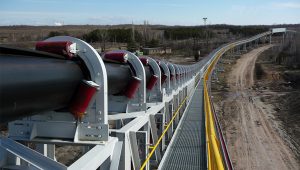
A trough idler is the group of rollers that supports the loaded run of a conveyor belt and shapes it into a trough. In a three-roll arrangement, the centre roller sits flat while the two side rollers angle upward, so bulk material such as coal, ore, clinker or aggregate stays centred instead of spilling over the edges. This same assembly is often called a troughing idler, and the term covers single-roll, two-roll and three-roll designs used along the carrying strand of a belt conveyor.
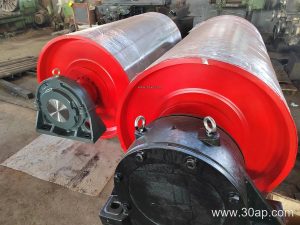
It should not be confused with the pulleys at the ends of the machine. Drive pulleys, tail pulleys and bend pulleys transmit or redirect belt tension, while trough idlers only support and guide the belt between those points. The two product families work together but are not interchangeable.
How the Assembly Is Built
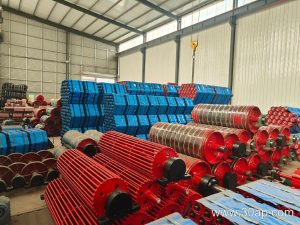
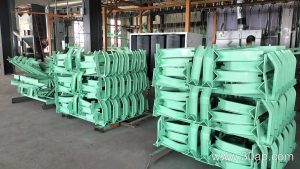
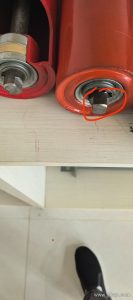
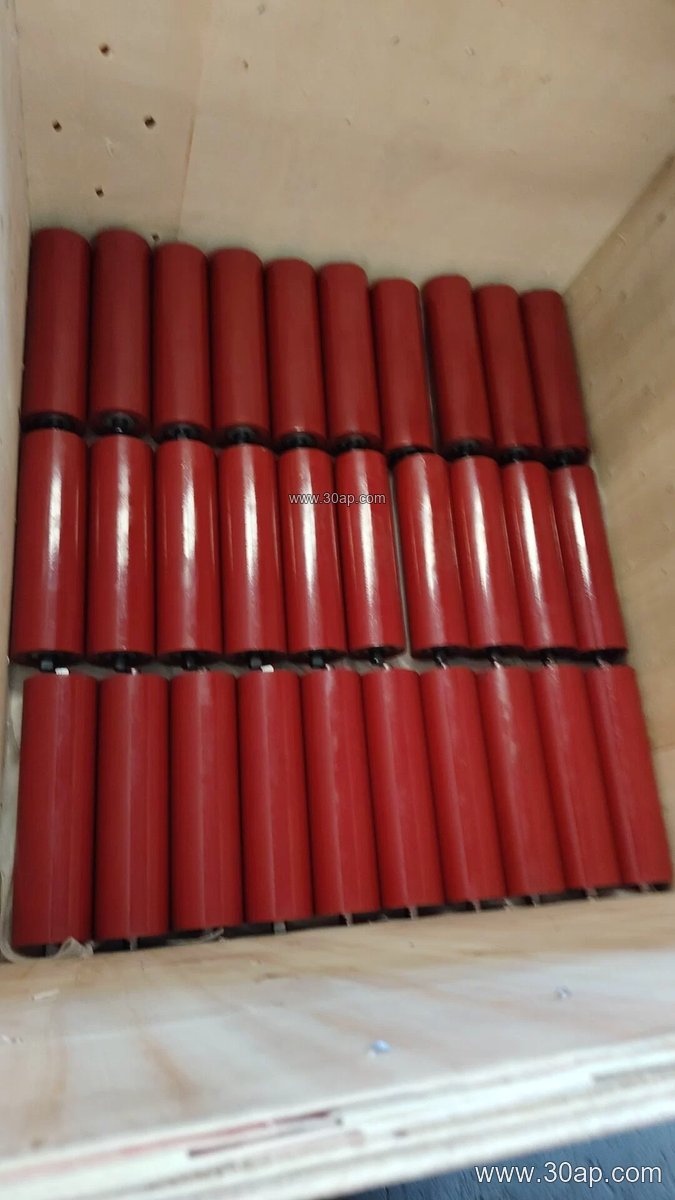
A typical station combines steel rollers, a shaft, bearing housings and a frame. Each roller turns on sealed bearings, and the shell may be plain steel tube, nylon-coated, ceramic-covered or fitted with rubber rings depending on the duty. The frame holds the rollers at a set trough angle, and the complete unit is bolted to the conveyor bracket or stringer.
Sealing matters as much as shell thickness in dusty plants. Labyrinth seals and grease-retaining caps keep fines away from the bearings, which is why idler life in a coal handling system or a cement plant often depends more on seal quality than on roller diameter.
Common Sizes and Configurations
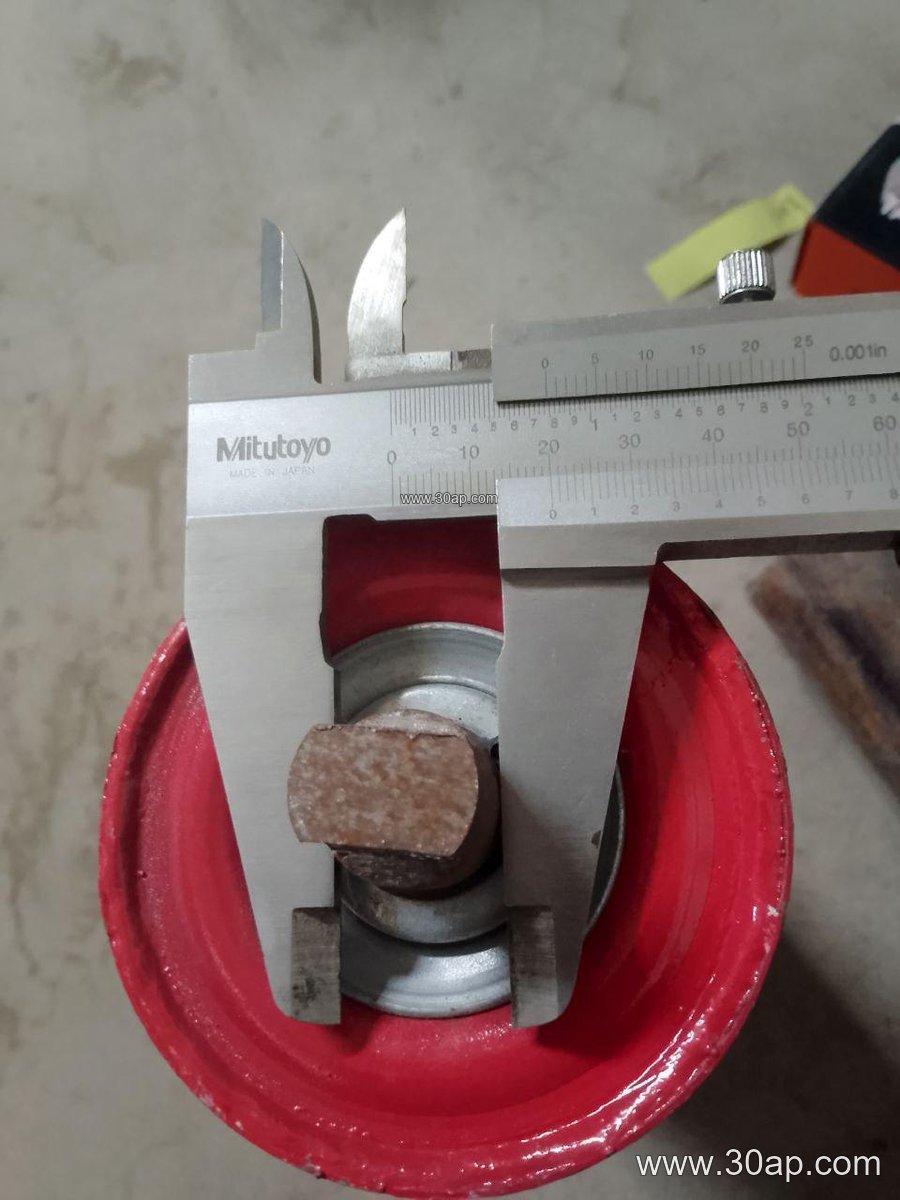
Dimensions are selected against belt width, belt speed, material density and the load per station. The values below are typical reference figures, not fixed pairings; final sizing is determined by the conveyor designer.
| Parameter | Common Options |
|---|---|
| Roller diameter | Ø63, Ø76, Ø89, Ø102, Ø108, Ø127, Ø133, Ø159, Ø178, Ø194, Ø219 mm |
| Belt width | B400, B500, B650, B800, B1000, B1200, B1400, B1600, B1800, B2000, B2200, B2400 |
| Trough angle | 20°, 30°, 35°, 45° |
| Roller surface | Steel tube, nylon, ceramic, rubber rings |
| Bearing | 6204, 6205, 6305, 6306, 6308, 6310 |
Roller length changes with belt width, trough angle and group type. For a three-roll trough set, common side-roller lengths run roughly 200 mm at B500, 250 mm at B650, 315 mm at B800, 380 mm at B1000, 465 mm at B1200, 530 mm at B1400, 600 mm at B1600, 670 mm at B1800 and 750 mm at B2000. Centre rollers and side rollers can differ, and these examples should not be read as a fixed belt-width-to-roller-length rule.
Where Trough Idlers Are Used
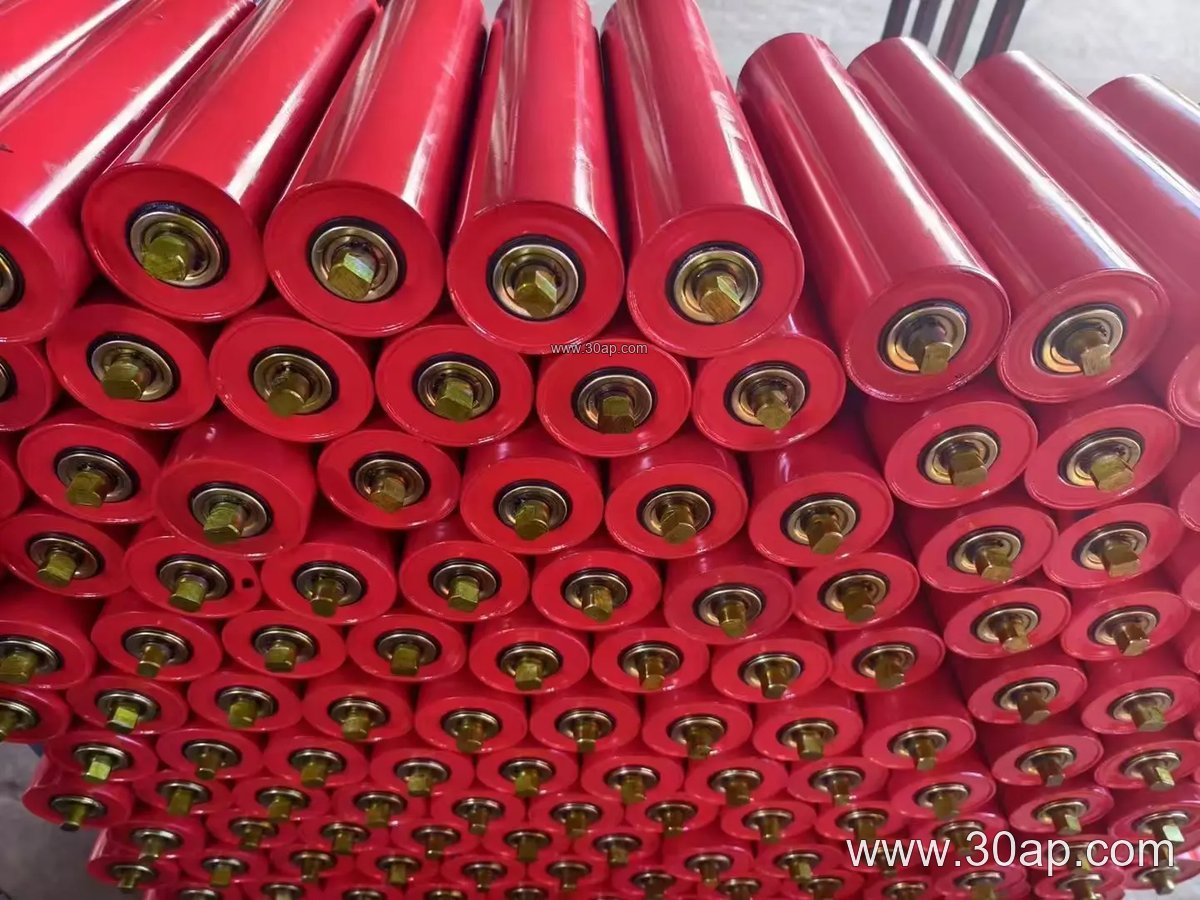
The carry side of almost every bulk belt conveyor relies on this component. In a limestone quarry, three-roll sets at 35° keep blasted rock on the belt through the crushing and screening circuit. In a coal-fired power station, troughing idlers on the coal handling conveyor must cope with fine dust and continuous operation, so sealed bearings and wear-resistant shells are usually specified.
Other typical locations include cement plants moving clinker and raw meal, iron and copper mines, sand and gravel lines, steel sinter plants and port terminals unloading bulk cargo. Transition idlers are placed near the head and tail to ease the belt from flat to troughed profile, and impact or rubber-ring buffer idlers are used under loading points where material falls onto the belt.
Selection and Maintenance Notes
- Match the trough angle to material behaviour: 20° and 30° suit free-flowing or light loads, while 35° and 45° help contain coarse, heavy material on wider belts.
- Check the load rating per station rather than choosing a roller diameter by habit; belt speed and material bulk density both raise the duty.
- For dusty or wet service, prioritise seal design and consider ceramic or nylon-covered shells where build-up and wear are problems.
- Inspect for seized rollers, worn shells and misalignment, since a single failed idler can damage the conveyor belt and increase power draw.
- Keep spare rollers and frames consistent with the installed group type so replacements fit the existing conveyor bracket without modification.
Buyers should confirm roller diameter, shell length, shaft ends, trough angle, bearing size and frame hole spacing before ordering, and ask for the drawing that matches the actual conveyor rather than relying on a generic catalogue line.