What a Trough Idler Bracket Does
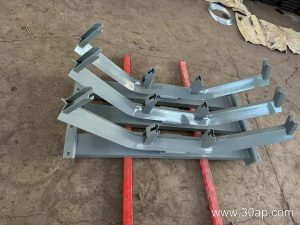
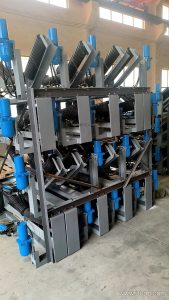
A trough idler bracket is the steel support that holds the inclined and center idler rollers in a troughing set, shaping a conveyor belt into a stable trough so bulk material stays on the line. In a quarry, a cement plant, or a power plant coal yard, the bracket carries the load path from the belt and idler roller down into the conveyor frame. It is a small component with a large effect on belt tracking, spillage, and roller life. Buyers often call it a conveyor bracket, but the troughing version is specific: it sets the trough angle and keeps the three-roller arrangement aligned along the carrying side.
How the Bracket Is Built
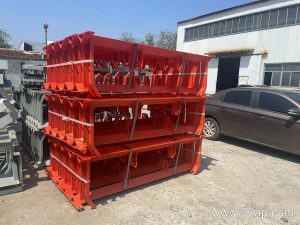
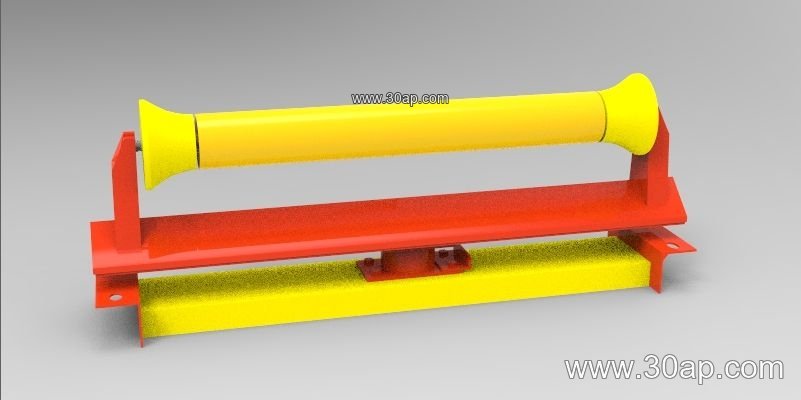
Most units are fabricated from angle steel, channel steel, or folded steel plate, then drilled or punched for mounting. The common forms include fixed trough brackets, adjustable brackets that can be set to different trough angles, transition brackets near the tail or head, and self-aligning or forward-tilted designs for tracking control. A typical bracket pair is supplied with slots or holes that accept the idler shaft ends, while the base bolts to the stringer or cross beam.
Build quality shows in details: consistent hole spacing, square bends, stiffened gussets, and a surface finish suited to the site. In wet or dusty service, galvanized or painted finishes are common. The bracket should match the idler roller shaft diameter and the frame hole pattern, so the roller sits without forcing or play.
Trough Angle and Size Coordination
Trough angle is a design choice, not a fixed rule. Common trough angles are 20, 30, 35, and 45 degrees. A 30-degree set is widely used for general bulk material, while 35 or 45 degrees helps contain a wider belt load in high-capacity lines. Adjustable brackets allow the same frame to be set between angles during commissioning.
The bracket must also coordinate with belt width and roller diameter. Reference combinations such as B800 with 35 degrees and Ø108, B1200 with 45 degrees and Ø133, or B650 with 30 degrees and Ø89 are common starting points, but the final match depends on the conveyor design, belt tension, and material. Installation hole spacing and cross beam length vary with belt width and trough angle, so they should be confirmed from the drawing rather than assumed.
Typical Reference Data
| Item | Common Reference Range |
|---|---|
| Belt width | B500, B650, B800, B1000, B1200, B1400, B1600, B1800, B2000 |
| Trough angle | 20°, 30°, 35°, 45°; adjustable versions cover these angles |
| Idler roller diameter | Ø89, Ø108, Ø133, Ø159, Ø194 |
| Material | Angle steel, channel steel, folded steel plate |
| Forward tilt (where used) | About 1.5° to 2° |
These values are reference data for selection discussion, not a universal specification or a supply promise.
Where Trough Brackets Are Used
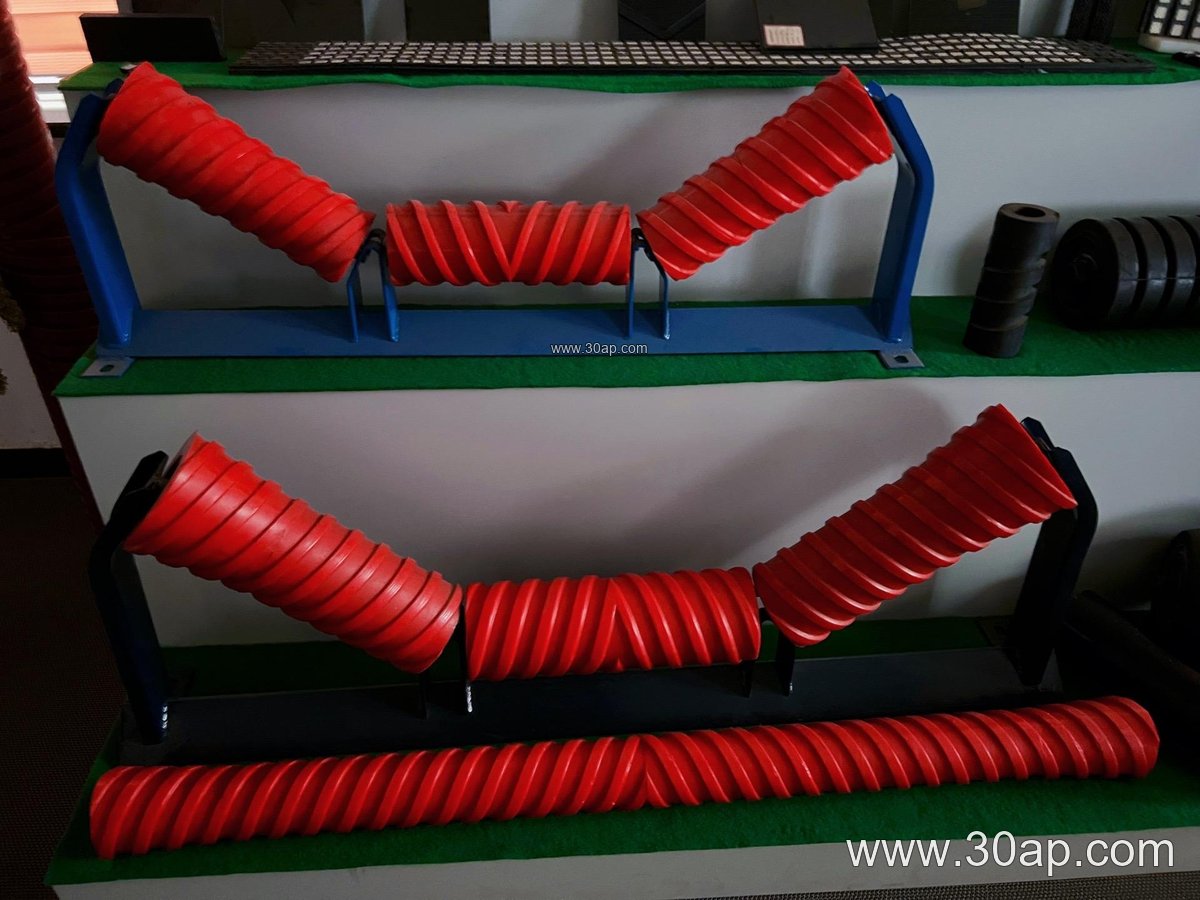
Trough idler brackets appear wherever a conveyor belt carries loose material: a limestone quarry feeding a crusher, a cement plant raw mill line, a power plant coal handling system, a sand and gravel plant, or a port loading conveyor. In a coal mining conveyor or an underground mining conveyor, flame retardant and anti-static belt grades are often specified, and the bracket must still align correctly with the idler roller and frame. The same bracket logic applies on a heavy-duty mining conveyor handling iron ore or copper ore, where impact and abrasion are high.
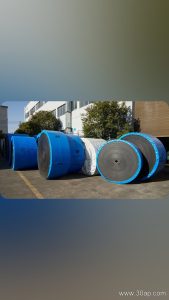
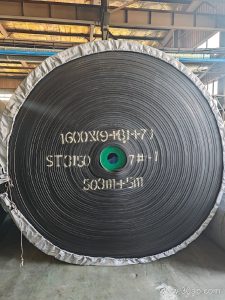
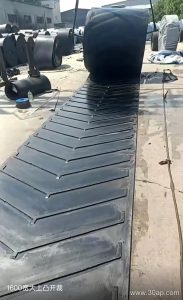
Bracket choice interacts with the belt: an abrasion resistant conveyor belt or a heat resistant conveyor belt may be used in the same line, and the troughing set should support the belt without pinching the edges. For steep or confined routes, a pipe conveyor belt or corrugated sidewall conveyor belt uses different support hardware, so the trough bracket is not a substitute for those designs.
Buyer Checklist
- Confirm belt width, trough angle, and idler roller diameter as a set, then verify hole spacing against the frame drawing.
- Decide between fixed and adjustable brackets based on whether the trough angle may need tuning on site.
- Check material and finish against the environment: dusty quarry, wet wash plant, or hot material service.
- Match the bracket to the idler type, including transition or self-aligning positions where tracking is difficult.
- Ask for dimensional drawings rather than relying on a single catalog number.
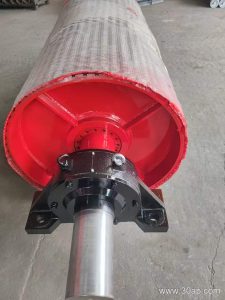
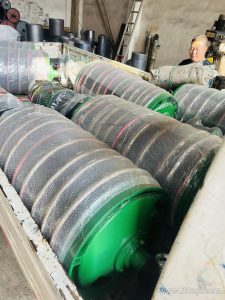
For a reliable troughing set, treat the trough idler bracket as part of a system with the conveyor belt, idler roller, and conveyor pulley. A bracket that fits the frame and roller properly keeps the belt seated, reduces spillage, and supports longer service in demanding bulk handling work.