What a Self-Powered Hydraulic Belt Tracker Does
A Self-Powered Hydraulic Belt Tracker is a belt alignment device that senses a drifting conveyor belt and corrects it using hydraulic force generated by the belt itself. Instead of relying on an external power supply, motor, or PLC cabinet, the unit converts the motion of the running belt into hydraulic pressure, which then actuates a steering action on a conveyor pulley or a set of training rollers. This makes it a practical option in remote sections of a plant where routing power and signal cables is difficult or expensive.
The device is often called a hydraulic self-energized belt tracking system or a self-contained hydraulic belt alignment unit. These are equivalent names for the same product. It should not be confused with a drive pulley, tail pulley, or bend pulley, which perform different mechanical roles on the conveyor.
How the Unit Is Built
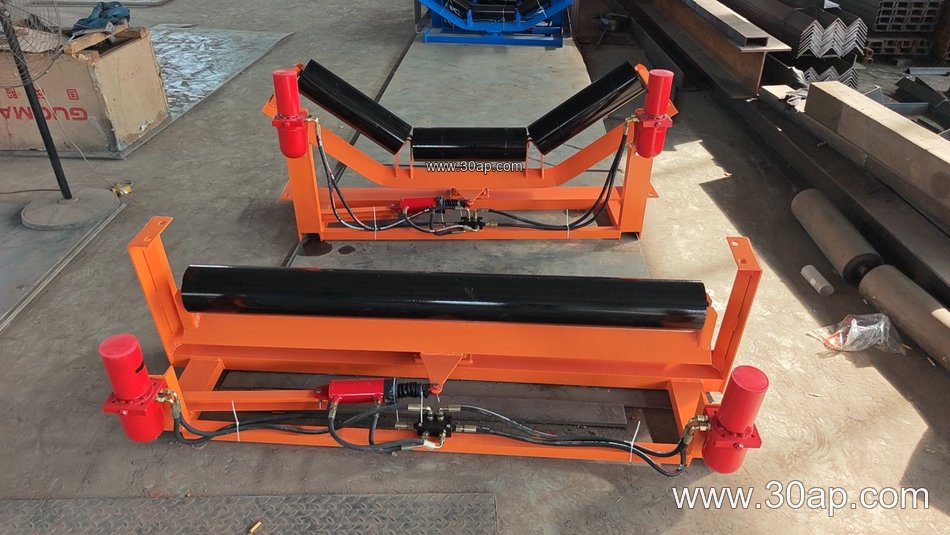
A typical assembly combines a sensing roller or edge probe, a small hydraulic pump driven by belt contact, a control valve block, and one or two hydraulic actuators linked to a steering frame. When the belt edge moves away from its correct path, the sensor displaces the valve, and the pump delivers oil to the actuator. The actuator then pivots the tracking roller or pulley slightly, guiding the belt back toward the center line.
- Sensing element: edge roller, probe arm, or contact roller
- Power source: belt-driven hydraulic pump or integrated generator-pump set
- Control: directional valve, relief valve, and manual adjustment
- Actuation: hydraulic cylinder or rotary actuator on a steering frame
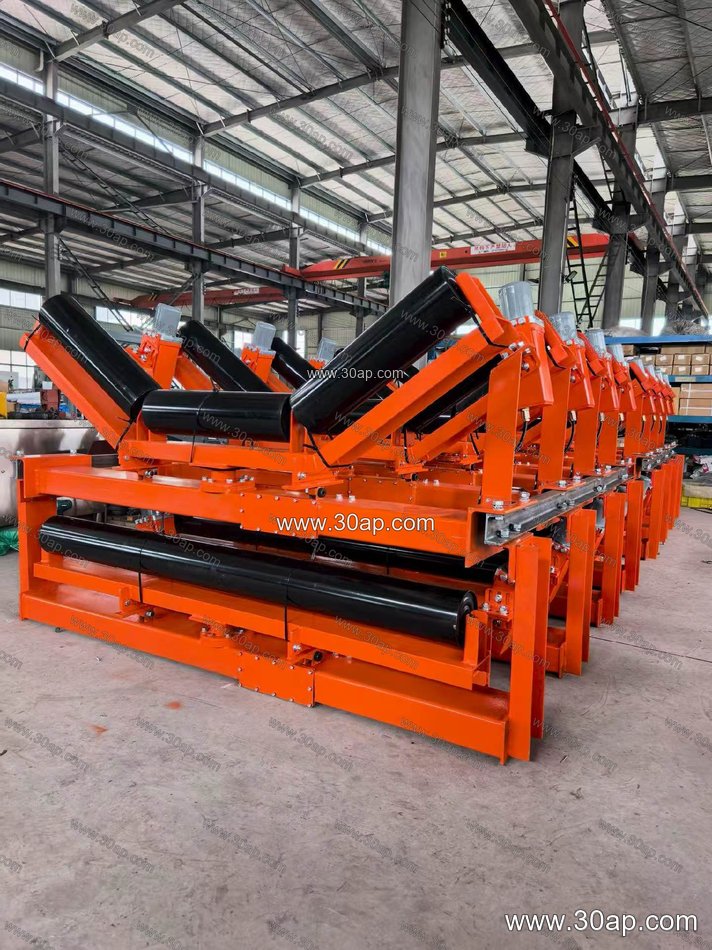
- Mounting: welded or bolted frame matched to the conveyor bracket and stringer
Because the system is self-contained, there is no need for an electrical feed in the tunnel, transfer tower, or stockyard gallery. The hydraulic circuit also provides smooth, damped movement, which helps avoid abrupt corrections on high-tension belts.
Where It Fits in Bulk Handling
These trackers are commonly considered for mining conveyors, coal handling systems, cement plant clinker and raw meal lines, power plant coal yards, quarry and aggregate belts, and port stockyard conveyors. In these environments, a misaligned belt can rub against the frame, damage the edge, spill material, and shorten the life of the idler roller and conveyor pulley. A self-powered hydraulic tracker can be mounted on the carrying side or the return side, depending on the layout and the nature of the drift.
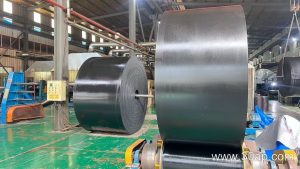
The choice of belt construction matters. A heavy-duty mining conveyor belt, a steel cord conveyor belt, or an abrasion resistant conveyor belt may call for different tracking force and roller contact pressure. On long overland routes, a fabric core conveyor belt such as an EP conveyor belt or NN conveyor belt may respond differently from a stiff steel cord belt. Buyers should match the tracker to the belt type and the actual misalignment pattern rather than assuming one unit suits every line.
Selection Details Buyers Should Confirm
Before ordering, gather the belt width, belt speed, running direction, trough angle, and whether the conveyor is reversible. Check the frame dimensions and the available space around the conveyor bracket. The table below shows typical reference points that help organize a request; these are examples, not a universal compatibility list.
| Item | Reference example | Why it matters |
|---|---|---|
| Belt width | 800 mm, 1000 mm, 1200 mm, 1400 mm | Affects frame span and sensor reach |
| Belt type | EP conveyor belt, steel cord conveyor belt, flame retardant conveyor belt | Influences contact pressure and edge sensitivity |
| Mounting position | Carrying side or return side | Determines bracket and actuator layout |
| Running direction | Single direction or reversible | Affects valve and sensor arrangement |
Do not assume that a given belt width automatically fixes the pulley diameter or shaft size. Those values come from the conveyor design, the pulley load, and the frame drawing. A 1200 mm wide conveyor belt and a 1200 mm wide EP conveyor belt may share a width but still need different tracking settings.
Installation and Maintenance Notes
Install the tracker square to the belt center line and follow the manufacturer’s alignment procedure. Before any adjustment, stop the conveyor, isolate the energy source, and lock out the drive. Do not touch moving belts, rollers, or actuators. During routine checks, look for hydraulic leaks, loose mounting bolts, worn sensor rollers, and oil contamination. Keep the area around the conveyor pulley and idler roller free of build-up, because frozen or packed material can imitate a tracking fault.
A Self-Powered Hydraulic Belt Tracker is not a substitute for correct conveyor design. It cannot compensate for a badly skewed frame, an off-center loading point, or a damaged belt splice. It works best as part of a maintained system that includes proper training idlers, good pulley alignment, and regular inspection. For plants handling abrasive or hot materials, confirm that the hydraulic components and seals suit the local dust, temperature, and duty cycle.