What a Bend Pulley Assembly Does
A bend pulley assembly is a directional change point in a conveyor system. It guides the conveyor belt around a curve, typically to route the belt back toward the tail or to increase wrap angle on a drive pulley. Unlike the drive pulley that transmits power or the tail pulley that returns the belt, the bend pulley assembly is a non-drive component focused on belt path control. In a limestone quarry or a coal washing plant, it helps maintain belt tension and alignment without adding drive force.
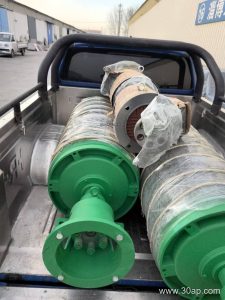
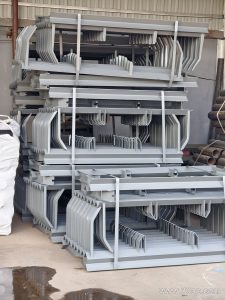
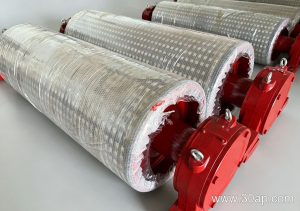
The assembly includes the pulley shell, shaft, bearings, bearing housings, and often a lagging surface. Some designs add a conveyor bracket for mounting. The pulley rotates freely on its bearings as the belt passes over it. Properly sized, it reduces belt stress and prevents mistracking.
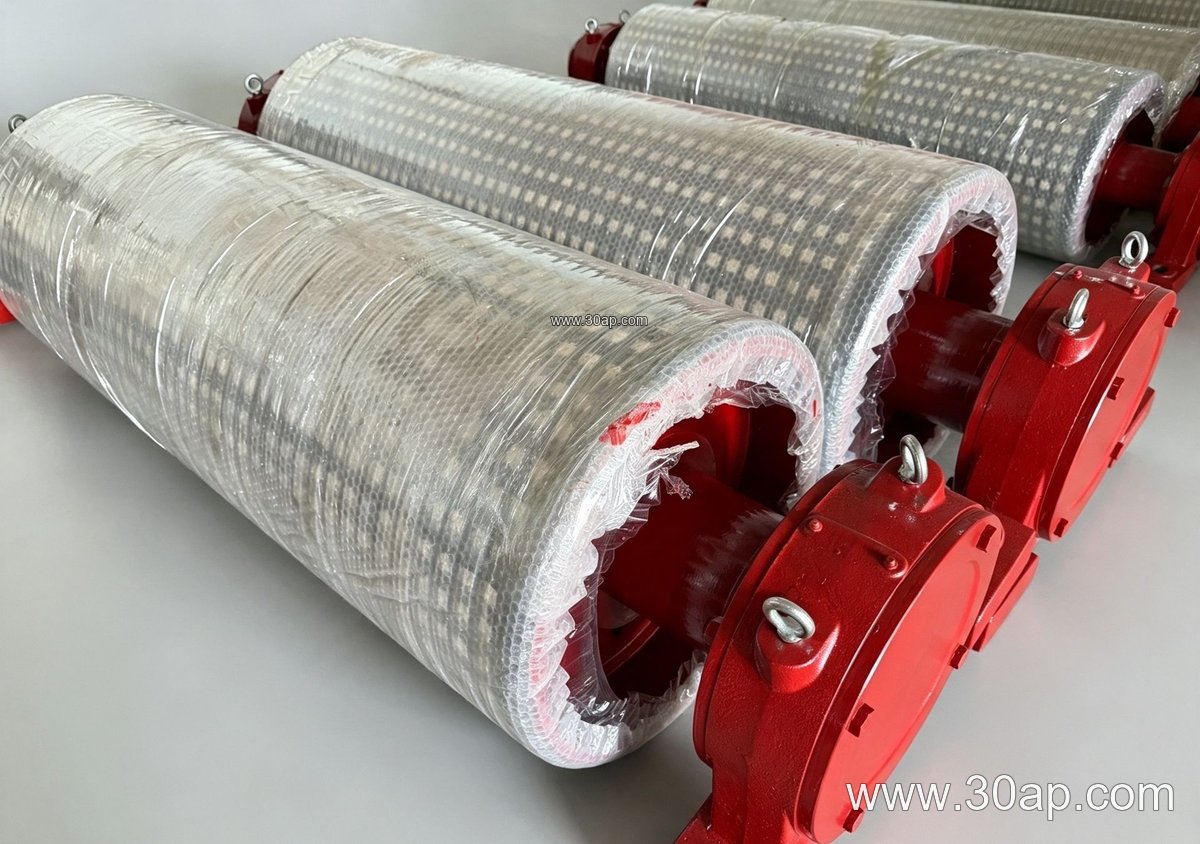
Construction and Surface Options
Bend pulley assemblies are built around a cylindrical shell, usually with a diameter from Ø200 to Ø800 mm for standard applications, and larger sizes like Ø1000 or Ø1250 mm for high-tension systems. Shell width normally exceeds belt width by about 100–200 mm; for example, a B800 belt often uses a 950 mm face width, while a B1200 belt may use a 1400 mm face. These are common references, not fixed rules.
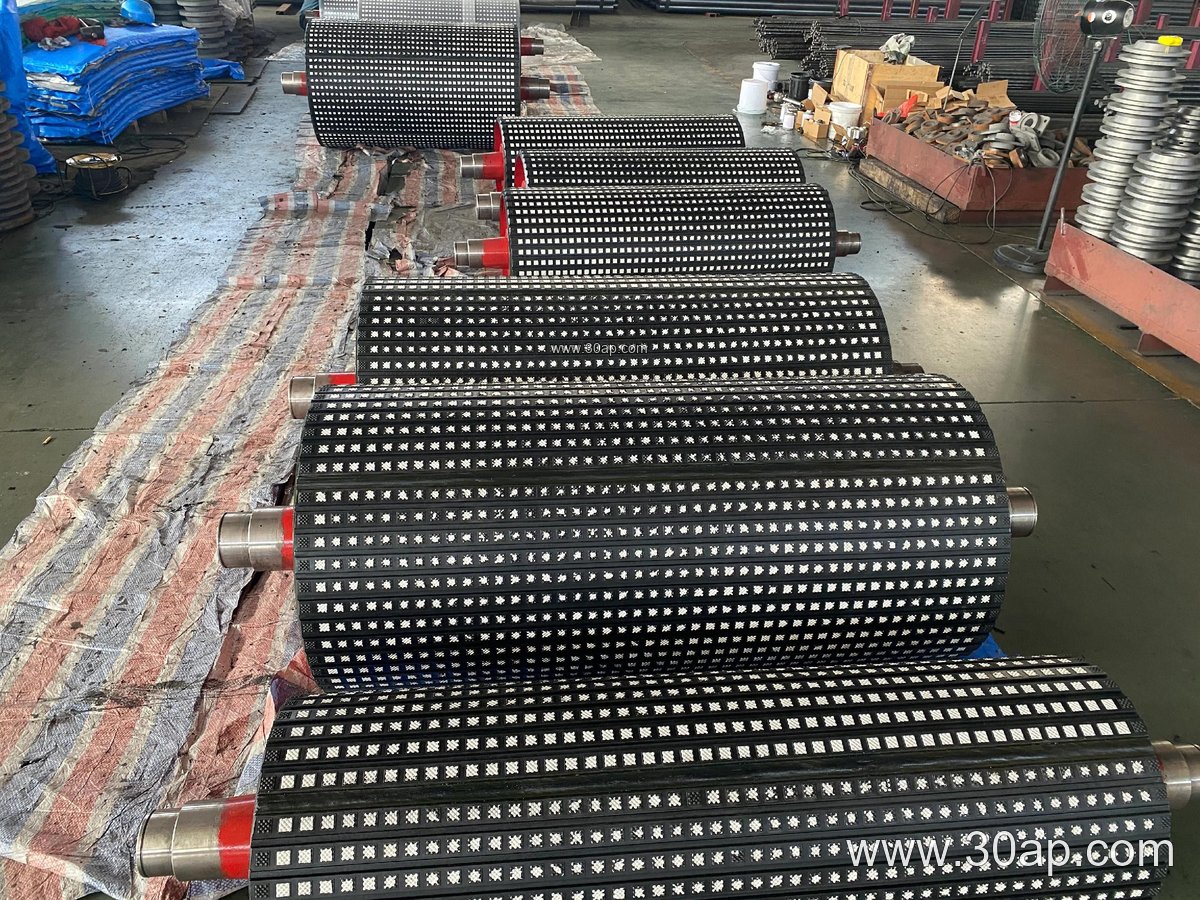
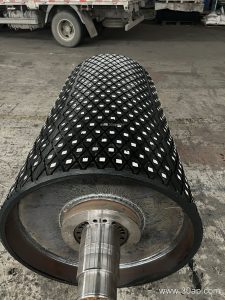
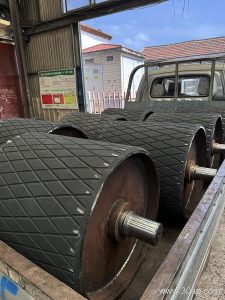
Surface options include plain steel, rubber lagging applied by cold bonding or hot vulcanizing, and patterned lagging such as diamond or herringbone. Lagging thickness commonly ranges from 8 to 20 mm. In dusty or wet conditions, diamond lagging improves traction and sheds material. For abrasive service, ceramic lagging may be considered, but it is not mandatory. The shaft diameter is determined by torque and load—typical values include Ø80, Ø100, Ø120, and Ø140 mm—and should not be selected from belt width alone.
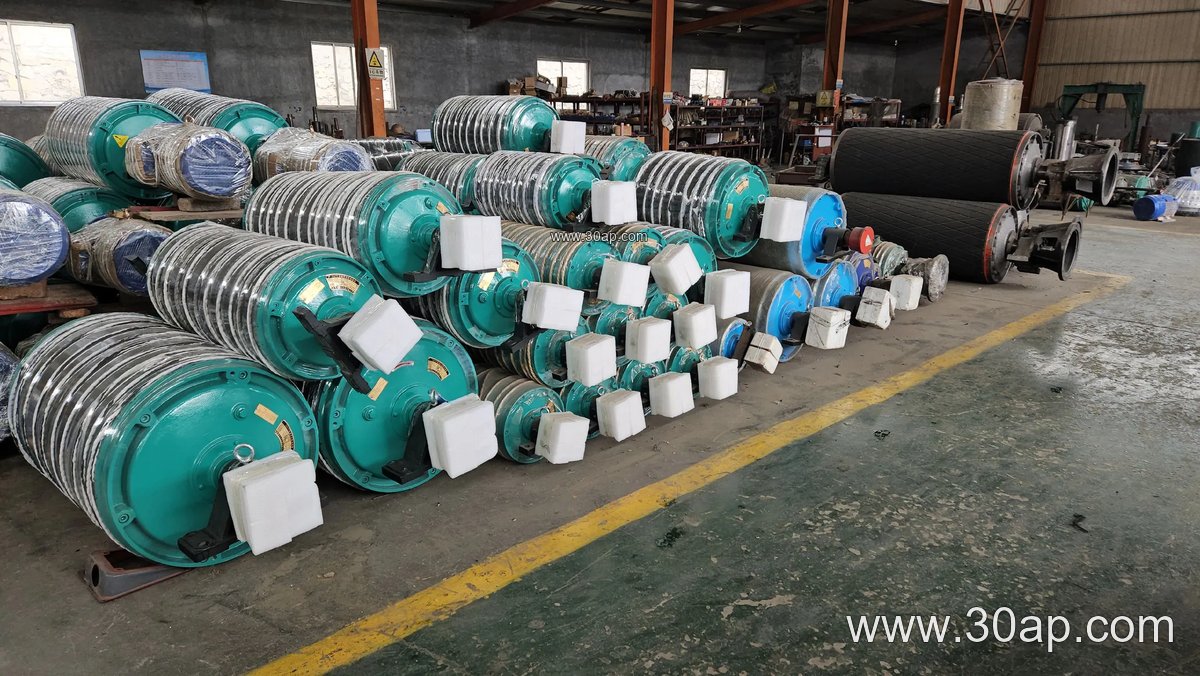
Where It Fits in the Conveyor
You will find bend pulley assemblies in power plant coal handling, cement kiln feed lines, and iron ore stockyards. They are often placed after the drive pulley to increase belt wrap angle, or near the take-up to redirect the belt before tensioning. In a tunnel boring operation, a bend pulley assembly may guide the belt around a curve to fit limited space. It is not a substitute for a drive pulley or a tail pulley; each has a distinct role in the conveyor layout.
When paired with a fabric core conveyor belt or a steel cord conveyor belt, the bend pulley must match the belt’s stiffness and tension requirements. A heavy-duty mining conveyor belt may need a larger diameter pulley to reduce bending stress. In contrast, a lightweight EP conveyor belt on a short aggregate line can use a smaller pulley. Always check the belt manufacturer’s minimum pulley diameter recommendation.
Buyer Checklist
- Confirm belt width (e.g., B650, B1000, B1400) and required face width.
- Specify pulley diameter based on belt tension and space—common sizes include Ø315, Ø400, Ø500, Ø630 mm.
- Choose lagging type and thickness: plain, diamond, or herringbone; 8–12 mm for general use, up to 20 mm for high abrasion.
- Provide shaft diameter and bearing type; do not assume a fixed shaft size from belt width.
- State mounting arrangement—whether a conveyor bracket is needed and its orientation.
- Consider environmental factors: heat, oil, flame resistance, or cold conditions may affect lagging and bearing selection.
For coal mining conveyor belt systems, flame retardant and anti-static properties are often required for the belt itself; the bend pulley assembly should be compatible with the belt’s tracking and tension. In a sand and gravel plant, abrasive dust may call for sealed bearings and wear-resistant lagging. A bend pulley assembly is a small but critical part of the material handling chain, and selecting it with the belt and load in mind pays off in uptime.