What a Trough Idler Bracket Does
A trough idler bracket, also called a troughing idler support bracket, holds the three-roll troughing set that shapes a conveyor belt into a trough. It keeps the idler rollers at the correct angle and spacing so the belt carries material without spilling. In a quarry, cement plant, or coal handling system, this bracket is the link between the conveyor frame and the idler roller that actually touches the belt.
The bracket is not a pulley. Drive pulleys, tail pulleys, and bend pulleys transmit power or change belt direction; they are different components. The trough idler bracket only supports the carrying side. Its job is to keep the trough idler rollers in line, resist the load from the belt and material, and allow simple replacement when a roller wears out.
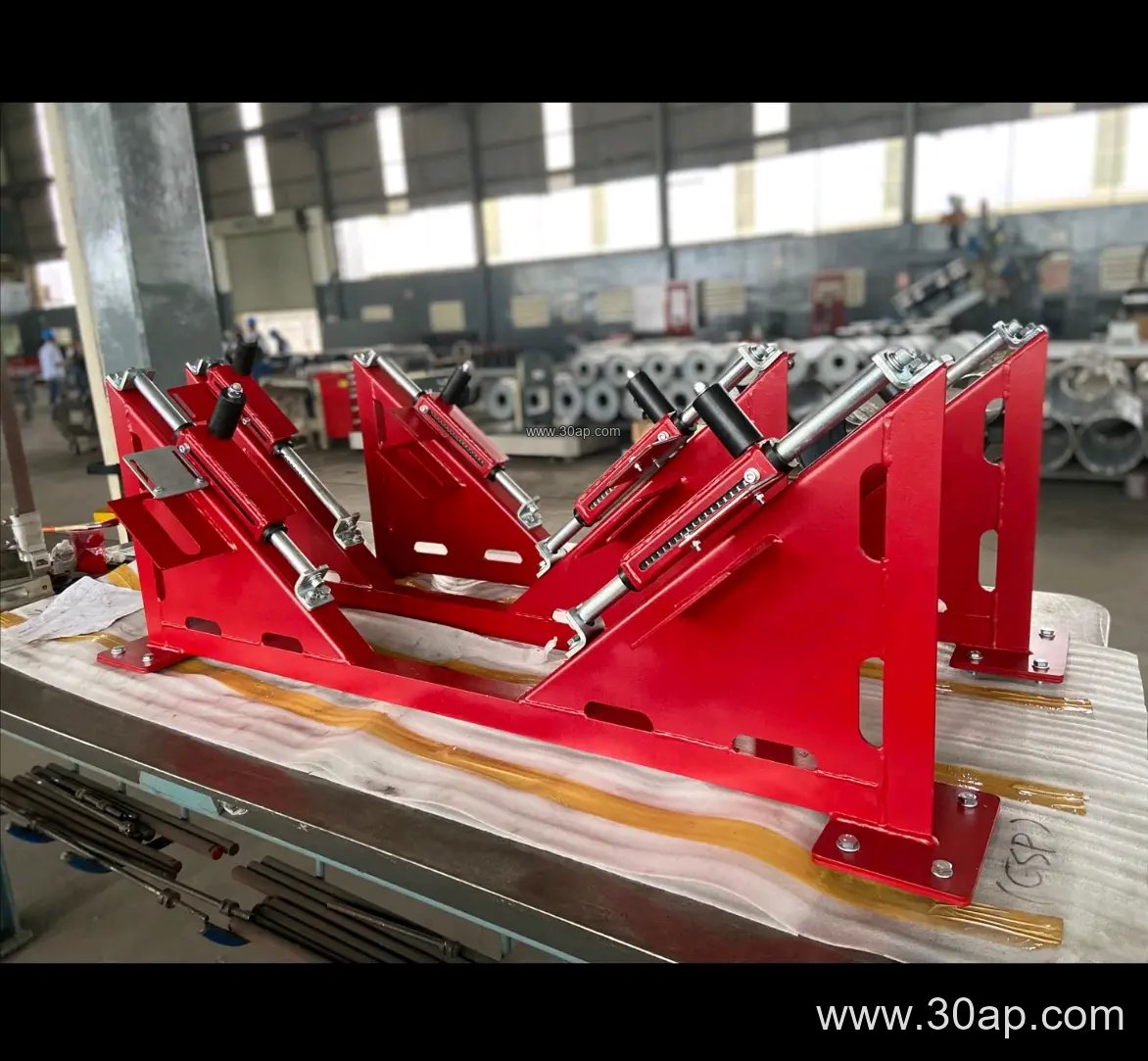
How It Is Built
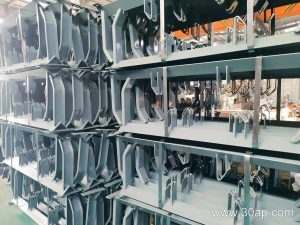
Most brackets are made from angle steel, channel steel, or folded steel plate. The fabrication depends on the belt width and the load. A typical bracket has a crossbeam, two side arms, and mounting slots or holes for the idler shafts. The trough angle is fixed at the factory for a standard bracket, or adjustable on a variable-angle design.
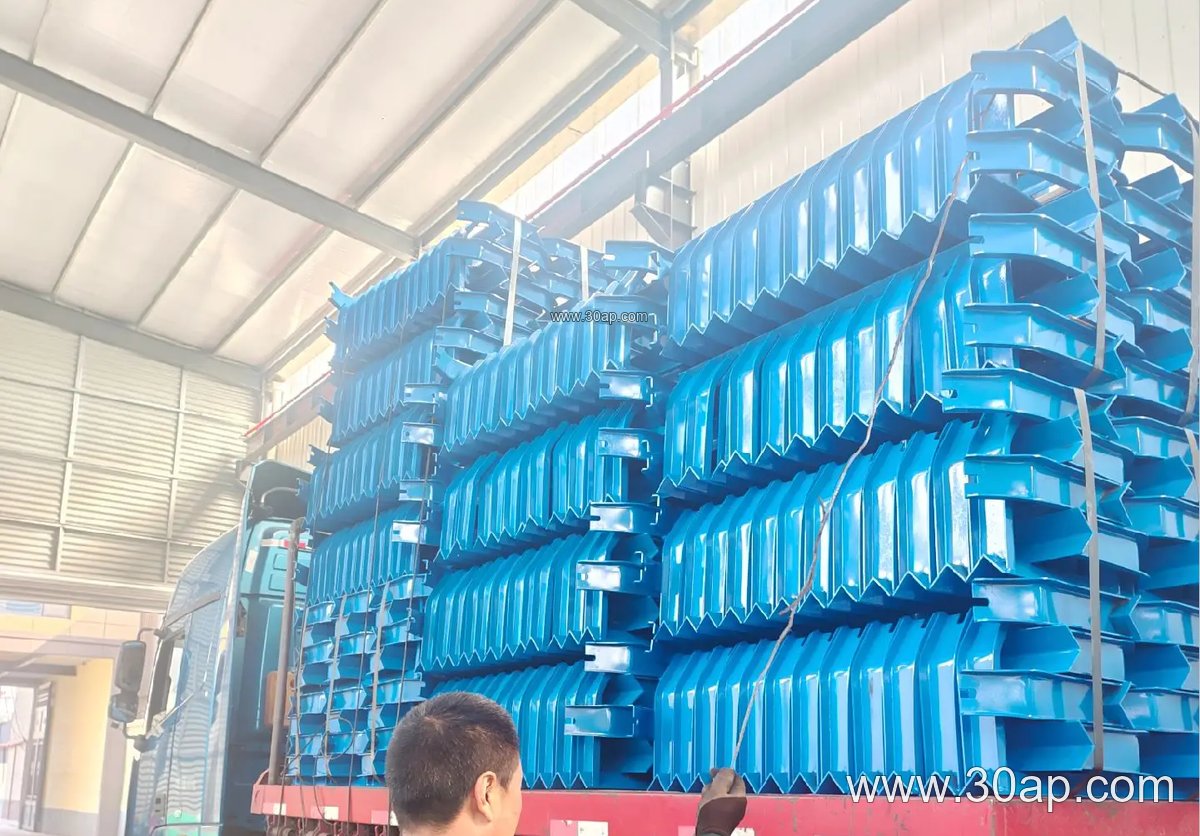
Common trough angles are 20, 30, 35, and 45 degrees. A 35-degree bracket is widely used in aggregate and cement service, while a 45-degree trough may suit higher capacity or material that tends to spill. The bracket must match the idler roller diameter and the belt width; it is not a one-size-fits-all part.
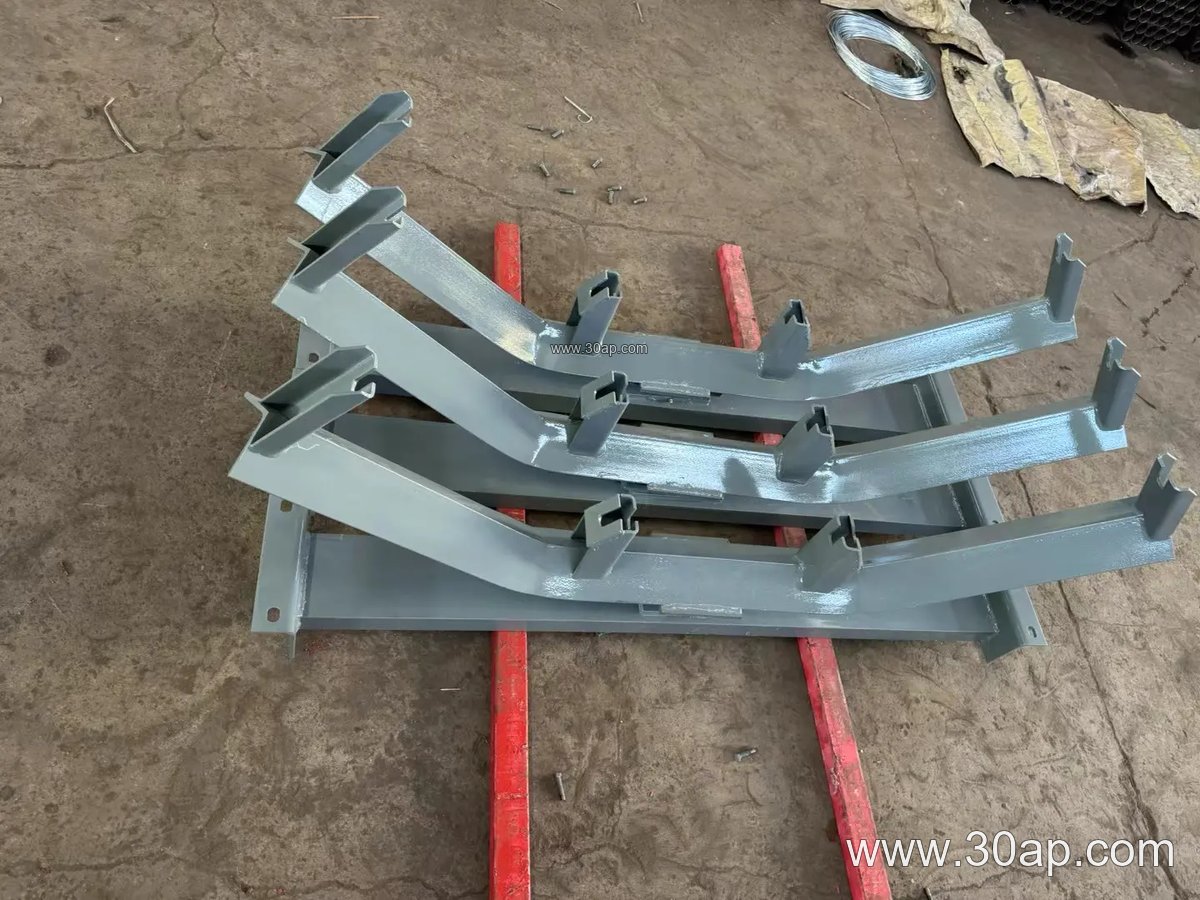
Where It Fits in the Conveyor
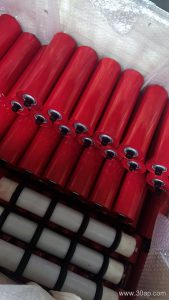
The trough idler bracket sits on the carrying side of the conveyor frame. It is bolted to the longitudinal beams, and the troughing idlers drop into the bracket seats. On a typical 800 mm belt conveyor in a sand and gravel line, a B800, 35-degree bracket may carry three Ø108 idlers. A larger B1200 conveyor at a power plant coal yard might use a 45-degree bracket with Ø133 rollers. These are common combinations, not mandatory pairings; the final choice depends on belt speed, material density, and loading conditions.
On the return side, a different bracket style is used, such as a V-return bracket or a flat return bracket. Those are separate support types and should not be confused with the trough idler bracket. A transition bracket near the pulley may also appear, but it serves a different position and function.
Common Sizes and Reference Data
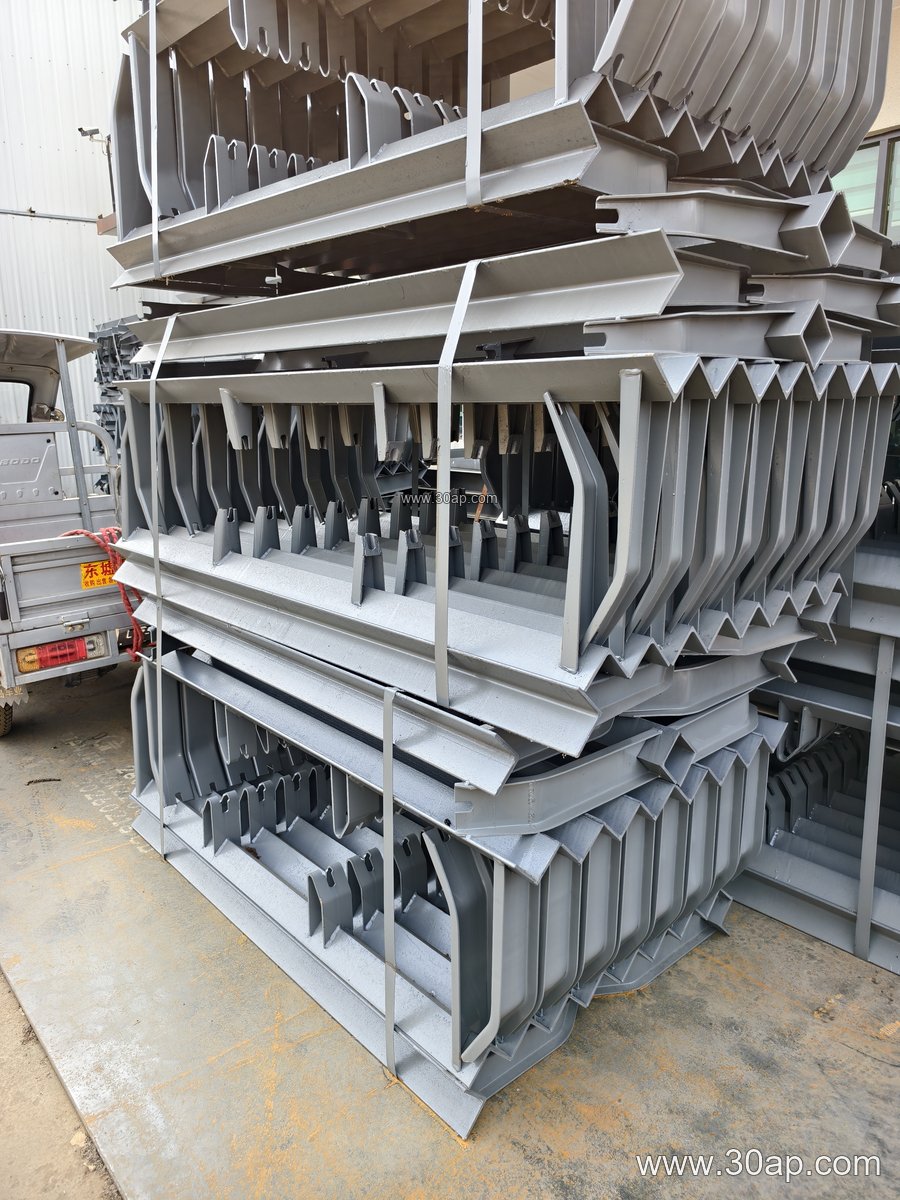
Belt width and idler diameter are the first things to confirm when selecting a bracket. The table below shows common reference values, not a fixed catalog promise.
| Belt Width | Common Trough Angle | Common Idler Diameter |
|---|---|---|
| B500 | 20-30 degrees | Ø89 |
| B650 | 30 degrees | Ø89-Ø108 |
| B800 | 35 degrees | Ø108 |
| B1000 | 35-45 degrees | Ø108-Ø133 |
| B1200 | 45 degrees | Ø133 |
| B1400 | 45 degrees | Ø133-Ø159 |
| B1600 | 45 degrees | Ø159 |
| B1800-B2200 | 45 degrees | Ø159-Ø194 |
Mounting hole spacing and crossbeam length change with belt width and trough angle. Do not assume a fixed shaft diameter from belt width alone. The bracket drawing should always be checked against the idler roller drawing.
Buyer Checklist
- Confirm the conveyor belt width and the required trough angle.
- Match the bracket seat to the idler roller shaft and diameter.
- Check the mounting hole pattern against the conveyor frame.
- Decide between a fixed bracket and an adjustable bracket if the trough angle may need fine-tuning.
- For dusty or high-load service, verify the steel thickness and finish with the supplier.
An adjustable trough idler bracket can be set between common angles, which helps when material characteristics change. A fixed bracket is simpler and often preferred where the trough angle is already settled. In either case, the bracket should be inspected for wear at the idler seats and for loose bolts during routine maintenance.