What a Mining Ceramic Lagged Pulley Does
A mining ceramic lagged pulley is a conveyor pulley whose shell is covered with embedded ceramic tiles, usually set in a rubber or polymer backing. It is most often used as the drive pulley at the head of a bulk handling conveyor, where the belt must transmit high torque without slipping. The ceramic studs bite into the belt cover and push water, fine dust and mud out of the contact zone, so traction stays more consistent in wet or gritty conditions than with a plain rubber lagging.
In a quarry, limestone mine or ore concentrator, this pulley works together with the conveyor belt and the conveyor pulley set to keep a heavy load moving. It is not a tail pulley or a bend pulley by definition. Those positions have different duties, and a ceramic lagged drive pulley is specified for the head drive where grip and wear life matter most.
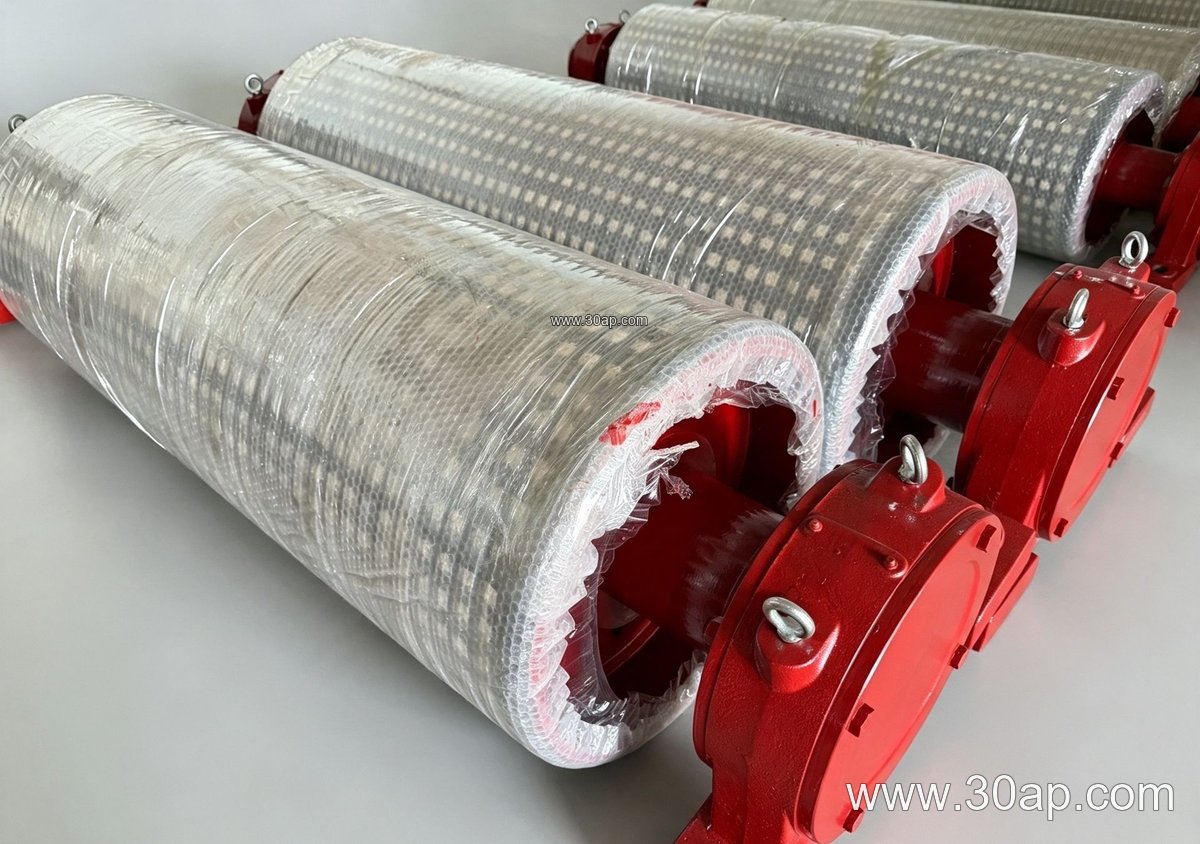
How the Ceramic Lagging Is Built
The pulley shell is machined, then the lagging is applied and vulcanized or bonded in place. Ceramic tiles, often alumina, are set in a pattern with small raised studs and recessed channels. The channels allow water and slurry to escape as the belt wraps the pulley. Tile thickness, stud height and the hardness of the backing all affect grip and service life. Common lagging thicknesses are 8, 10, 12, 15 and 20 mm, selected according to belt tension and the abrasiveness of the material.
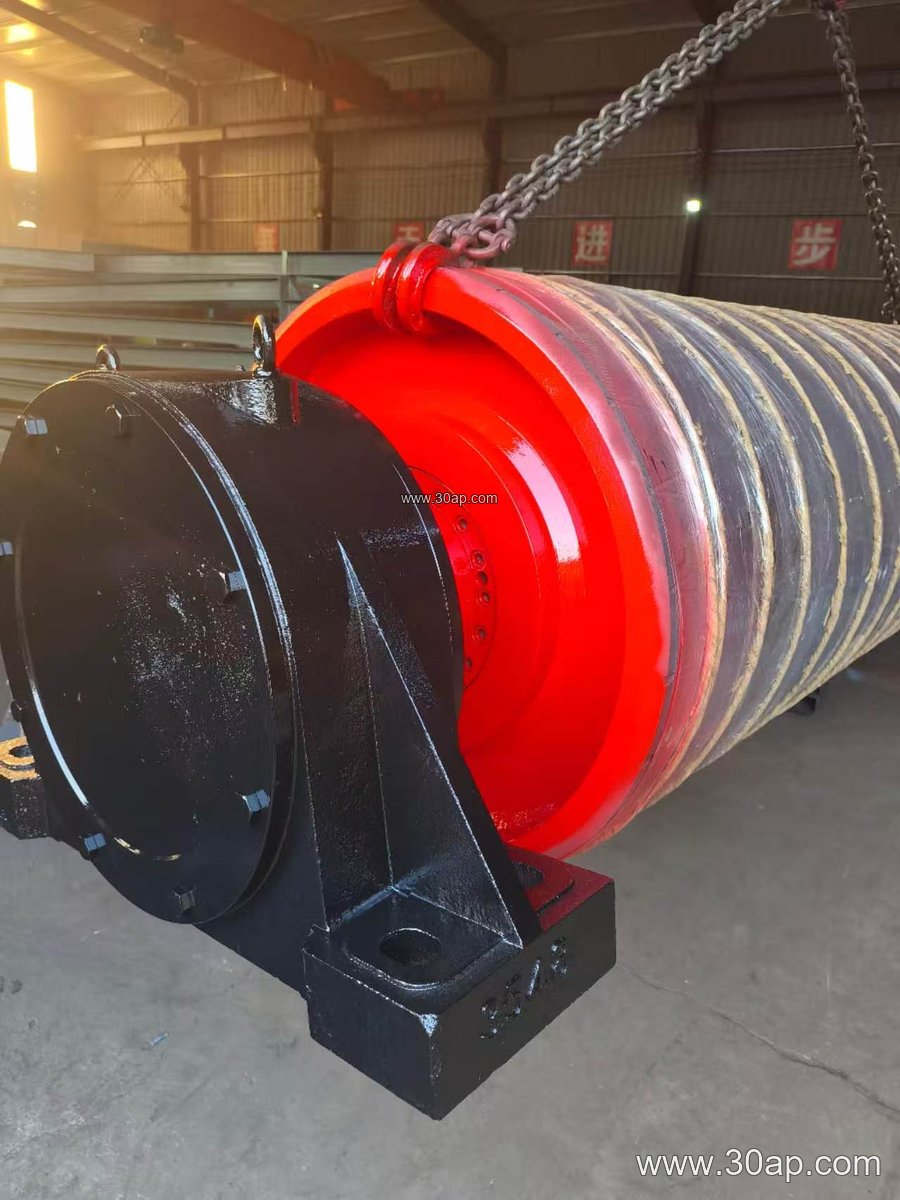
- Shell and end discs welded and machined for balance
- Ceramic tiles embedded in a rubber or polymer matrix
- Shaft sized by torque and radial load, not by belt width alone
- Bearing housings and locking assemblies matched to the conveyor bracket
Where It Fits in the Plant
You will see this drive pulley on overland conveyors, plant feed belts and transfer belts in a coal washing plant, a cement plant clinker line, a power station coal yard, or a sand and aggregate crushing circuit. Wet, dusty and abrasive duty is exactly where ceramic lagging earns its place. On a long overland run carrying iron ore or copper ore, the head drive may use a ceramic lagged pulley while a bend pulley upstream stays plain or rubber lagged.
Belt selection matters too. A heavy-duty mining conveyor belt with a strong fabric core or steel cord construction can handle the tension that a high-traction drive requires. Where oil or heat is present, an oil resistant conveyor belt or heat resistant conveyor belt may be needed, and the lagging choice should be checked against the belt cover grade.
Sizes and Common Combinations
Pulley diameter and face width follow the belt width, the wrap angle and the required torque. These are reference values only; final sizes are confirmed by design.
| Belt width | Typical pulley face width | Example diameter range |
|---|---|---|
| B500 | about 600 mm | Ø250 to Ø400 |
| B650 | about 750 mm | Ø315 to Ø500 |
| B800 | about 950 mm | Ø400 to Ø630 |
| B1000 | about 1150 mm | Ø500 to Ø800 |
| B1200 | about 1400 mm | Ø630 to Ø1000 |
| B1400 | about 1600 mm | Ø800 to Ø1250 |
| B1600 | about 1800 mm | Ø1000 to Ø1400 |
Combinations such as B800 × Ø500 or B1200 × Ø1000 are common in practice, but no single belt width locks you to one diameter. Shaft diameters are usually in the range of Ø80 to Ø200 mm and are set by torque and load calculation. A B1000 belt may run with a Ø120 shaft on one conveyor and a larger shaft on another.
Buyer Checklist
- Confirm the pulley position: head drive, tandem drive or another duty
- State belt width, belt type and maximum operating tension
- Specify lagging thickness and ceramic pattern for the material handled
- Check shaft size, bearing type and conveyor bracket interface
- Ask how tiles are bonded and whether replacement tiles are available
- Plan inspection intervals for tile wear, cracking and backing debonding
For a plant handling abrasive rock, a ceramic lagged drive pulley often outlasts plain rubber lagging, but it should be matched to the belt and the conveyor pulley layout rather than chosen on size alone. Good alignment, correct belt tension and clean idler roller rotation all help the lagging reach its expected life.