What the Conveyor Tail Pulley Does
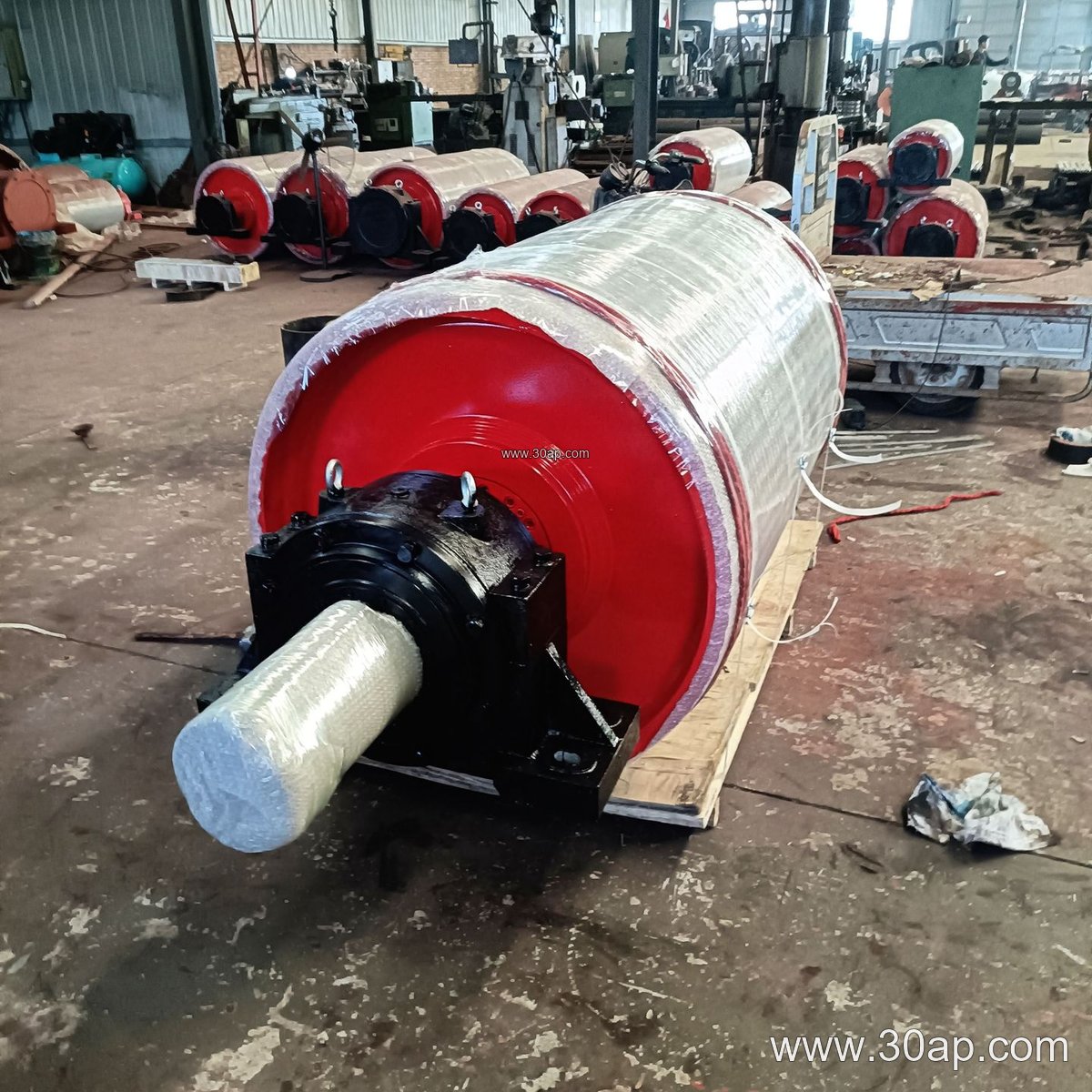
The conveyor tail pulley is the return-end drum that closes the belt loop and sets the belt path before the material-carrying run begins. On a typical conveyor it turns idle, driven only by belt friction, and it often carries a tensioning function as well. In a coal preparation plant or a limestone quarry, the tail pulley is where fines and moisture tend to collect, so its design and surface treatment matter as much as its diameter.
It is important to keep the name precise. A drive pulley transmits motor torque, a bend pulley changes belt direction in the middle of a circuit, and a tail pulley sits at the far end. These are separate components and are not interchangeable, even when they look alike. The tail pulley may also be supplied as a tension pulley when the take-up is located at the rear of the conveyor.
Construction and Surface Options
Most tail pulleys use a welded steel shell with end discs, a through shaft, and bearing housings mounted on a sturdy frame. Shaft ends are usually keyed for coupling to a take-up carriage or bearing blocks. The shell may be plain or covered with rubber lagging to improve grip and protect the belt from slip and abrasion.
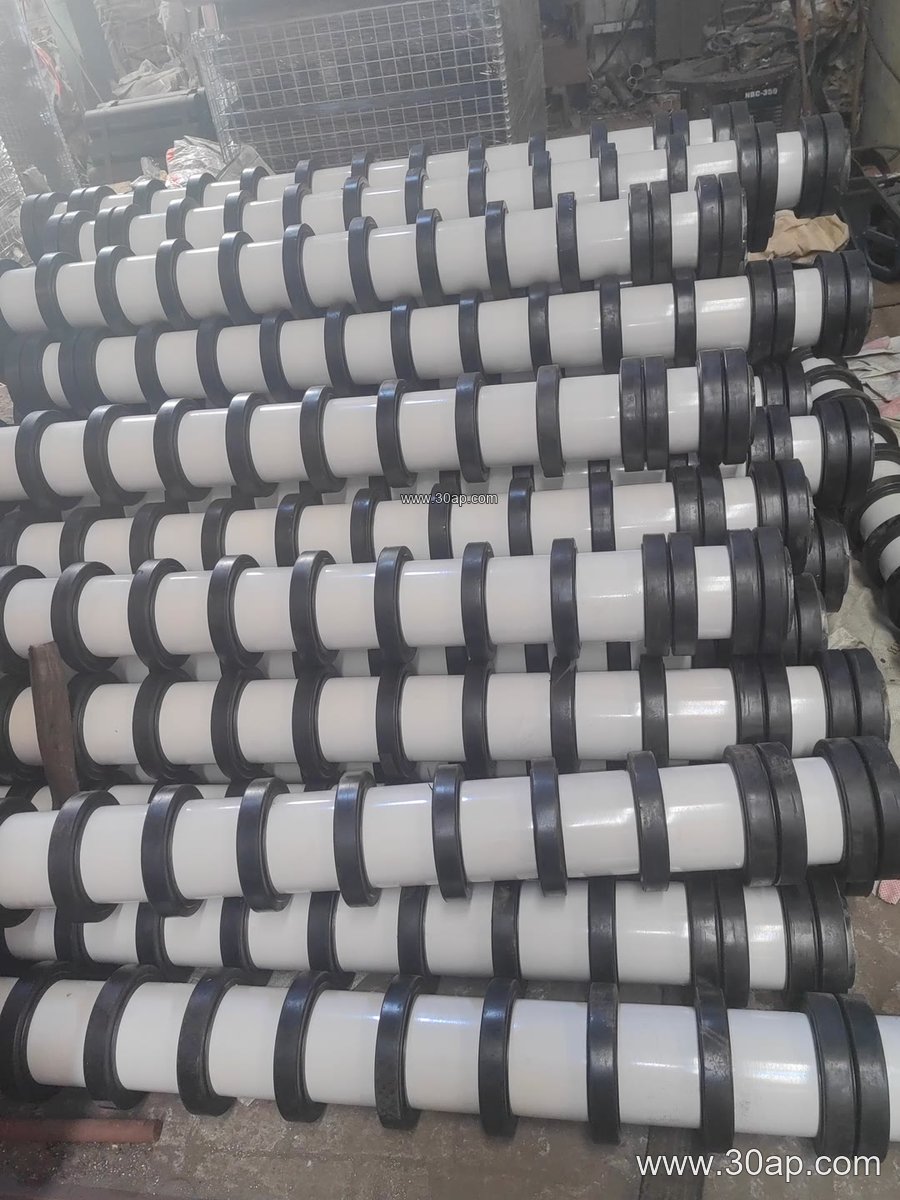
Lagging choices have a direct effect on service life. Plain, cast rubber, cold-bonded rubber, hot-vulcanized rubber, diamond grooved, herringbone grooved, and ceramic lagging are common surface forms, with lagging thickness typically in the 8 to 20 mm range. A diamond pattern helps shed water and fines, while ceramic tiles suit highly abrasive ore and aggregate duty. For a conveyor moving an abrasion resistant conveyor belt in a stone crushing line, a rubber-lagged tail drum is often a practical baseline.
Sizing the Tail Pulley
Diameter, face width, and shaft size are selected together, not from a single rule. Face width is normally wider than the belt, so a B800 conveyor usually takes a shell around 950 mm wide, and a B1200 unit around 1400 mm. Typical diameter references include Ø200, Ø250, Ø315, Ø400, Ø500, Ø630, Ø800, Ø1000, and larger sizes for heavy-duty circuits. Shaft diameters such as Ø80, Ø100, Ø120, or Ø140 are determined by torque and bearing load, not by belt width alone.
| Belt width | Approx. face width | Common diameter reference | Typical application context |
|---|---|---|---|
| B500 | 600 mm | Ø250 – Ø400 | Small aggregate lines, screening plants |
| B650 | 750 mm | Ø315 – Ø500 | Sand and gravel, cement additives |
| B800 | 950 mm | Ø400 – Ø630 | Quarry and crushing circuits |
| B1000 | 1150 mm | Ø500 – Ø800 | Coal washing, power plant coal handling |
| B1200 | 1400 mm | Ø630 – Ø1000 | Iron ore, large bulk terminals |
| B1400 | 1600 mm | Ø800 – Ø1000 | Heavy mining and port conveyors |
These figures are reference ranges, not fixed pairings. A B1200 × Ø1000 tail pulley and a B800 × Ø500 unit can both be correct in different layouts. Final selection should follow the belt tension calculation, take-up travel, and the load carried by the pulley shaft.
Where It Is Used
Tail pulleys appear across bulk handling. In a cement plant they sit at the discharge end of clinker and raw meal conveyors. In a copper or iron ore concentrator they work behind a coarse ore belt, often paired with a heavy-duty mining conveyor belt and impact idler rollers near the loading point. Port ship-loading conveyors, tunnel muck removal systems, and fertilizer handling lines also rely on them. In dusty or wet conditions, a self-cleaning lagging pattern reduces material build-up on the shell.
The pulley must match the belt type in service. A steel cord conveyor belt needs a drum sized to limit bending stress, while a multi-ply fabric core belt can often run on a smaller diameter. Chevron or corrugated sidewall belts require attention to the pulley face and any interference from cleats. Flame retardant and anti-static requirements in underground coal mining conveyors also influence lagging material selection.
Buyer Checklist
- Confirm the mounting position and whether the pulley is fixed, sliding, or part of a tensioning system.
- Specify belt width, belt type, and maximum belt tension so the supplier can size the shaft and bearings.
- Choose lagging by material condition: abrasive ore, wet coal, oily scrap, or high-temperature clinker.
- Check bearing type, sealing, and lubrication access for the planned maintenance interval.
- Verify face width, keyway dimensions, and bolt-hole spacing against the conveyor bracket and frame drawings.
For a reliable installation, the tail pulley should be aligned with the head and bend pulleys so the belt tracks centrally. Regular inspection of lagging wear, bearing temperature, and material build-up avoids unplanned downtime. More conveyor component references are available at www.example.com/conveyor-pulley for engineering teams comparing drum and belt specifications.