What a Sand and Gravel Conveyor Idler Does on an Aggregate Line
On a quarry or sand and gravel plant, the conveyor belt is only part of the story. The sand and gravel conveyor idler is the rotating support that carries the belt and the load between the head and tail of the conveyor. In a crushing and screening circuit, these idlers sit under some of the most abrasive material a plant handles, so their construction and placement matter as much as the belt itself.
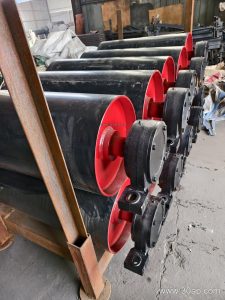
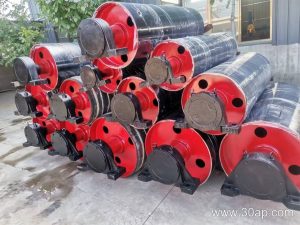
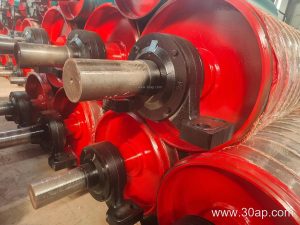
The idler roller is usually a steel tube fitted with bearing housings at each end, sealed against dust and water, and mounted in a frame. In sand and gravel service, fine silica dust and wash water are constant companions, so seal quality and bearing protection often decide how long a roller lasts. A well-built idler keeps the belt tracking smoothly and reduces the power needed to move the load.
Where Idlers Sit in a Sand and Gravel Plant
Material flow through a sand and gravel operation typically starts at the pit or primary crusher and moves through screening, washing and stockpiling. Each section places different demands on the conveyor components.
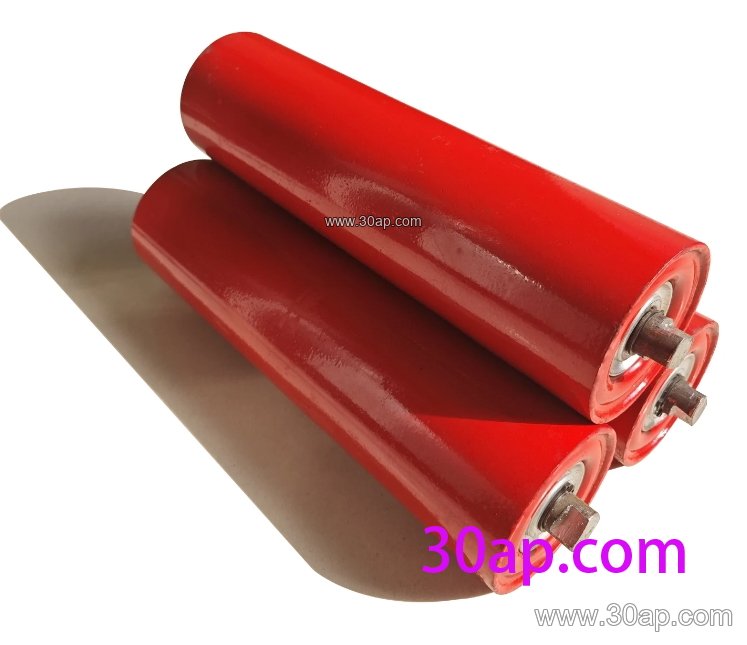
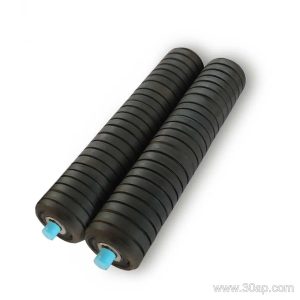
- Loading and transfer points: impact idlers with rubber rings absorb the drop from a crusher or screen.
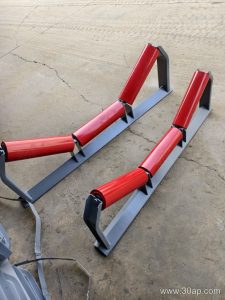
- Long carrying runs: three-roll troughing idlers support the belt and shape it into a trough.
- Return side: flat or V-return idlers support the empty belt and help keep it clean.
- Curves and transitions: self-aligning idlers correct minor mistracking before it becomes a spillage problem.
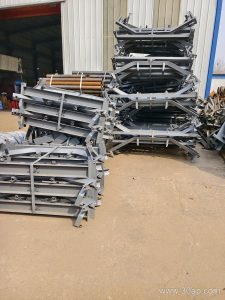
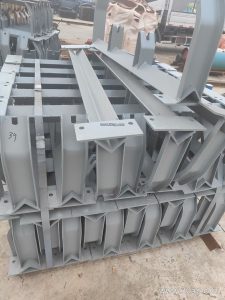
In a wash plant, the same conveyor may carry wet sand and gravel, so brackets and idler frames should be able to drain rather than trap water. On a stockpile conveyor feeding a ship loader or truck loadout, alignment idlers at the head end help keep the belt centered under the discharge.
Troughing Idler Dimensions and Common Configurations
The troughing idler set is the workhorse of an aggregate conveyor. Three-roll sets are common because they support the belt across a wide arc and reduce sag between frames. The table below shows typical reference values; actual roll length and diameter should be confirmed against the conveyor design.
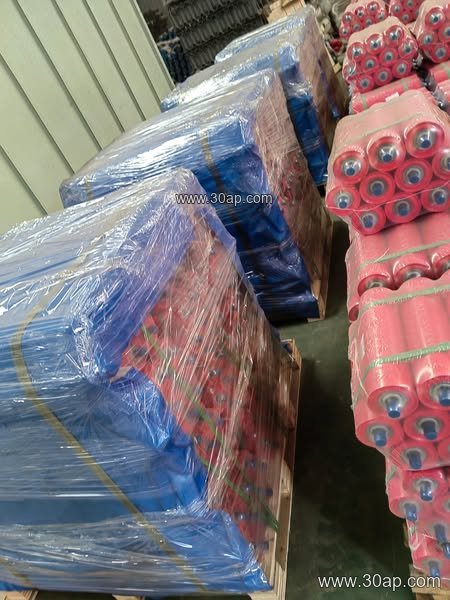
| Belt width | Common roll length (three-roll set, example) | Typical idler diameter range |
|---|---|---|
| B500 | approx. 200 mm | Ø63 to Ø89 mm |
| B650 | approx. 250 mm | Ø76 to Ø108 mm |
| B800 | approx. 315 mm | Ø89 to Ø127 mm |
| B1000 | approx. 380 mm | Ø102 to Ø133 mm |
| B1200 | approx. 465 mm | Ø108 to Ø159 mm |
| B1400 | approx. 530 mm | Ø127 to Ø178 mm |
| B1600 | approx. 600 mm | Ø133 to Ø194 mm |
| B1800 | approx. 670 mm | Ø159 to Ø219 mm |
Trough angles of 20, 30, 35 and 45 degrees are used depending on the material and belt. A steeper trough holds a deeper bed of gravel, which can raise capacity but also increases belt stress. Self-aligning idlers often use a slight forward tilt of about 1.5 to 2 degrees to encourage the belt to center itself.
Roll surface choice also matters. Steel rolls are common on clean, dry aggregate. Rubber-disc impact rolls are used where large rock lumps fall onto the belt. Ceramic or nylon-covered rolls may be considered where sticky material builds up. Bearings such as 6204, 6205, 6305, 6306, 6308 and 6310 appear across the range, but the correct bearing is matched to load and speed, not to belt width alone.
Matching the Idler to the Belt and the Duty
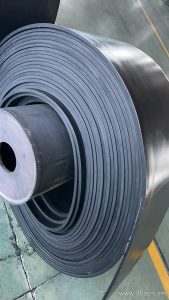
The idler should suit the belt it supports. A heavy-duty mining conveyor belt on a primary crusher discharge will need a more robust frame and impact protection than a light aggregate conveyor belt on a final screening deck. Where a Rubber Conveyor Belt carries wet sand, return idlers should be positioned to shed carryback rather than press it into the belt.
In dusty quarry conditions, an Abrasion Resistant Conveyor Belt reduces top-cover wear, but it does not protect the idlers from grit ingress. Specify sealed-for-life bearings and check that the bracket design allows the idler to be replaced without disturbing the belt line. For coal or dusty transfer houses, a Flame Retardant Conveyor Belt may be required, and the idler frame should be compatible with the same fire-safety approach.
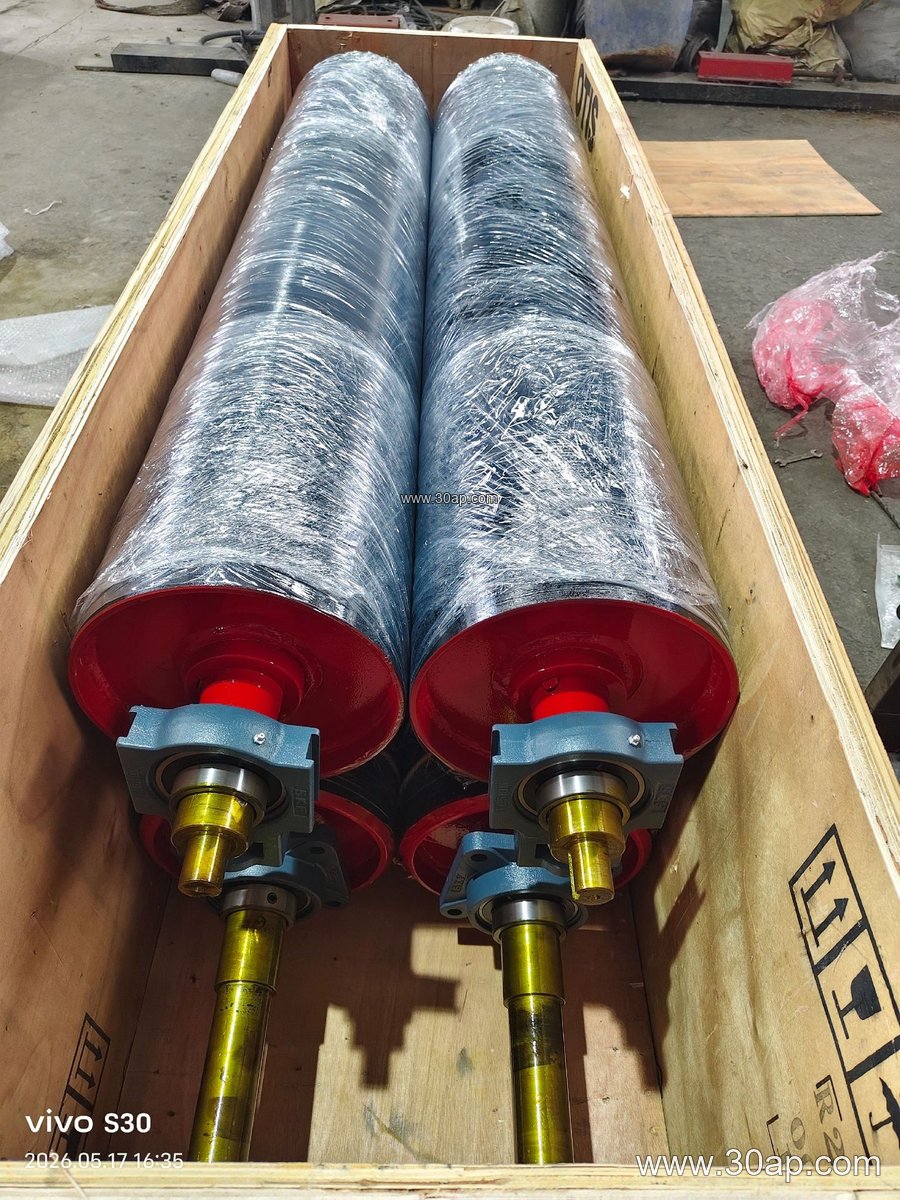
Where a conveyor follows a curved route, a Pipe Conveyor Belt may be used, and the idler arrangement changes from troughing panels to a ring of support rolls. This is a different layout, but the same principle applies: each idler must support the belt without pinching or misaligning it.
What a Buyer Should Check Before Ordering
Before selecting a sand and gravel conveyor idler, confirm the belt width, the trough angle, the roll diameter and the shaft and bearing arrangement. Ask for the frame dimensions and the mounting hole spacing so the new idlers match the existing conveyor bracket. Check whether the duty involves impact, wet material, or high dust, and choose the roll surface accordingly.
Do not assume that a given belt width fixes one pulley diameter or one idler size. Belt width, load, speed and trough geometry together determine the correct idler. On site, regular inspection of idler rotation, seal condition and frame alignment will prevent small issues from becoming belt damage or spillage. A conveyor pulley and its lagging are separate components from the idlers, and each should be specified on its own terms.