What a Three-Roll Trough Idler Does on a Conveyor
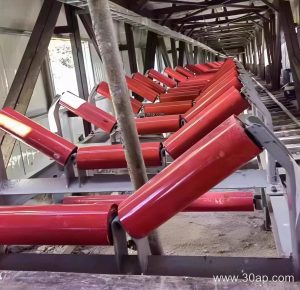
A three-roll trough idler is the assembly that shapes a conveyor belt into a trough so bulk material stays centered and contained. It sits on the carrying side of the conveyor, usually mounted on a conveyor bracket that fixes the three rolls at a set trough angle. In a quarry, cement plant, or coal handling line, this idler set supports the belt between the tail pulley and the drive pulley, and it works alongside the conveyor pulley, idler roller, and conveyor belt to keep material moving smoothly. The three-roll arrangement is common on medium and wide belts because it distributes load across three contact points instead of one flat surface.
How the Three-Roll Set Is Built
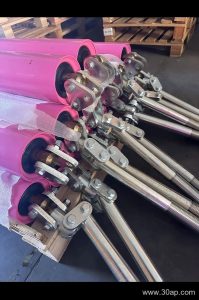
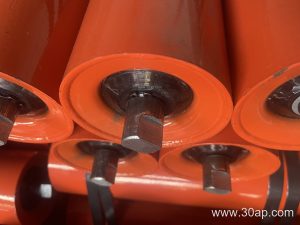
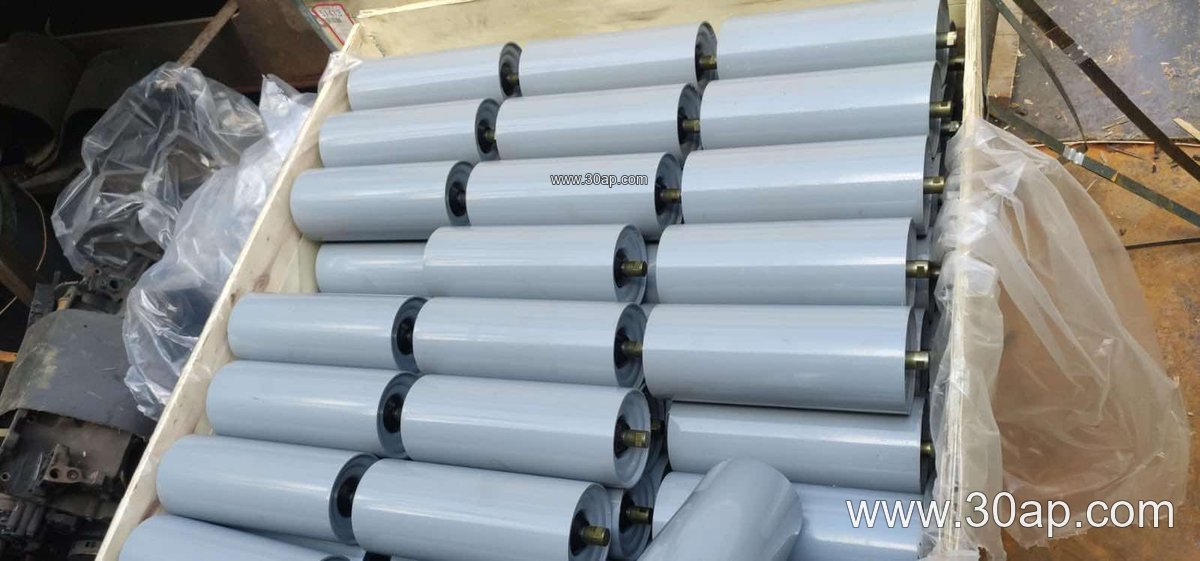
Each three-roll trough idler consists of three idler rollers held in a frame, with a center roll and two side rolls. The side rolls are set at a trough angle, typically 20, 30, 35, or 45 degrees, depending on the belt width and the material being carried. Roll diameters often range from Ø63 to Ø194, with Ø89, Ø108, Ø127, and Ø133 being common in general duty. Roll length changes with belt width and trough angle; for example, a three-roll set on a B800 belt may use rolls around 315 mm long, while a B1200 set may use rolls near 465 mm. These are common examples, not fixed rules, and the center roll and side rolls can differ in length.
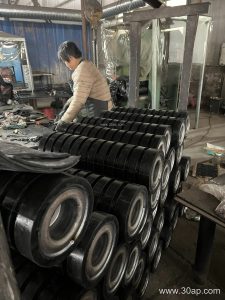
The roll shell can be steel, nylon, ceramic, or rubber-covered. Rubber rings are useful for impact absorption at load points. Bearings such as 6204, 6205, 6305, 6306, 6308, and 6310 are common, and the bearing size is matched to the roll diameter and load, not to belt width alone. Seals matter in dusty conditions found in limestone mines, iron ore operations, and aggregate plants.
Where Three-Roll Trough Idlers Are Used
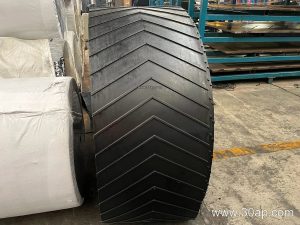
You will find three-roll trough idlers in stone crushing lines, sand and gravel plants, cement kiln feed systems, power plant coal yards, and port ship-loading conveyors. They are also used in copper ore and gold mining operations where a Fabric Core Conveyor Belt or Steel Cord Conveyor Belt runs over long distances. In a coal washing plant, a Flame Retardant Conveyor Belt may run on three-roll trough idlers to keep coal contained. The same idler set can support an Abrasion Resistant Conveyor Belt in a quarry or a Heat Resistant Conveyor Belt in a cement plant, provided the roll materials and bearings suit the environment. The three-roll trough idler is a carrying idler; it is not a return idler, and it is not a drive, tail, or bend pulley.
Choosing the Right Three-Roll Trough Idler
Selection starts with belt width, trough angle, and the material load. A three-roll set on a B650 belt is not the same as one on a B1800 belt, and the roll diameter should follow the load and speed. Trough angles of 30 and 35 degrees are common for general bulk material, while 45 degrees may be used where greater containment is needed. The frame should match the conveyor bracket and the belt line. For dusty or wet conditions, sealed bearings and corrosion protection help. Buyers should confirm roll diameter, roll length, bearing type, and trough angle with the supplier rather than assuming a size from belt width alone.
Installation and Maintenance Notes
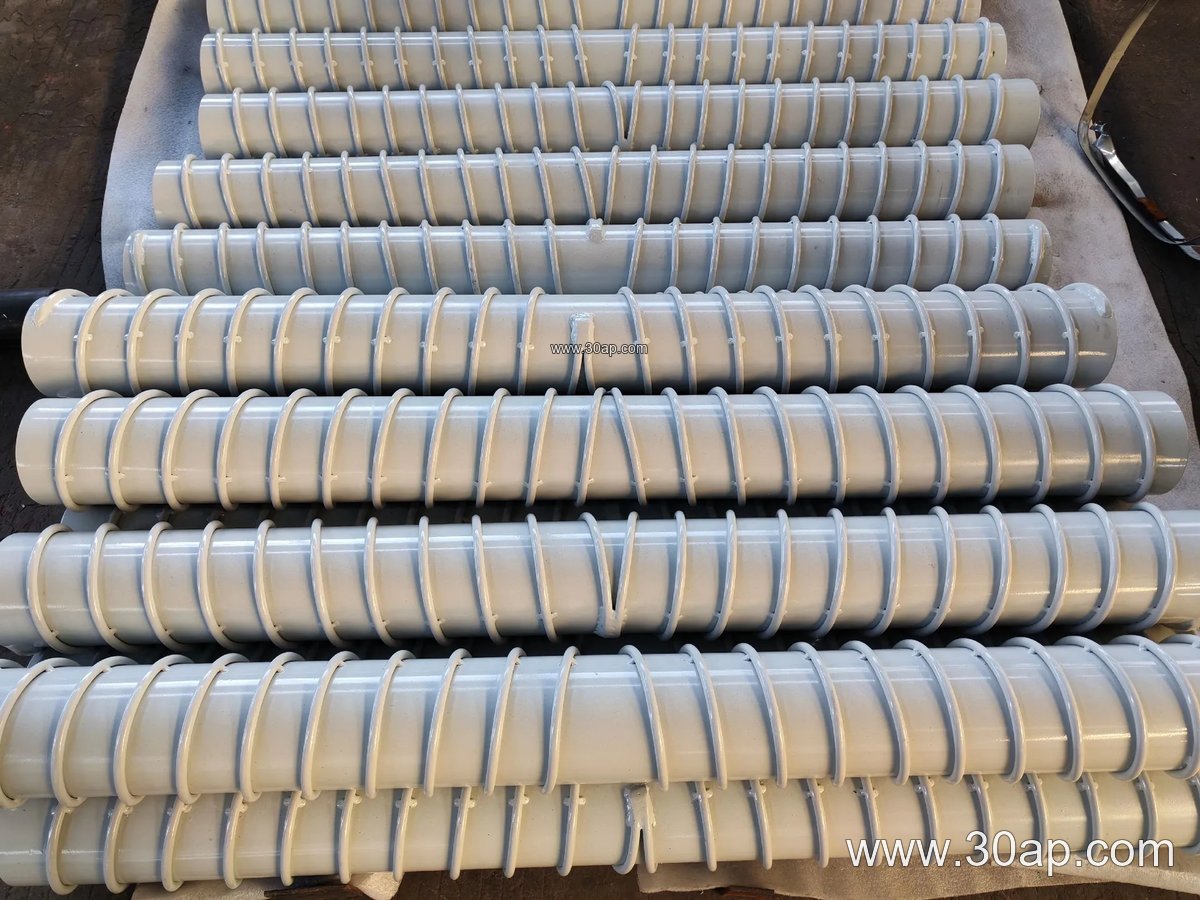
Align the three-roll trough idler square to the belt centerline and check that all three rolls turn freely. A worn or seized roll can damage the conveyor belt and increase power draw. Inspect seals and bearing play during routine stops. In a crusher conveyor or a bulk material conveyor, impact idlers may be needed at transfer points, but the three-roll trough idler remains the standard carrying set for the main run. Keep spare rolls on hand for critical lines in mines, power plants, and cement works.
Common Reference Data
The table below gives common examples only. Actual roll length and bearing selection depend on belt width, trough angle, load, and idler design.
| Belt width | Common roll length (three-roll set) | Common trough angle | Typical roll diameter range |
|---|---|---|---|
| B500 | about 200 mm | 20–35 degrees | Ø63–Ø89 |
| B650 | about 250 mm | 20–35 degrees | Ø76–Ø108 |
| B800 | about 315 mm | 30–35 degrees | Ø89–Ø127 |
| B1000 | about 380 mm | 30–35 degrees | Ø102–Ø133 |
| B1200 | about 465 mm | 30–45 degrees | Ø108–Ø159 |
| B1400 | about 530 mm | 35–45 degrees | Ø127–Ø178 |
| B1600 | about 600 mm | 35–45 degrees | Ø133–Ø194 |
For heavy-duty mining conveyors using an EP Conveyor Belt or a Steel Cord Conveyor Belt, confirm the idler load rating and bearing type with the manufacturer. The three-roll trough idler is a simple but critical part of the belt line, and the right match between roll, frame, and belt keeps the system running.