What a High-Angle Conveyor Trough Idler Does
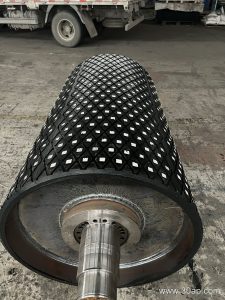
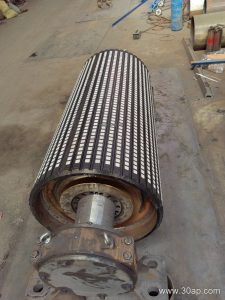
A high-angle conveyor trough idler is a carrying idler used on the loaded strand of a steeply inclined belt conveyor. Its trough shape keeps bulk material centered when the belt climbs or descends at a gradient where ordinary flat or shallow-trough idlers would let the load slide back or spill over the edges. In a quarry or a cement plant feeding a crusher from a deep pit, this idler is often the difference between a stable load and constant cleanup. The same trough idler works together with the conveyor belt, the conveyor pulley at the drive and tail ends, and the conveyor bracket that fixes the assembly to the frame. It is not a drive component, and it should not be confused with a drive pulley, tail pulley, or bend pulley, which transmit or redirect belt tension rather than support the load.
Construction and Trough Geometry
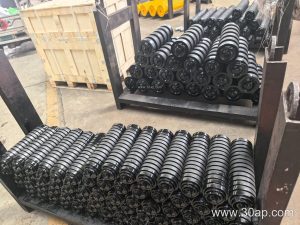
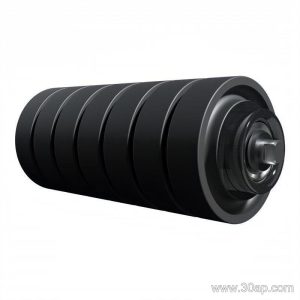
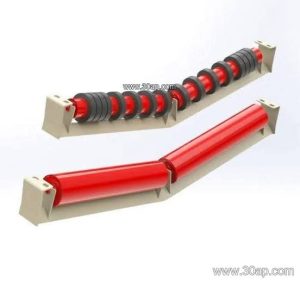
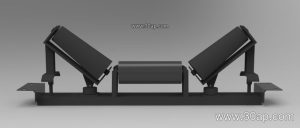
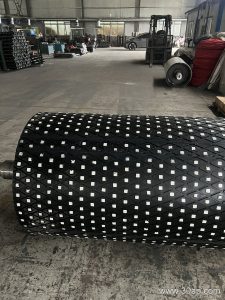
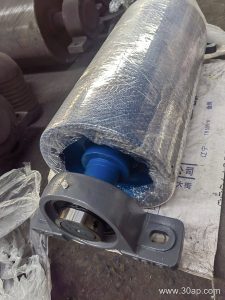
A typical unit is a three-roll trough set. The two side rolls are inclined at a trough angle, usually 20, 30, 35, or 45 degrees, and the center roll runs flat or nearly flat. For high-angle service, 35 and 45 degrees are common because a deeper trough increases the material cross-section and reduces the chance of rollback. The rolls themselves are steel tubes fitted with shafts and bearings, and the surface may be plain steel, nylon, ceramic, or rubber rings depending on abrasion and build-up conditions. Common roll diameters include Ø89, Ø108, Ø127, Ø133, Ø159, and Ø178, while bearing sizes such as 6205, 6305, 6306, and 6308 are selected by load and speed rather than by roll diameter alone.
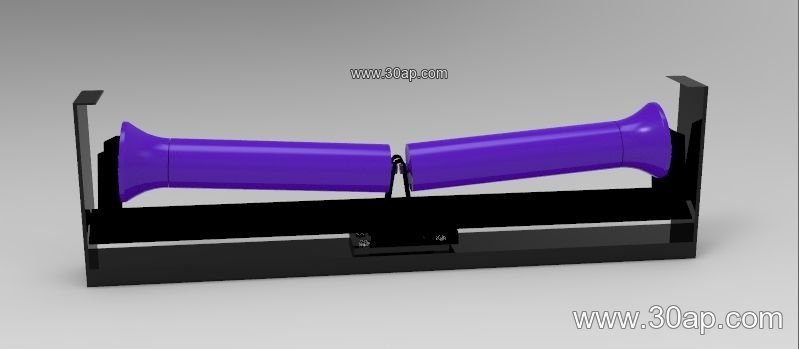
Roll length follows belt width, trough angle, and the number of rolls in the set. For a three-roll trough set, common center-roll lengths are roughly 200 mm at B500, 250 mm at B650, 315 mm at B800, 380 mm at B1000, 465 mm at B1200, 530 mm at B1400, 600 mm at B1600, 670 mm at B1800, and 750 mm at B2000. These are examples, not fixed pairings; side rolls and center rolls can differ. A 1200mm wide conveyor belt and a 1800mm wide conveyor belt will not use the same idler set, and the shaft diameter is determined by the idler manufacturer from load calculations, not from belt width alone.
Where It Fits in the Conveyor Line
On a steep incline, the high-angle trough idler is spaced along the carrying side, often closer together than on a horizontal run to limit belt sag and material movement. It may be paired with a rubber-disc impact idler at the loading point to absorb drop energy, and with a V-return or flat return idler underneath. Self-aligning trough idlers are sometimes used on long inclines to correct minor belt wander, but they are a separate type and do not replace the standard trough idler. In a coal mining conveyor or an underground mining conveyor, flame retardant and anti-static belt grades are common, and the idler frame and rolls should be selected with the same environment in mind. A quarry conveyor belt or an aggregate conveyor belt handling sharp rock will favor abrasion resistant roll surfaces, while a cement plant may need to consider dust sealing.
Selection Notes for Buyers
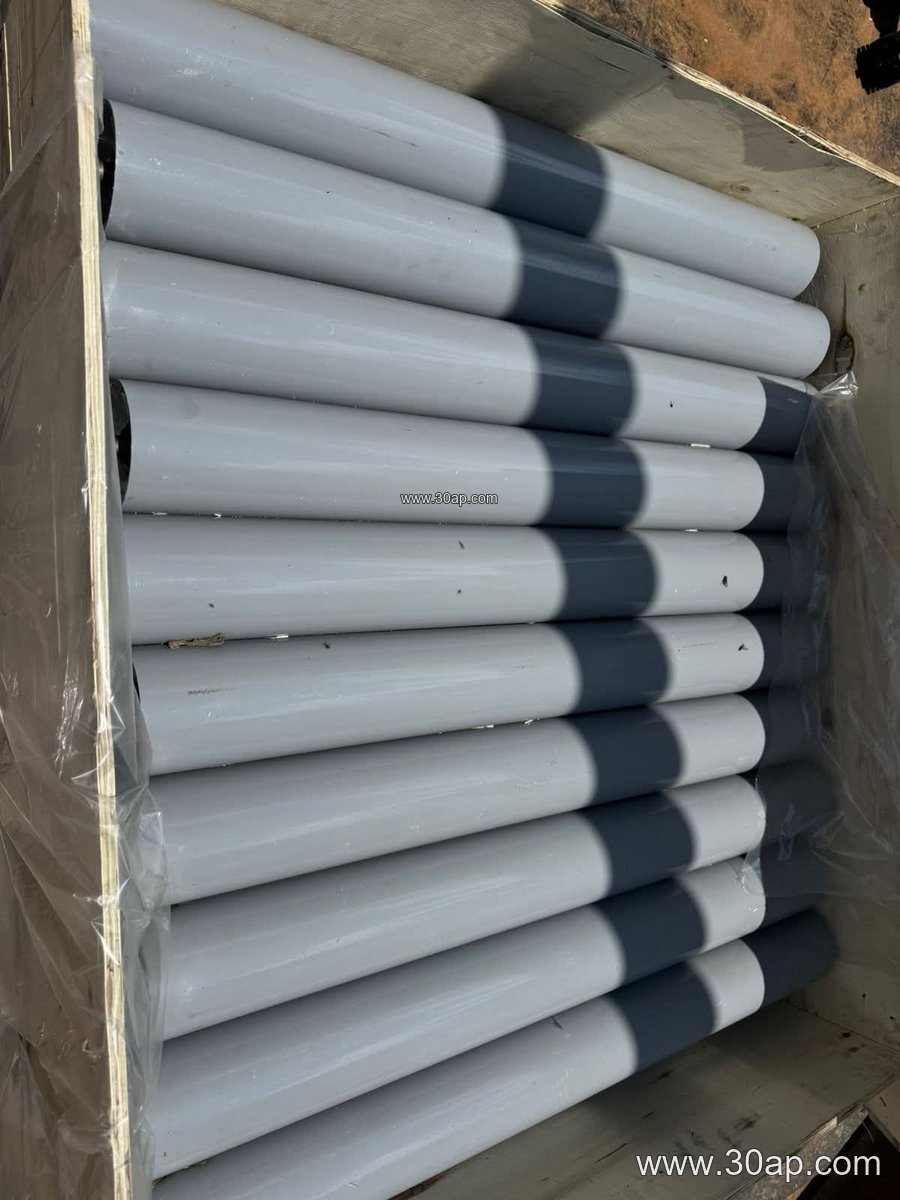
Start with the belt width, the maximum incline, the material bulk density, and the lump size. Then confirm the trough angle and the number of rolls. A 45-degree three-roll set gives a deeper trough than a 30-degree set, but it also increases the side load on the outer rolls. Check the bearing fit and seal type for dusty or wet conditions. For hot material such as clinker or sinter, a heat resistant conveyor belt may be used, but the idler bearing lubricant and seal should also be rated for the temperature. For oily or chemical environments, an oil resistant or chemical resistant belt may be specified, and the idler finish should resist buildup. Buyers should ask for the idler drawing, the roll length, the shaft diameter, and the bearing designation, and should not assume that one belt width matches one pulley diameter or one shaft size.
Maintenance and Common Mistakes
- Check roll rotation by hand during shutdowns; a seized roll will wear the belt cover quickly.
- Inspect seals and bearing housings for dust ingress, especially in coal mining and cement plant service.
- Verify trough alignment after belt tracking adjustments, because a skewed trough set can cause edge wear.
- Replace worn rubber rings or ceramic sleeves before the steel tube is exposed.
- Do not substitute a bend pulley or tail pulley for a trough idler; they serve different functions.
Used well, a high-angle conveyor trough idler keeps the belt loaded and the incline productive, whether the line moves ore, clinker, or aggregate.