What Pulley Lagging Actually Does
Pulley lagging is the rubber, ceramic, or composite layer bonded to the outer surface of a conveyor pulley shell. Its job is simple to describe but critical in practice: it raises friction between the drum and the conveyor belt so the drive can transmit torque without slipping. On a drive pulley, that grip is what moves the belt and the material on it. On a tail or bend pulley, lagging mainly protects the shell from abrasion and helps the belt track more steadily.
The word “lagging” comes from the idea of covering or lining the drum. In many plants, the same product is called rubber pulley lagging, drum lagging, or pulley rubber lining. Those names refer to the same item, and they should not be confused with the pulley itself or with an idler roller, which is a separate rotating component.
How a Lagged Pulley Is Built
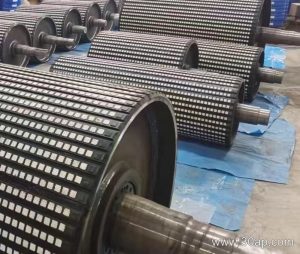
A typical assembly starts with a steel conveyor pulley shell, two end discs, and a shaft. The shell surface is prepared by blasting or machining, then a bonding agent is applied. The lagging compound is attached in one of several ways: hot vulcanized rubber, cold bonded rubber, or cast polyurethane. Ceramic tiles can be embedded in a rubber matrix for high-wear duties.
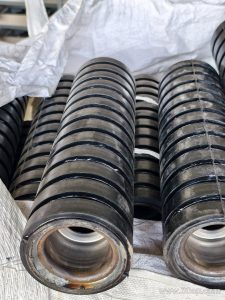
Surface forms vary with the application. A plain or flat rubber surface is common on bend and tail pulleys. Diamond grooved lagging helps channel water and fines away from the contact area. Herringbone patterns are used where the belt needs extra traction and self-cleaning. Ceramic lagging is chosen where abrasive rock or ore would quickly wear plain rubber.
Thickness is usually specified in the range of 8 mm to 20 mm, with 10 mm and 12 mm being common for general duty. The right thickness depends on the torque to be transmitted, the belt tension, and the abrasiveness of the material. A thicker layer is not automatically better; too much soft rubber can compress and reduce effective grip.
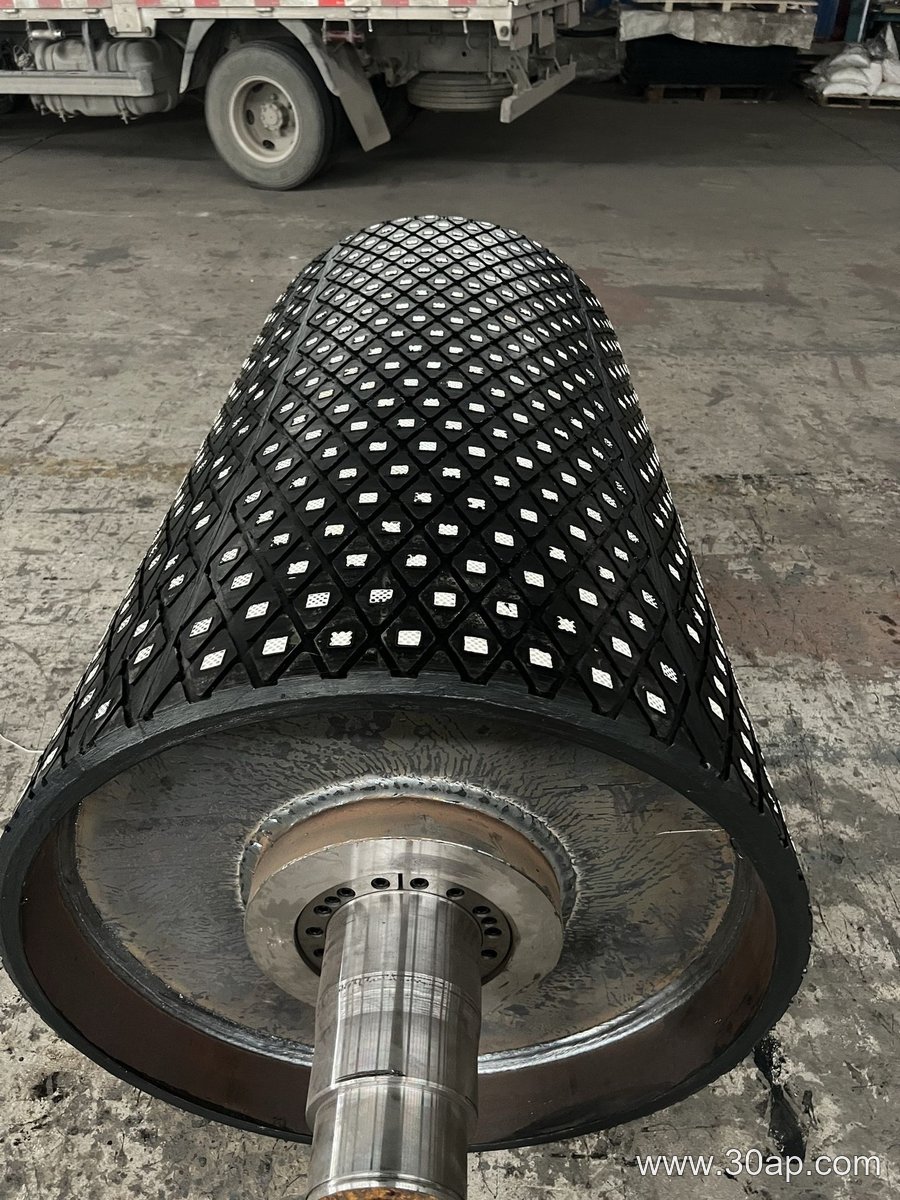
Where It Is Used
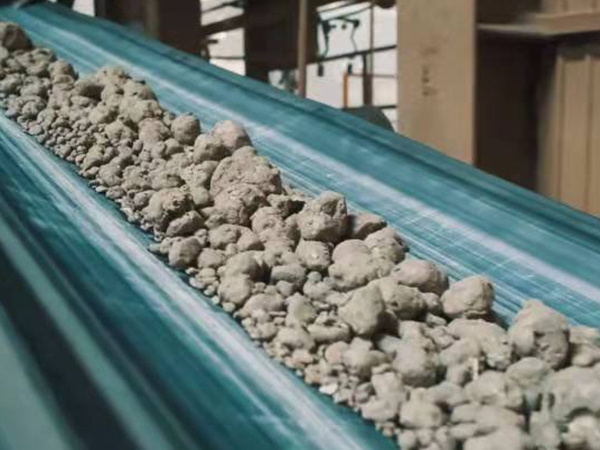
Lagging appears on conveyor pulleys in many bulk handling circuits. In a quarry or limestone mine, the head pulley often carries ceramic or diamond lagging because crushed rock and dust are present. In a coal preparation plant, rubber lagging with a herringbone pattern is a frequent choice for drive pulleys that must grip a wet belt. Aggregate lines, cement clinker handling, and port bulk terminals all rely on lagged drums to keep the belt moving.
Drive, tail, and bend pulleys are not interchangeable, and each position places different demands on the lagging. A drive pulley needs maximum friction and wear resistance. A tail pulley usually needs protection and a surface that will not damage the belt. A bend pulley may need only a thin, smooth layer to guide the belt without adding unnecessary weight.
Specifying the Right Lagging
Buyers should start with the pulley dimensions and the duty. Belt width alone does not determine pulley diameter, and shaft diameter is set by torque and load, not by belt width. A B800 belt might run on a Ø500 drum in one conveyor and a larger diameter in another, depending on belt tension and wrap angle. Common combinations such as B1200 with Ø1000 or B1400 with Ø800 are seen in the field, but they are examples, not rules.
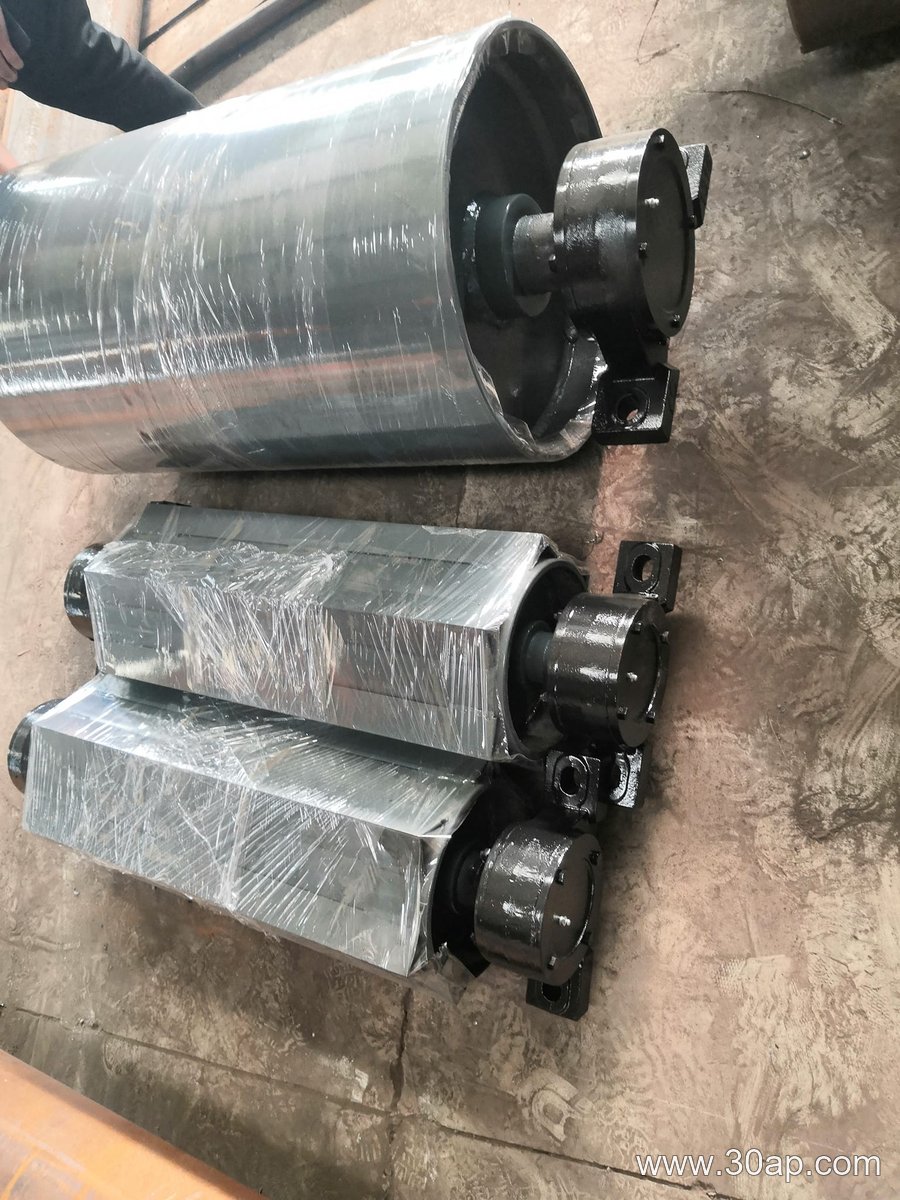
Key questions to answer before ordering:
- Is the pulley a drive, tail, bend, or tension pulley?
- What is the belt width and the pulley face width? Face width is normally slightly larger than belt width, for example about 950 mm for a B800 belt.
- What material is being conveyed, and how abrasive or wet is it?
- What torque must be transmitted, and what is the wrap angle?
- Will the lagging be hot vulcanized, cold bonded, or supplied as a replaceable strip?
Surface choice should follow the duty. Plain rubber suits light abrasion and clean conditions. Diamond or herringbone grooves help with water and fines. Ceramic tiles are for severe wear where rubber alone would fail too quickly. Thickness should be matched to the expected wear life and the pulley diameter, because a very thick layer on a small drum can affect belt tracking.
Installation and Maintenance Notes
Correct bonding is as important as the compound. Contaminated or poorly prepared shells cause premature debonding, which shows up as loose edges, cracks, or missing tiles. After installation, check belt tracking and tension. A lagged pulley that is not aligned with the conveyor bracket and frame will wear unevenly no matter how good the rubber is.
Inspect lagging during scheduled shutdowns. Look for glazing, chunking, exposed ceramic, or grooves worn smooth. Replacing a worn lagging layer is usually far cheaper than replacing a pulley shell or an entire conveyor pulley. Keeping a spare set of lagging strips or a pre-lagged drum can reduce downtime in continuous operations.
For any specific project, confirm dimensions, compound, and bonding method with the pulley manufacturer or lagging supplier. The values above are common reference points, not a universal specification, and the final selection should follow the actual conveyor design.