What a Tapered Self-Aligning Idler Does
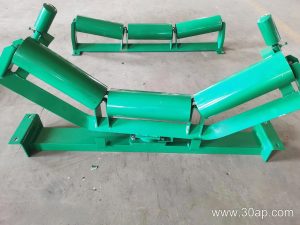
A tapered self-aligning idler is a carrying or return roller set built to steer a conveyor belt back toward the centre line when it starts to drift. The roller body is conical rather than cylindrical, and the assembly is mounted so it can pivot slightly in the horizontal plane. As the belt edges contact the tapered surfaces, the resulting difference in surface speed creates a gentle correcting force. In a coal preparation plant or a limestone crushing line, this kind of idler roller is often the simplest way to reduce edge damage and spillage without adding a separate belt tracker.
Some operators call the same product a conical self-aligning roller or a taper training idler. These are equivalent names for the same item. The taper is the key feature; a standard cylindrical return idler does not have it.
Construction and Mounting Details
The rotating parts usually sit on a steel tube that has been machined or pressed into a taper. Common roller diameters for this style follow the general idler range, such as Ø89, Ø108, Ø127, Ø133 and Ø159 mm, though the exact size is chosen by the conveyor designer. Bearing options are typically 6204, 6205, 6305 or 6306, depending on load and speed. Seals are important in dusty applications, so many units use labyrinth or contact seals to keep fines out of the bearing housing.
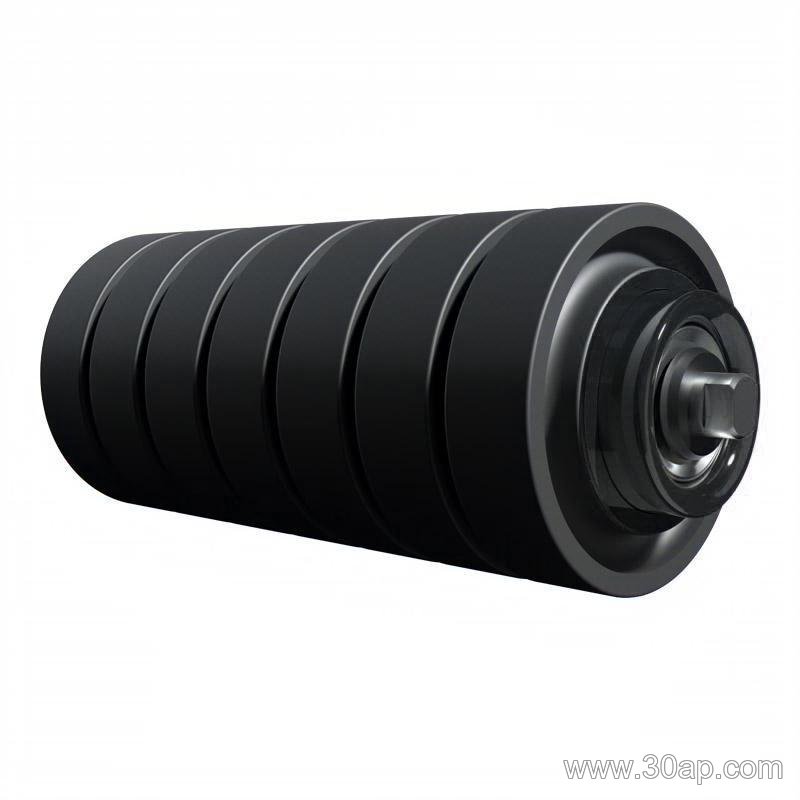
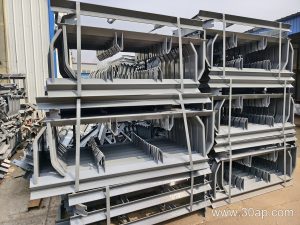
The frame is a pivoting bracket that allows the idler set to swing a few degrees left or right. A vertical pivot pin is common, and the bracket may include a stop to limit travel. The roller surface can be plain steel, nylon, or rubber-covered. In a quarry or a cement plant, rubber or polyurethane lagging on the taper is sometimes chosen to improve grip without marking the belt.
Where It Fits on a Conveyor
These units are most often placed in the carrying run, ahead of the head pulley or after a loading point. They can also be used on the return strand, where a V-return or flat return idler might otherwise be installed. On a long overland conveyor in a copper mine or a power plant coal yard, a pair of tapered self-aligning idlers is sometimes mounted 15 to 30 metres apart to correct gradual misalignment.
Do not confuse this product with a drive pulley, tail pulley or bend pulley. Those are conveyor pulleys that transmit power or change belt direction. A tapered self-aligning idler does not drive the belt; it only guides it. Compared with a friction self-aligning idler, which relies on friction pads, the tapered version uses the cone angle itself to create the steering effect. Both are training idlers, but the taper is the distinguishing feature.
Common Configurations and Size Reference
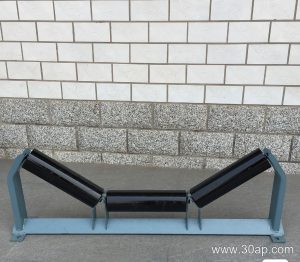
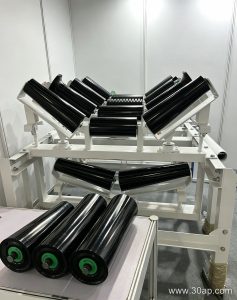
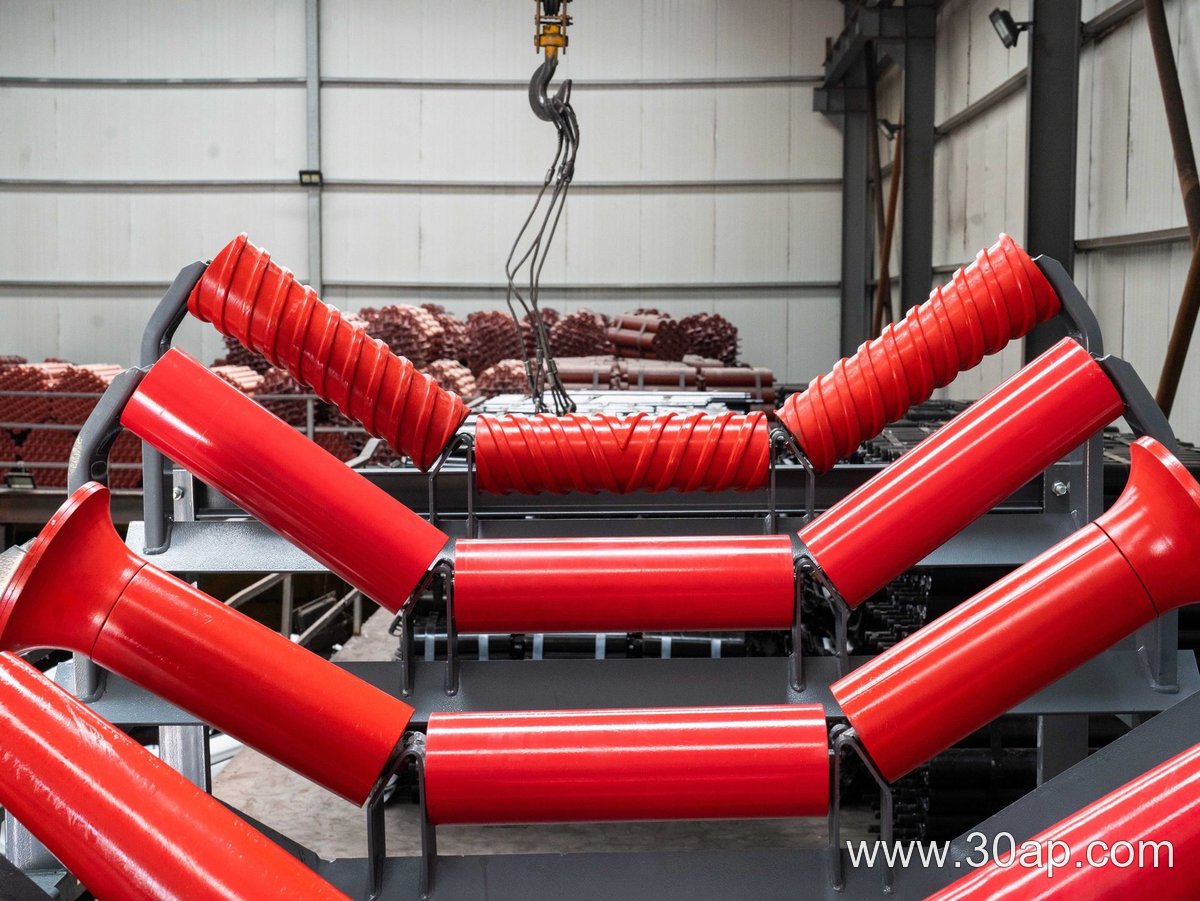
Tapered self-aligning idlers are frequently supplied as two-roller or three-roller sets. The taper may be on the side rollers only, or on all rollers. Belt width and trough angle determine the roller length. The table below gives common examples for reference only; actual dimensions are always set by the conveyor design.
| Belt Width | Typical Roller Length (three-roll trough) | Common Roller Diameter |
|---|---|---|
| B500 | 200 mm | Ø63 – Ø89 mm |
| B650 | 250 mm | Ø76 – Ø108 mm |
| B800 | 315 mm | Ø89 – Ø133 mm |
| B1000 | 380 mm | Ø108 – Ø159 mm |
| B1200 | 465 mm | Ø127 – Ø159 mm |
| B1400 | 530 mm | Ø133 – Ø178 mm |
| B1600 | 600 mm | Ø159 – Ø194 mm |
Trough angles of 20, 30, 35 and 45 degrees are common. A small forward tilt of about 1.5 to 2 degrees is sometimes used on the side rollers to help centring, but this is a design choice, not a requirement. The idler set must be matched to the conveyor bracket and the belt speed. A bracket that is too weak or a pivot that is too stiff will stop the idler from doing its job.
Buyer Checklist
- Confirm belt width (B400 to B2400) and trough angle before ordering.
- Check roller diameter and bearing size against the load and speed.
- Decide on roller surface: steel, nylon, rubber or ceramic.
- Verify the pivot bracket fits the existing conveyor bracket spacing.
- Ask about seal type for dusty or wet conditions.
- Remember that a tapered self-aligning idler is a guide, not a drive pulley; it will not replace a tail pulley or bend pulley.
In sand and gravel plants, tunnel muck removal, fertiliser handling and grain terminals, a properly sized tapered self-aligning idler can extend belt life and reduce cleanup. The key is to choose the roller size and taper angle for the actual belt width and material load, not to copy a size from another conveyor.