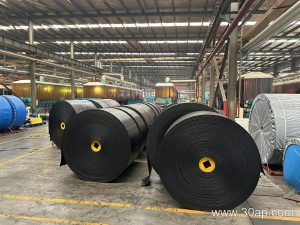
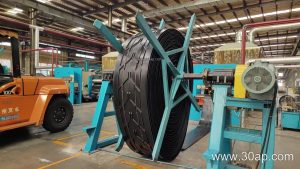
What a Mining Conveyor Idler Does on the Line
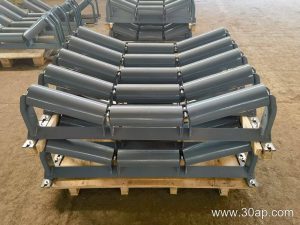
A mining conveyor idler is the rotating support that carries the belt and its load along the structure. In practice, it is usually called a conveyor roller or idler roller, and it appears in groups rather than as a single piece. The troughing set shapes the belt into a channel so that ore, coal, or aggregate stays centered, while return rollers support the empty strand on the way back. On a quarry conveyor belt or an underground coal mining conveyor belt, these components work continuously in dust, moisture, and shock loading, so their construction matters as much as their price.
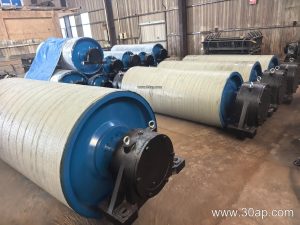
The idler does not pull the belt. That job belongs to the conveyor pulley at the drive and tail positions, and those pulleys are not interchangeable with idlers or with each other. A bend pulley redirects the belt; a drive pulley transmits torque. The idler simply rolls, and it must keep rolling with low resistance for thousands of hours.
How the Roller Is Built
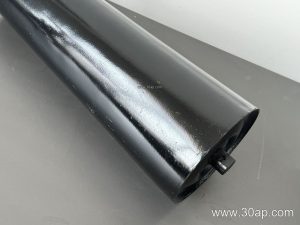
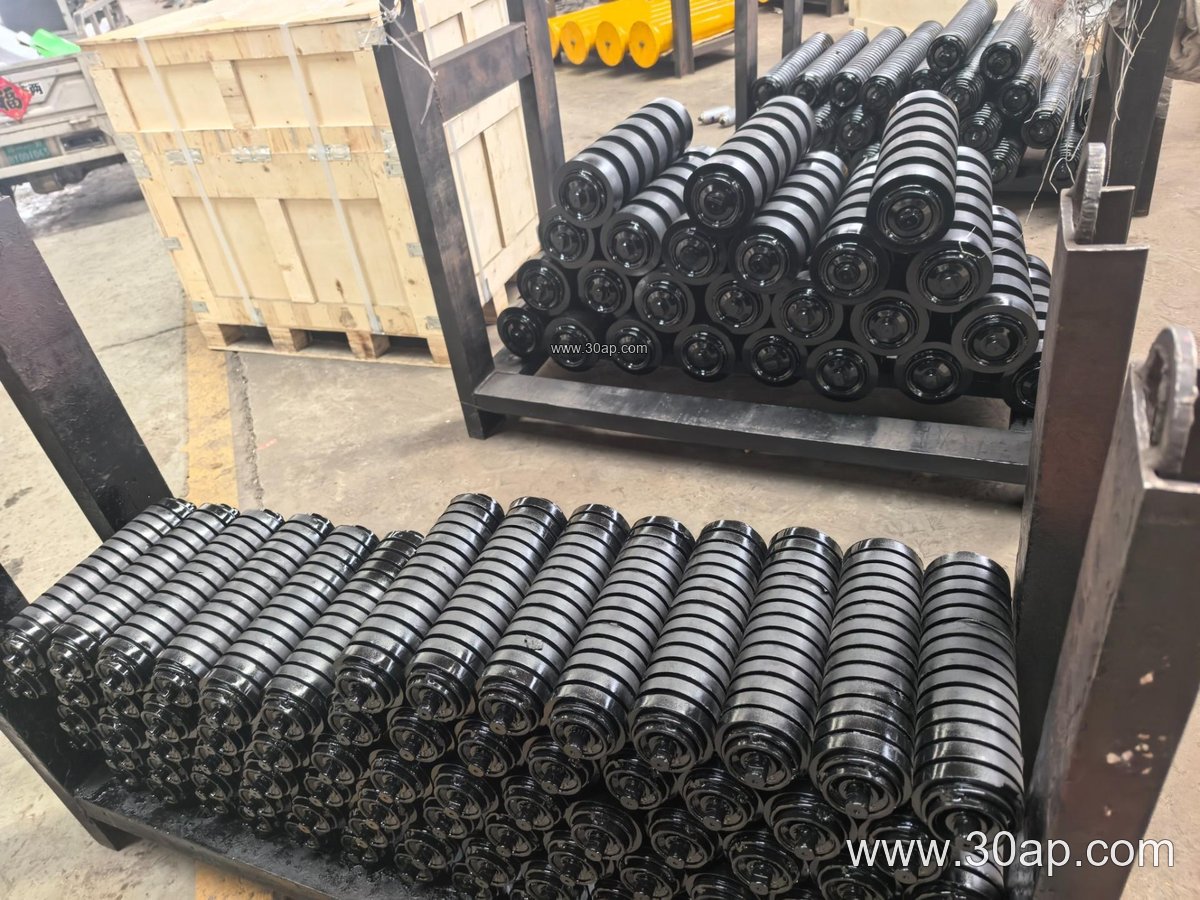
A typical idler roller combines a steel tube shell, welded end discs, a shaft, and sealed bearings. The shell may be plain steel, nylon-coated, ceramic-covered, or fitted with rubber rings for impact absorption. Bearing housings are usually grease-sealed on both sides, and the seal design is often the deciding factor in dusty plants. Common bearing numbers include 6204, 6205, 6305, 6306, 6308, and 6310, but a given bearing is not tied to one roller diameter. The shaft and bearing choice follow the load calculation, not a simple rule from belt width.
Common Idler Types and Where They Sit
- Troughing idlers: three-roll sets that form the carrying side; also available as two-roll or single-roll arrangements.
- Transition idlers: placed near the head and tail to ease the belt from flat to troughed shape.
- Return idlers: flat or V-shaped rollers under the empty strand.
- Impact idlers and rubber-ring impact rollers: installed at transfer points below chutes.
- Spiral idlers: used where sticky material tends to build up on the shell.
- Self-aligning idlers: friction, tapered, or plain types that correct belt drift.
- Comb or disc idlers: sometimes used on return runs for cleaning support.
Trough angle is usually 20, 30, 35, or 45 degrees. A steeper angle suits fine, free-flowing material, while a shallower angle may be chosen for lumpy rock. Forward tilt of about 1.5 to 2 degrees is sometimes used on training idlers to encourage self-centering.
Matching Diameter, Belt Width, and Roll Length
Roller diameters commonly range from Ø63 to Ø219 mm. Small diameters suit light belts and low loads; larger diameters reduce rotation speed and bearing stress on wide, heavy-duty lines. Belt widths in mining service often fall between B650 and B2400, and roll length changes with width, trough angle, and set form. For a three-roll troughing set, common roll lengths are roughly 200 mm at B500, 250 mm at B650, 315 mm at B800, 380 mm at B1000, 465 mm at B1200, 530 mm at B1400, 600 mm at B1600, 670 mm at B1800, and 750 mm at B2000. These are examples only; side rolls and center rolls can differ, and the final length is set by design.
| Parameter | Typical Range | Notes |
|---|---|---|
| Roller diameter | Ø63 to Ø219 mm | Selected by load and belt speed |
| Belt width | B400 to B2400 | Common mining sizes B650 to B2000 |
| Trough angle | 20°, 30°, 35°, 45° | Based on material and capacity |
| Roll surface | Steel, nylon, ceramic, rubber ring | Rubber rings for impact zones |
| Bearing | 6204, 6205, 6305, 6306, 6308, 6310 | Matched to shaft and load |
Where These Rollers Are Used
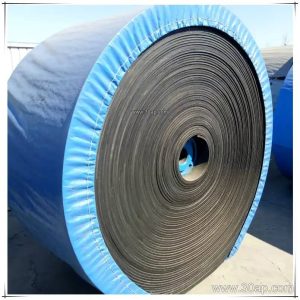
You will find them on a quarry conveyor belt moving blasted rock, on a cement plant conveyor handling clinker and limestone, and in power plant coal handling systems. Iron ore and copper ore lines use heavy-duty mining conveyor belt constructions such as steel cord conveyor belt or high abrasion resistant conveyor belt, and the idlers beneath must handle the same load and grit. In a coal washing plant, flame retardant conveyor belt and anti-static conveyor belt are common, and the idler seals must resist fine coal dust.
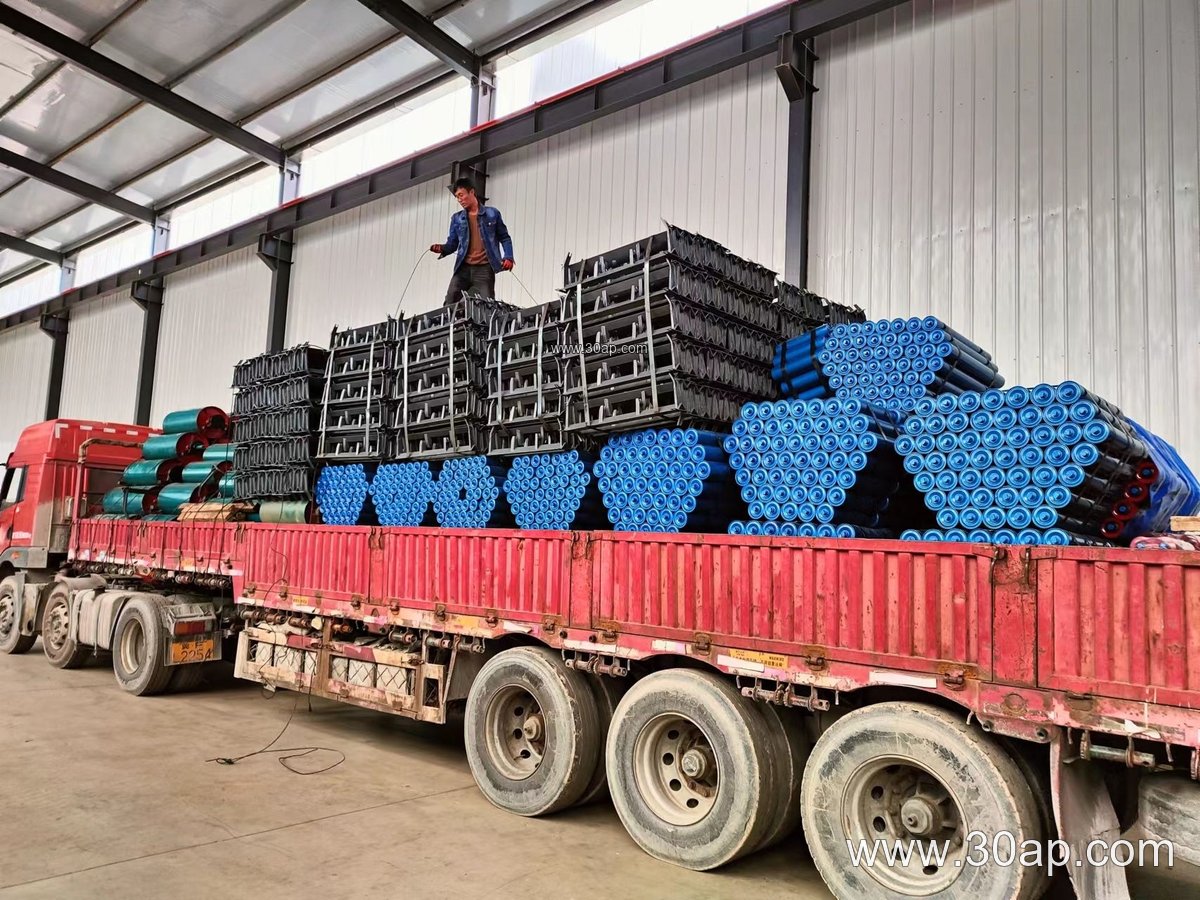
Transfer points are the hardest duty. A crusher conveyor belt receives falling lumps, so impact rollers or rubber-ring idlers are often fitted for the first few meters. Further along, standard troughing sets take over. On the return side, V-shaped rollers help track the belt and shed debris.
What Buyers Should Check
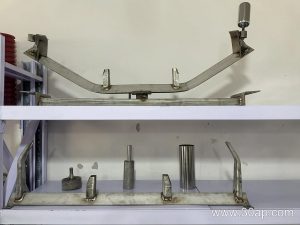
Start with the belt width, the trough angle, and the expected load per set. Confirm the roller diameter and shaft size from the conveyor design, not from a chart alone. Ask about seal type, bearing brand or grade, and shell thickness, because these determine service life in a dusty plant. Check that the idler frame or conveyor bracket matches the existing stringer spacing and bolt pattern. For abrasive ore, a ceramic or thick-wall shell may last longer; for sticky material, a spiral roller can reduce buildup.
Finally, plan a spare parts stock for the most heavily loaded positions. Idlers are consumables, and keeping a few sets of the right diameter and roll length on hand prevents long stoppages. If the line uses an endless conveyor belt or a pipe conveyor belt, confirm that the idler profile suits that belt type before ordering. For more on belts, pulleys, and rollers, visit beltconveyorparts.com and review the full conveyor component range.