What a Guide Idler Bracket Does
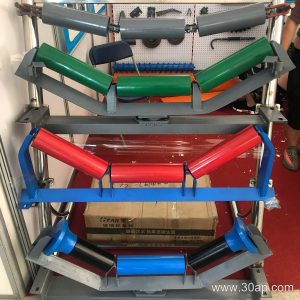
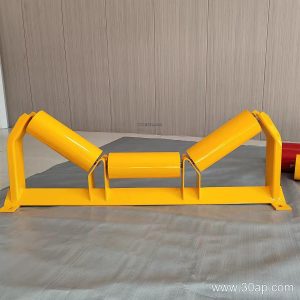
A guide idler bracket is the mounting component that holds a guide idler in a position where it can steer the conveyor belt back toward the center line. On a running conveyor, small sideways drift adds up quickly along a long run, and the guide idler bracket gives maintenance teams a fixed, repeatable place to mount the idler that corrects that drift. The bracket itself carries no drive function; it is a locating and support element, and its accuracy directly affects how well the idler does its job.
In a quarry, a cement plant or a power plant coal yard, a belt that wanders can rub the frame and damage edges long before anyone notices. That is why the guide idler bracket is usually treated as a precision part rather than a simple piece of steel.
Construction and Mounting
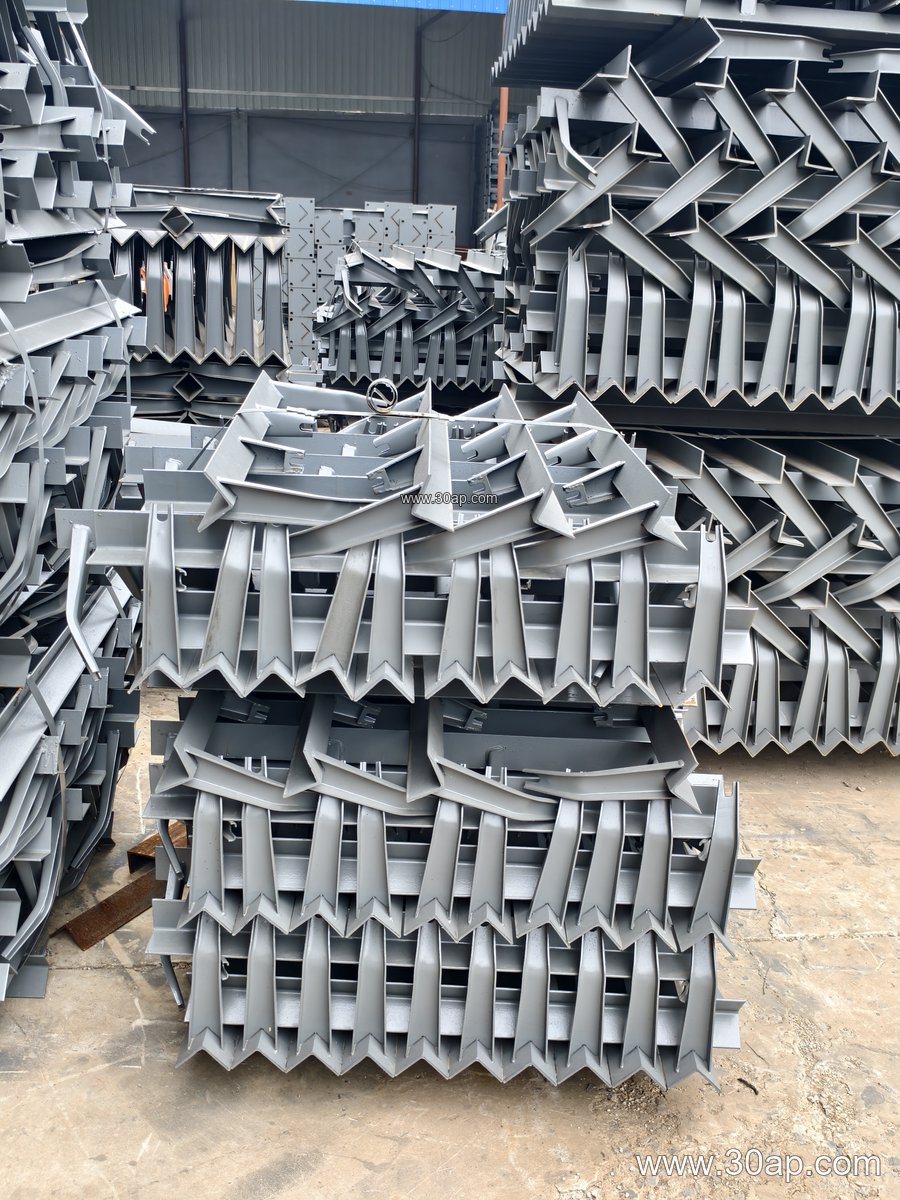
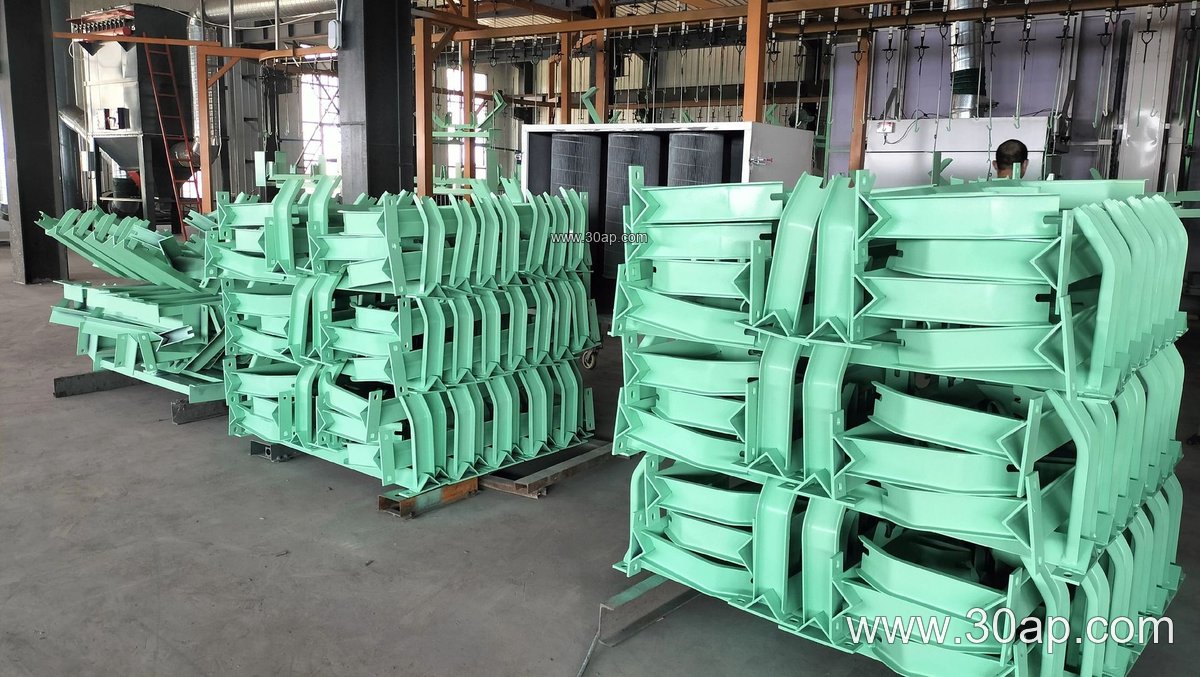
Most brackets are fabricated from angle steel, channel steel or folded steel plate, then drilled and welded to suit the frame. A typical unit includes a base plate, one or two upright arms, a shaft slot or bearing seat, and slotted holes that allow fine adjustment during installation.
- Base plate bolted or welded to the conveyor frame
- Upright arms locating the idler shaft at the correct height and angle
- Slotted mounting holes for lateral adjustment
- Reinforcing ribs where load and vibration are high
Fixing methods vary: bolt-on versions suit frames that may be modified later, while welded versions give a stiffer connection in heavy-duty mining conveyor lines. The bracket must sit square to the belt center line, because a bracket installed out of square will pull the belt even when the idler itself is correct.
Where It Fits on the Conveyor
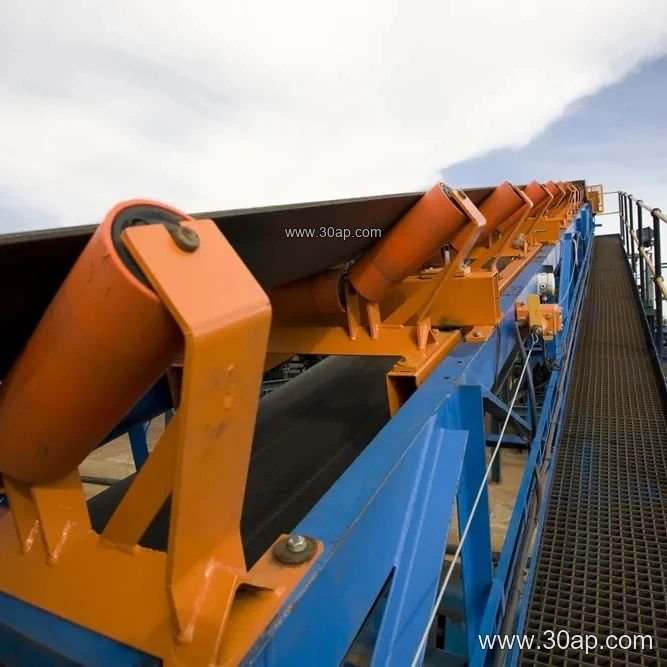
Guide idler brackets are commonly placed on the carrying side a short distance before the point where misalignment becomes a problem, and sometimes on the return side where the belt has less support. They are not a substitute for a bend pulley or a tail pulley; those components change belt direction, while the bracket only positions a guide idler. In a crushing and screening circuit, an operator may fit one bracket pair after the discharge chute and another on the long straight section, keeping the belt centered before it reaches the head pulley.
On a pipe conveyor belt or a corrugated sidewall belt, the guide idler bracket works together with the special idler arrangement that keeps the belt profile stable, so the bracket dimensions should follow the idler manufacturer’s drawing rather than a generic pattern.
Matching the Bracket to Belt Width and Idler Size
Bracket geometry follows the belt width and the idler diameter, and the two are selected together rather than in isolation. Common reference combinations include B650 with a 30 degree trough and Ø89 idlers, B800 with 35 degree and Ø108, and B1200 with 45 degree and Ø133. These are examples, not fixed rules: a wider belt can use different trough angles and roller diameters depending on load, speed and material.
| Belt width | Typical trough angle | Typical idler diameter | Bracket note |
|---|---|---|---|
| B500 | 20 to 30 degrees | Ø89 | Compact frame, short cross beam |
| B650 | 30 degrees | Ø89 | Common in aggregate lines |
| B800 | 30 to 35 degrees | Ø108 | Slotted holes for fine tracking |
| B1000 | 35 degrees | Ø108 to Ø133 | Reinforced arms for heavy loads |
| B1200 | 35 to 45 degrees | Ø133 | Adjustable versions available |
| B1400 | 35 to 45 degrees | Ø133 to Ø159 | Welded or bolted base |
| B1600 | 35 to 45 degrees | Ø159 | Check cross beam length |
| B1800 | 35 to 45 degrees | Ø159 to Ø194 | Heavy-duty fabrication |
| B2000 and above | 35 to 45 degrees | Ø194 | Engineered per project |
Installation hole spacing and cross beam length change with belt width and trough angle, so buyers should supply the frame drawing and the idler shaft diameter when ordering. Fixed and adjustable brackets differ mainly in how much correction range they offer: adjustable types let crews tune the guide angle on site, while fixed types rely on accurate fabrication from the start.
Buyer Checklist
- Confirm belt width, trough angle and idler shaft diameter before ordering.
- State whether the bracket is bolted or welded to the frame.
- Check material thickness for abrasive service such as iron ore or limestone.
- Ask for a drawing showing hole spacing and overall height.
- Plan periodic inspection, since loose bolts let the guide idler drift.
For an EP conveyor belt or a steel cord conveyor belt running at high speed, tracking errors show up faster, so bracket alignment deserves attention during commissioning. A well-matched guide idler bracket is a small item that protects an expensive belt, and matching it to the actual frame and idler is the most reliable way to keep the line running straight.