What a Mining Ceramic Lagged Pulley Does
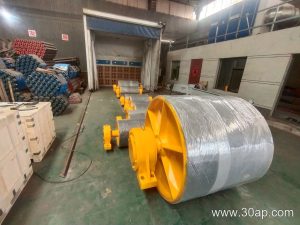
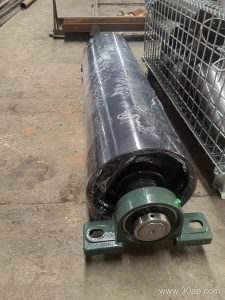
A mining ceramic lagged pulley is a conveyor pulley whose shell is covered with ceramic tiles set in a rubber or polymer backing. The ceramic surface is there to grip the conveyor belt under load, especially where the belt is wet, muddy, or carrying abrasive rock. In a crushing and screening circuit, or on a coal yard conveyor, the difference between a plain steel shell and a properly lagged one often shows up as belt slip at startup, or as pulley wear after a few seasons of grit passing over the face.
This pulley is a specific surface form of the conveyor pulley family, not a substitute for a drive, tail, or bend pulley. The position on the conveyor decides which type it is; the ceramic lagging decides how that type behaves at the belt interface.
How the Ceramic Surface Is Built
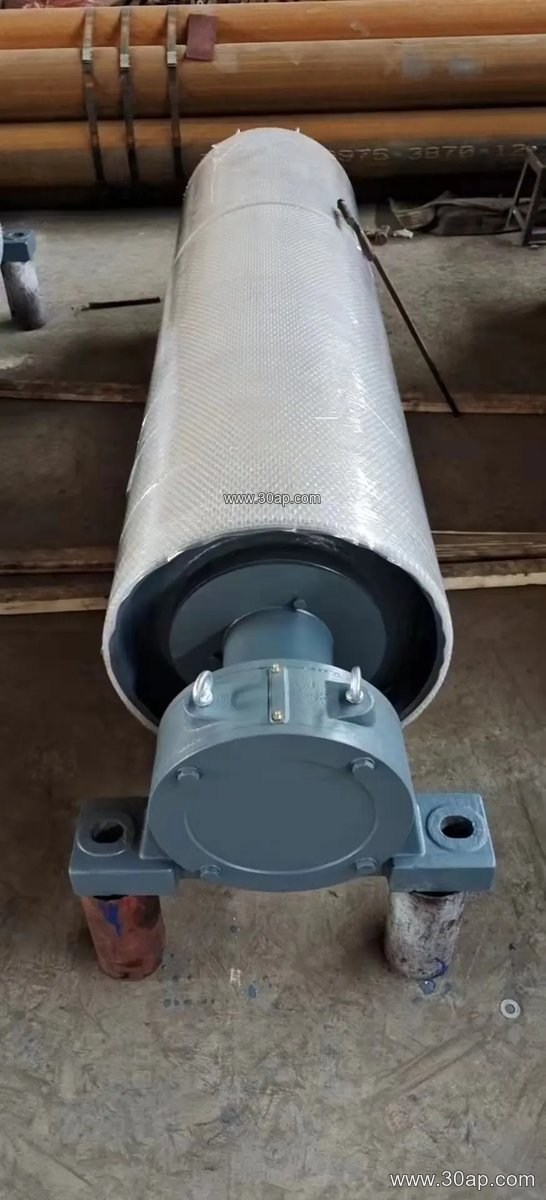
The shell is machined, then covered with a rubber or polymer layer into which ceramic tiles are bonded. Tiles are commonly arranged in a diamond or square pattern, with small gaps or grooves between them that let water and fines escape instead of being trapped under the belt. The result is a high-friction face with good resistance to abrasion and a longer service window than soft rubber alone in gritty service.
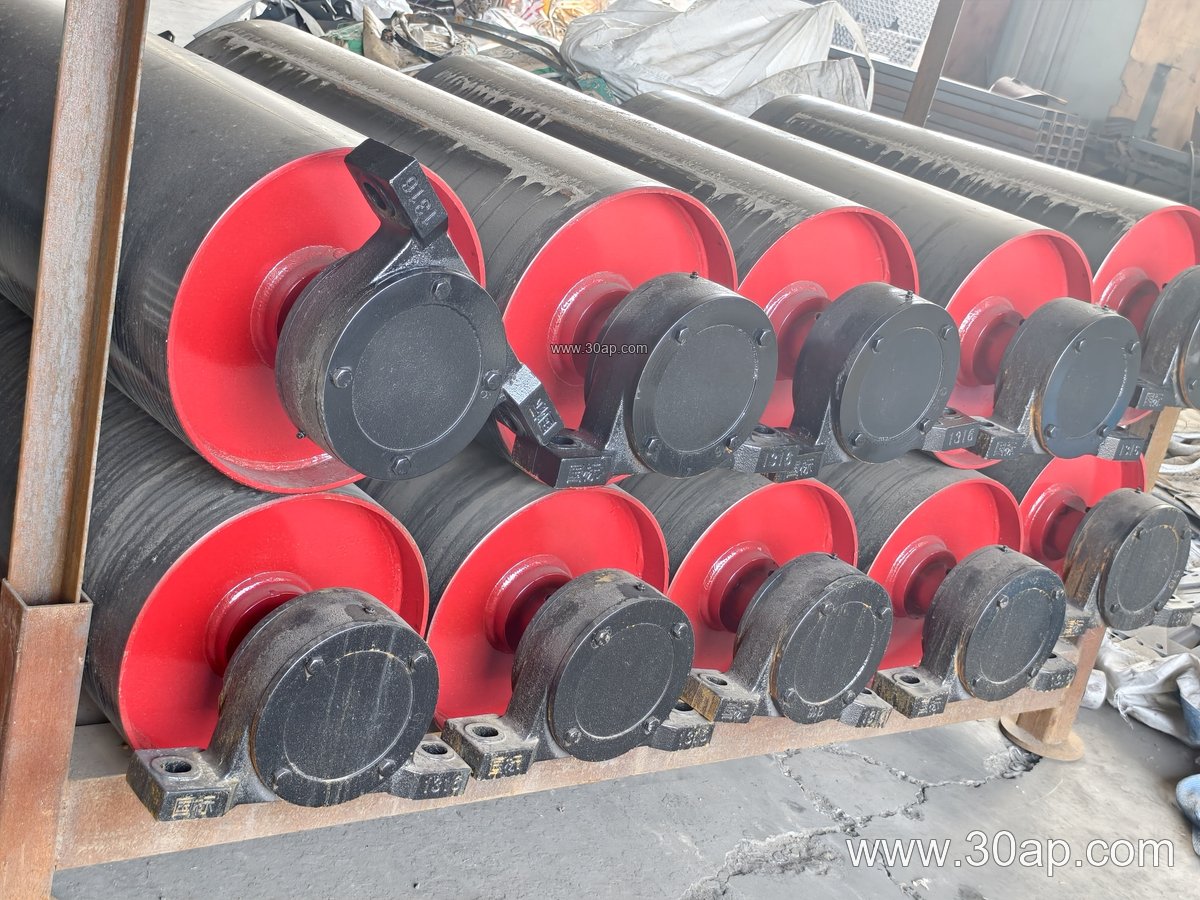
A few construction points matter to buyers:
- Tile thickness and pattern should suit the duty; heavier patterns are used where slip risk and abrasion are both high.
- The bond between tile, backing, and shell must be continuous; voids lead to tile loss.
- Lagging thickness commonly runs 8, 10, 12, 15, or 20 mm depending on the design.
- Ends and edges need protection, since the belt edge meets the pulley face at an angle.
Where It Fits on the Conveyor
The same ceramic-lagged surface can appear on several pulley positions, and each behaves differently. A drive pulley (head pulley) needs the highest grip because it transmits the belt tension; a tail pulley at the loading point deals with fines and spillage; a bend or take-up pulley works with lower wrap angles but still benefits from wear resistance. A snub or pressure pulley presses the belt against a drive pulley to raise the arc of contact.
In a coal preparation plant, ceramic lagging on the drive pulley helps when the belt arrives damp. In a limestone quarry, the tail pulley often sees the worst dust load, so a ceramic face there reduces the smoothing and polishing that plain steel develops. For a belt that only needs gentle tracking and no high tension, a plain or rubber-lagged bend pulley may be sufficient, and that comparison is worth making before paying for ceramic everywhere.
Common Sizes and Combinations
Dimensions follow the conveyor design, not a single fixed rule. Belt width and pulley diameter are separate choices, and one belt width can be matched with more than one diameter. Typical references look like this:
| Belt width | Usual pulley face width | Example diameter pairings |
|---|---|---|
| B400 | about 500 mm | Ø200, Ø250 |
| B500 | about 600 mm | Ø250, Ø315 |
| B650 | about 750 mm | Ø315, Ø400 |
| B800 | about 950 mm | Ø400, Ø500 |
| B1000 | about 1150 mm | Ø500, Ø630 |
| B1200 | about 1400 mm | Ø630, Ø800, Ø1000 |
| B1400 | about 1600 mm | Ø800, Ø1000 |
| B1600 | about 1800 mm | Ø1000, Ø1250 |
| B1800 | about 2000 mm | Ø1250, Ø1400 |
| B2000 | about 2200 mm | Ø1400, Ø1600 |
These are reference values only. Shaft diameter is set by torque and load, with common ranges from Ø50 up to Ø200 mm, and should never be guessed from belt width alone.
Buyer Checklist
- Confirm the pulley role: drive, tail, bend, take-up, or snub. Do not treat drive and tail pulleys as interchangeable.
- State belt width, pulley diameter, face width, and shaft size as a set.
- Describe the environment: wet, dusty, oily, or abrasive, and the material handled.
- Ask how tiles are bonded and whether edge protection is included.
- Check that the pulley mates correctly with the conveyor bracket and bearing arrangement.
- Plan inspection of tile wear together with conveyor belt and idler roller checks.
Ceramic lagging is not a cure for poor belt tension or misalignment. It works best when the pulley is correctly sized and the conveyor frame, brackets, and belt tracking are already in order.