What a Tail Bend Pulley Does
A tail bend pulley is a direction-changing roller mounted near the tail end of a belt conveyor, where the belt returns from the carrying run to the tail pulley and then starts its journey back toward the head. In many layouts the tail pulley itself is the tensioning point, and the bend pulley works alongside it to guide the belt around an additional arc, increase wrap angle, or route the belt clear of structure. It is not a drive pulley and not a tail pulley; it is a separate component in the return path, and treating these three positions as interchangeable is a common source of layout mistakes.
The accurate equivalent name for this component is a tail bend roller or tail return bend pulley. Whatever the wording, the function stays the same: change belt direction with low resistance while keeping the belt centered and the return strand tidy. In a quarry conveyor or a cement plant clinker line, a well-placed bend pulley can shorten the structural span and simplify the take-up arrangement.
Construction and Surface Options
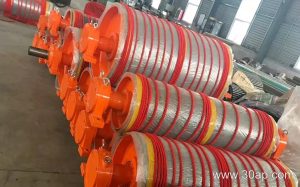
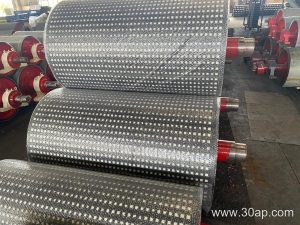
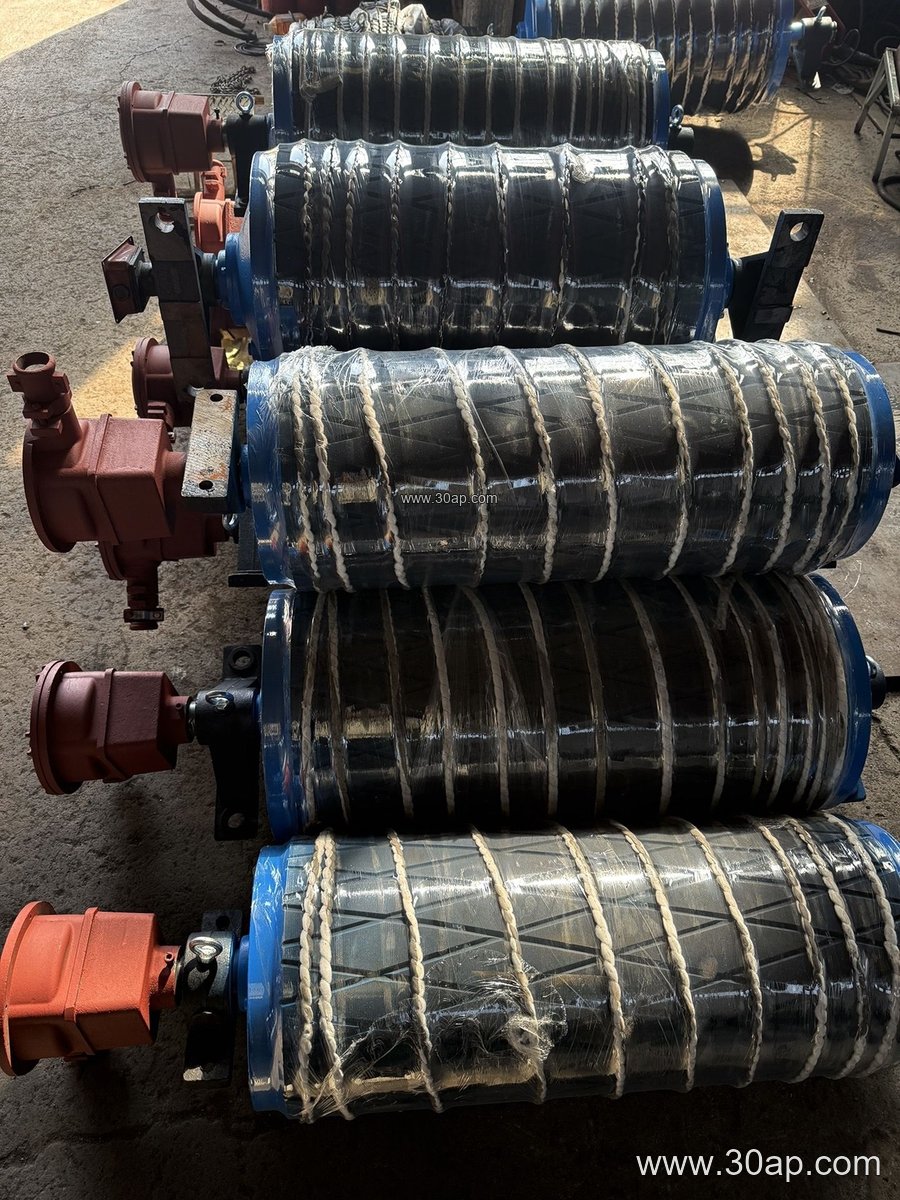
A typical unit is built around a steel drum with welded end discs and a through shaft, supported by two bearing housings that bolt to a conveyor bracket. The shell may be plain, or it may carry lagging for grip and wear protection. Common surface forms include plain finish, cold-bonded rubber, hot-vulcanized rubber, diamond groove lagging, and ceramic lagging. Lagging thickness commonly runs 8, 10, 12, 15, or 20 mm, chosen according to belt speed, load, and whether the pulley sees dirty or wet conditions.
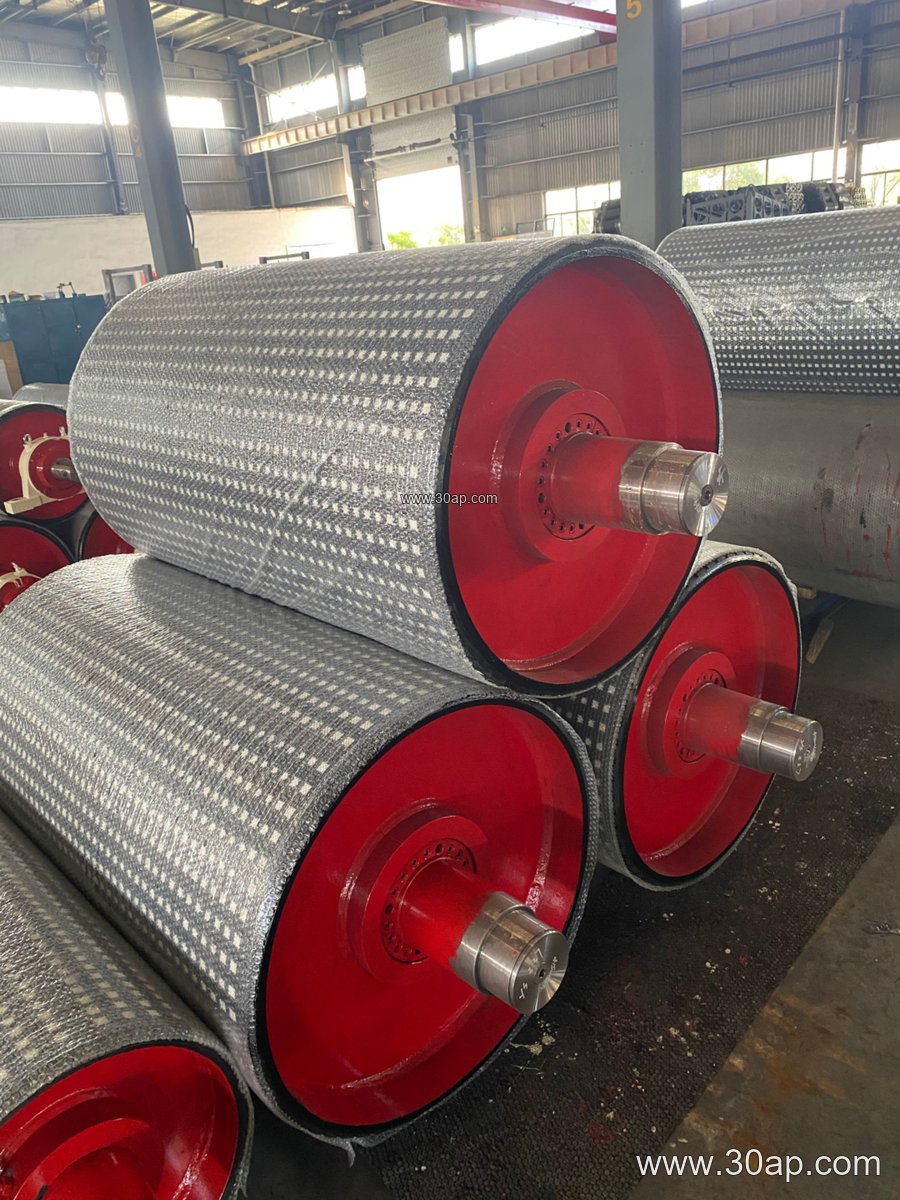
Shaft diameter is determined by torque and bearing load, not by belt width alone. Typical shaft sizes include Ø50, Ø60, Ø70, Ø80, Ø90, Ø100, Ø120, Ø140, Ø160, Ø180, and Ø200. A B800 tail bend pulley with a Ø500 shell and a Ø90 shaft is a plausible combination, but it is a design result, not a rule that links every 800 mm belt to one shaft size.
Common Reference Dimensions
The face width of a bend pulley is usually slightly wider than the belt it carries. The following values are reference points only; final dimensions follow the conveyor design.
- B400 belt — face width about 500 mm
- B500 belt — face width about 600 mm
- B650 belt — face width about 750 mm
- B800 belt — face width about 950 mm
- B1000 belt — face width about 1150 mm
- B1200 belt — face width about 1400 mm
- B1400 belt — face width about 1600 mm
- B1600 belt — face width about 1800 mm
- B1800 belt — face width about 2000 mm
Shell diameters commonly range from Ø200 and Ø250 for small return positions up to Ø630, Ø800, Ø1000, and larger where belt stiffness or wrap angle demands it. A short-center conveyor may use a compact B650 × Ø315 unit, while a long overland or port conveyor might call for B1400 × Ø800 with heavier lagging.
Where It Fits in the Plant
Tail bend pulleys appear in crushed stone and aggregate lines, in iron ore and copper ore handling, in coal preparation plants, in power station coal yards, and in fertilizer or grain silo conveyors. In a crushing and screening circuit they often sit behind the tail pulley to redirect the return strand under the discharge chute or toward a screw take-up. In a tunnel spoil system, a compact bend roller helps keep the return run close to the frame where space is tight.
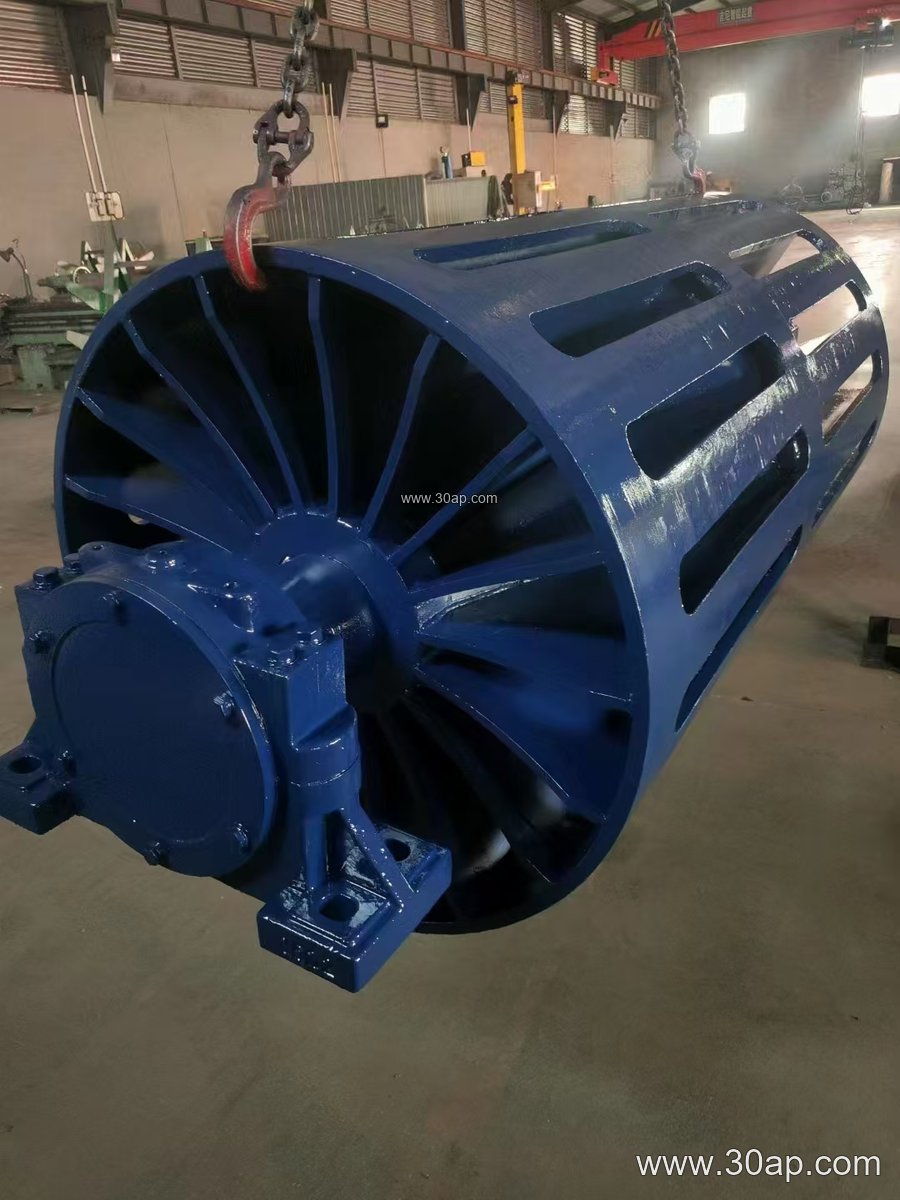
Matching the pulley to the belt matters. An abrasion resistant conveyor belt running over a plain shell may wear the lagging quickly in a sand and gravel operation, while a flame retardant conveyor belt in a coal mining conveyor needs a pulley surface that will not create slip heat. Where the belt carries hot sinter or cement clinker, a heat resistant conveyor belt paired with a suitably specified pulley and bearing arrangement protects both components. The bend pulley should also be checked against the belt’s minimum pulley diameter requirement, especially for steel cord conveyor belt and thick multi-ply fabric core conveyor belt constructions.
Buyer Checklist
Before ordering, confirm the belt width, the required wrap angle, the shaft and bearing size, the lagging type and thickness, and the mounting interface with the conveyor bracket. Ask whether the pulley is balanced for the intended belt speed and whether the bearing seals suit dusty or washdown conditions. Specify the shaft material and keyway only after the torque calculation is complete. For a tail bend roller on a heavy-duty mining conveyor belt, a spare set of bearings and a wear inspection interval are worth planning from day one.
Inspection is straightforward: check lagging wear, listen for bearing noise, verify that the belt tracks centrally, and confirm that the return strand does not rub the frame. A bend pulley that runs cool and true is doing its job quietly, and that quiet operation is what keeps the whole conveyor available.