What a Large Pulley Does on a Conveyor
A large pulley is the high-capacity drum that transmits motion, changes belt direction, or tensions the belt on heavy-duty conveyor systems. In quarry and aggregate lines, cement plants, and iron ore operations, these pulleys handle high belt tensions and abrasive loads. Unlike a drive pulley, which grips the belt to move it, a tail pulley redirects the returning belt, and a bend pulley simply changes its path. Each subtype has a distinct role; they are not interchangeable. A large pulley may be any of these types when the diameter and face width are sized for the duty.
Construction and Key Dimensions
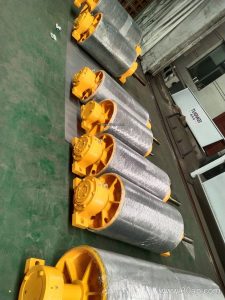
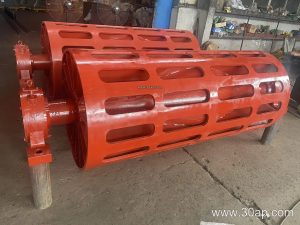
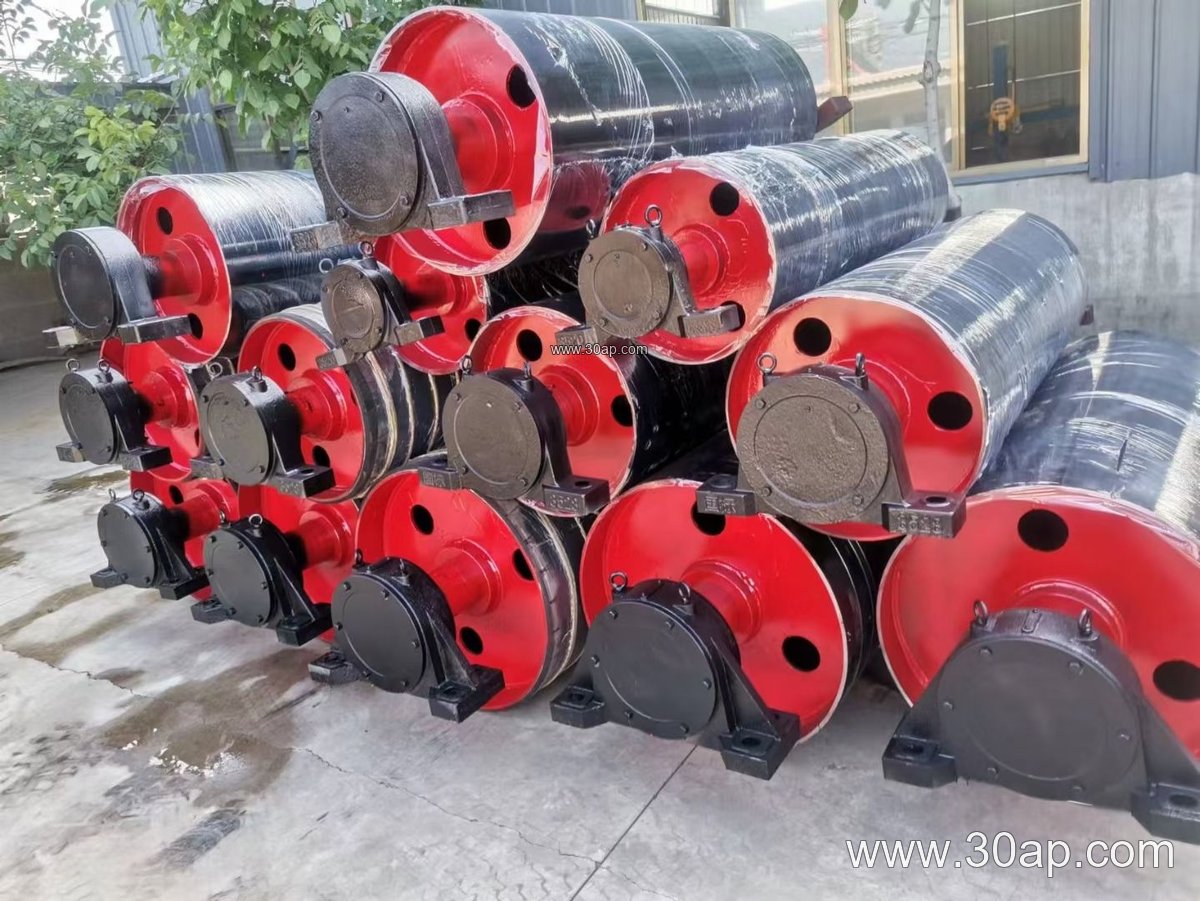
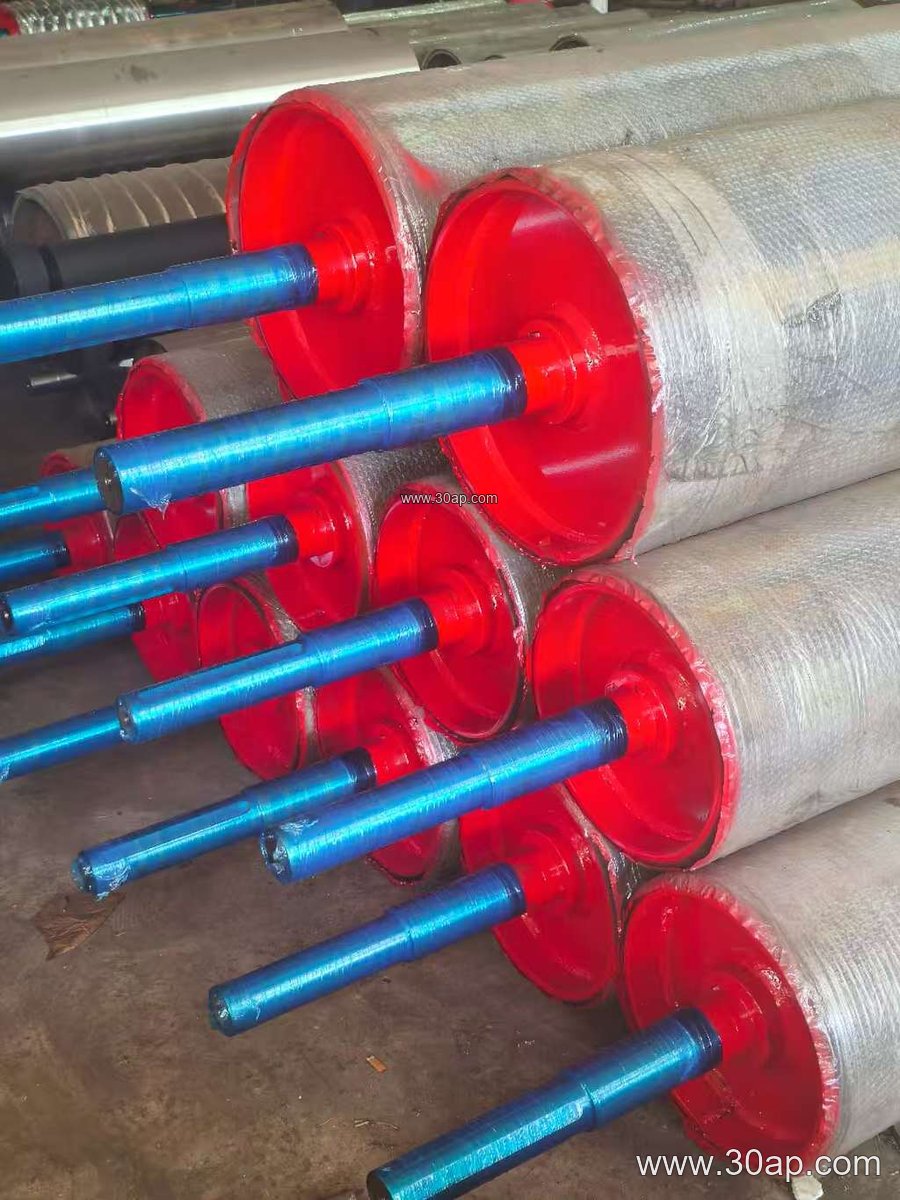
A large pulley typically consists of a cylindrical shell, end discs, a shaft, and a lagging surface. The shell is often rolled from steel plate and welded to the end discs, which are bored to accept the shaft. Shaft diameter is determined by torque and load, not by belt width alone. Common shaft sizes include Ø50, Ø80, Ø120, Ø160, and Ø200, but final selection depends on the drive calculation.
Face width usually exceeds belt width to keep the belt centered. For example, a B800 belt may run on a pulley with roughly 950 mm face width, while a B1200 belt might use about 1400 mm. These are typical references, not fixed rules. Diameters for large pulleys commonly range from Ø500 to Ø1250 or more, depending on the application. A heavy-duty mining conveyor might use a B1400 × Ø800 tail pulley, while a cement plant drive could employ a B1000 × Ø1000 drum with diamond lagging.
Lagging and Surface Options
Surface treatment affects grip and wear life. Plain steel is used where slip is not a concern. Rubber lagging—applied by cold bonding or hot vulcanizing—improves friction. Diamond or herringbone patterns help shed water and fines, while ceramic lagging suits high-abrasion service. Lagging thickness often falls between 8 mm and 20 mm. The choice depends on belt speed, material, and environmental conditions. For a coal mining conveyor belt that carries wet, fine coal, diamond rubber lagging can reduce slip without overloading the belt.
Where Large Pulleys Are Used
In a limestone quarry, a large pulley at the head of a primary crushing line drives an EP conveyor belt or a steel cord conveyor belt. In a coal-fired power plant, large tail and bend pulleys guide a flame retardant conveyor belt through long galleries. Cement plants use large pulleys on clinker conveyors where heat resistant conveyor belt is required. Sand and gravel operations rely on large pulleys to keep a heavy-duty mining conveyor belt tracking through transfer points. The pulley must match the belt’s tension rating and the material’s impact and abrasion characteristics.
Matching Pulley to Belt and Support Components
Belt width, tension, and troughability influence pulley diameter. A wider belt, such as a 1200mm wide conveyor belt, generally needs a larger diameter to limit bending stress. However, there is no single diameter for a given width. A B650 belt might use a Ø400 pulley in a light duty, while the same width on a steep incline could require Ø630. The conveyor bracket and idler roller layout also affect belt path and pulley load. For transition zones, a larger pulley reduces edge stress.
Consider an EP1000 1200mm conveyor belt carrying aggregate. The drive pulley might be Ø800 with 12 mm rubber lagging, while the tail pulley could be Ø630. The shaft would be sized per torque, perhaps Ø120 or Ø140. These values are illustrative only and must be confirmed by engineering calculation.
Buyer Checklist
- Confirm the pulley’s function: drive, tail, bend, take-up, or snub. Each has different design priorities.
- Provide belt width, belt type (e.g., EP200, NN300, ST1600), and maximum tension.
- Specify lagging type and thickness if needed for grip or wear protection.
- State environmental conditions: dust, water, heat, oil, or fire risk. This guides the choice of a fire resistant conveyor belt or oil resistant conveyor belt.
- Check shaft diameter against torque and bearing life, not just belt width.
- Ensure the pulley face width suits the belt and that the conveyor bracket interfaces correctly.
For more information on compatible conveyor components, visit conveyor pulley and conveyor belt resources.