What a V-Type Idler Bracket Does
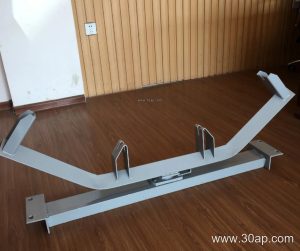
A V-Type Idler Bracket is a return-strand support component that holds two idler rollers in a shallow V arrangement under the carrying belt. Instead of a single flat return roller, the bracket positions the rollers at an angle so the belt rests in a slight trough. This shape helps the belt run centred, sheds loose material toward the edges, and reduces the chance of the belt wandering off the structure. On long conveyors in a quarry, a limestone mine, or a cement plant, these brackets are a practical way to keep the return side tidy and stable.
The bracket is not a pulley. A drive pulley, tail pulley, and bend pulley each have a distinct role in transmitting power and changing belt direction, and none of them can be swapped for a return bracket. The V-Type Idler Bracket belongs to the group of conveyor brackets that carry idler rollers, together with troughing and transition brackets on the carrying side.
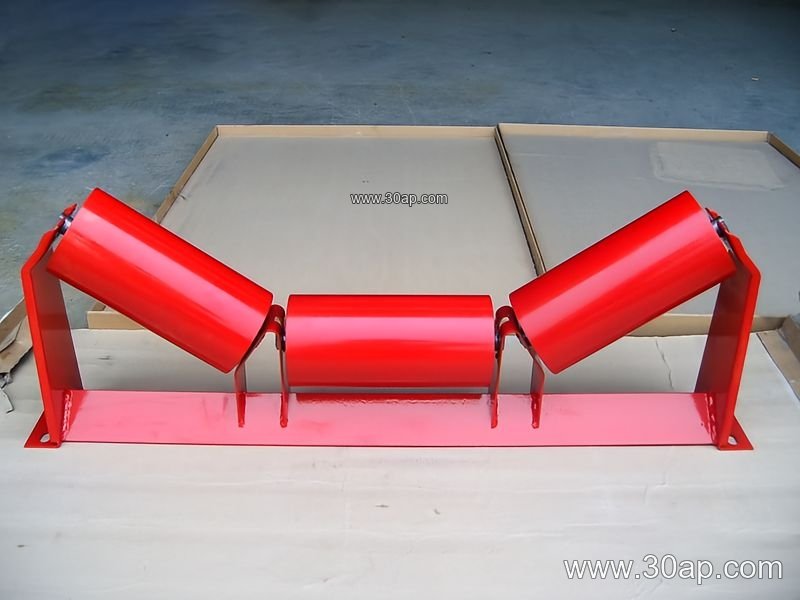
Construction and Mounting
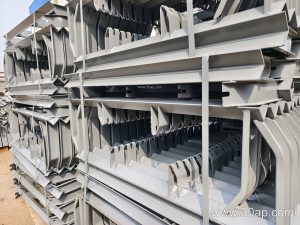
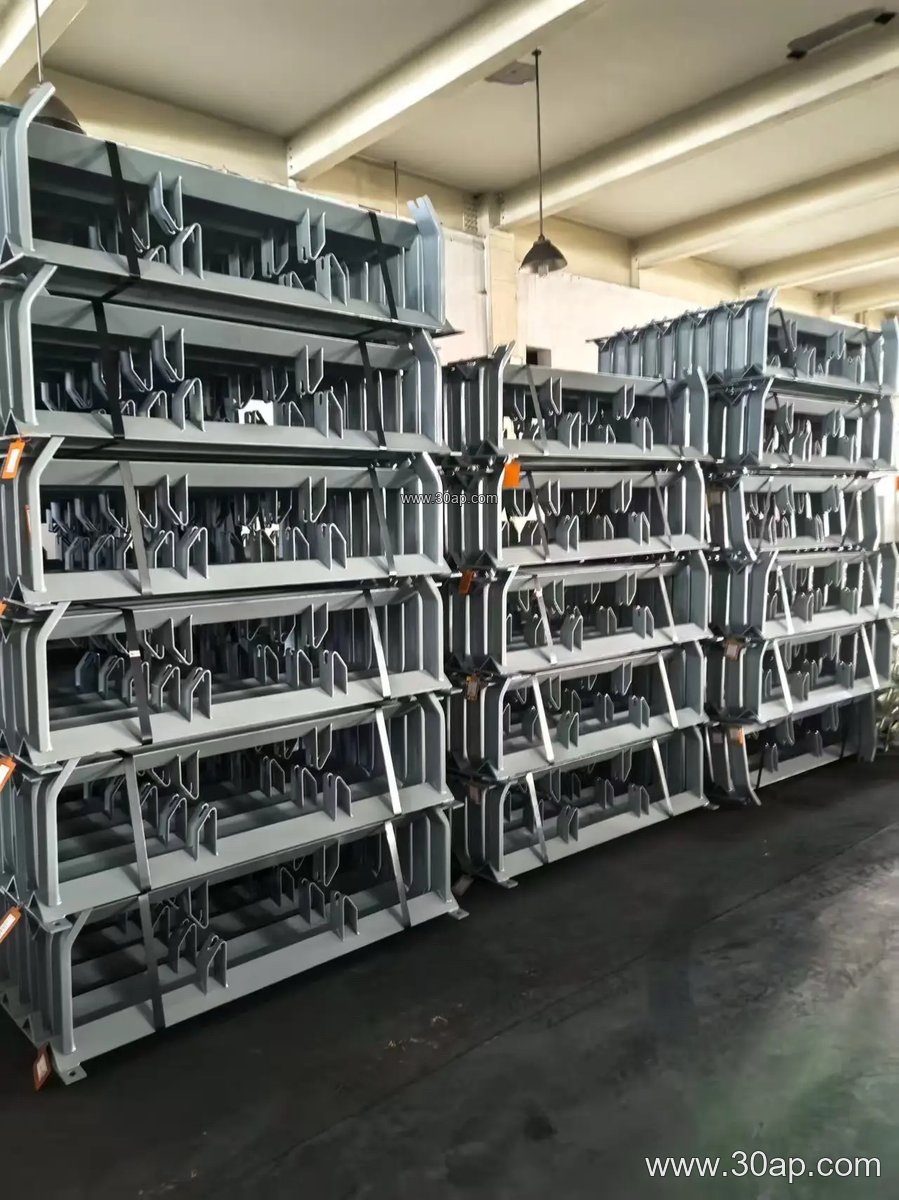
Most units are fabricated from angle steel, channel steel, or folded steel plate. The two arms are set at a fixed angle, and each arm carries a mounting position for an idler roller. The bracket is bolted to the conveyor frame stringers, so the hole spacing and crossbeam length follow the belt width and the chosen angle rather than a single universal number.
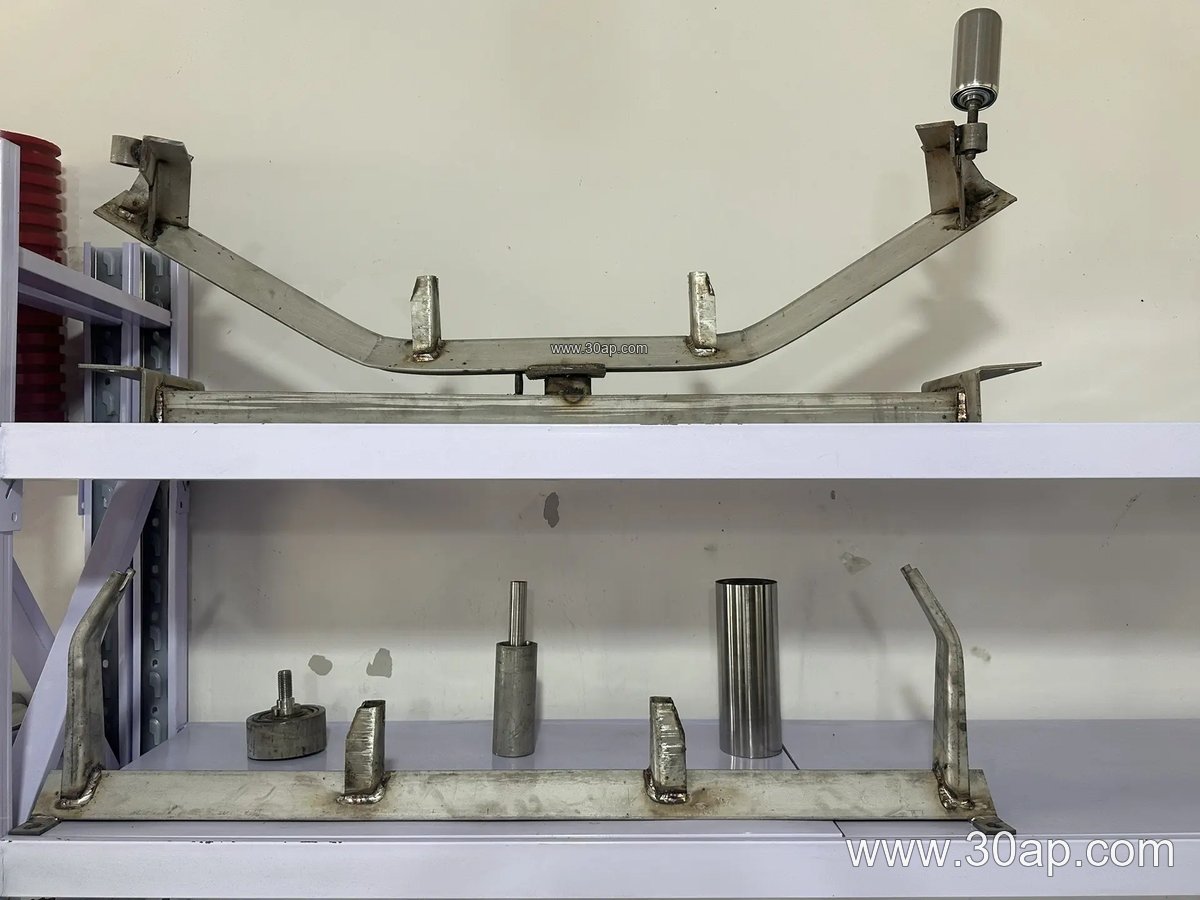
- Fabricated arms in angle or channel steel
- Welded or bolted roller seats
- Mounting holes matched to the frame stringer
- Optional height adjustment on adjustable versions
Fixed brackets hold a set angle. Adjustable brackets let maintenance staff change the roller position within a small range, which is useful when a belt needs fine training after installation or after the frame has settled. The V shape itself is usually shallow, commonly in the range of a few degrees per side, and the exact angle is set by the bracket design.
Where It Fits on the Conveyor
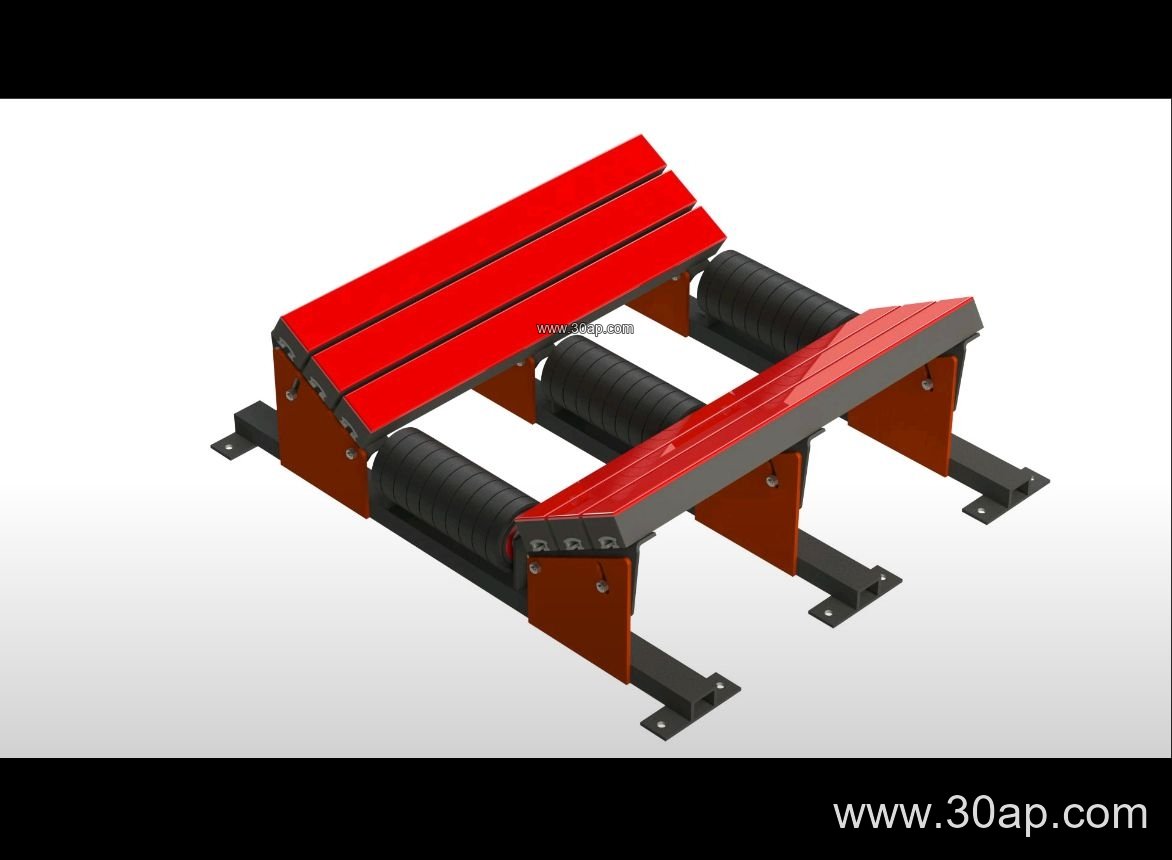
The bracket is installed on the return strand, below the carrying run, spaced along the frame in the same way as other return supports. It is often used where spillage, wet material, or a slight belt misalignment is a concern, such as a coal handling line at a power plant or a crushing and screening circuit in an aggregate plant. Because the rollers sit at an angle, fines tend to fall away instead of building up on the roller face.
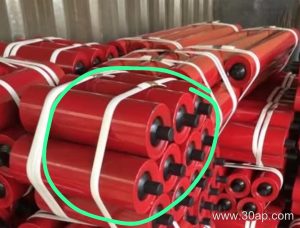
In dusty or abrasive service, the idler roller and the bracket should be selected as a pair. A belt such as an abrasion resistant conveyor belt or a heavy-duty mining conveyor belt may run over the same return support for years, so the bracket needs to be robust enough to hold the roller without flexing. Related equipment on the same conveyor includes the conveyor pulley at the head and tail, the conveyor belt itself, and the conveyor bracket set on the carrying side.
Common Reference Sizes
The table below gives typical reference values for planning. These are common ranges, not fixed rules, and the final match depends on the conveyor design.
| Item | Common Reference |
|---|---|
| Belt width | B500, B650, B800, B1000, B1200, B1400, B1600, B1800 |
| Roller diameter | Ø89, Ø108, Ø133, Ø159 |
| Bracket material | Angle steel, channel steel, folded plate |
| Mounting | Bolted to frame stringer, fixed or adjustable |
A combination such as B800 with Ø108, or B1200 with Ø133, is common in practice, but one belt width does not lock the bracket to one roller diameter. The frame height, load, and belt tension all influence the choice.
Buyer Checklist
- Confirm the belt width and the frame stringer dimensions before ordering.
- State whether a fixed or adjustable bracket is needed.
- Match the roller seat to the chosen idler roller diameter.
- Check the material and finish against the site conditions, such as wet coal or abrasive ore.
- Ask for the mounting hole spacing and crossbeam length for the specific design.
For a plant handling bulk material, a well-matched V-Type Idler Bracket keeps the return strand supported and the belt tracking predictably. It is a small part of the conveyor, but it works together with the belt, the idler roller, and the pulleys to keep the line running.