What a Discharge Pulley Does at the Head of a Conveyor
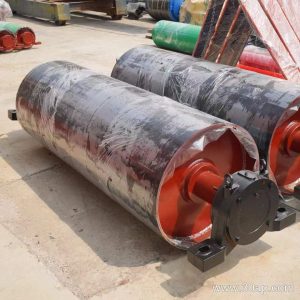
The discharge pulley, often simply called the head pulley, sits at the delivery end of a belt conveyor and turns the belt back after the load has been thrown clear. Because it is the last rotating part the belt touches before the material leaves the system, its diameter, alignment and lagging have a direct effect on trajectory, belt tracking and wear. In a quarry, a cement plant or a coal handling line, this conveyor pulley is usually the largest and most heavily loaded drum on the machine.
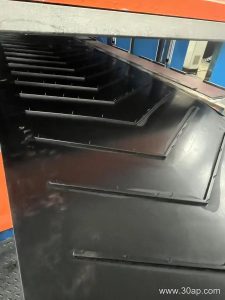
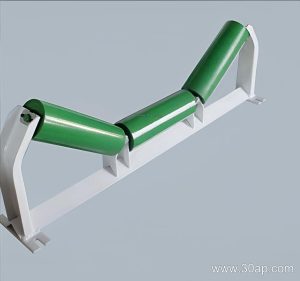
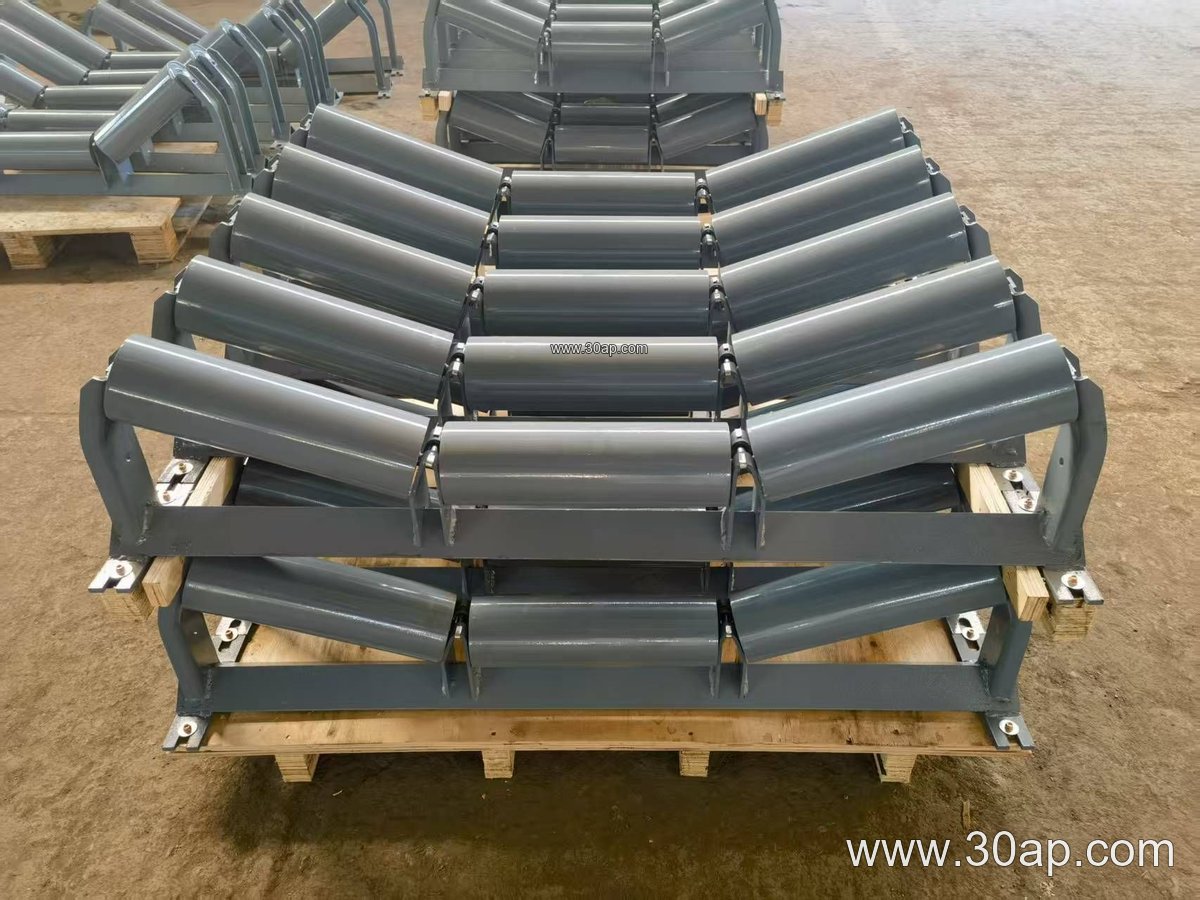
The drum is not a standalone item. It works with the conveyor belt, the idler roller sets along the carrying side, and the conveyor bracket that fixes the bearing housings to the frame. Get the head-end geometry right and the whole line runs more quietly.
How the Drum Is Built
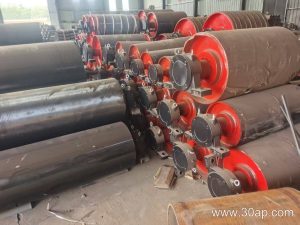
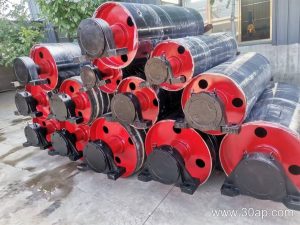
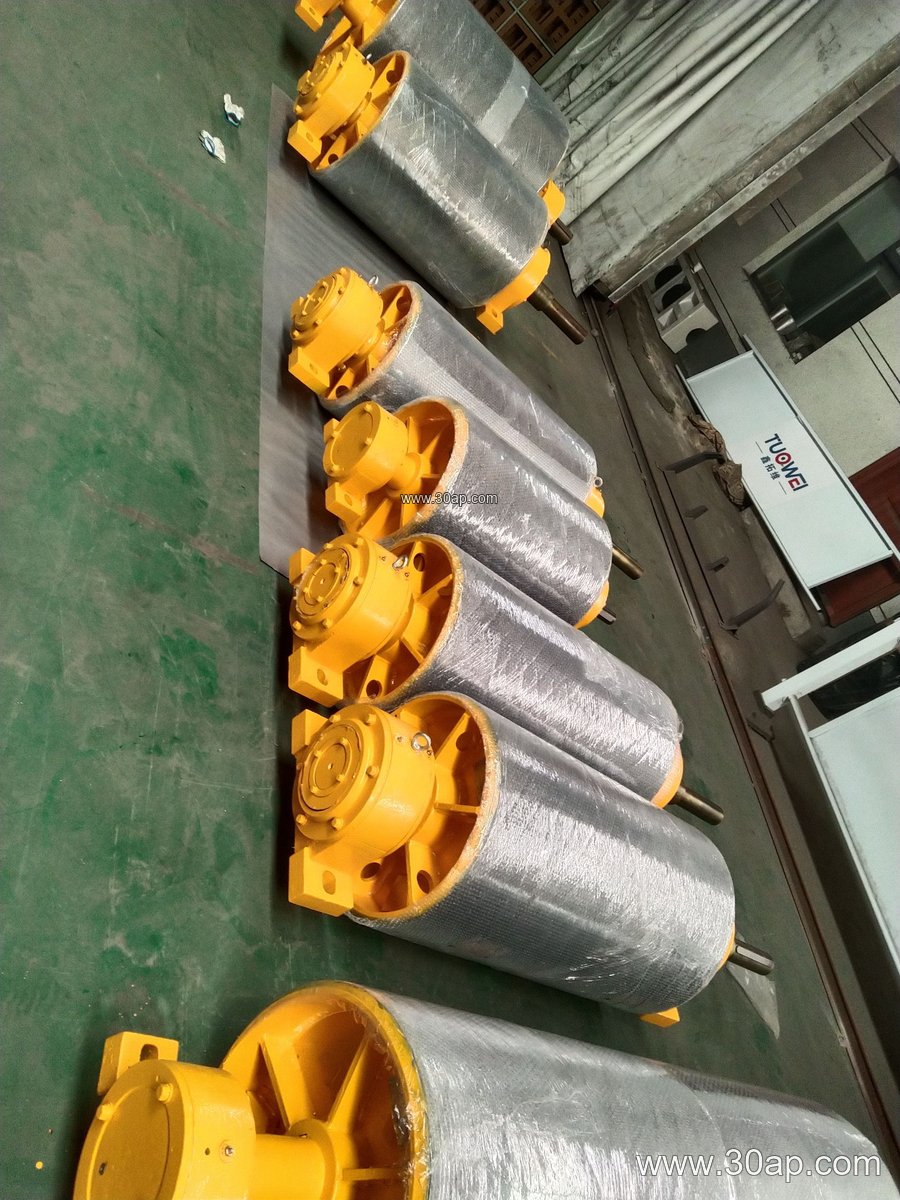
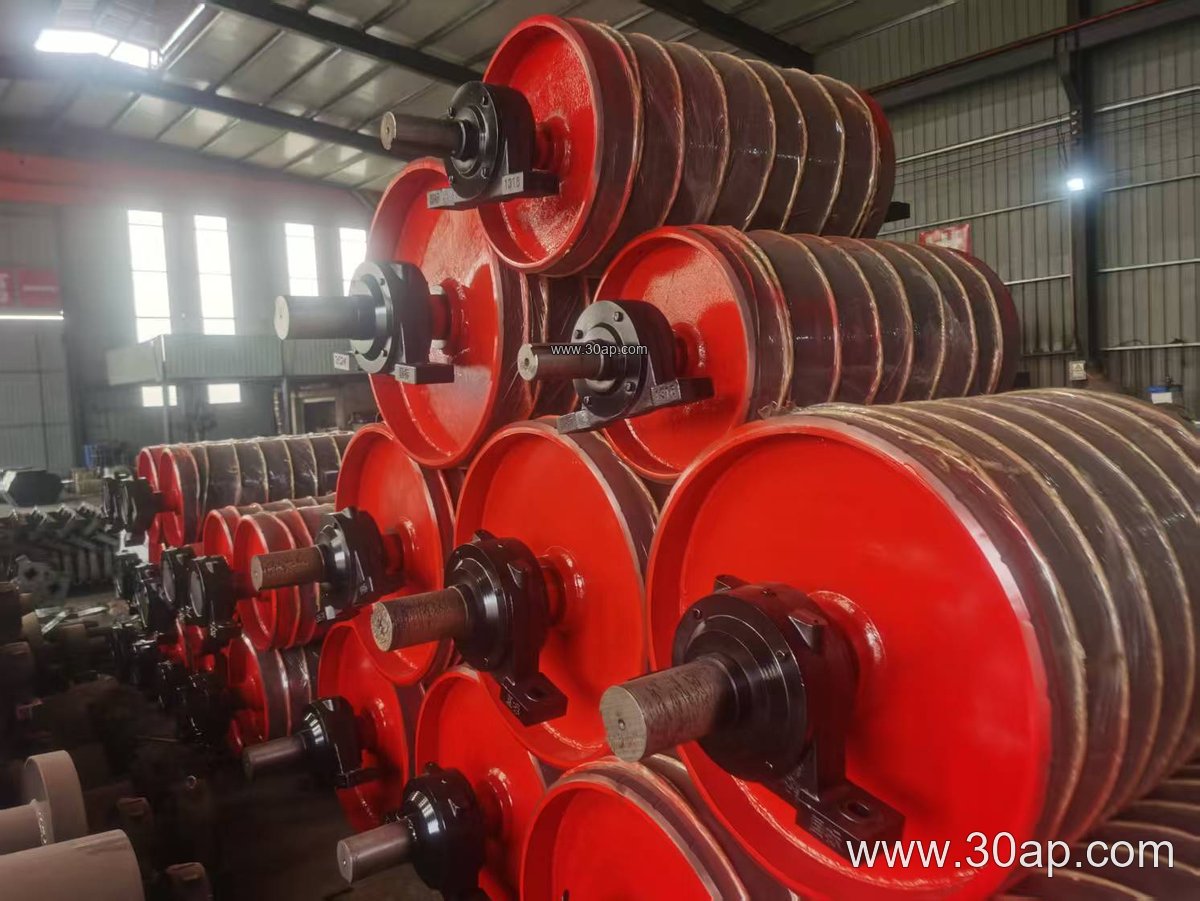
A typical discharge pulley consists of a cylindrical shell, two end discs, a shaft, bearing housings and a lagging layer. The shell is machined to keep runout small, since even a slight wobble shows up as belt slap at high speed. The shaft is sized by torque and radial load rather than by belt width alone, so a B800 unit may use a shaft in the Ø80 to Ø120 mm range depending on the duty, while a wider B1400 drum on a heavy ore duty may need considerably more.
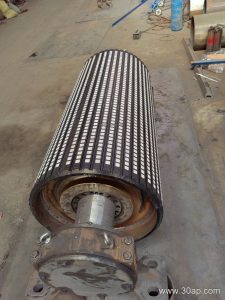
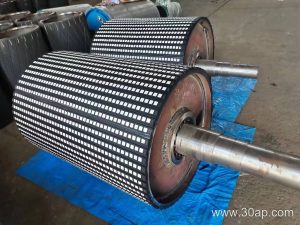
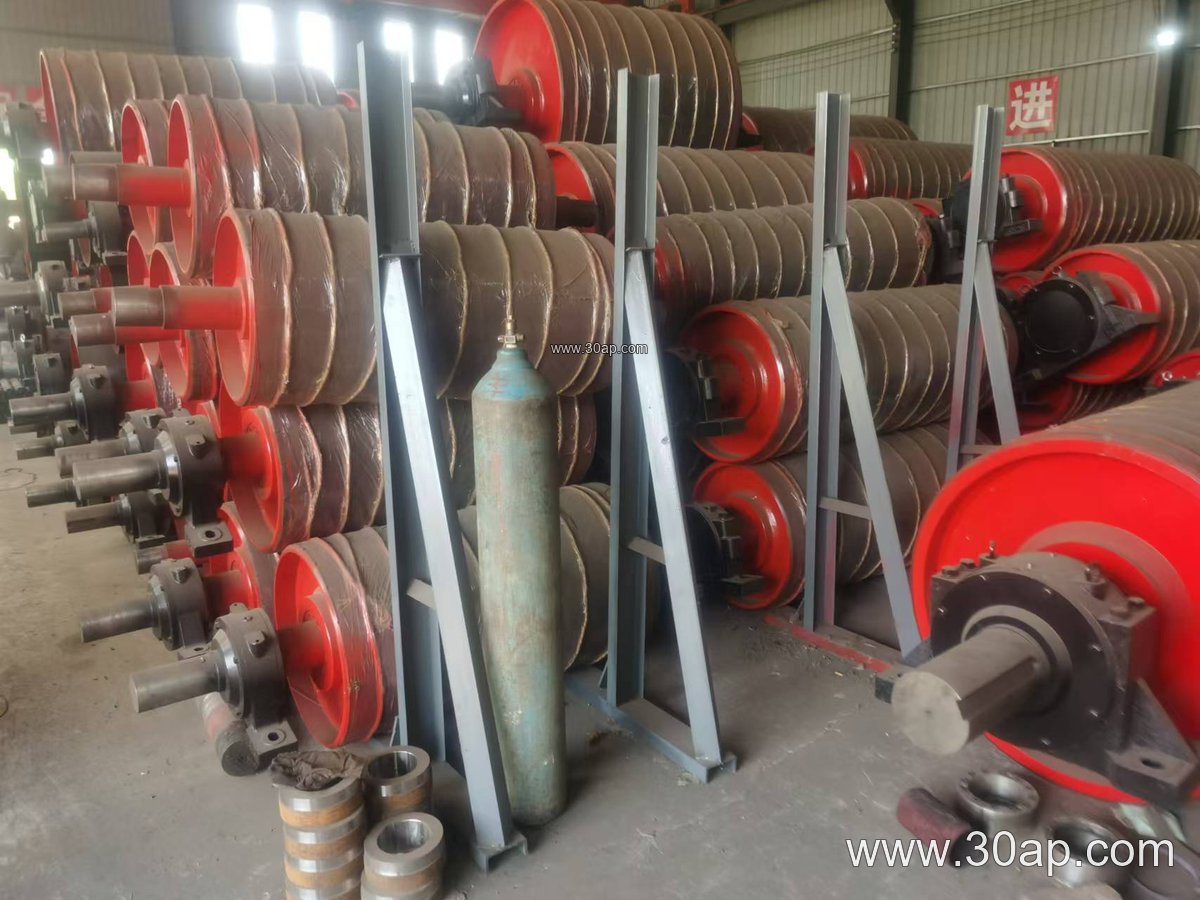
Surface treatment is where buyers have the most choice. Plain steel is acceptable for light, dry service, but most discharge pulleys are covered with rubber or ceramic to protect the shell and improve grip. Common covering forms include:
- Plain face for low-tension, clean duties
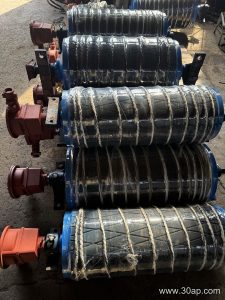
- Diamond or herringbone grooving for wet or slightly contaminated belts
- Ceramic tiles for abrasive abrasion resistant conveyor belt circuits
- Hot-vulcanised or cold-bonded rubber in 8, 10, 12, 15 or 20 mm thickness
The right choice depends on whether the belt is carrying gritty stone, sticky clay or hot clinker. A soft rubber cover grips well but wears faster in sharp rock; ceramic holds up in iron ore and copper ore service but costs more and is less forgiving of misalignment.
Sizes and Dimensioning
There is no single rule that ties one belt width to one drum diameter. Designers usually start from the belt width, then confirm the diameter from the required wrap angle, belt tension and material trajectory. The face width is normally a little wider than the belt so the edges are fully supported.
| Belt width | Typical face width | Diameter examples |
|---|---|---|
| B500 | about 600 mm | Ø250, Ø315, Ø400 |
| B650 | about 750 mm | Ø315, Ø400, Ø500 |
| B800 | about 950 mm | Ø400, Ø500, Ø630 |
| B1000 | about 1150 mm | Ø500, Ø630, Ø800 |
| B1200 | about 1400 mm | Ø630, Ø800, Ø1000 |
| B1400 | about 1600 mm | Ø800, Ø1000, Ø1250 |
| B1600 | about 1800 mm | Ø1000, Ø1250, Ø1400 |
These figures are reference data, not a fixed catalogue match. A B1200 x Ø1000 head drum and a B800 x Ø500 unit are both common, but the final selection should follow the conveyor design. Shaft diameters such as Ø70, Ø90, Ø120 or Ø160 mm are chosen from load calculations, never from belt width alone.
Where It Fits in the Plant
In a coal preparation plant, the discharge pulley at the top of a transfer tower sets the fall pattern onto the next coal mining conveyor belt. In a limestone crushing and screening line, the head drum of the primary discharge conveyor often runs with a thick rubber cover to tolerate sharp, wet feed. Power plant coal handling and port bulk terminals use similar drums, sometimes with a crowned face to help centre a long, fast belt.
It should not be confused with a drive pulley, which transmits power, or a tail pulley at the loading end. Each position has its own load case. A bend pulley, for instance, only changes belt direction with a light wrap, while the discharge drum carries the full tension of the carrying side and the impact of the material leaving the belt.
Buyer Checklist
- Confirm belt width, belt type and the actual tension at the head end.
- State the material: sharp rock, hot clinker, wet slurry or fine powder.
- Choose lagging form and thickness to suit abrasion and grip needs.
- Check shaft size and bearing type against the calculated load.
- Ask for runout and balance data, and confirm the face width covers the belt.
- Plan a maintenance interval for lagging inspection; worn covers damage both drum and belt.
Matching the head drum to a heat resistant conveyor belt or a heavy fabric-core belt is a matter of joint design and tension, not guesswork. Treated as a system part rather than a spare, the discharge pulley rewards careful specification with longer belt life and a cleaner material throw.