What a Large-Diameter Conveyor Idler Is
A large-diameter conveyor idler is a load-bearing roller with an outside diameter well above the small sizes used on light belts. In bulk handling, the term usually points to idlers in the range from Ø159 mm up to Ø219 mm, although the exact boundary depends on the conveyor design. These rollers support the conveyor belt on the carrying side or the return side and help keep the belt profile stable under heavy material loads. They are often specified together with the conveyor bracket and frame so that the roll length, shaft end, and fixing dimensions match the installation.
The main reason to choose a larger roll diameter is load capacity and bearing life. A bigger shell gives more space for a stronger bearing, reduces rotation speed for the same belt speed, and lowers the stress on the roller surface. This matters on wide belts carrying abrasive rock, ore, or clinker, where a small idler would wear out quickly or run hot.
How the Roller Is Built
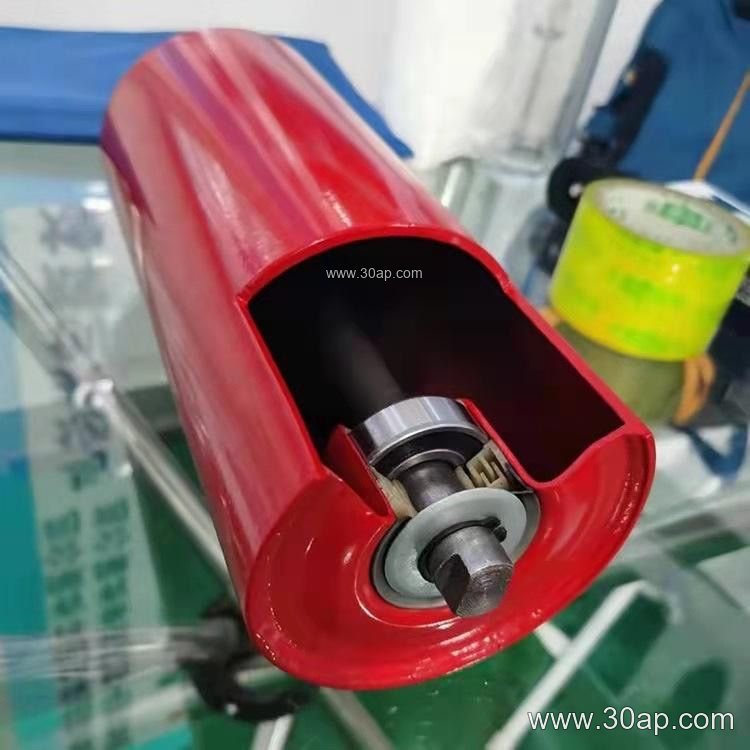
A typical large-diameter conveyor idler uses a seamless steel tube shell, welded end caps, a through shaft, and sealed bearings. Common bearing sizes in this class include 6308, 6310, and larger, but the bearing is selected from the actual load and speed, not from the roll diameter alone. The seal arrangement is critical in dusty plants: a multi-labyrinth seal with grease retention protects the bearing from fine particles and water ingress.
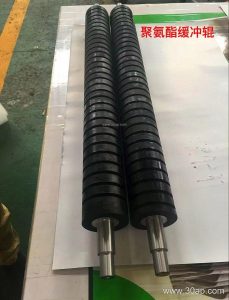
Surface form varies with duty. Plain steel shells suit general bulk material. Rubber rings or ceramic lagging can be added on impact zones or on rollers that see heavy abrasion. For comparison, a buffer idler with rubber rings is often used at transfer points to absorb impact, while a standard carrying idler in the same frame may have a plain steel shell. The two are different subtypes and should not be swapped without checking the load case.
Where Large-Diameter Idlers Fit
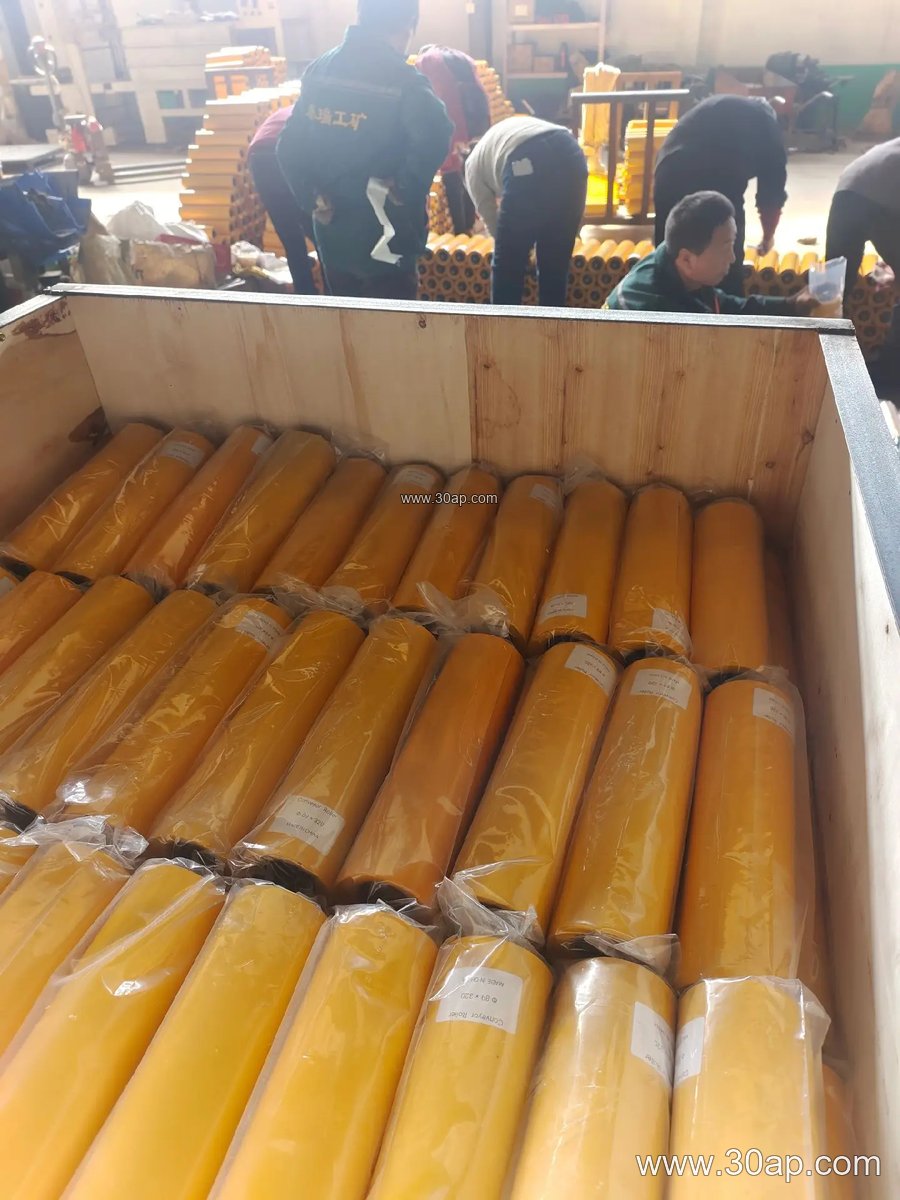
These rollers are common in quarry and aggregate lines, iron ore and copper ore handling, coal preparation plants, cement plants, and power station coal conveying. They also appear in port bulk terminals and steel plant raw material yards. On a long overland conveyor, the carrying idlers may be arranged in a three-roll trough set at 30 or 35 degrees, while the return side may use a V-type or flat return idler. A large-diameter return roller can reduce belt sag and help tracking on wide belts.
Roll length is not fixed by diameter. For a three-roll trough set, common roll lengths are roughly 315 mm for B800, 380 mm for B1000, 465 mm for B1200, and 530 mm for B1400. These are examples only; the side rollers and center roller can differ, and the final length is set by belt width, trough angle, and frame design. A wide belt such as a 1800 mm or 2000 mm conveyor belt will usually need a larger frame and longer rolls, but belt width alone does not dictate one shaft diameter.
Selection Points for Buyers
Start with the belt width and the trough angle, then confirm the idler group form: single roll, two-roll, or three-roll trough. Check the calculated load per idler, the belt speed, and the ambient conditions. In a coal mine, a flame retardant conveyor belt may be used together with anti-static idlers; in a cement plant, heat resistant conveyor belt sections may need heat-tolerant roller seals. The conveyor pulley at the drive and tail is a separate item and is not interchangeable with an idler.
Ask for the shaft end drawing, the bearing designation, the seal type, and the surface treatment. For abrasive duty, an abrasion resistant conveyor belt and a wear-resistant idler shell work as a pair, but neither replaces the other. If the line uses an EP conveyor belt or a steel cord conveyor belt, the idler spacing and diameter should follow the belt manufacturer’s recommended support conditions. Keep spare rollers in the same diameter and length as the installed set to avoid mixing incompatible parts.
Maintenance and Common Mistakes
Inspect for shell wear, seal leakage, and abnormal noise. A roller that no longer turns freely can flat-spot the belt and damage the conveyor bracket. Replace idlers in matched sets where possible, and do not fit a small-diameter roller into a frame designed for a large-diameter conveyor idler without checking the belt line height. Lubrication intervals depend on the seal type and environment; sealed-for-life rollers need no routine greasing, while regreasable types need a defined schedule.
Finally, keep the specification practical. A Ø178 mm or Ø194 mm roller may be right for a heavy-duty mining conveyor, but a light aggregate line may run well with Ø133 mm. The correct choice comes from load, speed, belt width, and environment, not from a single size rule.