What a 1600mm Diameter Conveyor Pulley Is
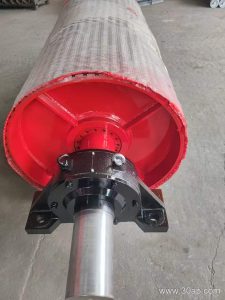
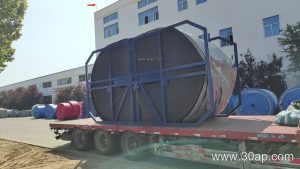
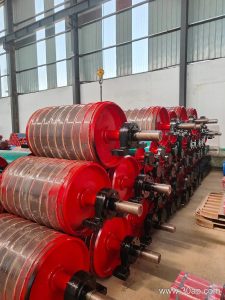
A 1600mm diameter conveyor pulley is a large-diameter drum used at the head, tail, or take-up point of a heavy-duty belt conveyor. At this size, the pulley is normally a welded steel shell with machined end discs, a keyed shaft, and bearing housings mounted on a sturdy frame. Because the drum is large, the conveyor belt wraps it over a long arc, which improves traction and reduces the bending stress that the belt must absorb at each revolution. In quarry and iron ore duty, this drum is often the main drive pulley at the discharge end, while in a coal preparation plant it may serve as a tail or tension pulley on a wide, high-tonnage line.
Buyers sometimes describe the same item as a 1.6m belt conveyor drum or a Ø1600 head pulley; these are accurate equivalents for the same product. Drive, tail, and bend pulleys are distinct positions in the conveyor and should not be treated as interchangeable names.
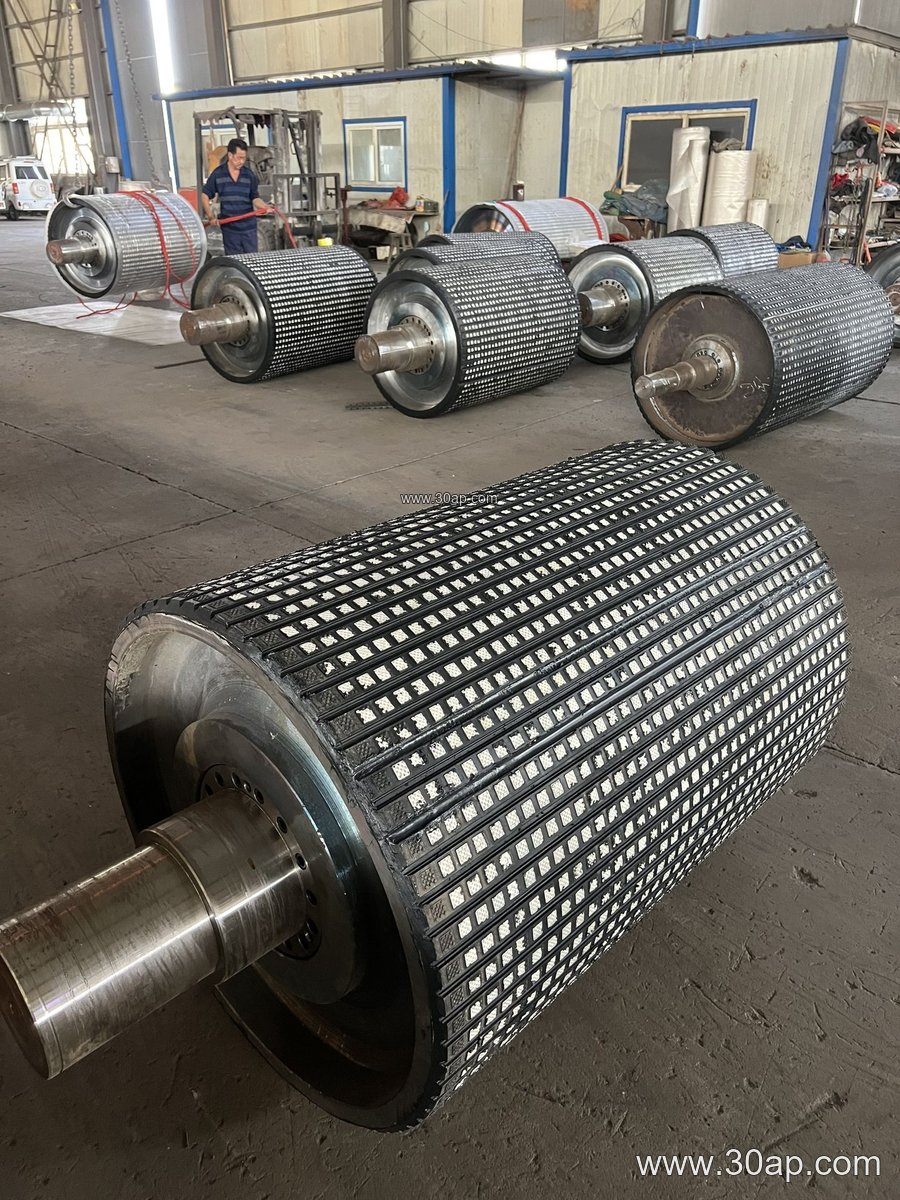
Construction and Surface Options
The shell is usually rolled from steel plate and continuously welded, then machined to keep the drum round and balanced. The shaft is sized by torque and radial load rather than by belt width alone, so a Ø1600 drum may run on shafts from roughly Ø120 up to Ø200 or more, depending on the drive arrangement and bearing span.
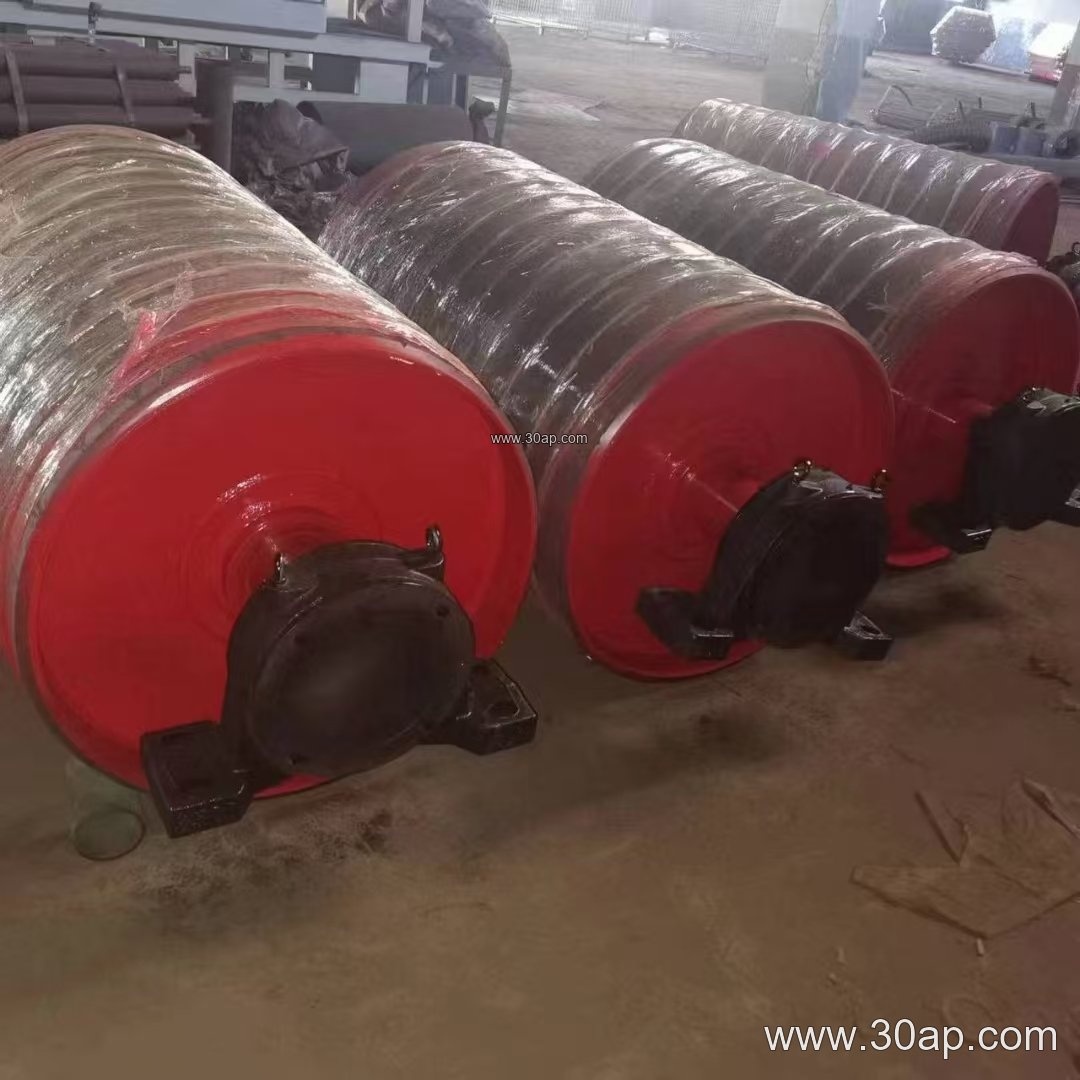
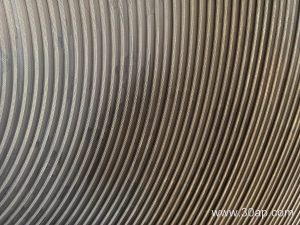
Surface treatment matters for grip and wear life. Common choices include plain machined face, hot vulcanized rubber lagging, cold bonded rubber, diamond grooved lagging, herringbone lagging, and ceramic lagging. Lagging thickness is often 8, 10, 12, 15, or 20 mm. For a wet or dusty transfer point, diamond or ceramic lagging helps shed water and maintain friction; for a clean, high-tension drive, plain or lightly lagged faces may be sufficient.
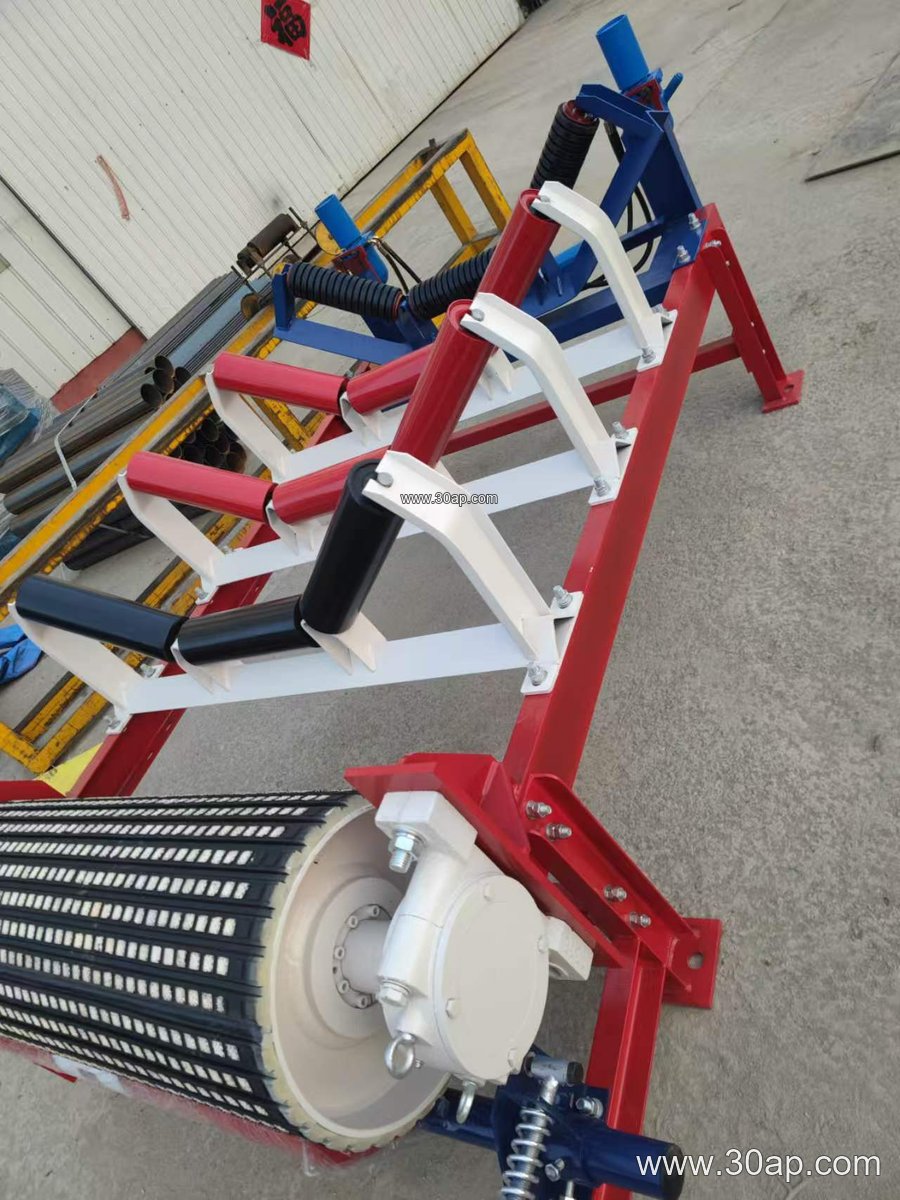
Typical Reference Dimensions
The figures below are reference values, not universal specifications. Final dimensions are set by the conveyor design.
| Item | Common Range or Example |
|---|---|
| Pulley diameter | Ø1600 mm |
| Belt width match (example) | B1400 to B1800 |
| Face width (example) | about 1600 to 2000 mm |
| Lagging thickness | 8, 10, 12, 15, 20 mm |
| Shaft diameter (by design) | Ø120, Ø140, Ø160, Ø180, Ø200 |
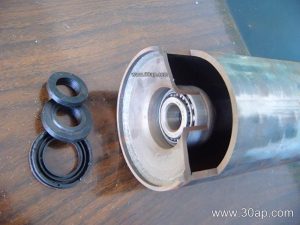
| Bearing type | spherical roller bearing, pillow block |
Face width is normally wider than the belt. A B1400 belt may run on a drum with roughly 1600 mm face, and a B1600 belt on about 1800 mm face, but one belt width does not lock the pulley to a single diameter. The Ø1600 size can be paired with several belt widths when the conveyor layout and tension allow it.
Where It Fits in the Plant
Large drums of this diameter are common in primary crushing and bulk handling. In a limestone quarry, a Ø1600 drive pulley at the crusher discharge handles coarse rock and keeps belt slip low. In a power plant coal yard, the same size may appear on a long overland conveyor feeding the stockpile, often working with a flame retardant conveyor belt and a heavy-duty idler roller set. In a cement plant, clinker lines use abrasion resistant belts, and the head drum must tolerate hot, gritty material. A copper or gold mining operation may combine the drum with a steel cord conveyor belt where high tension is expected.
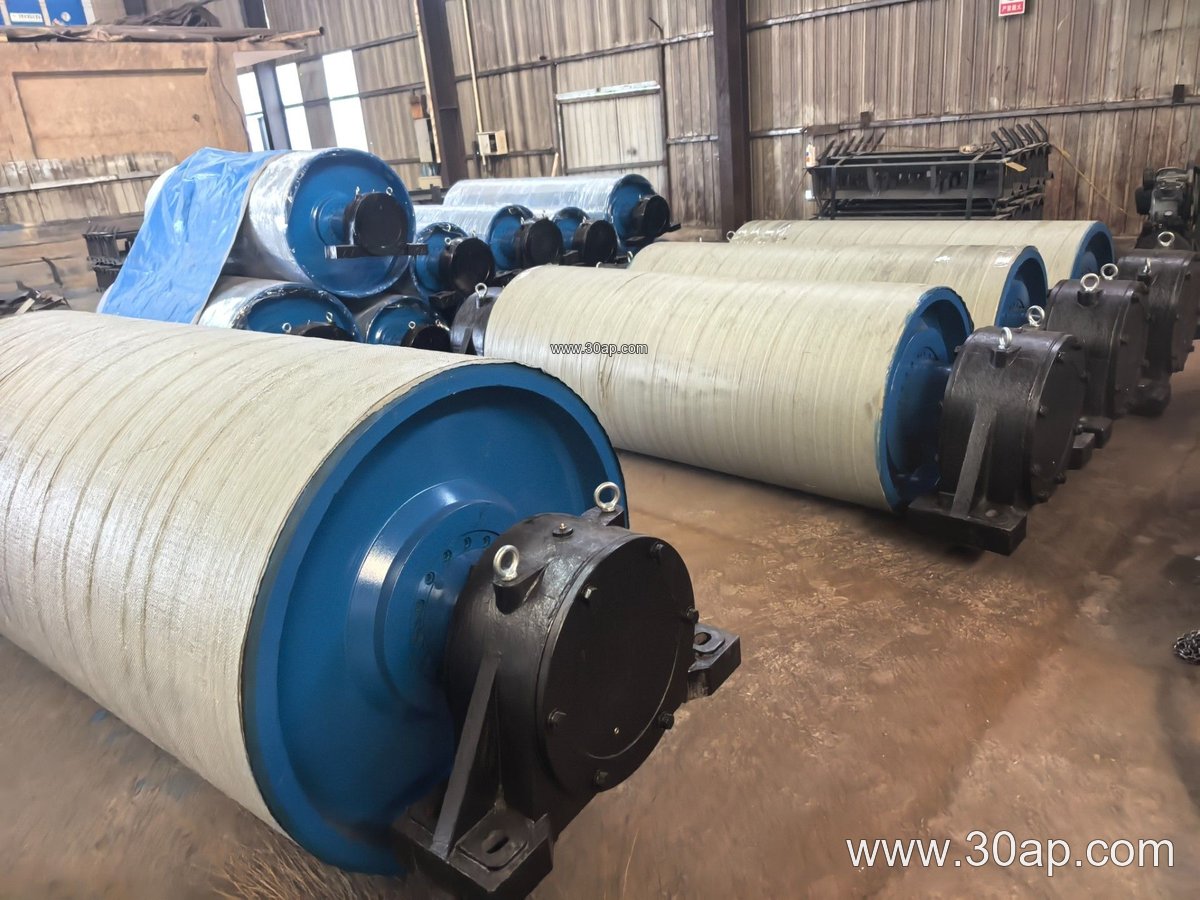
At the tail end, a Ø1600 pulley may be used as a tension or take-up drum, giving the belt a gentle wrap and reducing the risk of ply separation. At a bend or snub position, a smaller drum is more common, so the 1600mm unit is usually reserved for main drive or main tail duty rather than tight secondary bends.
Buyer Checklist
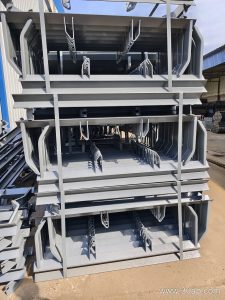
- Confirm the pulley position: drive, tail, take-up, or bend. Each has different load and lagging needs.
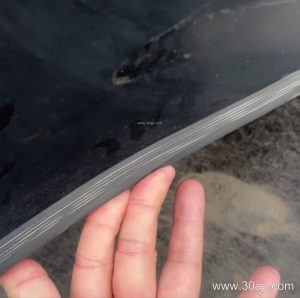
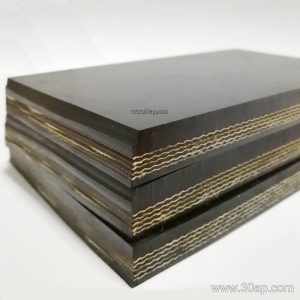
- State the belt width and belt type, such as EP conveyor belt, NN conveyor belt, or steel cord conveyor belt, so the face width and lagging can be matched.
- Provide the calculated belt tension and torque so the shaft and bearing size can be checked.
- Choose lagging by environment: diamond or ceramic for wet, dusty duty; plain or smooth rubber for clean runs.
- Check that the conveyor bracket and bearing housings align with the existing frame before ordering.
- Ask for the balance grade, runout, and welding inspection records, and keep spare lagging and bearings on site.
During installation, align the drum square to the belt centerline and check that the idler roller trains and conveyor bracket supports are level. A large pulley amplifies misalignment, so small errors at the frame can cause edge wear on the belt. Routine checks of lagging wear, bolt tightness, and bearing temperature will extend service life in quarry, coal, and cement duty.