What the Head Pulley Does on a Conveyor
The head pulley is the driven drum at the discharge end of a belt conveyor. It turns the conveyor belt, carries the loaded belt around its shell, and throws material into the chute or onto the next machine. Because it also sets belt alignment and transfers drive torque into the belt, this component is often the single most important drum on a conveyor. In many plants it is also called the drive pulley or drive drum, although the two names describe the same function at the head position.
Construction and Main Parts
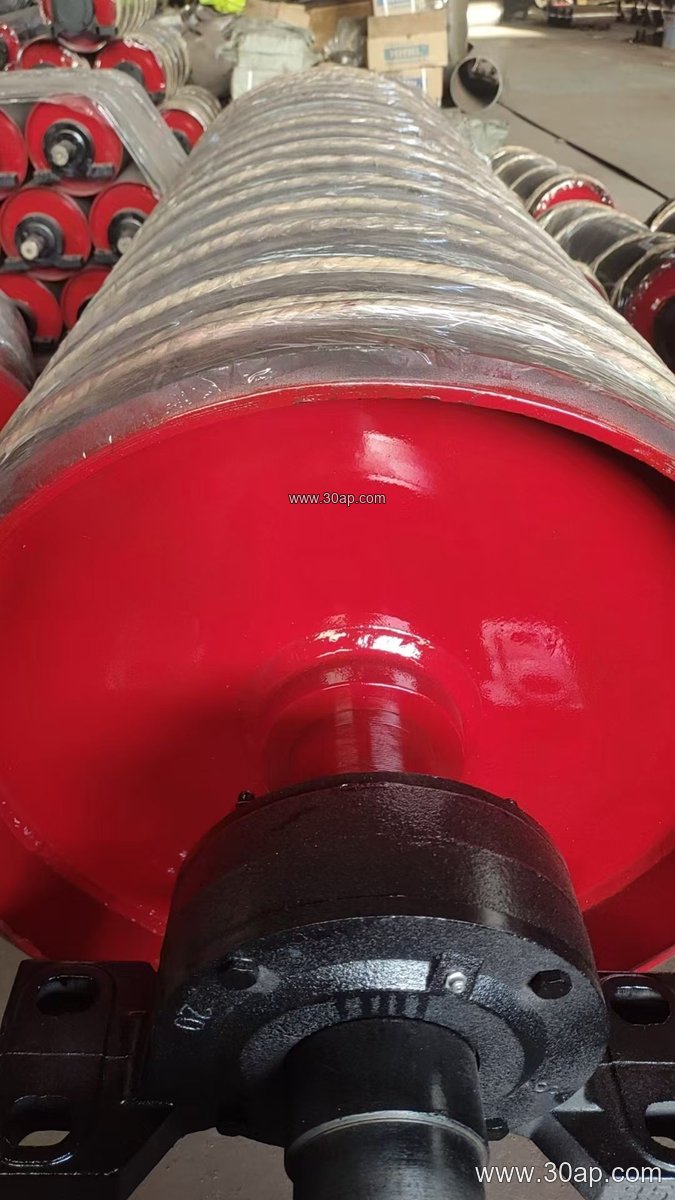
A typical head pulley is built from a cylindrical shell, two end discs, a shaft, and a hub connection. The shell may be seamless tube or rolled plate; the shaft is sized by torque and radial load rather than by belt width alone. Locking assemblies, keyed hubs, or shrink discs connect the shell to the shaft. Bearing housings sit in the conveyor bracket at each side, and the drive is coupled through a gearbox, a shaft-mounted reducer, or a motorized drum in compact layouts.
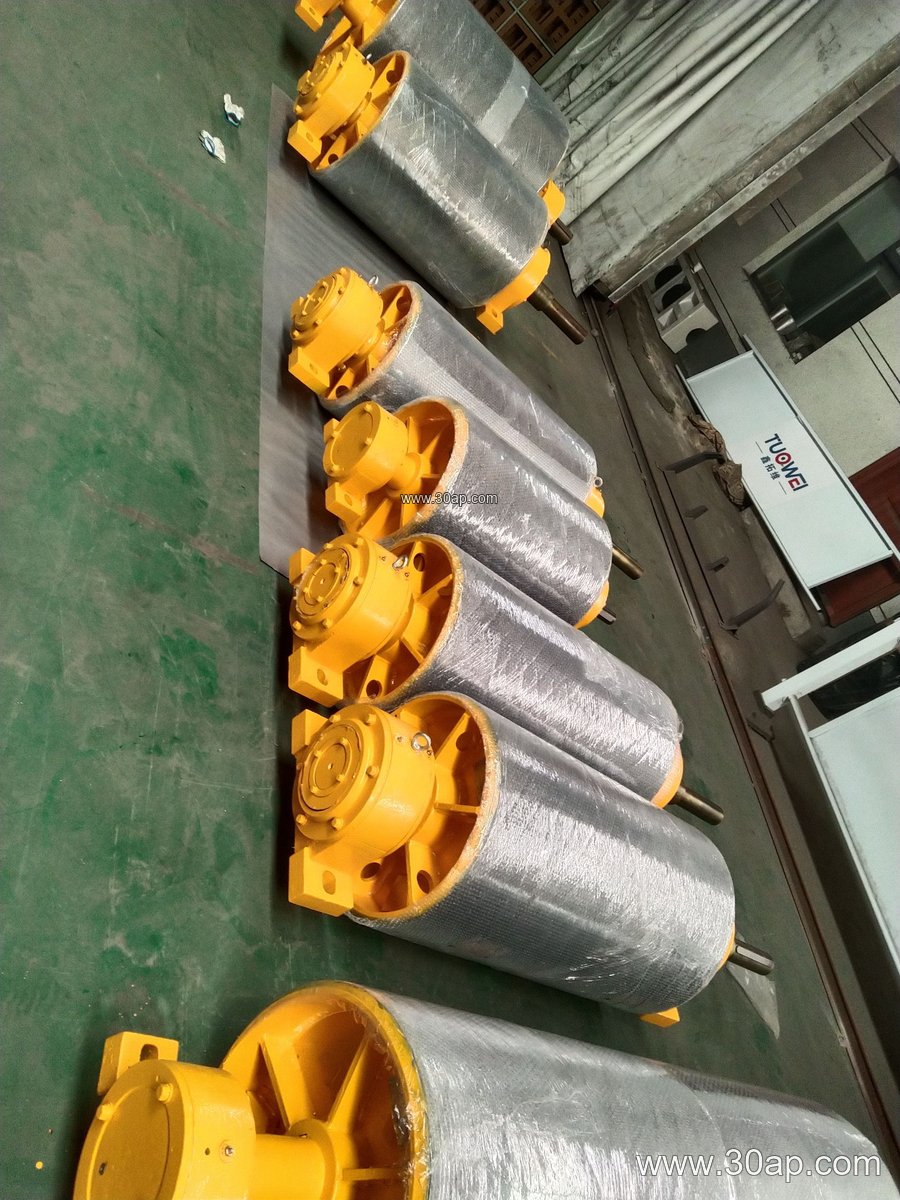
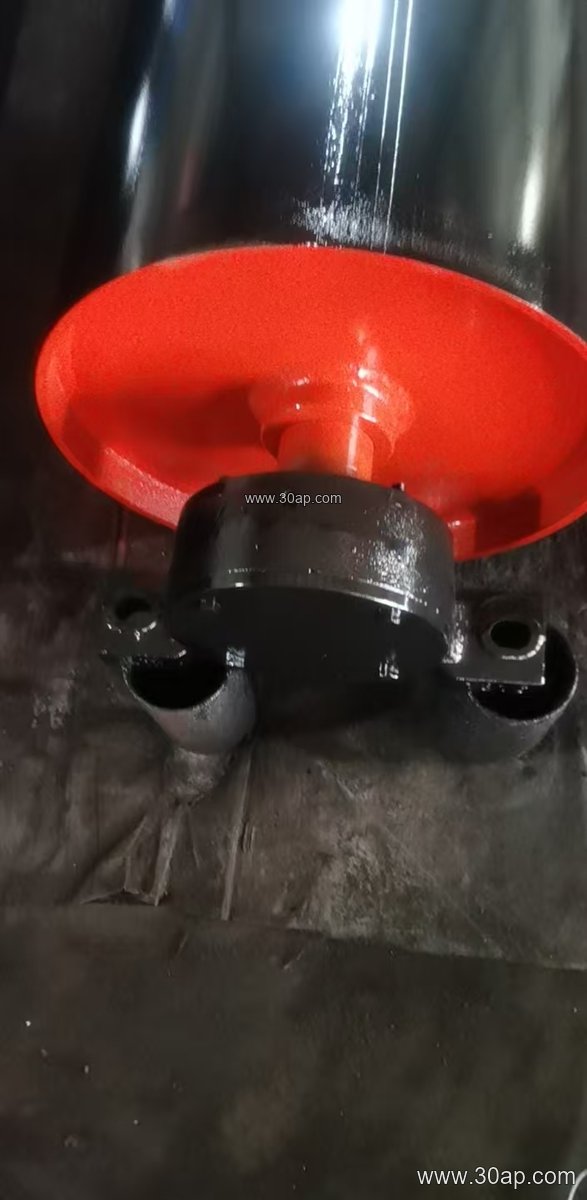
- Shell: rolled steel or tube, machined for balance and runout
- Shaft: usually Ø50 to Ø200 mm in common bulk handling sizes, confirmed by calculation
- Lagging: plain, rubber, diamond, ceramic, or herringbone pattern
- Bearings and seals: selected for load, speed, and dust exposure
Where It Is Used
Head pulleys appear in nearly every continuous bulk handling line. In a quarry or aggregate plant they discharge crushed stone from the last belt into the screening house. In a coal mining or coal preparation plant they work with flame retardant and anti-static belting, where static control and fire safety matter. Cement plants use them on clinker and raw meal lines, power plants on coal feeding systems, and port terminals on ship loading conveyors. The same drum type handles ore, sand, fertilizer, and grain in silos, though the lagging and surface finish change with the duty.
Sizes, Lagging, and Matching the Belt
Drum diameter and face width are chosen together with belt width and belt tension. A B800 belt commonly runs on a pulley with a face around 950 mm, and a B1200 belt on a face near 1400 mm, but the diameter is a separate decision driven by belt stiffness, wrap angle, and the belt’s minimum pulley diameter. Common combinations such as B800 × Ø500 or B1200 × Ø1000 are starting points for discussion, not fixed rules. Larger diameters reduce bending stress in the belt and improve grip; smaller ones save space.
| Belt width | Typical pulley face | Common diameter range |
|---|---|---|
| B500 | about 600 mm | Ø250 to Ø400 |
| B650 | about 750 mm | Ø315 to Ø500 |
| B800 | about 950 mm | Ø400 to Ø630 |
| B1000 | about 1150 mm | Ø500 to Ø800 |
| B1200 | about 1400 mm | Ø630 to Ø1000 |
| B1400 | about 1600 mm | Ø800 to Ø1250 |
| B1600 | about 1800 mm | Ø1000 to Ø1400 |
Lagging thickness is commonly 8, 10, 12, 15, or 20 mm. Rubber lagging improves friction on a wet or dusty belt; diamond and herringbone patterns help shed water; ceramic lagging suits high-torque drives on abrasive duty. The choice should follow the belt cover and the material being carried, whether that is an abrasion resistant conveyor belt in a crusher line or a heat resistant belt near a kiln.
Buyer Checklist
- Confirm belt width, belt type, and required wrap angle before sizing the drum.
- State the drive torque and starting condition so the shaft can be checked.
- Decide lagging type and thickness with the actual material and moisture level.
- Check that the conveyor bracket and bearing centers match the existing structure.
- Ask for balancing and runout data, especially on wide or high-speed drums.
- Plan inspection of lagging wear, bearing temperature, and belt tracking.
A head pulley is not interchangeable with a tail pulley or a bend pulley; each position has its own load direction and function. Getting the drum right means matching it to the belt, the drive, and the material, then keeping it aligned and well greased through its service life. For more conveyor drum and belt guidance, see conveyor pulley and conveyor belt resources.