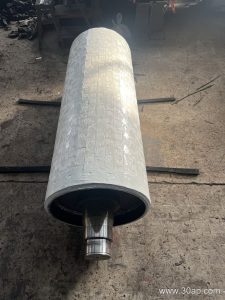
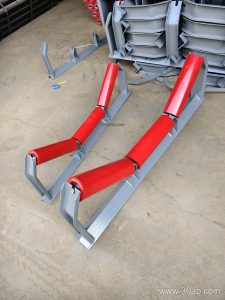
What Conveyor Bracket Fabrication Covers
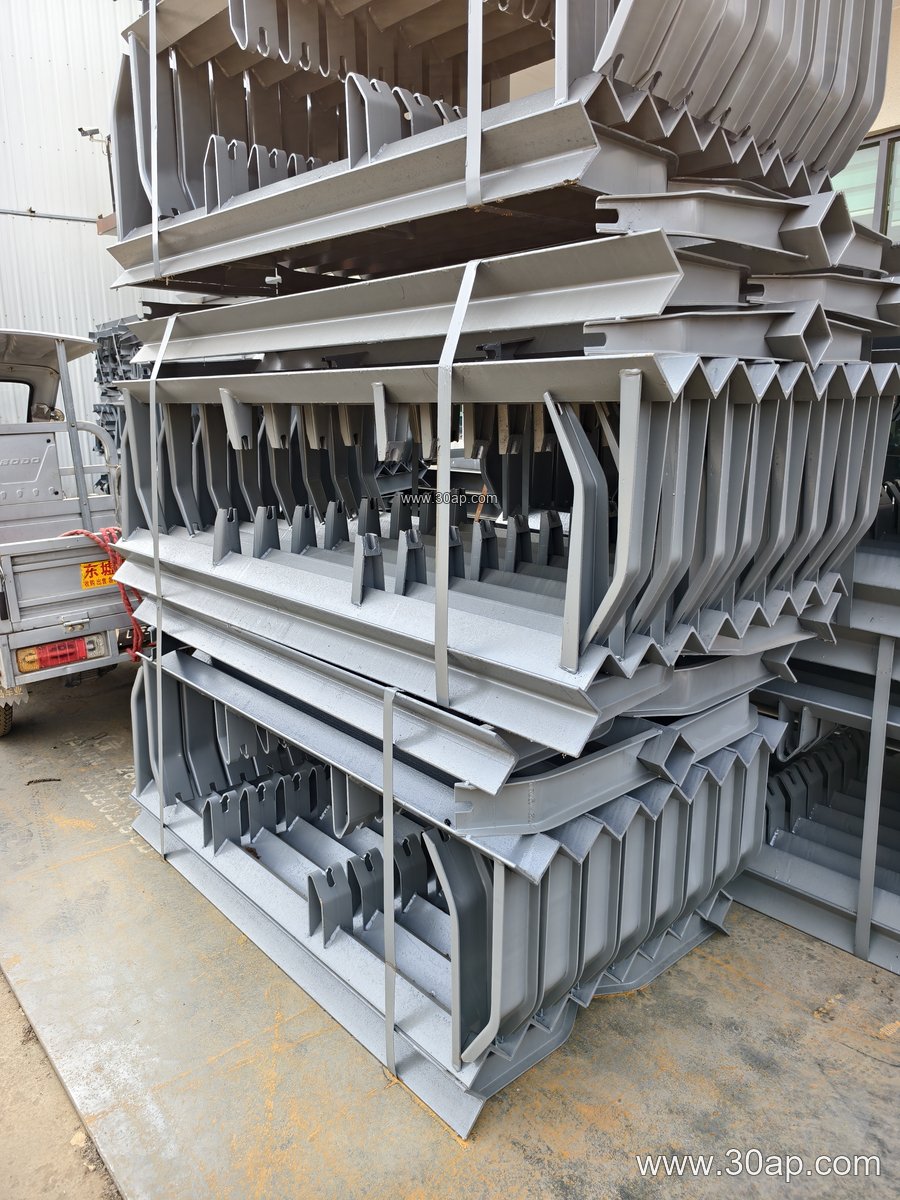
In a bulk handling line, the conveyor bracket is the steel interface between the idler roller and the conveyor frame. Conveyor bracket fabrication is the work of cutting, bending, drilling and welding these supports so that each idler sits at the right height, angle and spacing under the conveyor belt. Good fabrication keeps the belt tracking smoothly from the load point to the discharge, whether the line runs in a quarry, a cement plant or a power station coal yard.
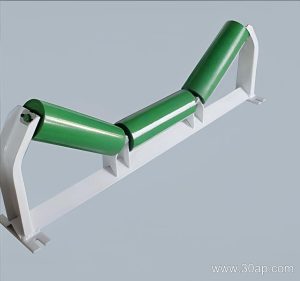
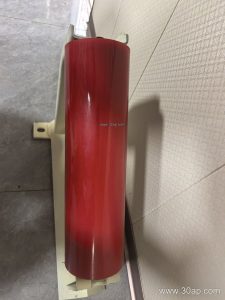
The scope is broader than a single part. It includes troughing brackets that hold three rollers in a trough shape, return brackets that carry the empty strand, impact brackets at transfer points, and self-aligning or transition units where the belt changes direction or profile. Each one is made to match the frame, the belt width and the duty of the installation.
How a Fabricated Bracket Is Built
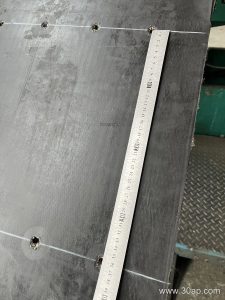
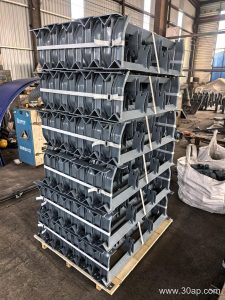
Most brackets start as angle, channel or folded plate. The fabricator cuts the profile, punches or drills the mounting holes, then bends the trough wings to the required angle. Welding follows a simple sequence to limit distortion, and the finished part is checked for square, hole alignment and wing angle before surface treatment.
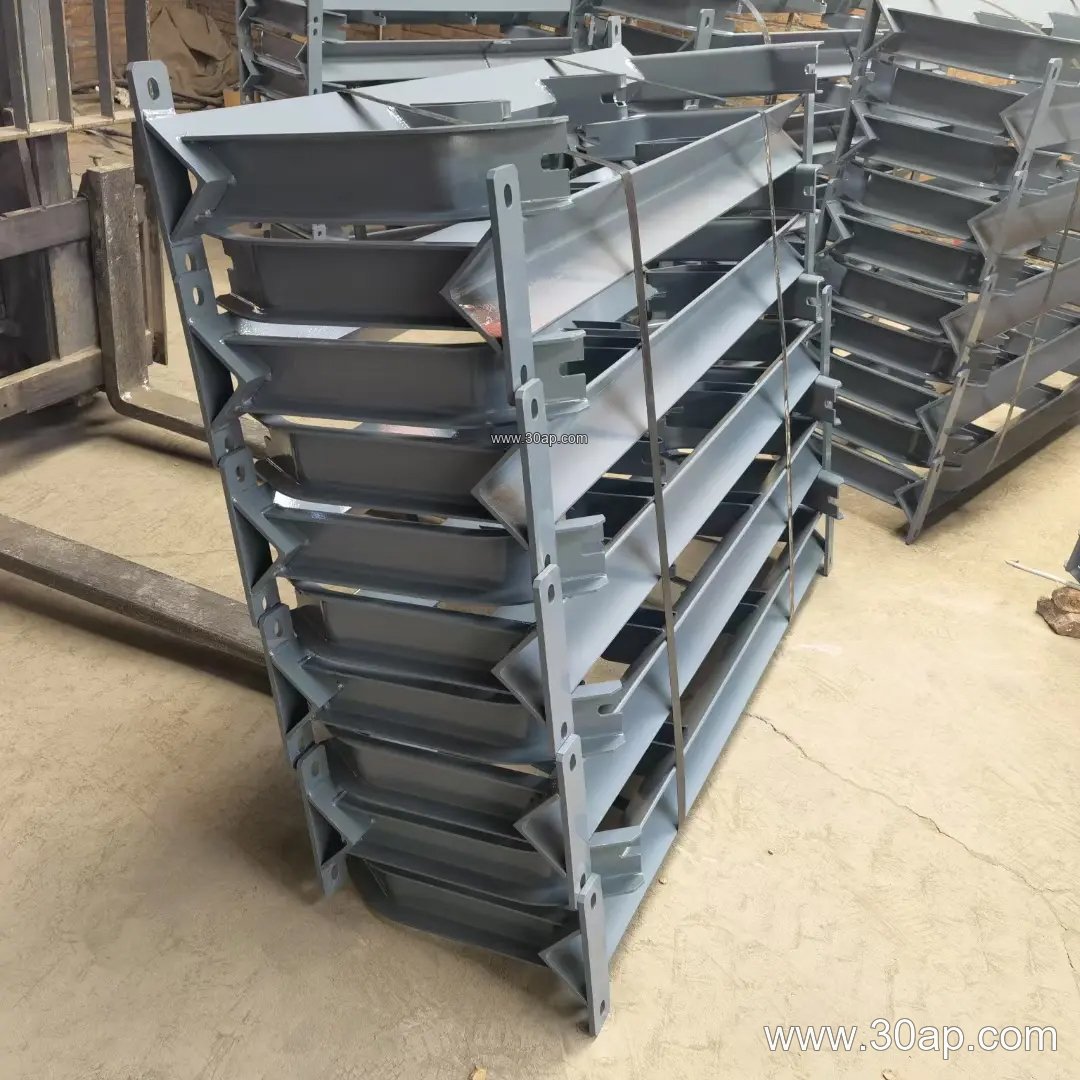
- Material choice: angle steel and channel for general frames, folded plate for lighter or more compact designs.
- Cutting and drilling: hole spacing is set by the frame and idler, not by a single universal figure.
- Forming: trough wings are set to the designed angle, and adjustable versions allow the angle to be changed on site.
- Welding and finishing: jigs help hold position, then parts are cleaned and painted or galvanized as specified.
Fabrication tolerance matters most at the roller seats. If the mounting faces are twisted, the idler roller will sit off-line and the conveyor belt will drift. A well-made bracket keeps the roller axis parallel to the frame and the trough consistent along the whole run.
Trough Angle, Belt Width and Roller Diameter
The trough angle controls how the belt forms its load channel. Common values are 20, 30, 35 and 45 degrees, and adjustable brackets can move between these settings. The right choice depends on material flow, belt stiffness and transition length. Roller diameter and belt width are matched by design, not by a fixed rule, so a B800 line may use different roller sizes depending on load and speed. Typical reference combinations look like this:
| Belt width | Trough angle | Roller diameter |
|---|---|---|
| B650 | 30 degrees | Ø89 |
| B800 | 35 degrees | Ø108 |
| B1000 | 35 degrees | Ø108 |
| B1200 | 45 degrees | Ø133 |
| B1400 | 35 degrees | Ø159 |
| B1600 | 45 degrees | Ø159 / Ø194 |
These are reference values only. Crossbeam length and hole pitch change with belt width and trough angle, so the fabrication drawing should always follow the actual frame. Forward-leaning brackets are sometimes set at about 1.5 to 2 degrees to help centering, and V-return brackets support the return strand on wider belts.
Where Fabricated Supports Are Used
Crushing and screening plants use troughing and impact brackets where stone drops onto the belt, while a coal handling system in a power plant relies on flame retardant conveyor belt and sturdy return supports along long galleries. In a cement plant, heat resistant conveyor belt may run near clinker areas, so bracket spacing and roller choice are adjusted to suit the duty. Wash plants and aggregate yards often prefer adjustable brackets because belt alignment can be tuned without cutting steel.
Fabricated brackets also appear on pipe conveyor belt lines, where the panel and roller nest must hold a circular profile, and on skirted conveyor belt or corrugated sidewall conveyor belt installations where extra support is needed near the loading zone. The same workshop approach applies: match the bracket to the frame, the idler and the belt path.
Buyer Checklist for Conveyor Bracket Fabrication
Before ordering, confirm the frame drawing, belt width such as B500 to B2200, trough angle, roller diameter and mounting hole pattern. Ask how the bracket will be finished and whether adjustable versions are wanted at transitions. For heavy-duty mining conveyor belt duties, specify thicker sections and closer inspection of welds. Keep a small stock of spare brackets for wear points, and check alignment after installation so the belt runs centered on every idler roller and conveyor pulley. A careful fabrication order, referenced against the conveyor belt and conveyor pulley layout, reduces downtime and keeps the line running straight.