What an Adjustable Conveyor Bracket Does
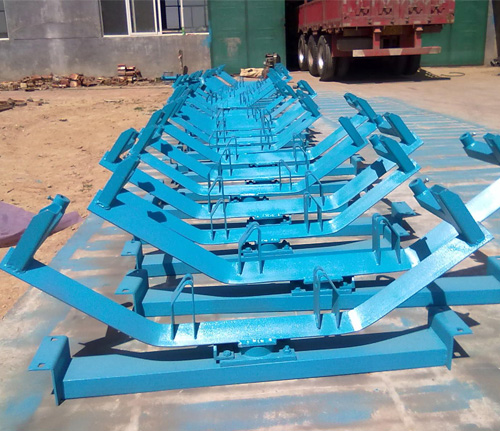
An adjustable conveyor bracket is a support frame for idler rollers that lets maintenance teams change the trough angle or roller position without cutting and re-welding the conveyor structure. On a fixed bracket, the roller seats are welded or bolted in one position. On the adjustable version, slotted holes, pivoting arms or movable cross beams allow the same frame to serve several belt widths or trough angles. This flexibility matters in stone crushing lines, cement plants and power plant coal handling, where one conveyor may be re-profiled or re-rolled during a retrofit.
The bracket carries the load of the belt and material and transfers it to the stringer. A poor bracket alignment shows up quickly as edge wear on a rubber conveyor belt, roller noise, or material spillage along the trough.
How the Frame Is Built
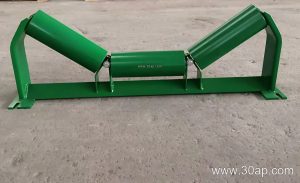
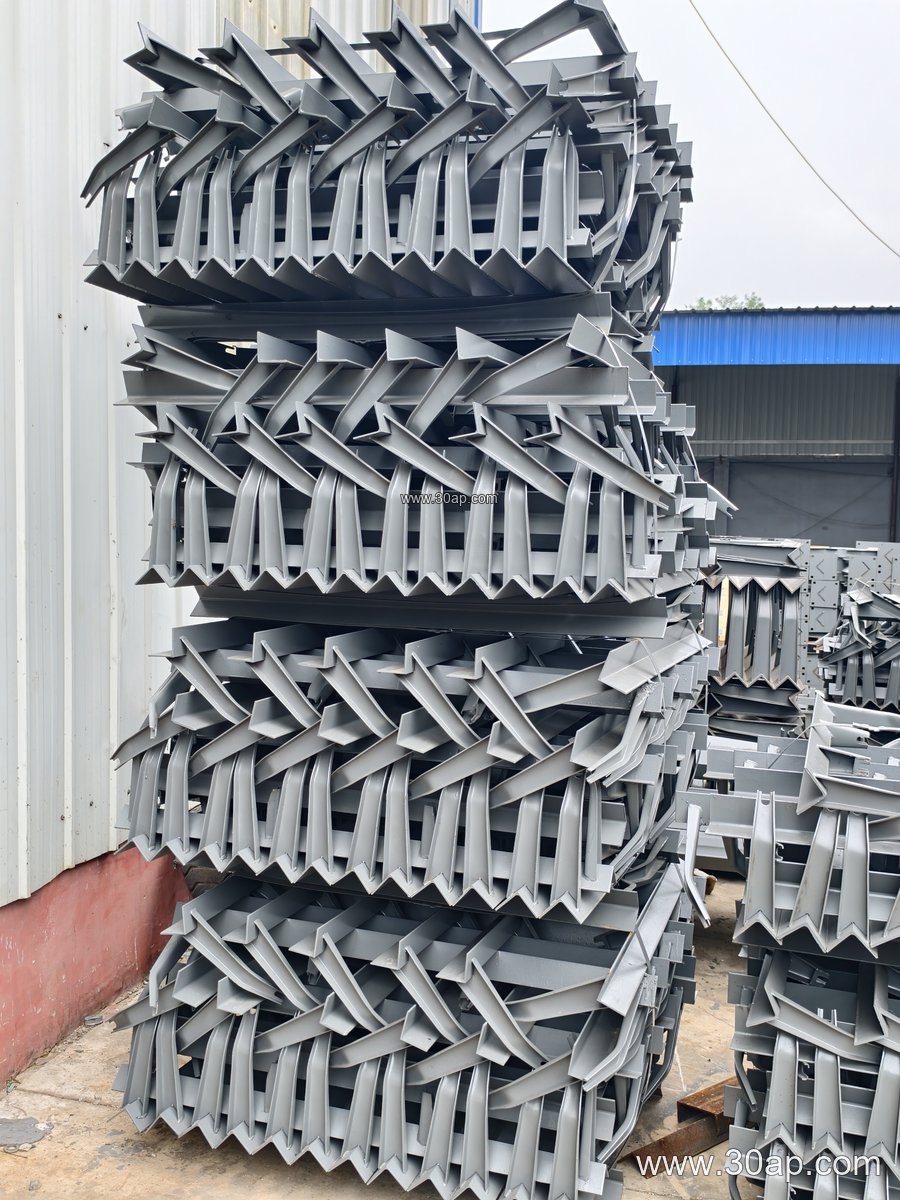
Most adjustable conveyor brackets are fabricated from angle steel, channel steel or folded steel plate. The common design has a fixed base beam plus two hinged or slotted side arms that hold the troughing rollers. The arms are locked with bolts after the angle is set. Typical surface protection is painting or hot-dip galvanizing, depending on the environment.
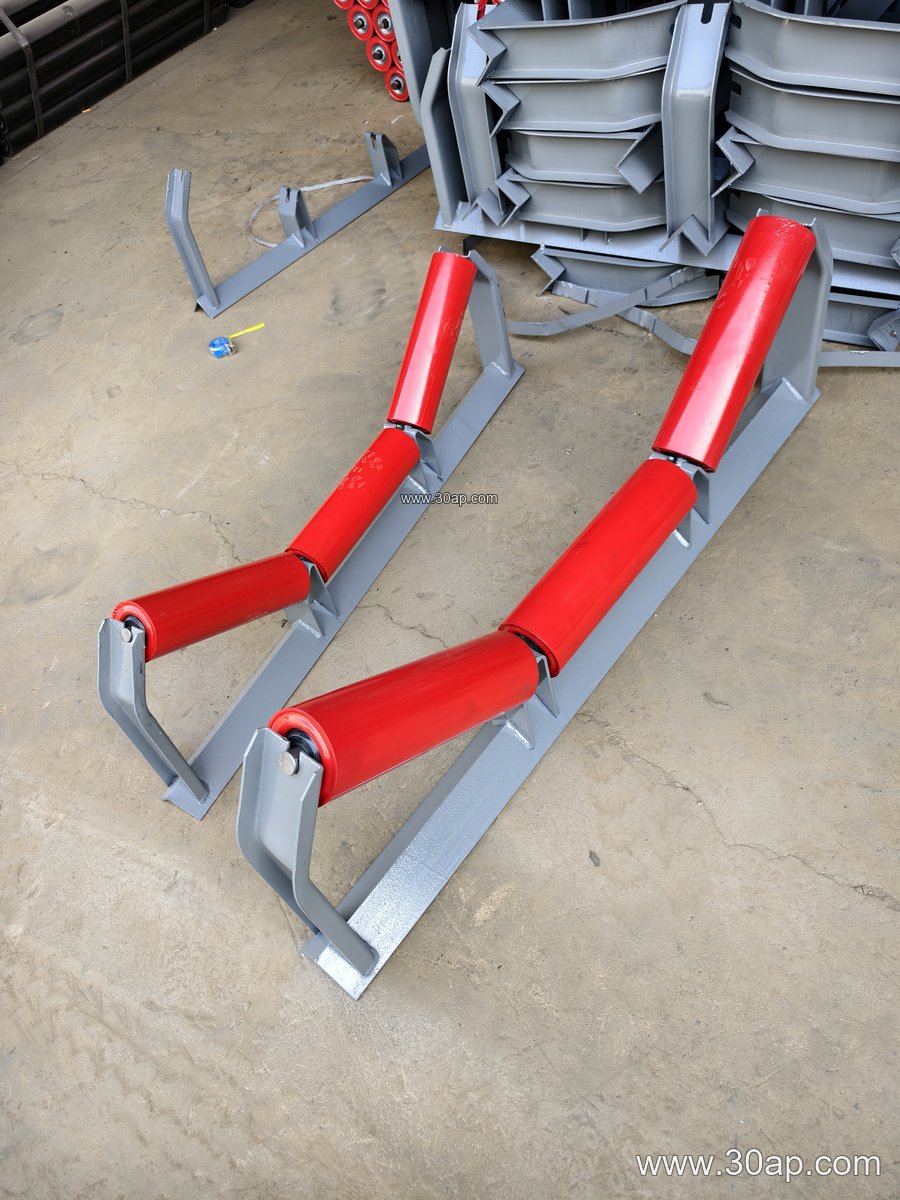
Because the frame is made for mounting idler rollers, the key dimensions are the roller spacing, the mounting hole pitch and the beam length. These usually change with belt width and trough angle, so a bracket for B800 is not simply a scaled copy of one for B1400. Buyers should confirm the hole centres and beam length with the supplier rather than assume a standard figure.
- Slotted or pivoted roller seats for angle adjustment
- Bolt-locked arms to hold the setting after alignment
- Angle steel, channel steel or folded plate construction
- Mounting holes matched to stringer spacing
Common Positions and Subtypes
Adjustable brackets appear in several positions along a conveyor. The upper troughing bracket supports the carrying side and is the most common adjustable type. A transition bracket sits between the tail pulley and the first full trough station, where the belt changes from flat to troughed. Return brackets support the empty side, and V-type return brackets help centre the belt on the way back.
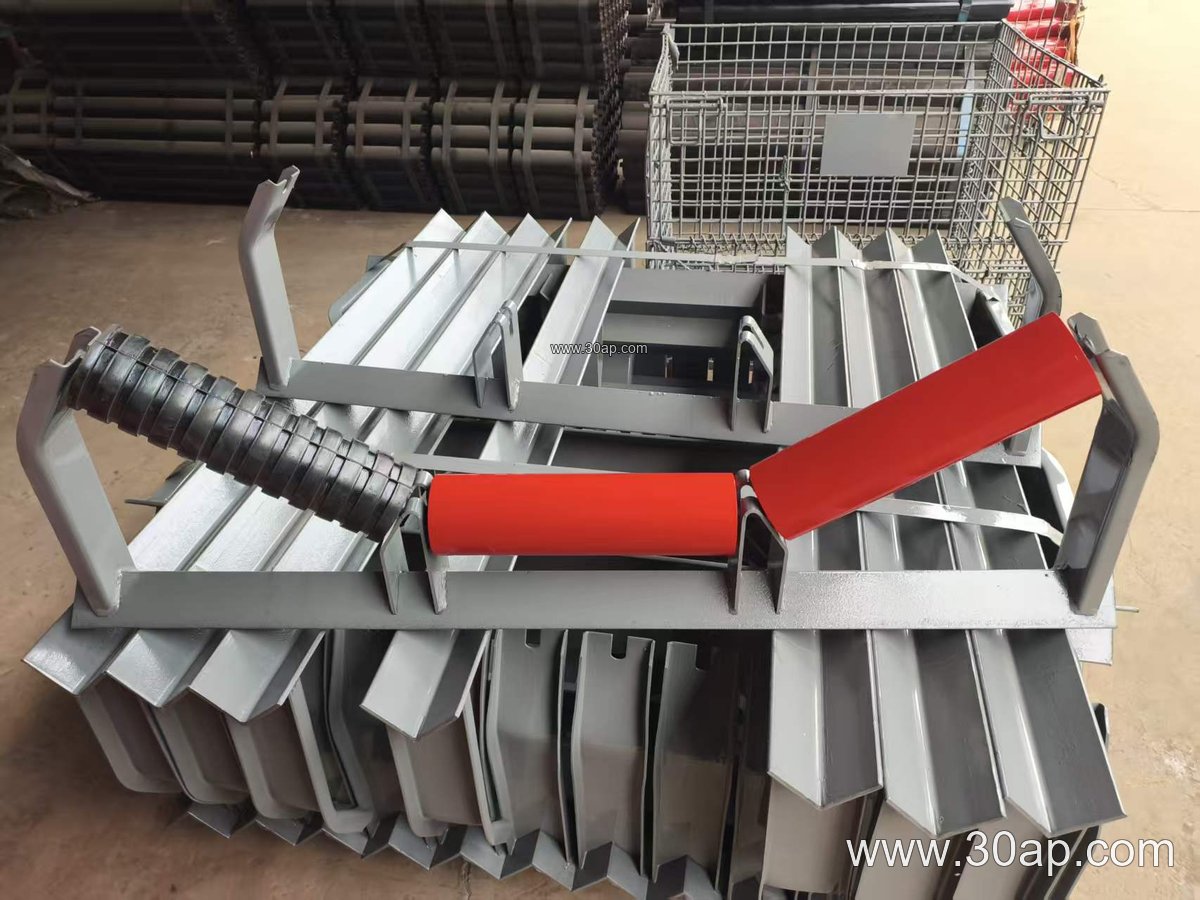
Impact brackets under a loading point are usually fitted with cushion rollers and are often fixed rather than adjustable, because the priority there is shock absorption. Self-aligning brackets are a separate function again; they correct belt drift rather than change trough angle. These are different jobs, and one should not be substituted for another when the aim is angle adjustment.
Typical Reference Ranges
The table below lists reference values that are common in the field. They are not fixed combinations and should be confirmed against the actual conveyor design.
| Item | Common reference values |
|---|---|
| Belt width | B500, B650, B800, B1000, B1200, B1400, B1600, B1800 |
| Trough angle | 20°, 30°, 35°, 45° (adjustable within range) |
| Roller diameter | Ø89, Ø108, Ø133, Ø159, Ø194 |
| Forward tilt | about 1.5° to 2° where specified |
| Frame material | angle steel, channel steel, folded plate |
A typical selection note might read B800, 35°, Ø108, but the same belt width can also run at 30° with a different roller diameter. Do not treat one size as mandatory. For heavy-duty mining conveyor belt service, wider and thicker belts usually call for larger rollers and heavier frames, while a short aggregate conveyor belt line may use lighter sections.
Where It Is Used
Adjustable brackets are common in quarry and sand and gravel plants where conveyors are assembled from modular sections. In a cement plant they help tune the trough angle at transfer points feeding a crusher conveyor belt. In a steel plant or sintering line, heat and dust make alignment important, and the adjustable feature allows fine correction without replacing the whole frame. Port and ship loading conveyors also use them where belts are wide and roller changes are frequent.
The bracket works alongside the conveyor pulley, conveyor belt and idler roller as one system. Setting the bracket slightly out of line loads the belt edge and shortens roller life, so alignment after adjustment is as important as the adjustment itself.
What Buyers Should Check
- Belt width and trough angle range required at each station
- Roller diameter and the matching seat height
- Mounting hole pitch and stringer spacing
- Beam length and clearance to the return belt
- Material and surface treatment for the site environment
- Whether the position needs an angle-adjustable frame or a fixed one
Ask for a drawing showing hole positions before ordering, and confirm that the frame suits the actual conveyor bracket layout on site. For abrasive duty such as iron ore or copper ore, a heavier frame and abrasion resistant conveyor belt grade are usually worth discussing together with the roller choice.