What a Coal Mine Conveyor Idler Does Underground
A coal mine conveyor idler is the rotating support that carries the belt and the coal load along the structure. In an underground coal mining conveyor line, dozens or hundreds of these rollers sit under the belt on the carrying side and above it on the return side, keeping the belt tracking, reducing friction, and protecting the belt from premature wear. The idler roller is a simple component, but it is one of the highest-count parts on the whole conveyor, so its quality and correct selection have a direct effect on downtime in a coal face, a wash plant, or a drift conveyor.
The same roller family is used across many industries, from a quarry conveyor belt line handling limestone to a power plant coal yard. The working principle does not change, but the environment and the belt type do.
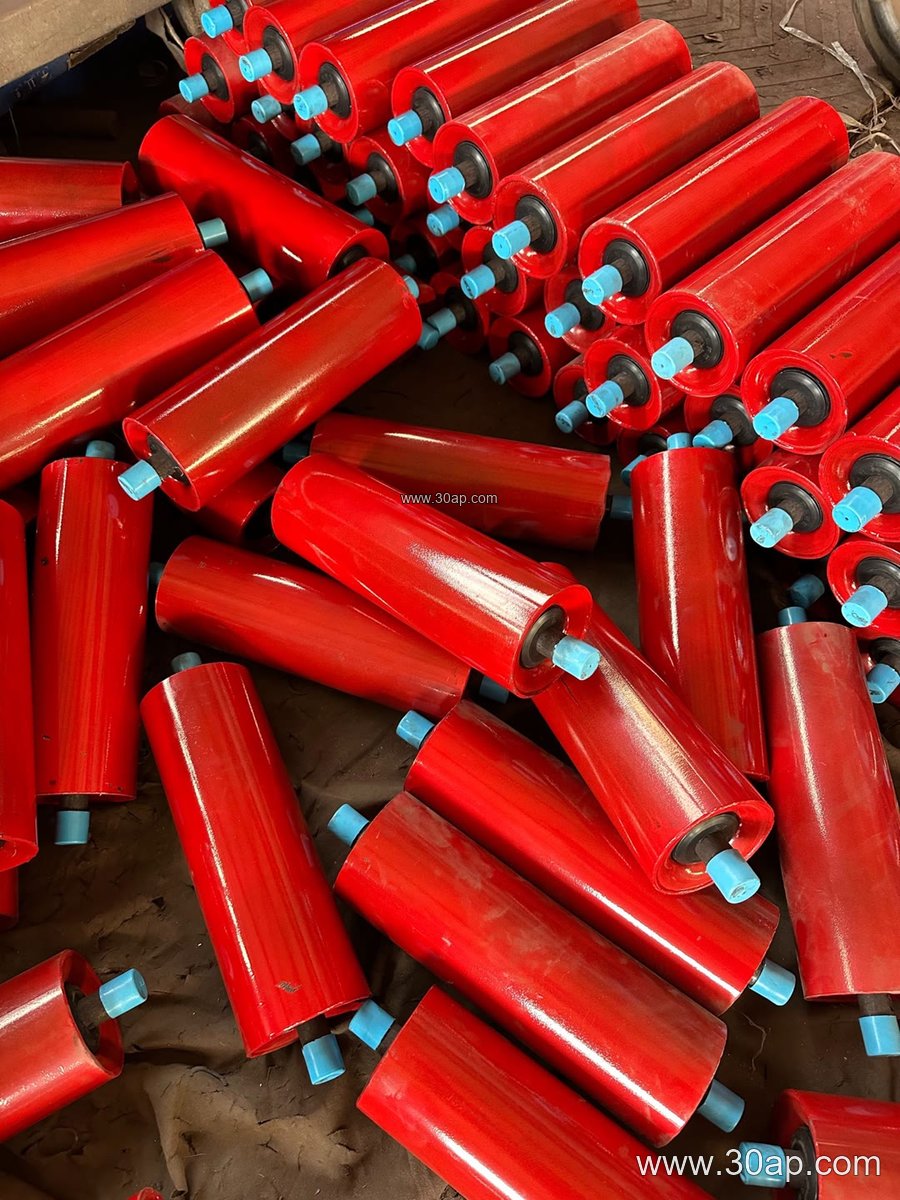
How the Idler Is Built
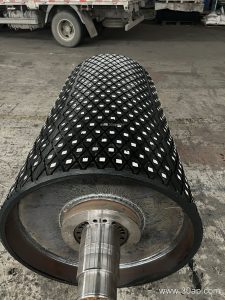
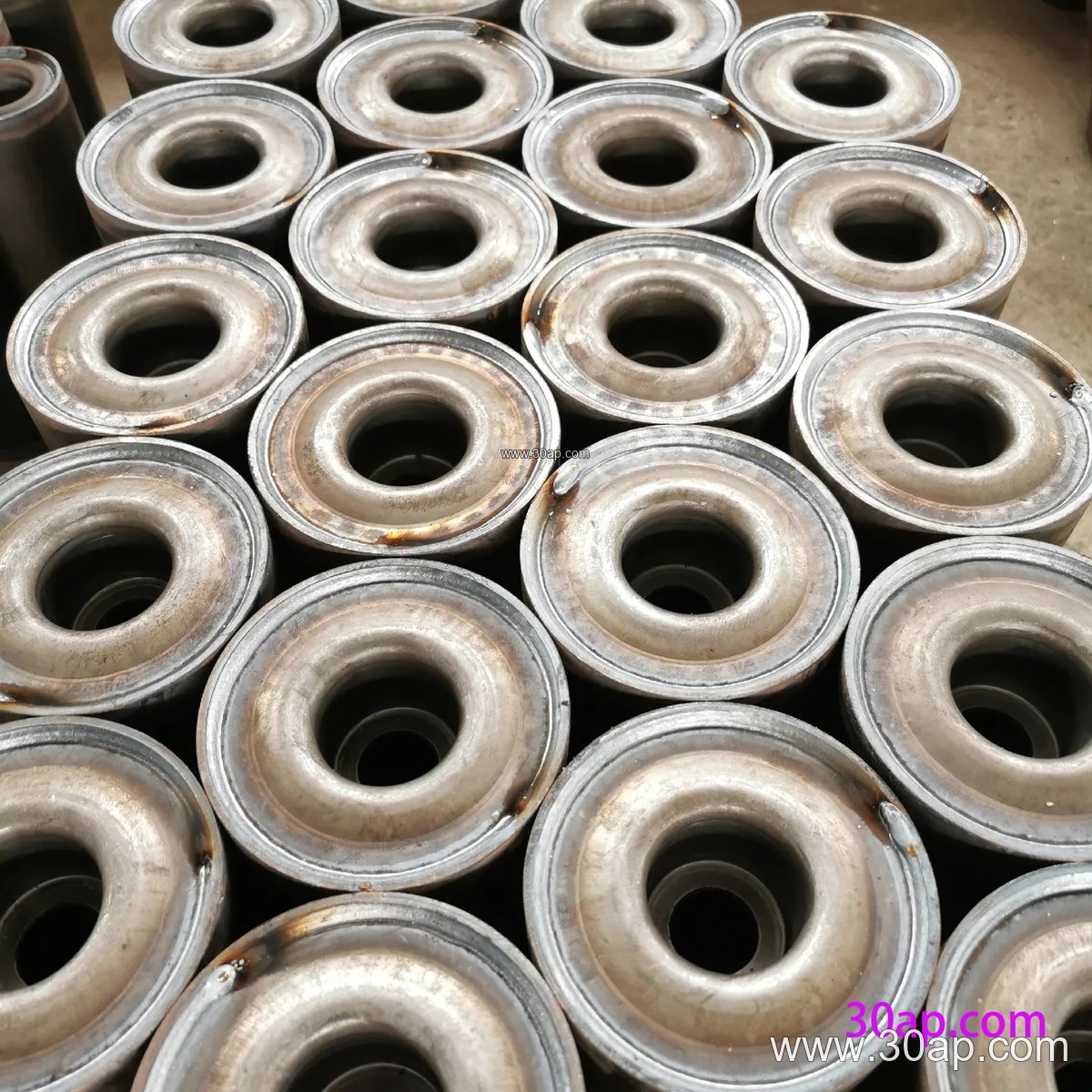
Most coal mine rollers share a common construction: a steel tube shell, a shaft, bearing housings at each end, and a sealing arrangement. The shell is often a welded steel pipe; for abrasive coal and rock, a rubber ring or ceramic surface can be added to extend service life. Bearings are commonly 6204, 6205, 6305, 6306, 6308 or 6310, with the final choice set by load, speed and roller diameter rather than by belt width alone.
Sealing is the part that decides whether a roller survives in a wet, dusty coal mine. Labyrinth seals, felt seals and multi-stage dirt guards are common approaches. A well-sealed idler keeps coal dust and water away from the bearing, which is where most failures begin.
Common Roller Diameters
| Roller diameter | Typical use |
|---|---|
| Ø63, Ø76, Ø89 | Light to medium sections, return runs |
| Ø102, Ø108, Ø127, Ø133 | General carrying idlers on medium belts |
| Ø159, Ø178, Ø194, Ø219 | Heavy-load and large belt applications |
These are reference values only. The right diameter depends on belt speed, load, and the design of the conveyor bracket and frame.
Carrying, Return and Impact Positions
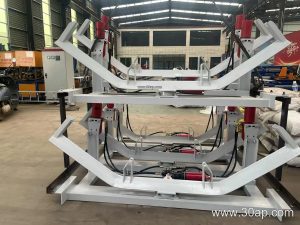
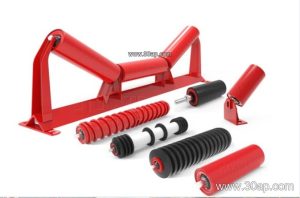
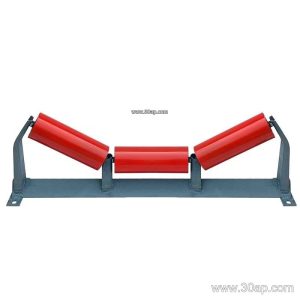
On the carrying side, three-roll troughing sets are the standard arrangement, with trough angles of 20, 30, 35 or 45 degrees. A steeper trough holds more coal and reduces spillage, but it also increases the load on the side rollers. Transition idlers are placed near pulleys to ease the belt from flat to troughed and back again.
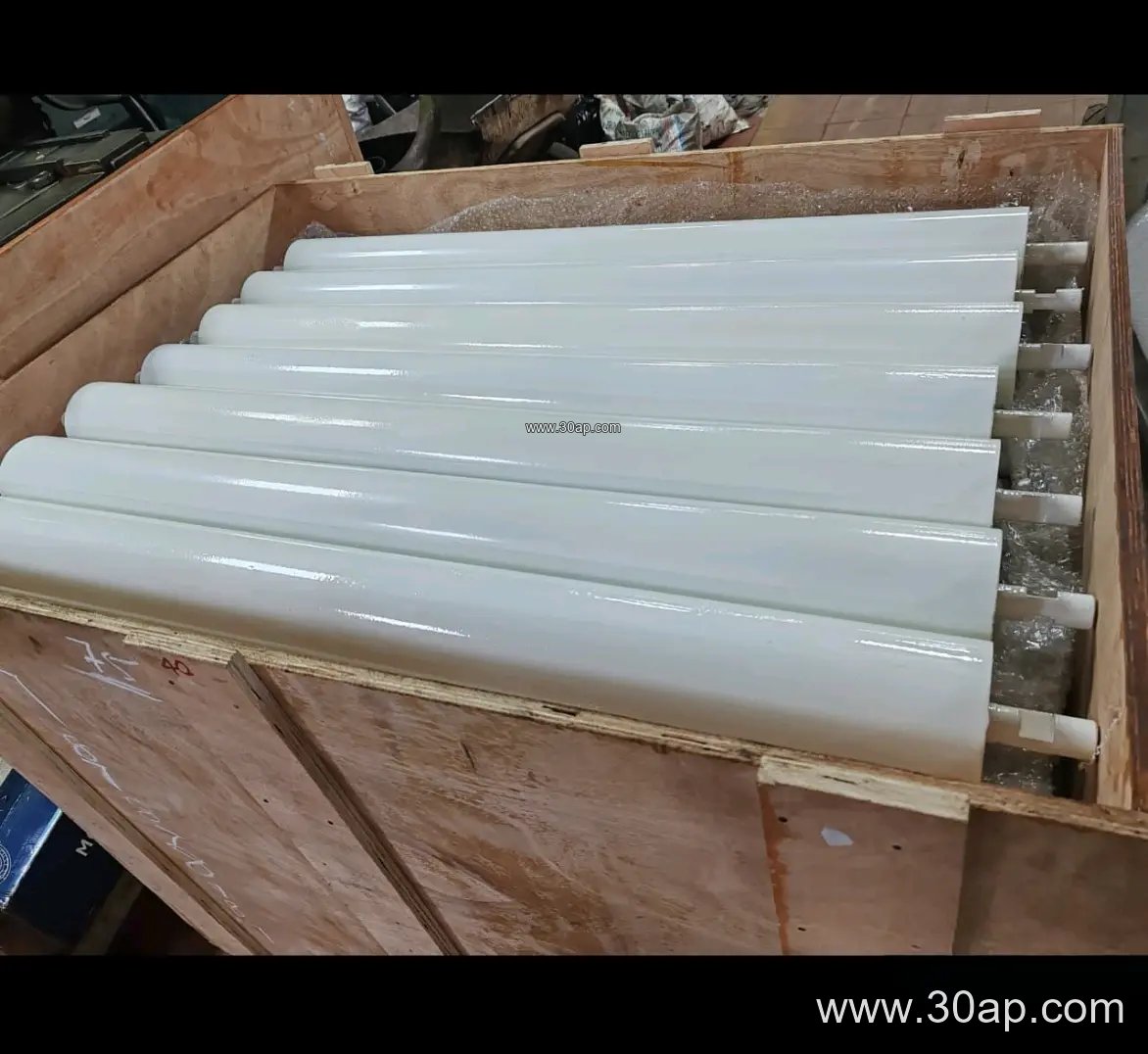
On the return side, flat return rollers or V-shaped return sets support the empty belt. At the loading point, impact rollers with rubber rings absorb the drop energy from coal falling onto the belt. Self-aligning idlers, including friction and tapered types, help correct belt wander on long drifts. Spiral rollers are sometimes used where sticky material tends to build up on the shell.
Matching the Idler to the Belt and the Duty
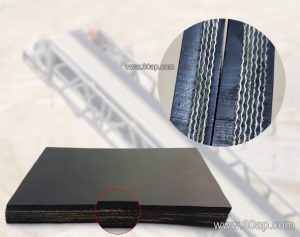
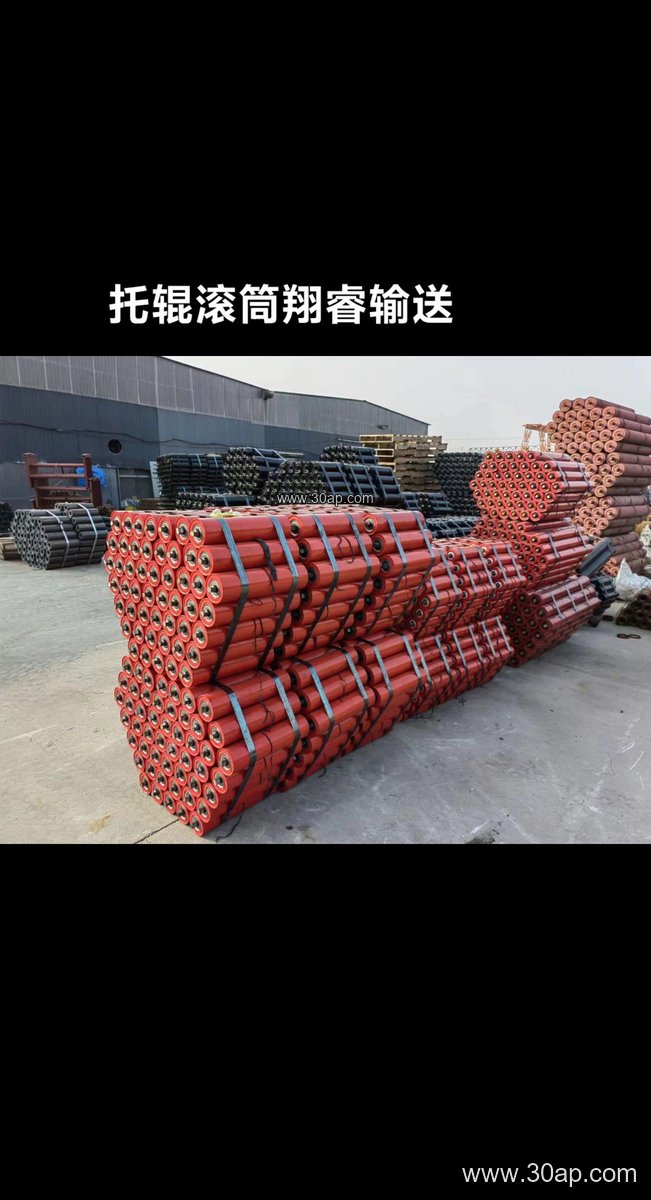
The belt and the roller work as a system. A flame retardant conveyor belt or fire resistant conveyor belt is typical underground, and its cover hardness and thickness affect how the roller should be specified. An abrasion resistant conveyor belt used on a high-wear coal face may justify a rubber-surfaced roller; a steel cord conveyor belt carrying heavy loads over long distances calls for larger diameter rollers and stronger bearings. Fabric core belts such as EP conveyor belt and NN conveyor belt grades are common in shorter or medium-duty sections.
Roller length follows belt width, trough angle and roll configuration. In three-roll troughing sets, common roll lengths are roughly 200 mm for B500, 250 mm for B650, 315 mm for B800, 380 mm for B1000, 465 mm for B1200, 530 mm for B1400, 600 mm for B1600, 670 mm for B1800 and 750 mm for B2000. Side and center rolls can differ, so these are examples, not fixed pairings.
| Belt width | Common example roll length (three-roll set) |
|---|---|
| B500 | 200 mm |
| B650 | 250 mm |
| B800 | 315 mm |
| B1000 | 380 mm |
| B1200 | 465 mm |
| B1400 | 530 mm |
| B1600 | 600 mm |
| B1800 | 670 mm |
| B2000 | 750 mm |
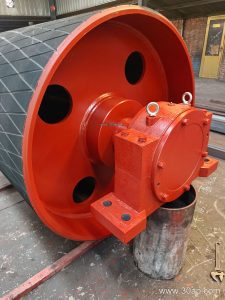
Do not assume that one belt width can only match one pulley diameter or one shaft size. Drive pulleys, tail pulleys and bend pulleys are separate components with their own rules, and they are not interchangeable with idlers.
What Buyers Should Check Before Ordering
- Confirm the belt width, trough angle and roll configuration, and state whether the set is carrying, return, transition, impact or self-aligning.
- Ask for the bearing designation and the sealing method, since these drive service life underground.
- Specify the shell material and surface form: plain steel, rubber ring, ceramic or spiral.
- Match the idler to the conveyor bracket and frame dimensions, not just to the belt.
- State the environment: wet, dusty, coal dust, or high temperature near a power plant coal yard.
On a coal handling line, spare idlers are cheap compared with a stopped belt. Keeping a small stock of the most-used roller sizes, together with the right conveyor bracket, is a practical way to keep a coal mine conveyor idler system running.