What Conveyor Bracket Procurement Covers
Conveyor bracket procurement is the process of sourcing the steel frames that hold idler rollers in position along a belt conveyor. In many plants the item is simply called a conveyor support bracket or idler frame, and buyers often group it with the roller order because the two parts must fit together. A bracket that arrives with the wrong slot angle or mounting hole spacing can stall an entire installation, so the purchasing decision deserves its own attention rather than being treated as an accessory line item.
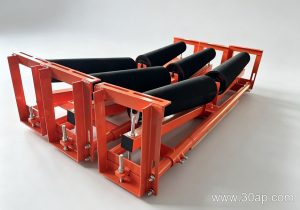
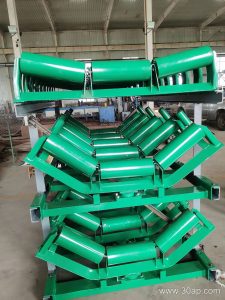
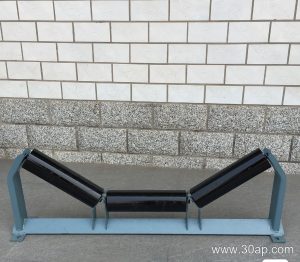
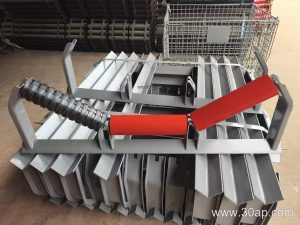
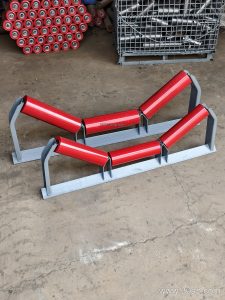
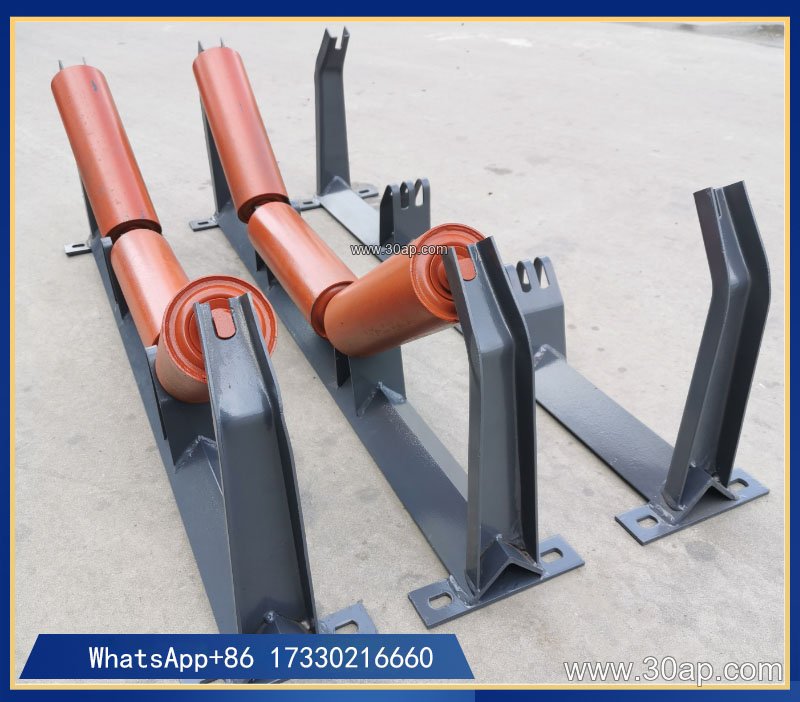
The bracket itself is a fabricated steel part. Common materials include angle steel, channel steel, and folded steel plate. A troughing bracket carries three rollers in a trough shape; a return bracket supports the belt on the return run; a transition bracket sits near the head or tail to guide the belt from flat to troughed. Each subtype has its own geometry, and none of them should be ordered as a substitute for another.
How the Bracket Is Built and Where It Sits
A typical bracket is welded or bolted from two end plates, a crossbeam, and roller seats. The crossbeam length and the hole spacing change with belt width and trough angle, so they are determined by design rather than fixed by a catalog number. Surface treatment is usually painted or galvanized, and buyers should confirm this in the inquiry because dusty sites such as a quarry or a cement plant may prefer one finish over another.
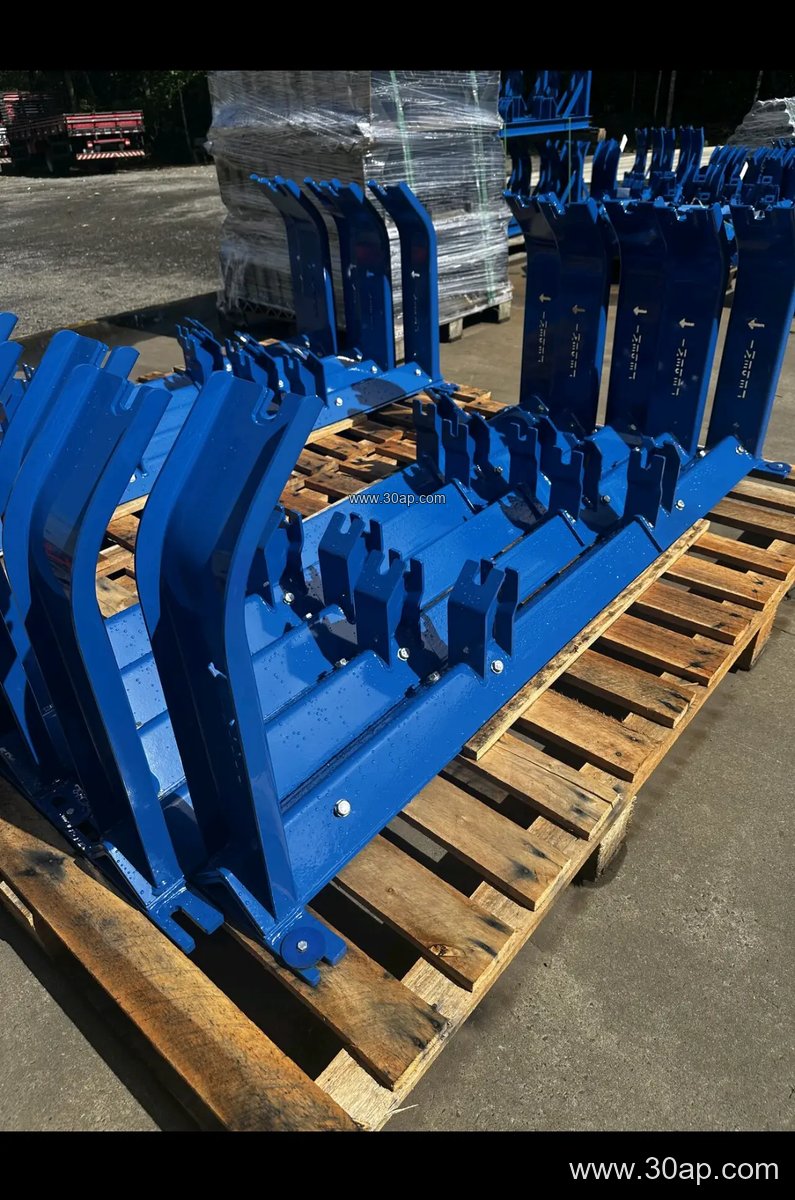
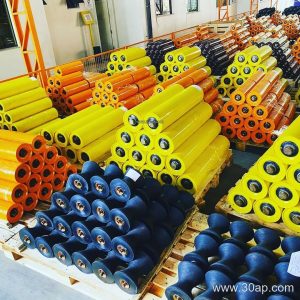
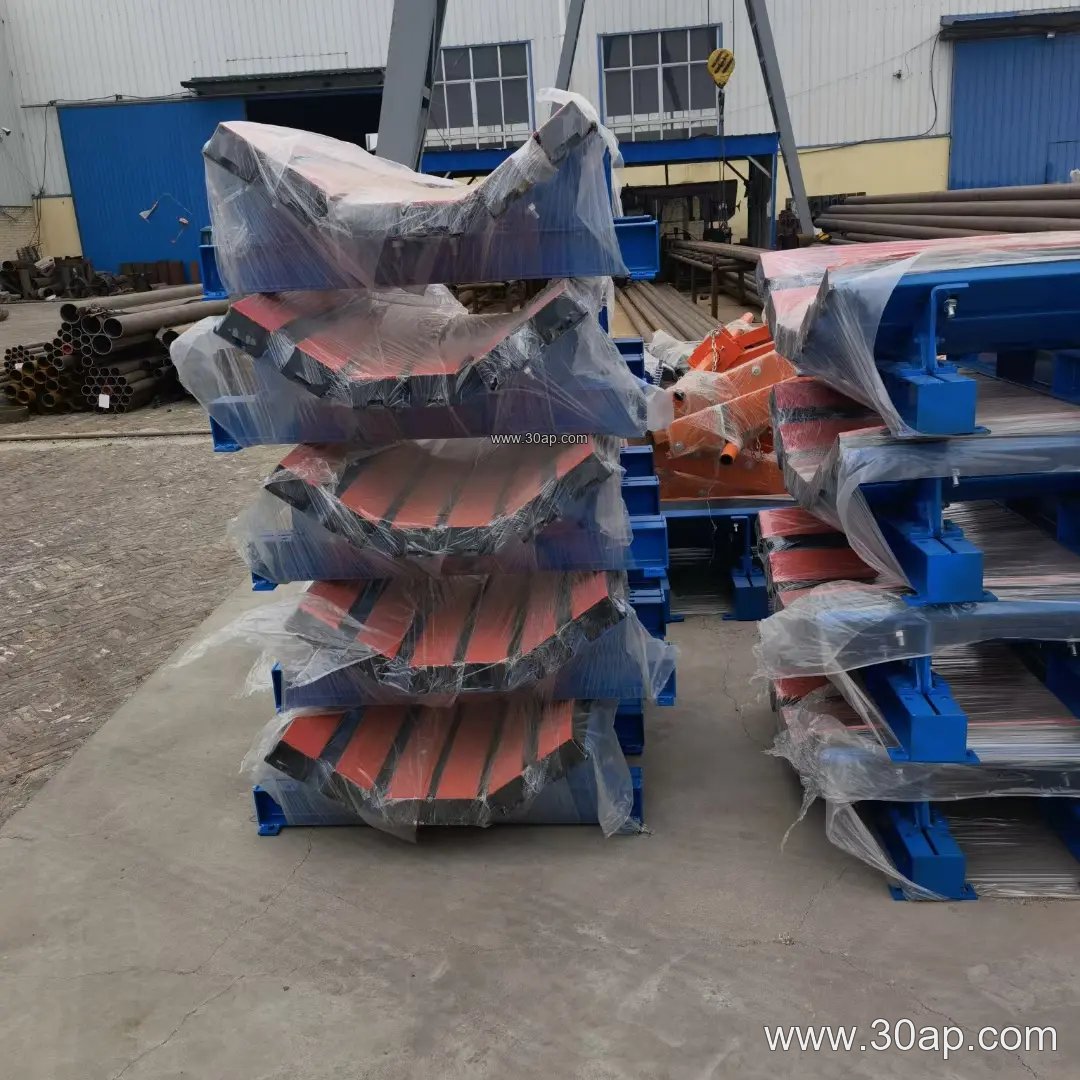
On the conveyor, brackets repeat at intervals along the frame. Troughing brackets sit on the carrying side, return brackets on the lower run, and impact brackets are placed under the loading point where coarse rock or ore drops onto the belt. In a coal mining or power plant coal yard, flame retardant conveyor belt and anti-static conveyor belt are often specified alongside the rollers, and the bracket must match the roller diameter chosen for that duty.
Matching Brackets to Belt Width and Roller Diameter
Belt width and roller diameter are the two numbers that drive most bracket selections. Common belt widths range from B500 to B2200, and common roller diameters include Ø89, Ø108, Ø133, Ø159, and Ø194. A B800 bracket with a 35 degree trough angle and Ø108 rollers is a frequent combination, while a B1200 line may use 45 degree troughing with Ø133 rollers. These are examples, not rules: a given belt width can be paired with more than one trough angle or roller size depending on load and belt stiffness.
Buyers should also confirm the trough angle range. Fixed brackets are built for one angle, usually 20, 30, 35, or 45 degrees. Adjustable brackets allow the angle to be changed within a range, which helps during commissioning or when a conveyor is converted. Forward-leaning brackets, typically around 1.5 to 2 degrees, are used for belt training and should be requested by name rather than assumed.
Procurement Checklist
- State the bracket subtype clearly: troughing, return, transition, impact, self-aligning, or adjustable.
- Provide belt width, roller diameter, and required trough angle.
- Confirm material and finish, for example channel steel with painted surface.
- Ask for a drawing showing hole spacing and crossbeam length before production.
- Check that the bracket suits the conveyor pulley and frame layout at the head and tail.
For heavy-duty mining conveyor belt or steel cord conveyor belt installations, brackets are often heavier and the roller seats are reinforced. In a sand and gravel line or a crushing and screening plant, impact brackets under the feed point reduce roller damage from falling stone. Buyers working with an EP conveyor belt or a multi-ply fabric core conveyor belt should still treat the bracket as a separate specification item, because belt type does not define bracket geometry.
Working With Suppliers
A good inquiry includes a simple table of requirements rather than a single sentence. List the subtype, belt width, roller diameter, trough angle, material, and quantity per conveyor. Ask whether the supplier can supply matching conveyor pulley components and idler roller sets from the same drawing set, which reduces fit problems on site. For a port or ship loading conveyor, confirm that the bracket can handle the belt tension and that the return bracket clears the pulley. For a fertilizer or grain silo application, discuss corrosion protection early. Accurate drawings and clear subtype names are the most reliable way to keep conveyor bracket procurement on schedule.