What an Idler Bracket Does on a Conveyor
An idler bracket is the mounting component that holds a conveyor idler roller in position and fixes its angle relative to the belt line. On a typical troughing station, the bracket carries the side rollers at the chosen trough angle and the centre roller in the middle, so the belt forms the loading profile that suits the material being carried. The same component is sometimes called a conveyor bracket or an idler frame bracket, and in many plants it is simply referred to as a roller support. It is a structural part rather than a rotating one, but its accuracy has a direct effect on belt tracking, roller life and the smooth running of the whole conveyor.
Because the bracket is bolted to the conveyor stringer or frame, it also sets the spacing between idler stations. A loose or misaligned bracket can tilt a perfectly good roller and cause edge wear on a heavy-duty conveyor belt long before the roller itself shows any problem.
Construction and Common Materials
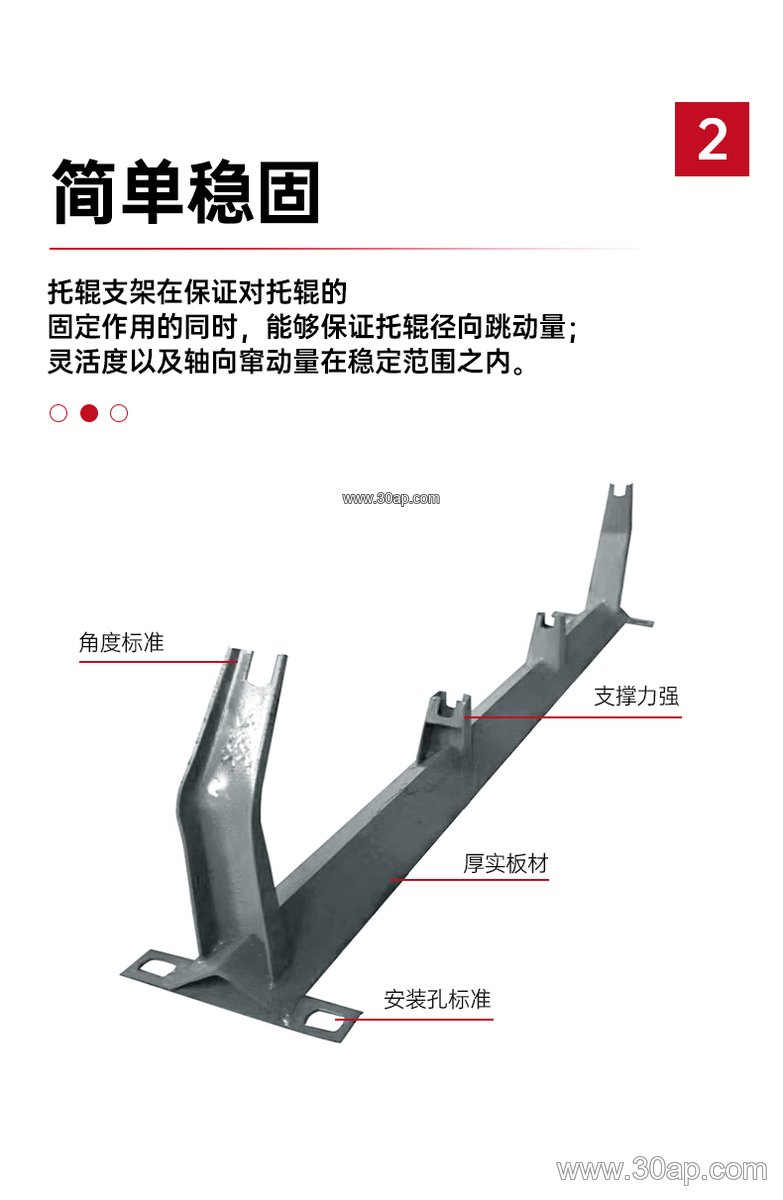
Most brackets are fabricated from structural steel rather than cast. Angle steel and channel steel are common, and some designs use folded steel plate for a lighter but still rigid shape. The bracket usually includes mounting slots or holes, a crossbeam that spans the belt width, and roller seats or notches that hold the idler shaft ends. Surface treatment depends on the environment: painted finish for general service, and galvanised or coated versions where moisture and dust are persistent, such as a wash plant or a port terminal.
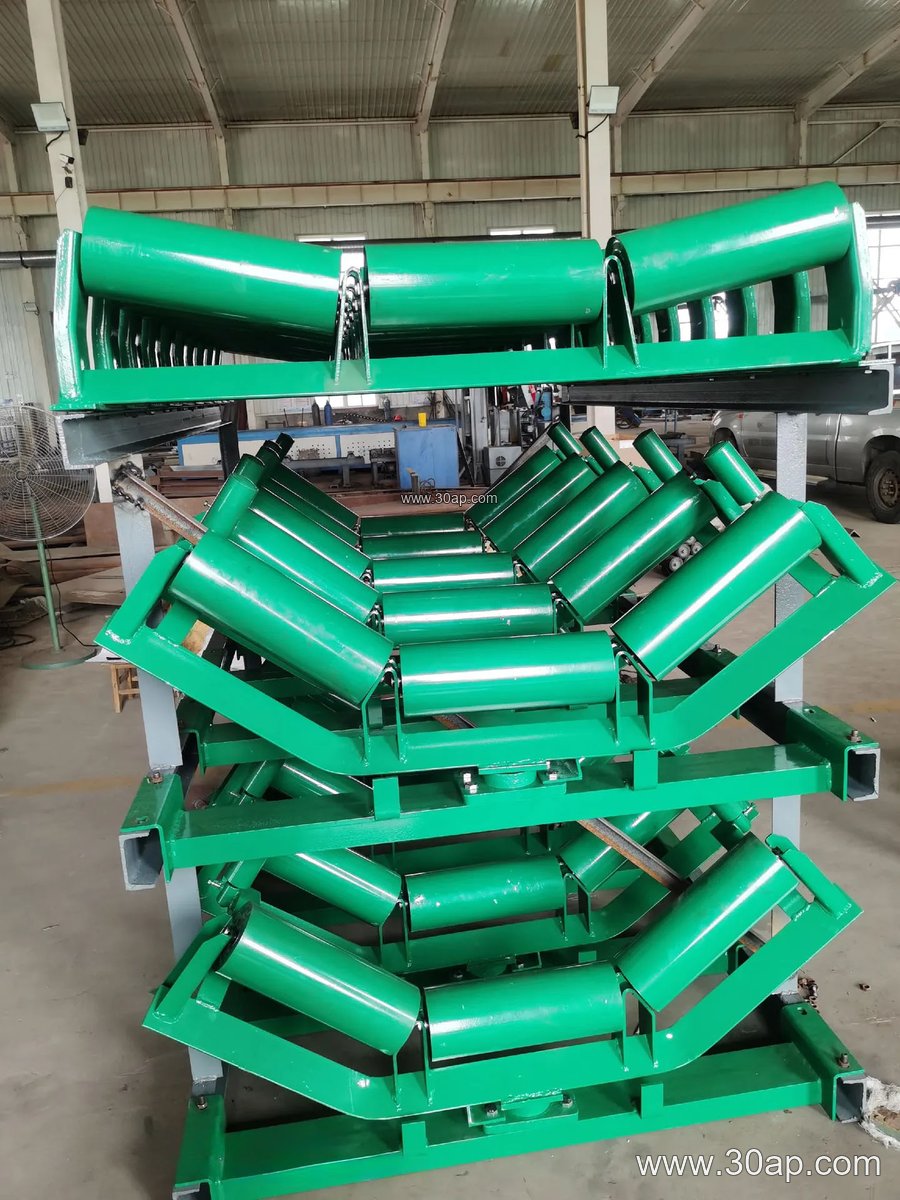
Stiffness matters more than weight. A bracket that flexes under load changes the trough profile, and the belt then runs unevenly. Buyers should check plate thickness, weld quality and the accuracy of the roller seat positions, since these determine how well the installed rollers line up.
Types and Where They Are Used
Bracket types are usually named after the idler arrangement they support. Troughing brackets hold the carrying idlers, transition brackets are placed near pulleys to ease the belt from flat to troughed, and return brackets support the belt on the lower run. V-return and flat-return brackets are both common, and impact brackets are used under loading points where a crusher conveyor belt or a quarry conveyor belt receives coarse rock.
Self-aligning and forward-tilted designs are chosen where tracking is difficult, while suspended and adjustable versions help where the structure is irregular or the trough angle needs to change. A lime kiln feed line, a coal handling system in a power plant or a cement plant clinker route will each use a different mix of these positions, but the bracket itself remains the interface between the steel structure and the conveyor idler roller.
Trough Angle, Belt Width and Roller Diameter
Bracket geometry and belt width are linked, but not in a fixed pairing. Common belt widths run from B500 to B2000 and beyond, and typical trough angles are 20, 30, 35 and 45 degrees. Roller diameters such as Ø89, Ø108, Ø133, Ø159 and Ø194 are selected by load and belt speed, not by width alone. A B800 station at 35 degrees with Ø108 rollers is a familiar combination, as is B1200 at 45 degrees with Ø133 rollers, but these are examples rather than rules. Adjustable brackets allow the angle to be set on site within the range the design permits.
| Parameter | Common Range (Reference Only) |
|---|---|
| Belt width | B500, B650, B800, B1000, B1200, B1400, B1600, B1800, B2000 |
| Trough angle | 20°, 30°, 35°, 45° |
| Forward tilt | Usually about 1.5° to 2° |
| Roller diameter | Ø89, Ø108, Ø133, Ø159, Ø194 |
| Material | Angle steel, channel steel, folded plate |
Hole spacing and crossbeam length vary with belt width and trough angle, so they should be confirmed against the conveyor drawing rather than assumed. On a steel cord conveyor belt line carrying iron ore, the bracket load is higher and the roller diameter larger, but the mounting pattern still follows the frame design.
Buyer Checklist
- Confirm belt width, trough angle and roller diameter before ordering, and state whether the bracket is fixed or adjustable.
- Check that the mounting holes match the existing stringer spacing; retrofit brackets often need custom drilling.
- Match the steel thickness to the duty, especially at impact points under a crusher or transfer chute.
- For dusty or wet sites, ask about coating and about drain or clean-out features that stop material packing around the roller seats.
- Keep a small stock of spare brackets, since a bent bracket is quicker to replace than a damaged roller.
Used together with well-chosen rollers and a suitable rubber conveyor belt, a correctly specified idler bracket keeps the trough profile stable and reduces unnecessary wear across the whole conveying line.