What a Rubber-Lined Pulley Does on a Conveyor
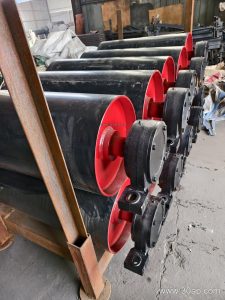
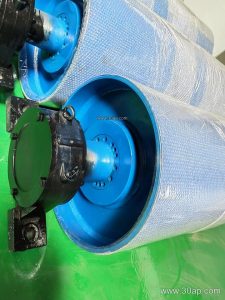
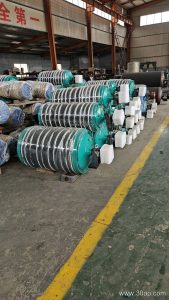
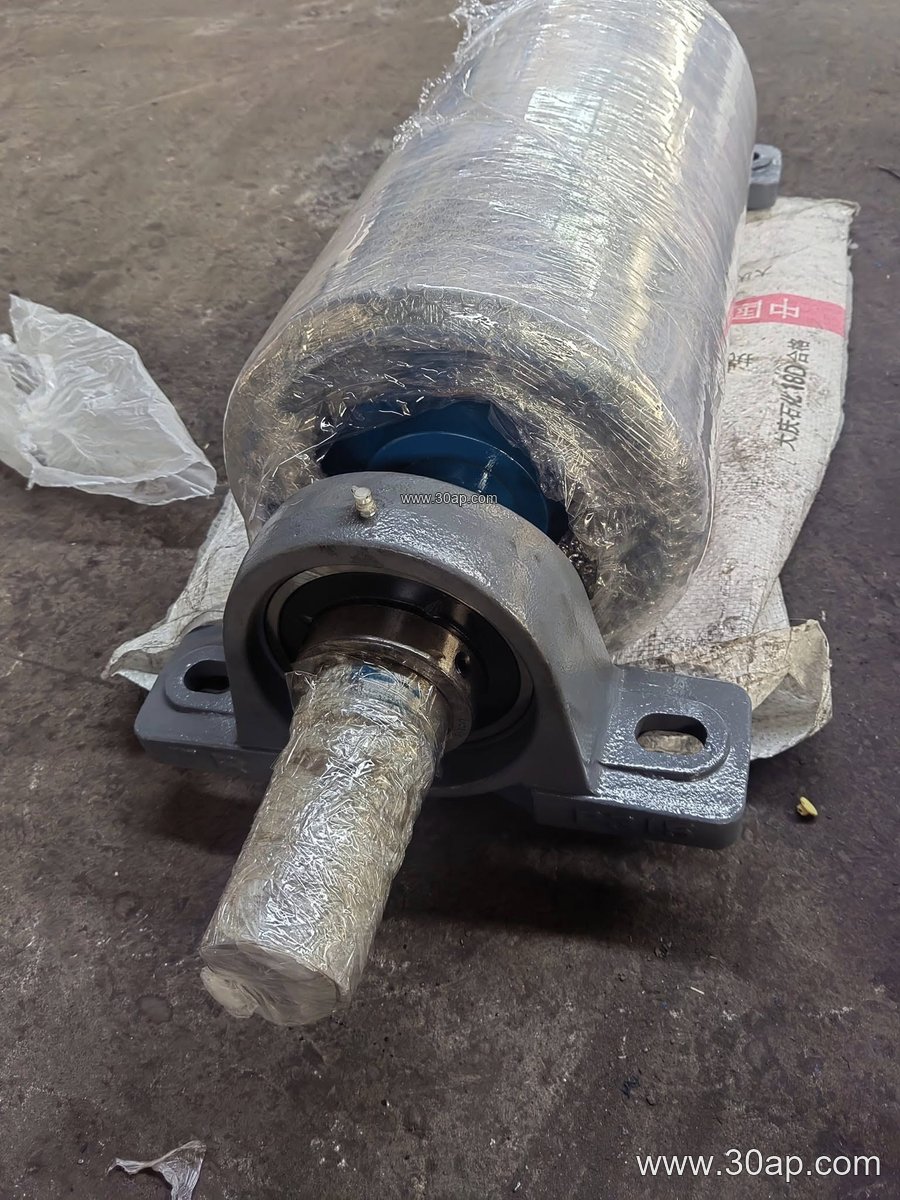
A rubber-lined pulley is a conveyor pulley whose shell is covered with a rubber layer to improve grip between the drum and the conveyor belt. In most installations this is a drive pulley, where the added friction helps transmit torque without excessive belt slip. The lining also protects the shell from abrasive material and reduces the chance of belt damage when fines work their way between belt and drum. In a quarry or aggregate line, this can mean fewer unplanned stops on the main haulage conveyor.
The same rubber covering is sometimes used on a bend pulley or a tension pulley where belt tracking and surface protection matter, but the drive position remains the most common application. A tail pulley is normally kept plain or fitted with a lighter lagging, because its main job is to reverse the belt rather than to transmit power.
How the Lining Is Applied and What It Includes
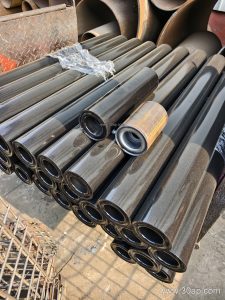
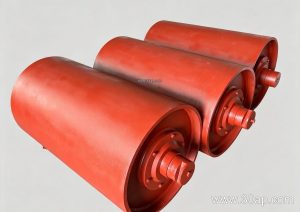
The pulley body is usually a welded steel shell with end discs and a shaft, machined at the ends for bearing fit. Rubber lagging is applied in one of several ways: hot vulcanized rubber, cold-bonded rubber sheet, or cast rubber directly on the shell. Diamond grooving and herringbone patterns are common surface forms, and ceramic lagging may be chosen where slip is a persistent problem.
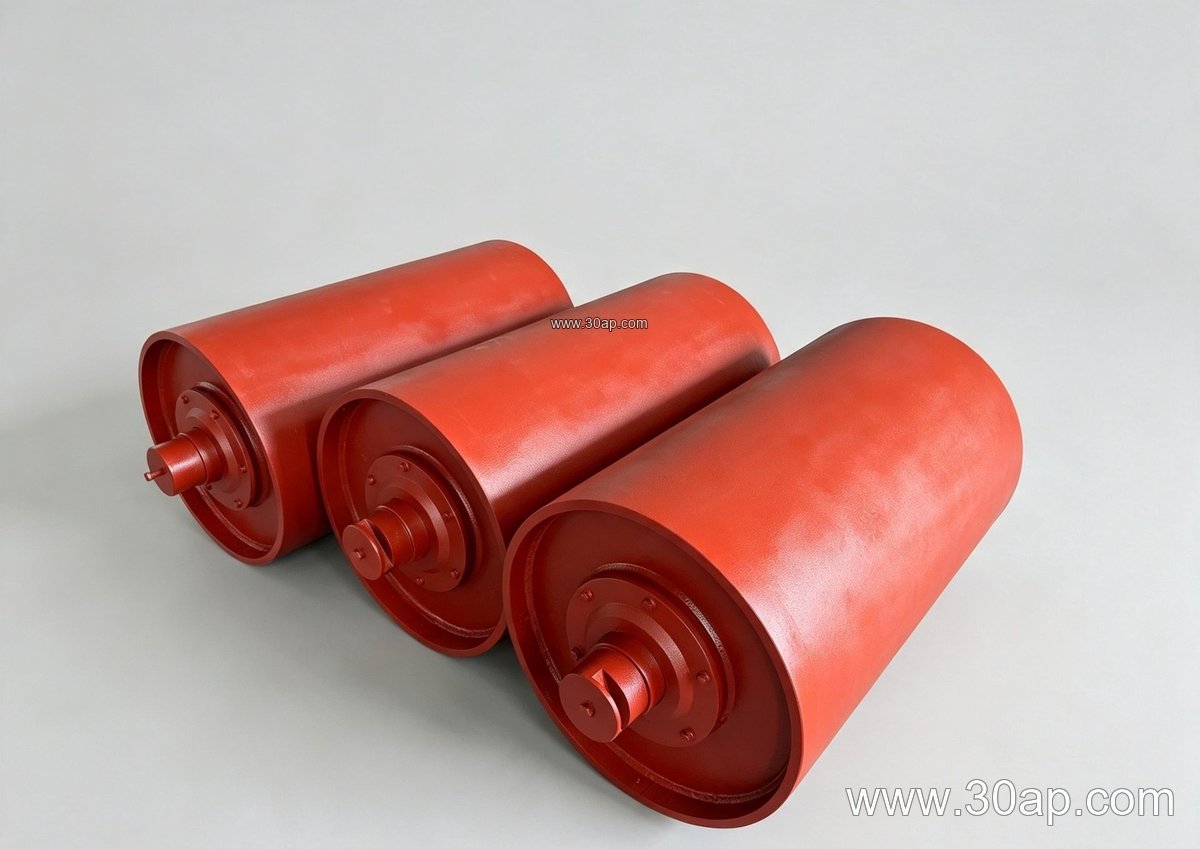
Common lagging thicknesses are 8, 10, 12, 15 and 20 mm, selected according to belt tension and duty. The rubber compound should suit the environment; an oil-resistant grade is useful near gearboxes and lubricated drives, while a flame retardant grade is often specified in coal mining conveyors and underground coal mining conveyor belts. A rubber-lined drive pulley working alongside a flame retardant conveyor belt or fire resistant conveyor belt should follow the same safety requirements as the rest of the system.
- Shell and end disc welded and machined
- Rubber layer bonded by hot vulcanizing, cold bonding or casting
- Surface pattern chosen for grip and water shedding
- Balance check before installation
Matching Pulley Size to Belt Width
Pulley face width is normally a little wider than the belt it carries. Typical reference values include B400 with about 500 mm face, B650 with about 750 mm, B800 with about 950 mm, B1000 with about 1150 mm and B1200 with about 1400 mm. Diameter is a separate design decision based on belt tension, wrap angle and shaft load, so a B1200 belt may run on a Ø1000 drum in one plant and a different diameter in another. Common combinations such as B800 × Ø500 or B1400 × Ø800 appear in catalogs, but they should not be read as fixed pairings.
| Belt width | Typical pulley face | Common diameter range |
|---|---|---|
| B400 | about 500 mm | Ø200 to Ø400 |
| B650 | about 750 mm | Ø250 to Ø500 |
| B800 | about 950 mm | Ø315 to Ø630 |
| B1000 | about 1150 mm | Ø400 to Ø800 |
| B1200 | about 1400 mm | Ø500 to Ø1000 |
| B1400 | about 1600 mm | Ø630 to Ø1250 |
| B1600 | about 1800 mm | Ø800 to Ø1400 |
Shaft diameter is set by torque and bearing load, not by belt width alone. Common shaft sizes run from Ø50 to Ø200, and the final value should come from the conveyor designer.
Where Rubber-Lined Pulleys Are Used
In a coal preparation plant, a rubber-lined drive pulley on the main belt helps keep the belt centered under heavy load. In a cement plant clinker line, the same drum resists fine abrasive dust that would otherwise wear a plain shell. Port bulk terminals handling iron ore or copper ore often specify a high abrasion resistant conveyor belt together with a rubber-lined head pulley, because both surfaces face the same aggressive conditions. A stone crushing line feeding a screen deck may pair a rubber-lined pulley with a crusher conveyor belt and impact resistant conveyor belt to handle lumpy feed.
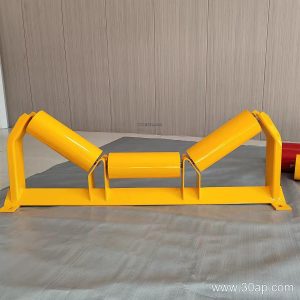
Other equipment around the drum matters too. A worn idler roller can cause the belt to misalign, which then loads the pulley edge and shortens lagging life. Checking conveyor brackets for looseness and confirming that the belt is not over-tensioned will protect the rubber surface as much as choosing the right compound.
Buyer Checklist Before Ordering
Start with the conveyor duty: tonnage, belt speed, wrap angle and starting conditions. Then confirm the belt type, because an EP conveyor belt, an NN conveyor belt and a steel cord conveyor belt each load the drive pulley differently. State the required face width and shaft size, and describe the environment, for example whether the drum sits in a washdown area or a dusty transfer point. Ask how the lining is bonded and whether the surface pattern is plain, diamond or herringbone. Finally, keep spare lagging sheets and fasteners on site, because a small worn patch on a rubber-lined pulley can be repaired before it reaches the belt.