What Pulley Machining Involves
Pulley machining is the manufacturing stage that turns a raw shell, shaft, and end disc assembly into a true-running conveyor pulley. In a quarry or a coal handling plant, a pulley that runs out of round will shorten belt life long before the lagging wears out. Machining covers shaft preparation, end disc fitting, shell turning, keyway cutting, and final balancing, so the finished unit holds concentricity between the shaft axis and the drum surface.
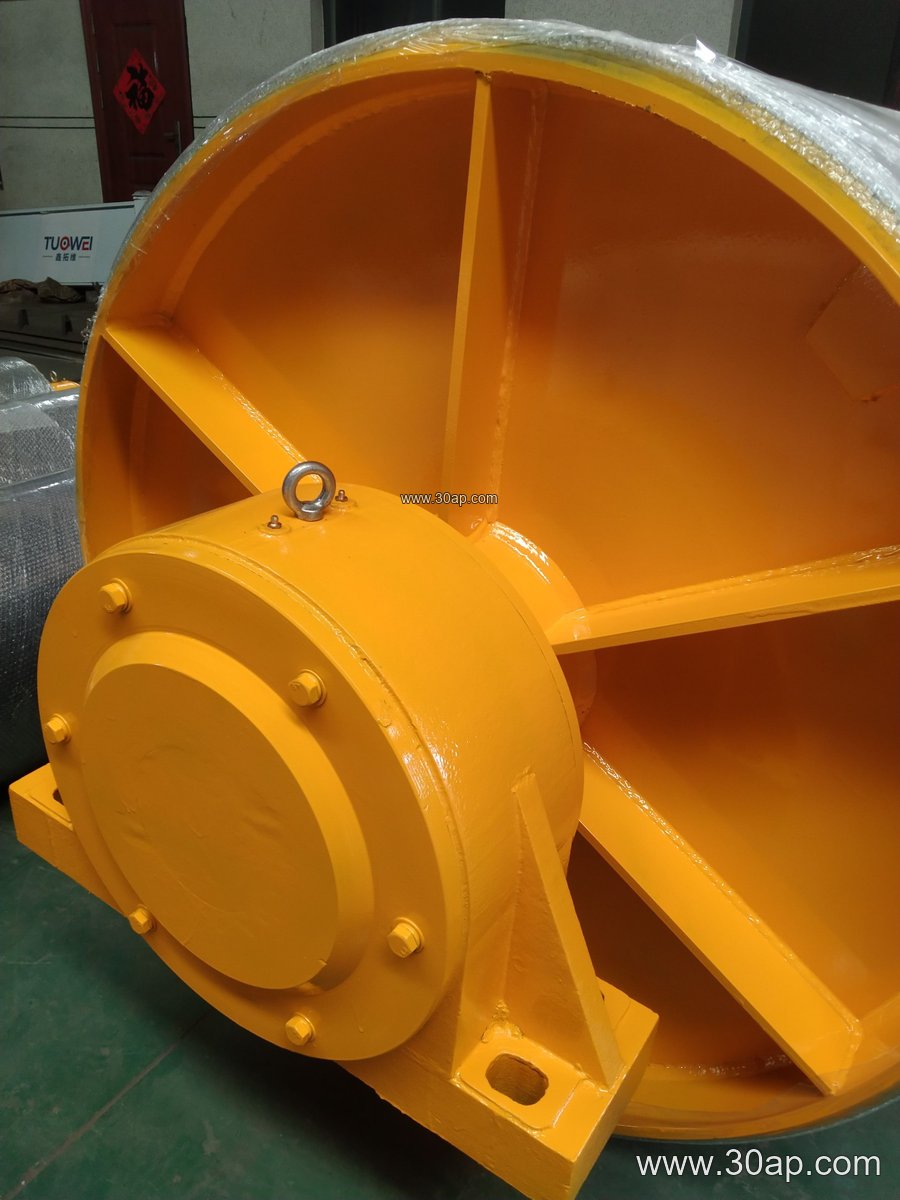
The work usually starts with the shaft. Journals are turned to the bearing seat diameter, shoulders are faced square, and keyways are milled to match the drive coupling. The shell is then machined on a horizontal boring mill or a large lathe so the outside diameter is uniform along its full face width. For a driven pulley, the machined face must stay square to the shaft, because any tilt shows up as belt tracking drift on a long overland conveyor.
From Shell to Finished Drum
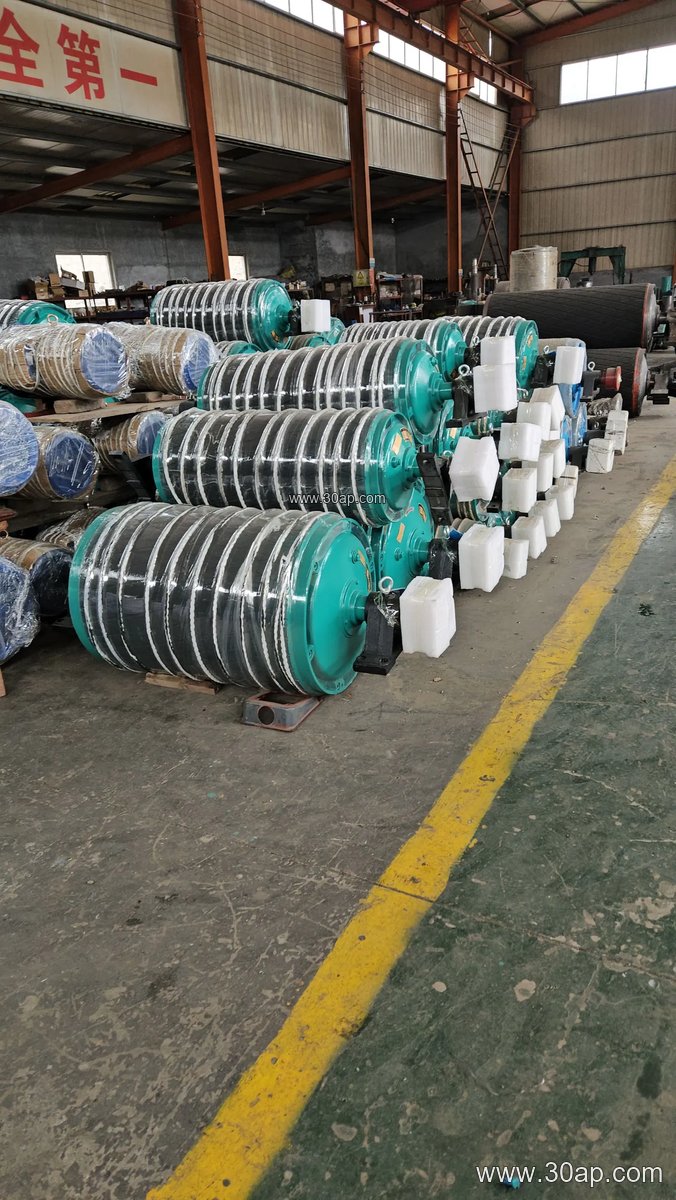
A typical build sequence looks like this:
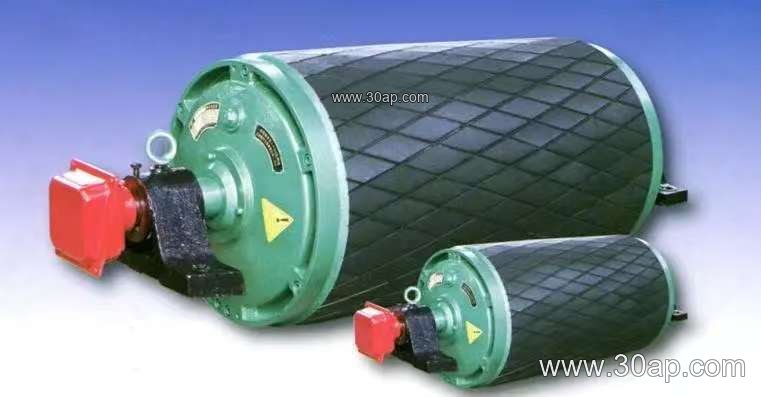
- Cut and roll the shell, then weld the end discs and hub.
- Stress relieve the weldment where the duty is heavy, such as a crusher discharge or an iron ore transfer point.
- Machine the shaft seats, hub bore, and end faces.
- Turn or grind the shell outside diameter to the design size.
- Apply lagging by vulcanizing, cold bonding, or casting, then finish the surface.
- Balance the assembly and mark the belt centerline.
Machining tolerances matter most at the bearing seats and at the face where the lagging sits. A drum that is machined accurately but poorly balanced will still vibrate at operating speed, so balancing is normally part of the same process rather than a separate afterthought.
Where Machined Pulleys Are Used
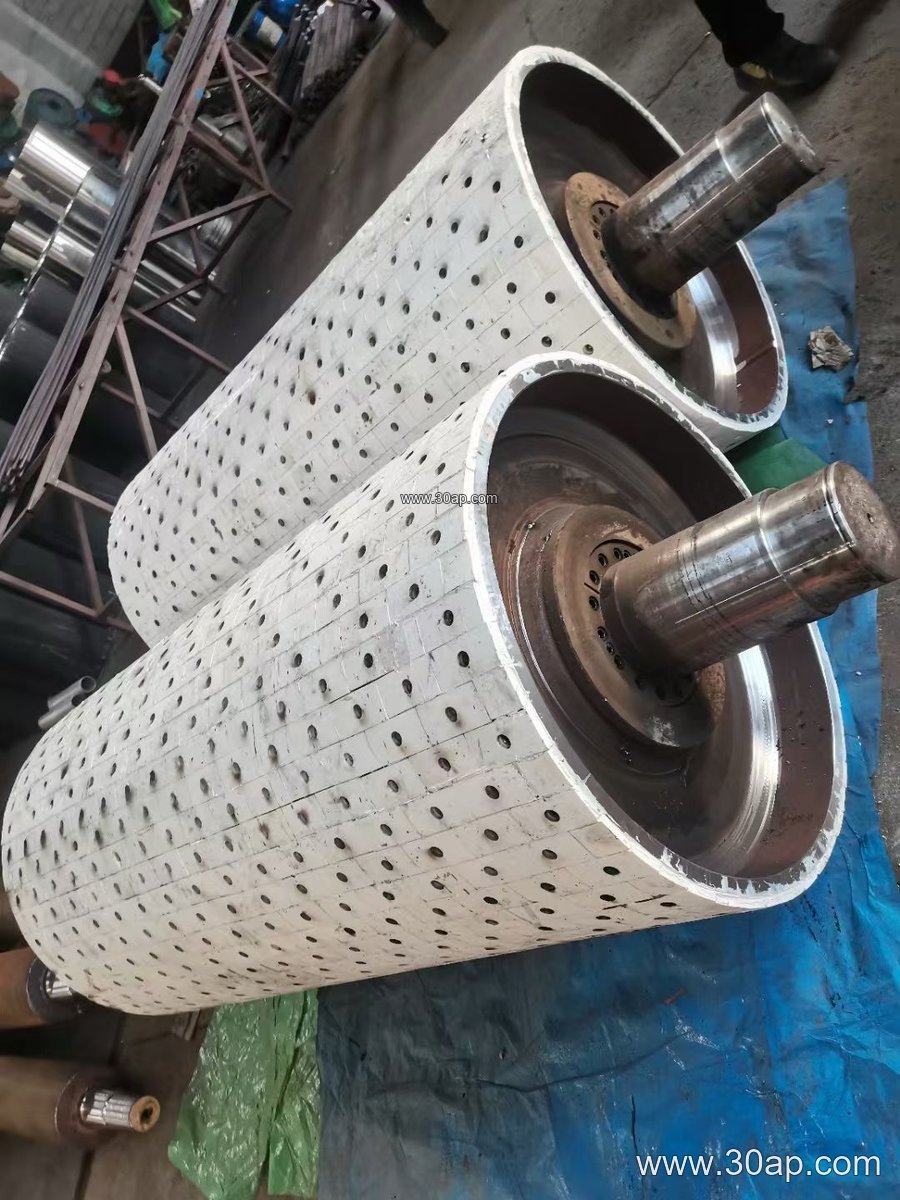
These drums appear wherever a conveyor changes direction or transfers power. In a limestone mine, the head pulley drives the belt while the tail pulley keeps tension; in a power plant coal yard, bend and take-up pulleys guide a flame retardant conveyor belt through the transfer tower. A cement plant clinker line often uses a machined head drum with ceramic lagging, while a port bulk terminal may run wide face drums on a steel cord conveyor belt handling iron ore.
Drive, tail, and bend pulleys are not interchangeable. The drive or head pulley carries the torque and usually has the largest shaft; the tail pulley returns the belt and may be smaller; a bend pulley only redirects the belt and sees lower load. Machining priorities follow that role: shaft and keyway accuracy for the drive unit, smooth concentric faces for the bend unit, and good lagging adhesion for the tail drum.
Common Size References
Dimensions are set by belt width, belt tension, and shaft torque, not by a single fixed rule. The table below shows typical combinations that appear in design drawings; treat them as reference points, not as supply promises.
| Belt width | Typical face width | Example drum size |
|---|---|---|
| B400 | about 500 mm | B400 x Ø315 |
| B650 | about 750 mm | B650 x Ø400 |
| B800 | about 950 mm | B800 x Ø500 |
| B1000 | about 1150 mm | B1000 x Ø630 |
| B1200 | about 1400 mm | B1200 x Ø1000 |
| B1400 | about 1600 mm | B1400 x Ø800 |
| B1600 | about 1800 mm | B1600 x Ø1250 |
| B2000 | about 2200 mm | B2000 x Ø1400 |
Face width is normally slightly larger than the belt so the belt does not rub the end discs. Shaft diameters commonly fall between Ø50 and Ø200, but the correct value comes from torque and bearing load calculations. A B1200 drum may use Ø100 or Ø160 shaft depending on the drive power.
Lagging and Surface Finish
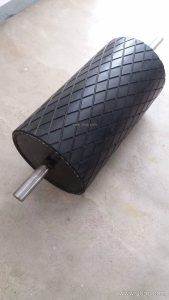
The machined shell is often covered to improve grip. Plain finish suits light duty; diamond or herringbone rubber lagging improves traction on wet belts; ceramic lagging is chosen at high-tension drive points in ore and aggregate duty. Lagging thickness is commonly 8, 10, 12, 15, or 20 mm, applied by hot vulcanizing, cold bonding, or casting. The shell must be machined true before covering, because lagging follows the surface beneath it.
What Buyers Should Check
When specifying pulley machining, ask for the shaft material and keyway dimensions, the shell diameter and face width, the lagging type and thickness, the balancing grade, and the bearing seat tolerance. Confirm whether the pulley will run with an abrasion resistant conveyor belt in a wet quarry or a heat resistant conveyor belt near a sinter plant, since that affects lagging choice. Also check that the drawing shows the belt centerline and the mounting bracket interface, so the drum fits the conveyor frame without field modification. A well-machined pulley, matched to its belt and structure, keeps tracking stable and extends the service life of the whole conveyor line.