What an EP200 Conveyor Belt Is
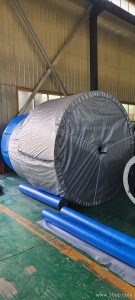
An EP200 Conveyor Belt is a fabric core belt built on polyester warp and polyamide weft cords. The “EP” refers to the carcass, and the 200 is a nominal tensile strength grade expressed in newtons per millimeter of belt width. In practice, this grade sits in the middle of the common EP range, above lighter EP100 and EP1250-class construction questions and below heavier EP315, EP400, EP500 and EP630 builds used on longer or steeper runs. It is a practical choice for medium-duty bulk conveying where a steel cord belt would be overkill but a light single-ply belt would not survive.
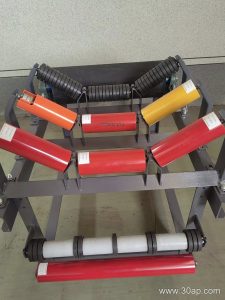
Because the carcass is a fabric core, the belt tracks well on conventional troughing idlers and can be spliced with either mechanical fasteners or vulcanized steps. That flexibility is one reason fabric core belts remain common in quarry, cement, power plant and coal handling circuits.
How the Belt Is Built
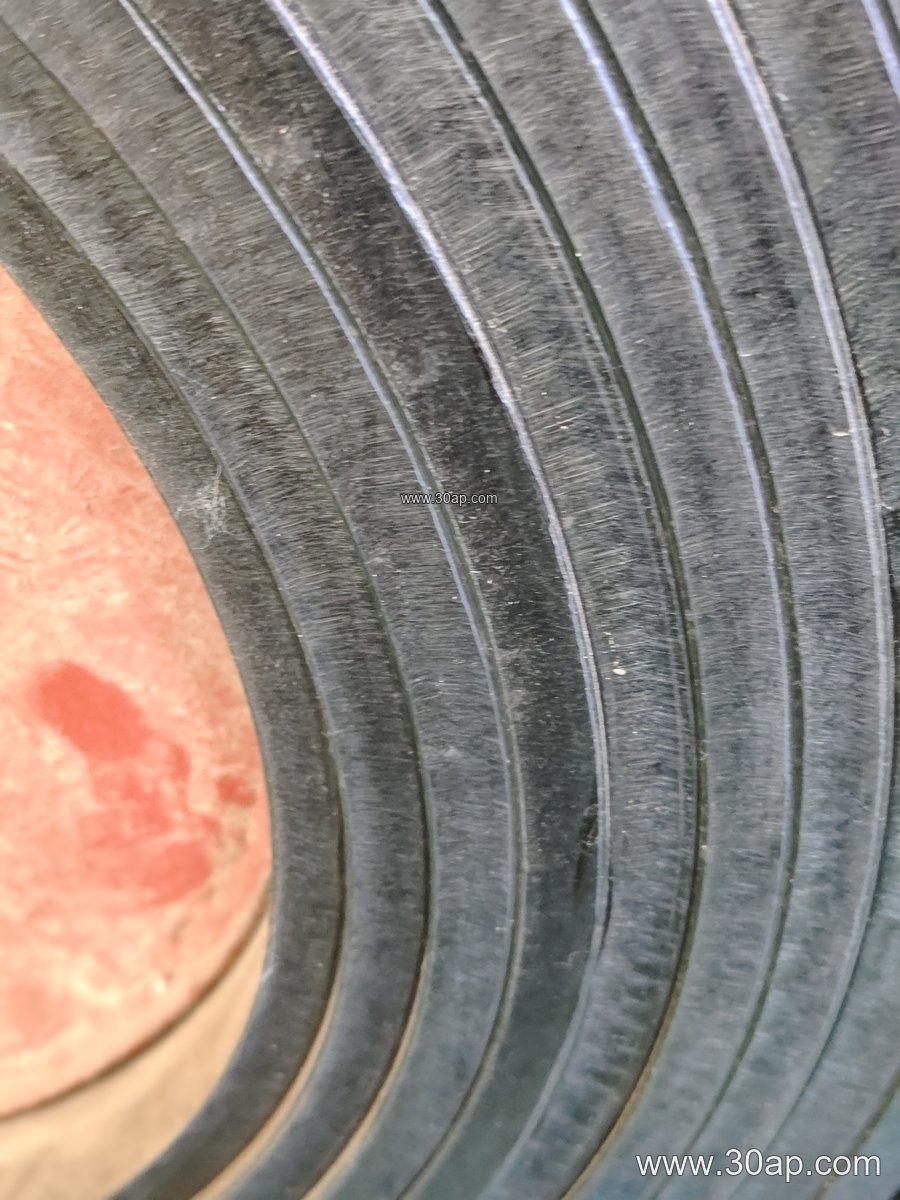
A typical EP200 belt uses two to six plies of EP fabric, depending on the required strength and the number of splices in the system. The plies are bonded with rubber skim compound, then covered on both faces with abrasion resistant rubber. Cover thickness is usually quoted as a top-plus-bottom pair, such as 4+2 mm, 5+2 mm or 6+2 mm; lighter 3+1.5 mm covers appear on smaller belts. The edges are usually cut square or molded, and the belt can be supplied as an Endless Conveyor Belt for short, fixed-center machines.
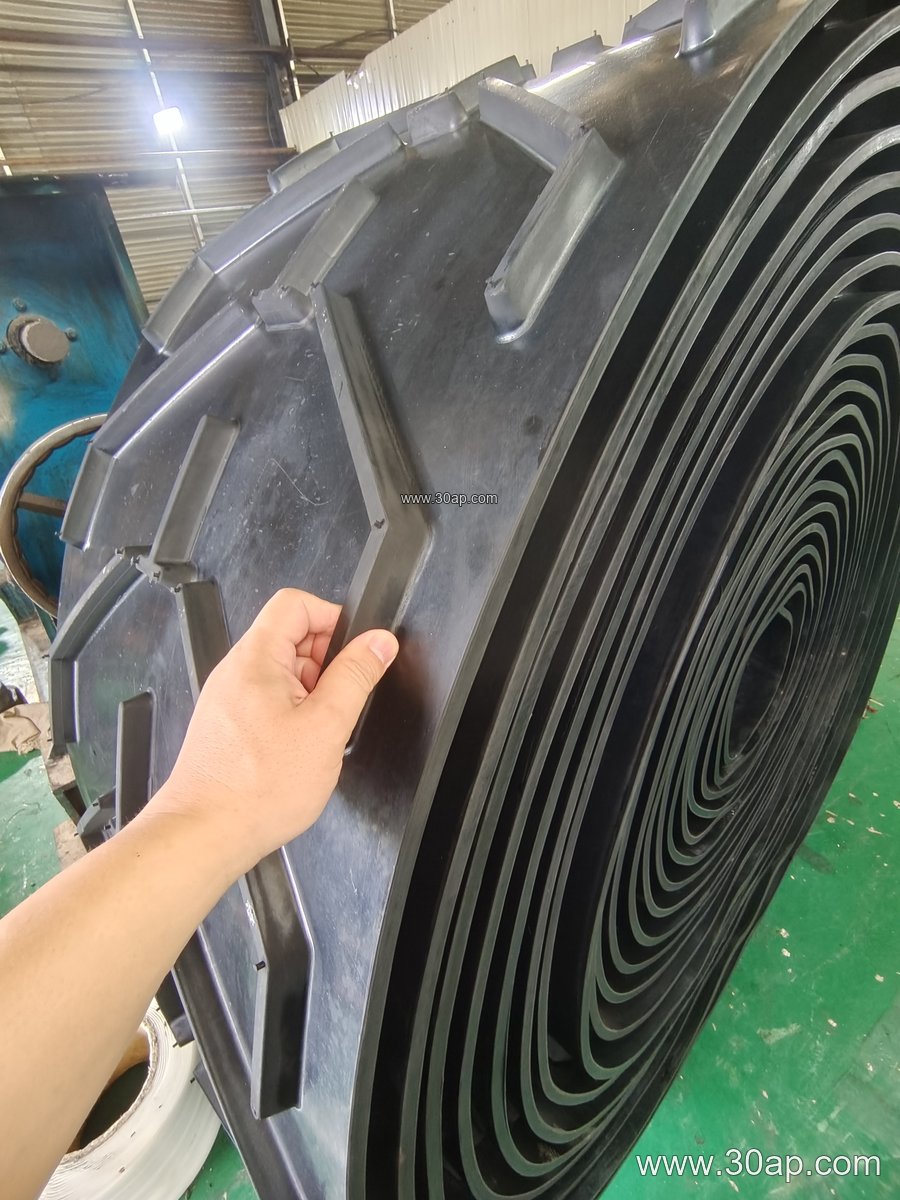
Buyers should confirm four details before ordering: the strength grade, the number of plies, the cover thickness and the cover compound. The cover compound is what determines whether the belt is a standard Rubber Conveyor Belt or a specialized variant such as a Heat Resistant Conveyor Belt, Oil Resistant Conveyor Belt, Flame Retardant Conveyor Belt or Cold Resistant Conveyor Belt. An Anti-Static Conveyor Belt grade is often requested for dusty or potentially explosive atmospheres, particularly in coal mining.
Common Specifications
The table below shows reference values that appear in typical catalogues. They are indicative only; actual construction is confirmed per design and per manufacturer.
| Parameter | Common Reference Values |
|---|---|
| Strength grade | EP200 (also EP100, EP315, EP400, EP500, EP630, EP800, EP1000, EP1250, EP1600, EP2000 in the same family) |
| Belt width | B500, B650, B800, B1000, B1200, B1400, B1600, B1800, B2000 |
| Cover thickness | 3+1.5, 4+2, 5+2, 6+2, 8+3 mm |
| Carcass plies | Usually 2 to 6 layers |
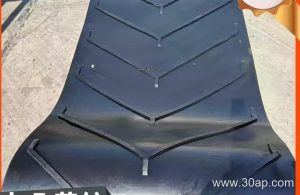
| Surface options | Smooth, Chevron Conveyor Belt, Corrugated Sidewall Conveyor Belt, Skirted Conveyor Belt |
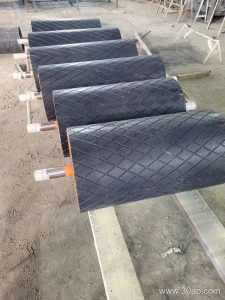
Widths such as 800mm Conveyor Belt, 1000mm Conveyor Belt and 1200mm Conveyor Belt are the most common in aggregate and cement plants, while 1400mm Conveyor Belt and 1500mm Conveyor Belt sizes appear on higher-capacity main lines. The belt width is matched to the required tonnage and lump size, not to a single pulley diameter; troughing idlers, a conveyor pulley and the conveyor bracket layout are all selected together as a system.
Where It Fits in the Plant
EP200 belts turn up across a wide spread of industries. In a sand and gravel operation they carry screened aggregate from a Crusher Conveyor Belt discharge to stockpiles. In a cement plant they move clinker and limestone on medium-length runs. In a power plant they feed coal from a yard conveyor to the bunker. In mining, an EP200 Mining Conveyor Belt may serve as a drift or panel belt where the full tension of a Steel Cord Conveyor Belt is not needed.
For abrasive rock, an Abrasion Resistant Conveyor Belt cover is usually specified. For hot clinker or sinter, a Heat Resistant Conveyor Belt compound is chosen instead. Where oil or grease contamination is expected, an Oil Resistant Conveyor Belt cover helps prevent swelling. These are cover-compound choices layered on top of the same EP200 carcass, not different products.
Selection and Maintenance Notes
- Check the calculated maximum belt tension against the EP200 rating with a safety margin; do not size by width alone.
- Match the cover grade to the material: abrasive, hot, oily, or flame retardant service.
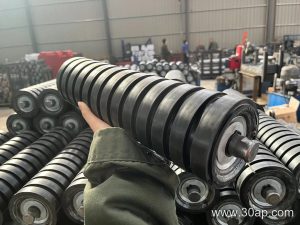
- Keep idler roller alignment and pulley lagging in good condition, since a fabric core belt tolerates misalignment less well than a steel cord belt.
- Inspect splices regularly; vulcanized splices usually outlast mechanical fasteners on long runs.
- Store spare belt rolls flat and dry to protect the fabric core.
For a comparable but different construction, an NN Conveyor Belt uses nylon in both warp and weft and offers higher elongation under load; a Multi-Ply Fabric Core Conveyor Belt in EP200 grade is often preferred where lower stretch and better tracking are wanted. Neither is a substitute for confirming the actual duty with the conveyor designer.