What a Heavy-Duty Lagged Pulley Does on the Line
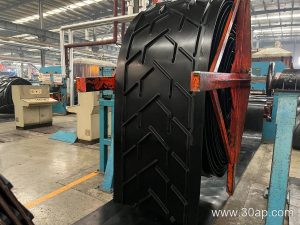
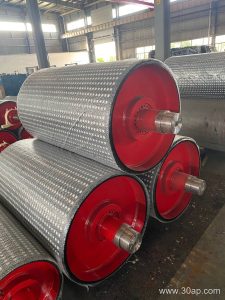
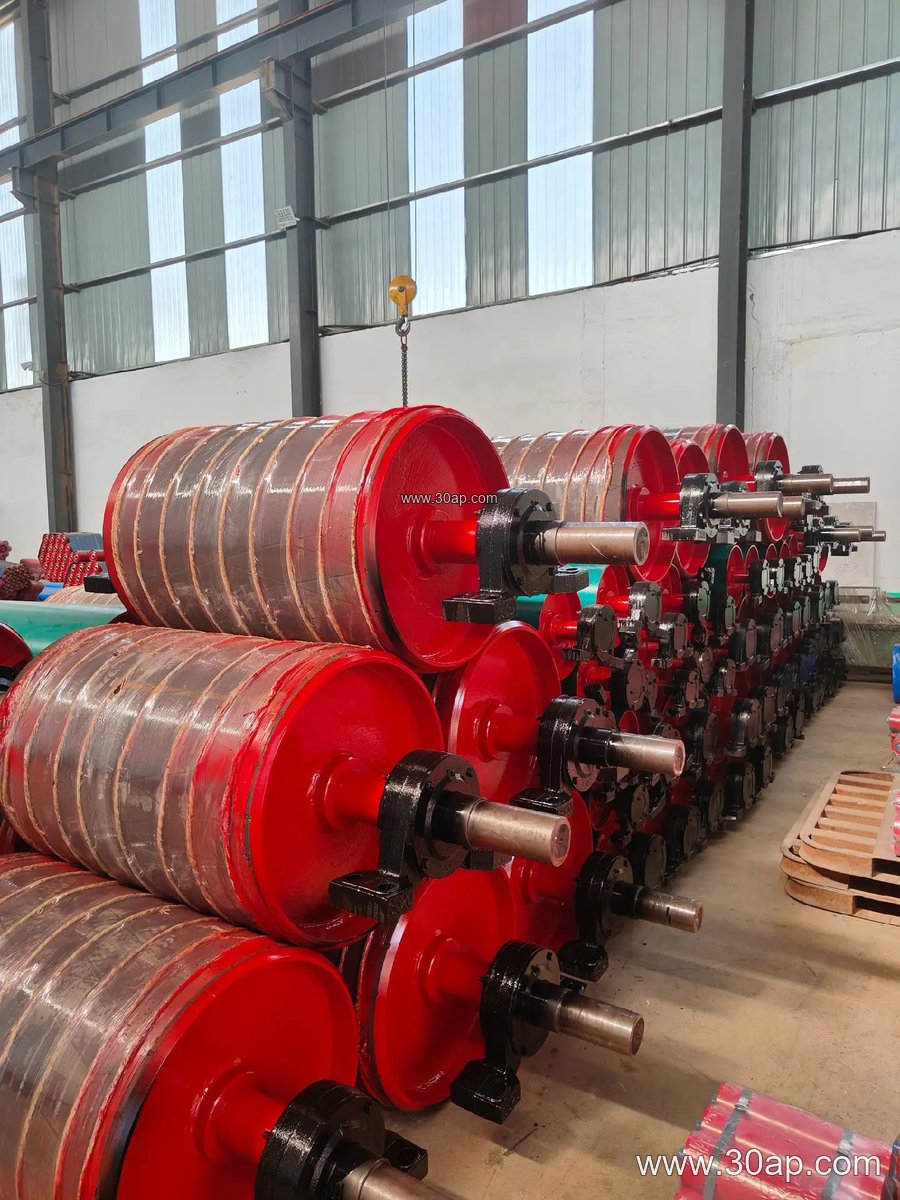
A heavy-duty lagged pulley is a conveyor pulley whose shell carries a bonded rubber or ceramic lagging layer and whose build is sized for high tension, continuous duty and abrasive bulk materials. It is the drum that transfers drive force to the belt or redirects it under load, and the lagging is what protects both the shell and the belt at the contact point. In a quarry, limestone mine or sand and gravel line, this pulley often works alongside a heavy-duty mining conveyor belt and a set of troughing idler rollers, and its condition directly affects belt tracking and slip.
The name covers one product family, not a substitute for other drum positions. A drive pulley, a tail pulley and a bend pulley each perform a different job, and the lagging specification should follow the duty of the position rather than a generic label.
Construction Details That Matter
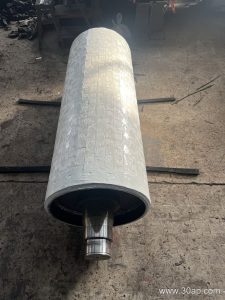
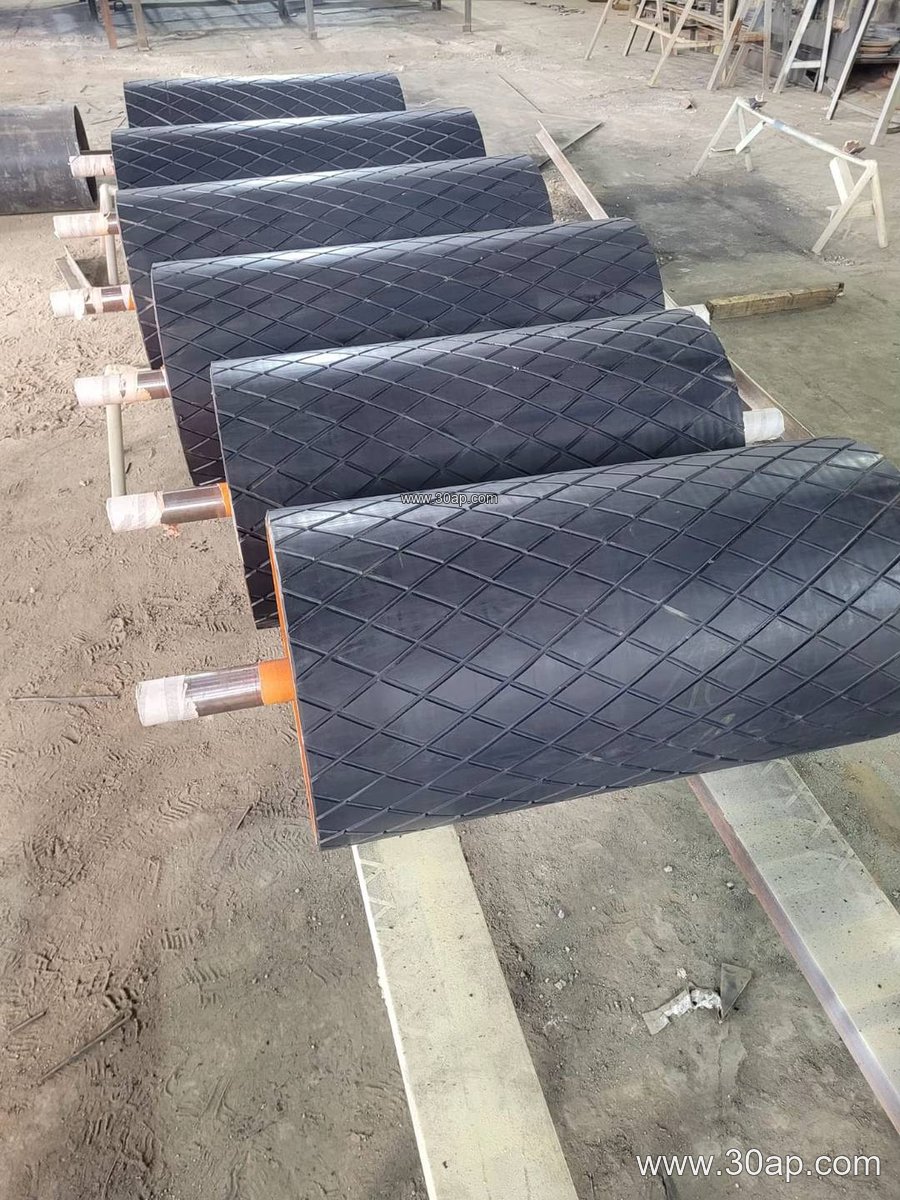
The shell is usually a rolled steel cylinder with welded end discs and a shaft sized by torque and radial load, not by belt width alone. Common shaft diameters include Ø80, Ø100, Ø120, Ø140 and Ø160, but the final value is determined by the drive calculation. The lagging is applied by hot vulcanization, cold bonding or casting, and the surface pattern is chosen for grip and water shedding.
- Plain lagging for general grip where material build-up is not severe
- Diamond or herringbone grooving to improve traction in wet or dusty conditions
- Ceramic tiles embedded in rubber for very high wear at the drive contact
- Lagging thickness commonly 8, 10, 12, 15 or 20 mm depending on wear allowance
The pulley face width is normally wider than the belt. For example, a B800 belt typically runs on a pulley face around 950 mm, and a B1200 belt on a face around 1400 mm. Diameter and face width are selected together with the belt tension and the wrap angle, so combinations such as B800 × Ø500 or B1200 × Ø1000 are design choices rather than fixed rules.
Where It Fits in Bulk Handling
Heavy-duty lagged pulleys appear at the head drive of a crushing and screening plant, on the main incline of a cement plant clinker line, and at transfer points in a power plant coal yard. In an underground coal mine, flame retardant conveyor belt specifications usually dominate the belt choice, while the pulley must still deliver reliable grip in a damp, dusty environment. A quarry conveyor belt carrying sharp rock benefits from ceramic or thick rubber lagging that resists cutting and polishing.
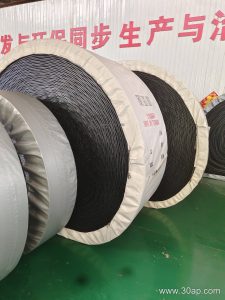
On long overland routes, a steel cord conveyor belt may call for a larger diameter drum to keep bending stress low, whereas a multi-ply fabric core belt on a shorter run can work with a smaller drum. The pulley should be matched to the belt construction, not chosen in isolation.
Reading the Size and Surface Options
Typical pulley diameters in heavy duty service range from Ø400 up to Ø1600, with Ø630, Ø800 and Ø1000 common on medium and large installations. Face widths track the belt: B650 around 750 mm, B1000 around 1150 mm, B1400 around 1600 mm, B1800 around 2000 mm. The table below shows reference pairings for orientation only.
| Belt width | Typical pulley face | Example diameter range |
|---|---|---|
| B650 | about 750 mm | Ø400 to Ø630 |
| B800 | about 950 mm | Ø500 to Ø800 |
| B1000 | about 1150 mm | Ø630 to Ø1000 |
| B1200 | about 1400 mm | Ø800 to Ø1250 |
| B1400 | about 1600 mm | Ø800 to Ø1400 |
These are reference values, not universal specifications. A buyer should confirm the shaft diameter, bearing type, lagging thickness and surface pattern against the actual conveyor design.
Buyer Checklist Before Ordering
Start with the belt specification and the duty cycle. An abrasion resistant conveyor belt on a primary crusher discharge will wear lagging faster than a cleaner duty belt, so a thicker lagging or ceramic surface may be justified. Confirm the pulley position, the wrap angle, the belt speed and the environment, including dust, water and temperature. Check that the conveyor bracket and bearing housing dimensions match the existing frame, and that the pulley can be removed without cutting the belt path.
Ask for the lagging bond method, the surface pattern drawing and the balancing class. For a heat resistant conveyor belt application, keep the pulley surface within the belt manufacturer’s temperature limit. For an oil resistant conveyor belt, avoid lagging compounds that swell on contact with the carried material. A clear drawing and a stated load case prevent most installation problems.
Maintenance Points That Extend Service Life
Inspect lagging for glazing, cuts and loose tiles at each shutdown. Worn lagging reduces friction and invites slip, which then damages the belt cover. Keep the pulley face clean and confirm that the belt is centered; misalignment loads one edge of the lagging and shortens its life. Check bearing temperature and lubrication, and verify that the shaft and keyways remain tight. On a coal mining conveyor belt system, also confirm that the lagging material is compatible with the fire safety requirements of the installation.
Spare pulleys should be stored with the lagging protected from sunlight and oil. When replacing a drum, record the diameter, face width, shaft size and lagging pattern so the next order matches the proven design.