What a Plastic Idler Is
A plastic idler is a conveyor idler roller whose barrel is made from a polymer instead of steel. It supports the conveyor belt on the carrying or return side, lets the belt travel with low resistance, and keeps the belt profile steady between the head and tail. In many plants the same item is simply called a plastic idler roller, and that is the exact product discussed here. It is not a drive pulley, a tail pulley or a bend pulley, and it should not be confused with the pulleys that transmit power or change belt direction.
The appeal is easy to understand. Polymer barrels are lighter than steel, resist corrosion and many chemicals, and are quieter in operation. In a quarry, a limestone mine or a fertilizer plant, where dust and moisture attack steel parts, this can extend service life. For general material handling, a plastic conveyor idler is a practical alternative where loads are moderate and the environment is aggressive.
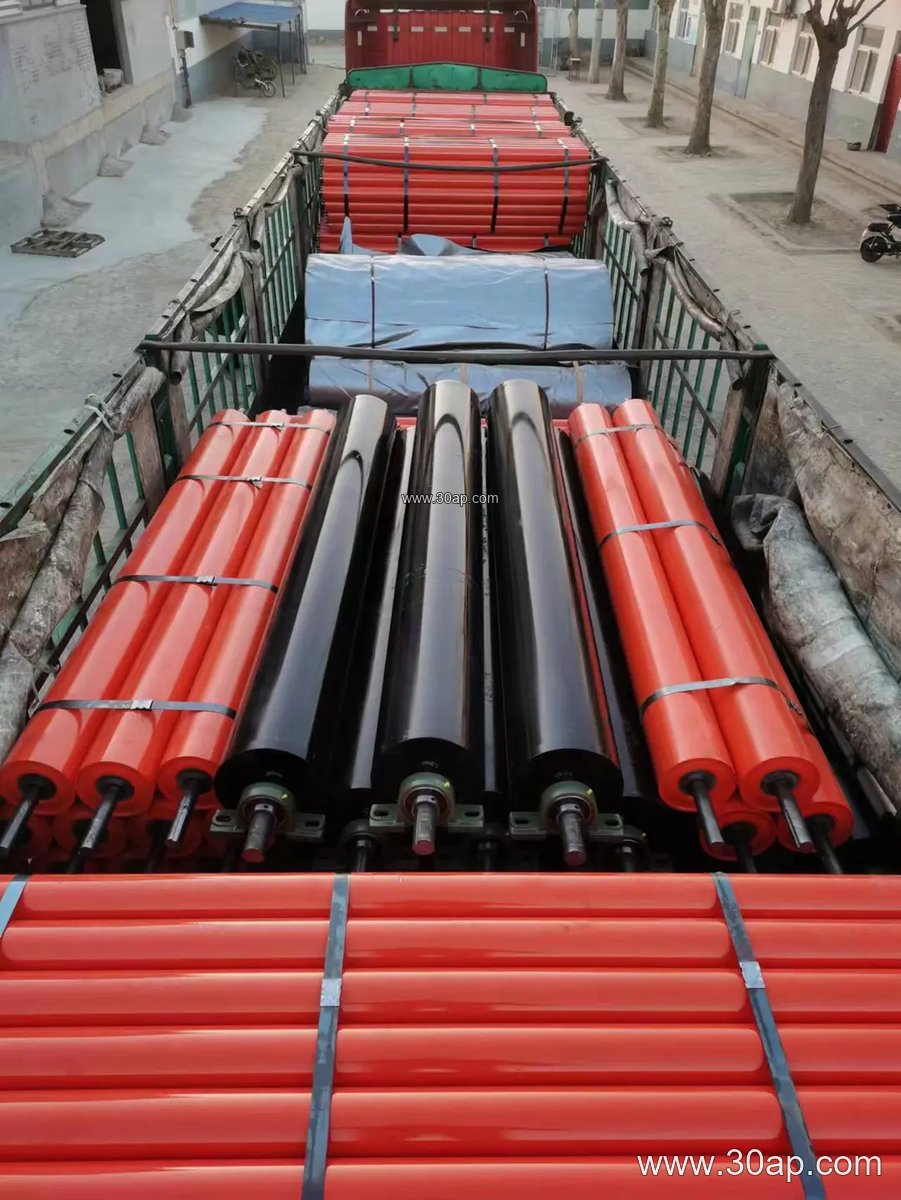
Construction and Materials
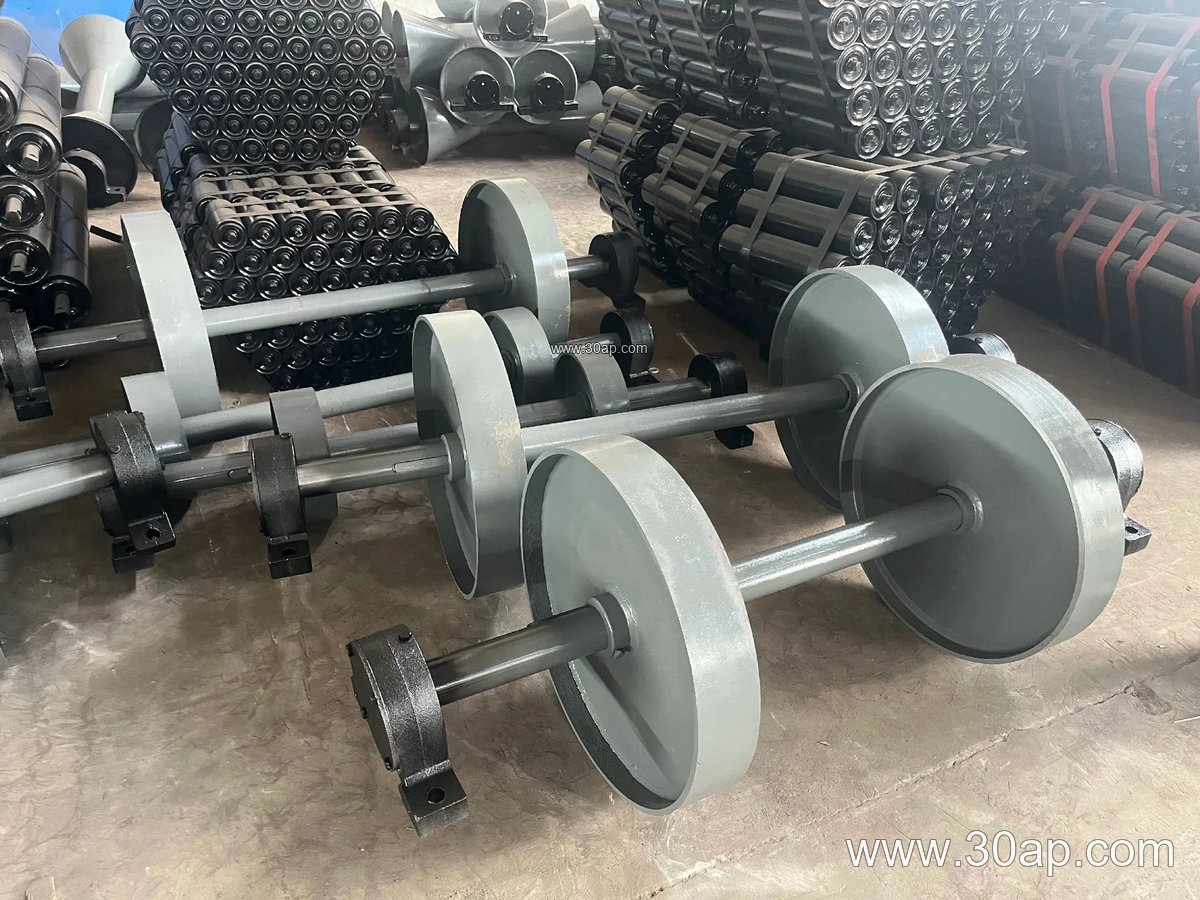
A typical unit combines a polymer tube, a shaft, bearing housings and a sealing arrangement. Common barrel materials include UHMW-PE, nylon and reinforced polymer blends. The shaft is usually carbon steel or stainless steel, and the bearings are selected to match the load and speed. Seals matter as much as the tube, because fine grit from a crusher line or a sand making plant will destroy a bearing quickly if it gets inside.
Surface options vary by duty. Smooth polymer suits clean, light belts. Rubber rings can be fitted to a plastic roller when impact absorption is needed at a transfer point. The dimensions follow the conveyor design, not the other way around, so a buyer should read the drawing rather than assume a single standard.
| Parameter | Common Range (Reference) |
|---|---|
| Roller diameter | Ø63, Ø76, Ø89, Ø102, Ø108, Ø127, Ø133 mm |
| Belt width | B500, B650, B800, B1000, B1200, B1400 mm |
| Trough angle | 20°, 30°, 35°, 45° |
| Bearing | 6204, 6205, 6305, 6306, 6308 |
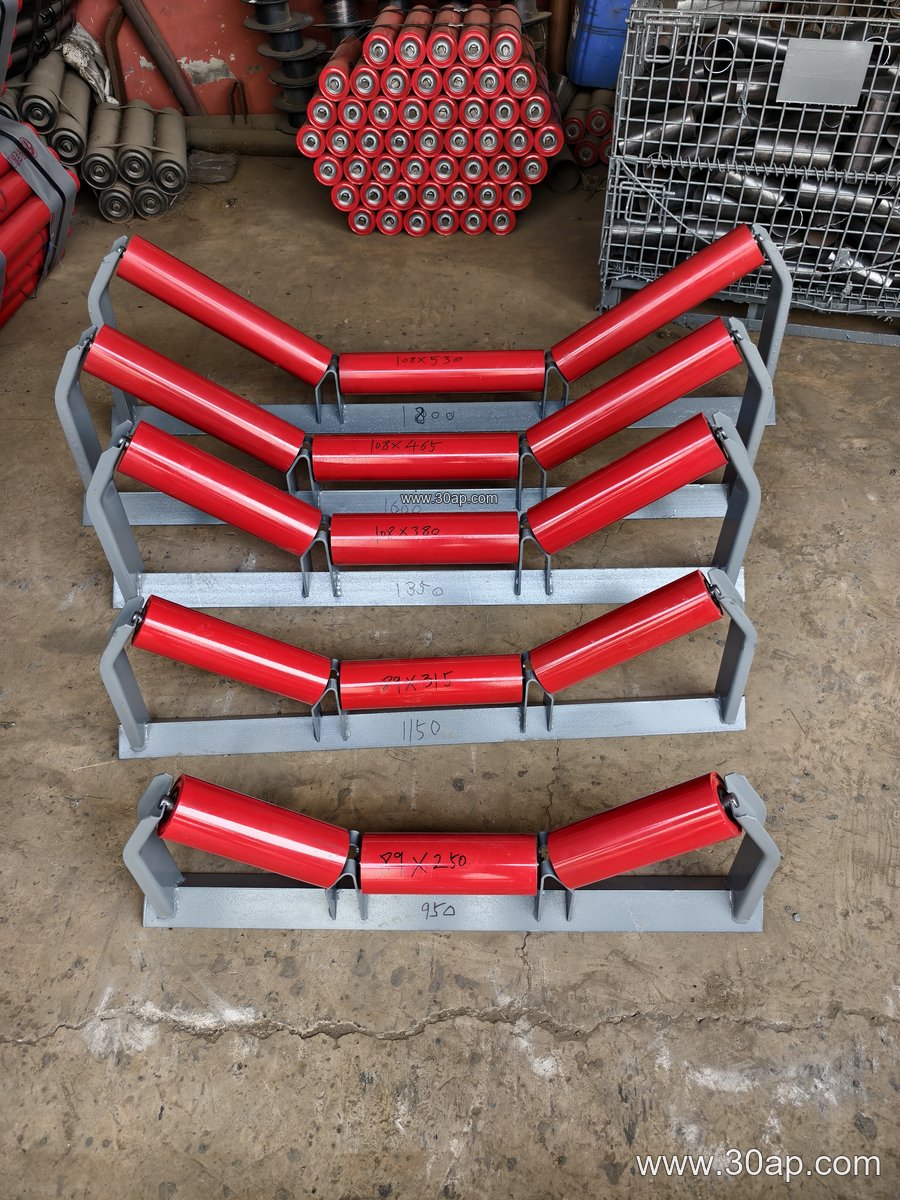
| Roller length (3-roll trough, example) | About 250 mm at B650, 315 mm at B800, 380 mm at B1000 |
These figures are examples only. Roller length changes with belt width, trough angle and idler arrangement, and the side rollers may differ from the centre roller. A bearing number does not fix a single diameter, and one belt width does not dictate one roller size.
Where It Fits on the Conveyor
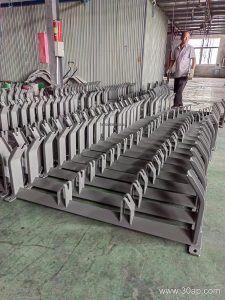
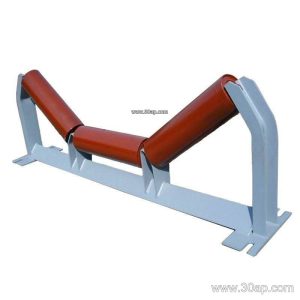
On the carrying side, plastic idlers are usually arranged in a trough set of two or three rolls. On the return side, flat or V-return rollers support the empty belt. Transition idlers guide the belt from flat to troughed. Self-aligning types help keep a wandering belt centred, and impact rollers are used below loading points. A plastic idler can serve in several of these positions, but each position has its own load and sealing requirements.
Typical applications include aggregate lines, cement plants, power plant coal handling, port terminals and recycling facilities. Where a rubber conveyor belt, an EP conveyor belt or an NN conveyor belt runs at moderate tension, plastic rollers can do a good job. On heavy-duty mining conveyor belts carrying iron ore or copper ore, steel rollers are often preferred for load capacity, so the choice should follow the duty, not fashion.
Buyer Checklist
- Confirm roller diameter, length and shaft end type against the existing conveyor bracket.
- State the belt width and trough angle so the supplier can match the roll set.
- Describe the environment: dust, water, chemicals, temperature and wash-down.
- Check bearing size and seal design for the expected speed and load.
- Ask about polymer grade, wall thickness and allowed radial load.
- For hot material such as sinter or clinker, verify temperature limits before use.
Maintenance is simple. Listen for squealing bearings, watch for a stopped roller that polishes the belt, and replace damaged units promptly. Keep the belt tracking well, because a misaligned belt wears rollers on one side. Spare parts should match the original drawing, especially the shaft and bracket interface.
Summary
A plastic idler is a lightweight, corrosion-resistant support roller for conveyor belts. It suits dusty, wet and chemical environments where steel corrodes, provided the load and temperature are within the polymer’s limits. Select it by duty, dimensions and sealing quality, and treat the catalogue numbers as a starting point for discussion rather than a fixed specification.