What an Anti-Slip Lagged Pulley Does
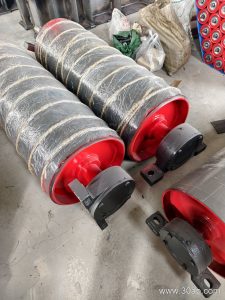
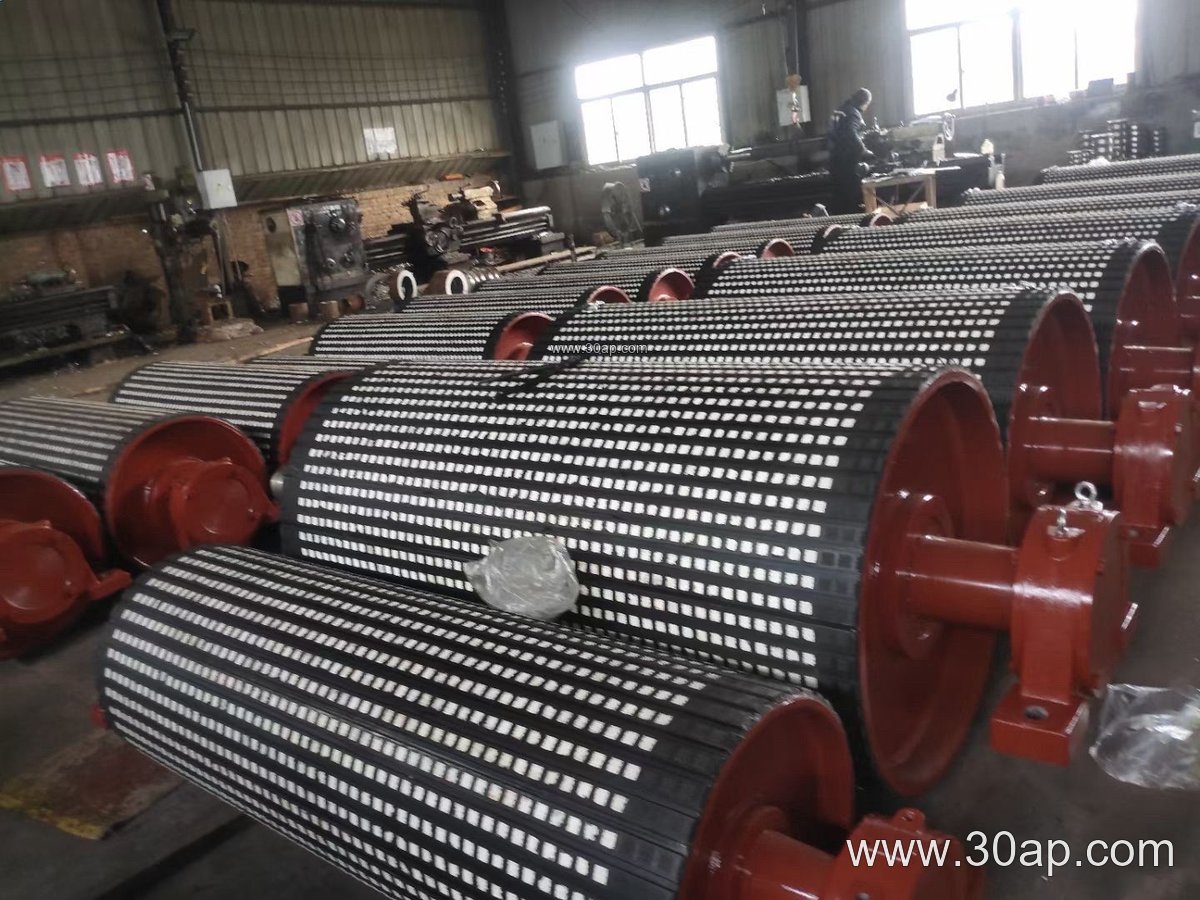
An anti-slip lagged pulley is a conveyor pulley whose shell carries a rubber or ceramic lagging layer that raises friction between the drum surface and the conveyor belt. The purpose is simple: transfer torque without belt slipping. In a quarry, a cement plant clinker line, or a coal handling system at a power station, the drive drum must grip the belt firmly under load. Without adequate friction, the belt can slip, the drum can polish, and the belt can run hot and wear quickly. The lagged construction also protects the shell from abrasion and helps shed fines and moisture from the contact zone.
The same product is often called a rubber lagged drum or a friction lagged conveyor pulley. These names describe the same item. The lagging is what distinguishes it from a plain steel shell.
How the Lagging Is Built
The core is a welded steel shell fitted with shaft, hubs, and end discs. Lagging is applied in several ways:
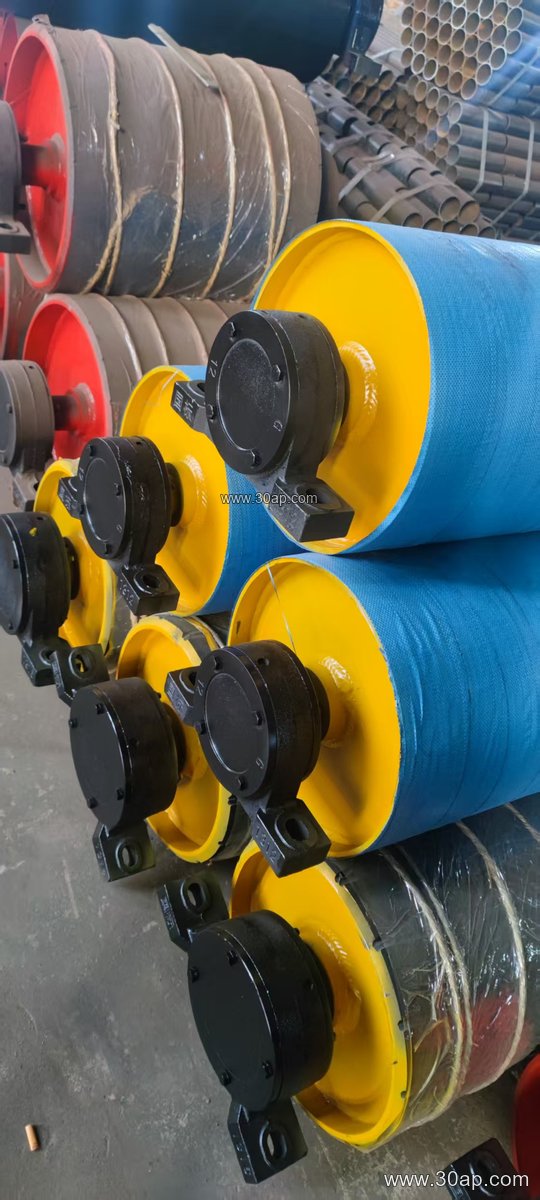
- Hot vulcanized rubber, bonded under heat and pressure for heavy duty service
- Cold bonded rubber, often chosen for easier field repair
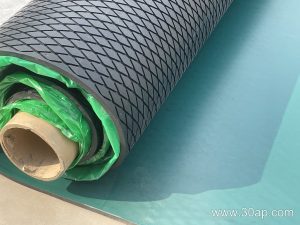
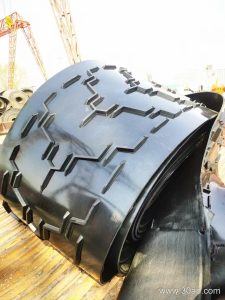
- Diamond or herringbone grooved rubber, which helps water and fines escape
- Ceramic tiles set in rubber, used where abrasion is severe
- Plain sheet rubber for general grip
Common lagging thicknesses are 8, 10, 12, 15, and 20 mm. Grooved patterns are useful in wet or dirty conditions, while plain lagging suits cleaner duty. Ceramic lagging costs more but resists wear in sinter plants and aggregate lines handling sharp material.
Matching Diameter, Face Width, and Shaft
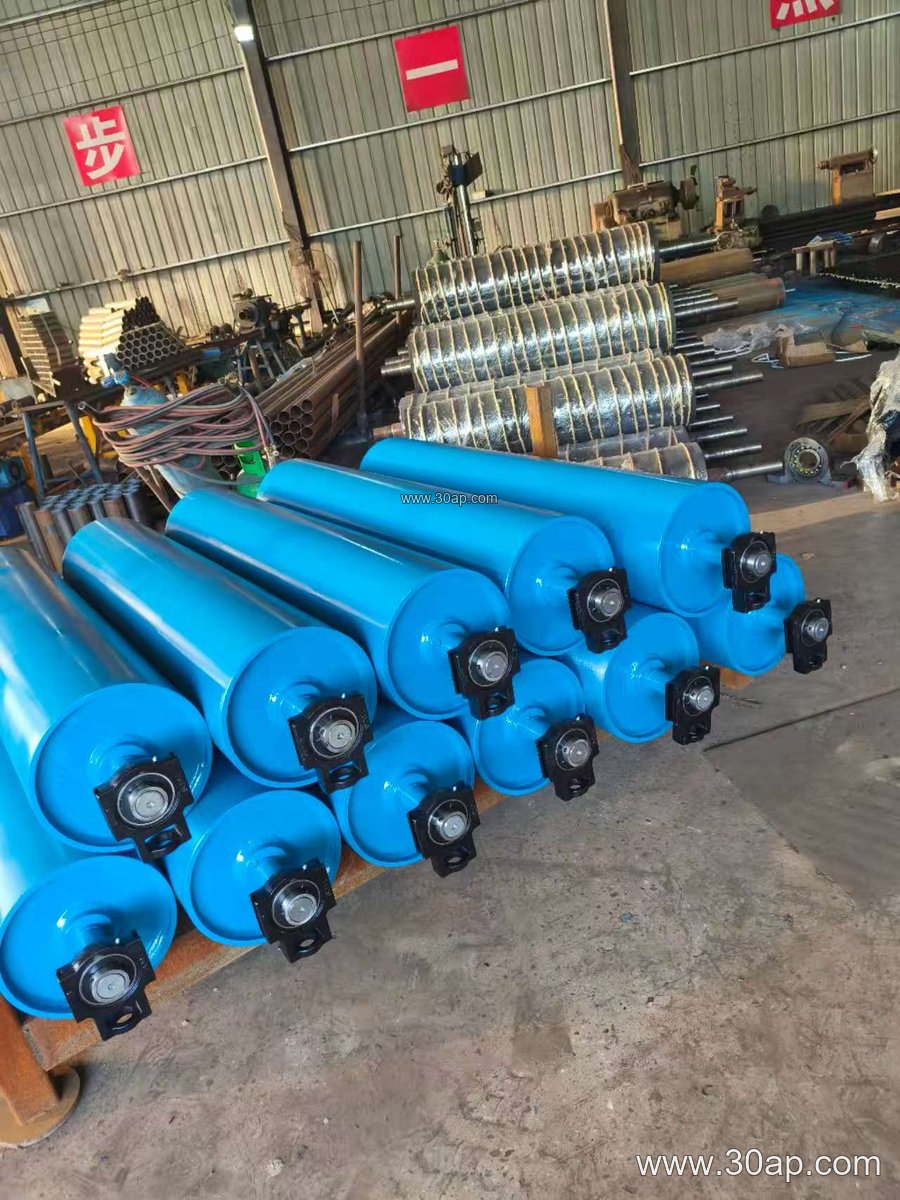
Face width is normally a little wider than the belt. Typical references include B800 belt with roughly 950 mm face, B1000 with about 1150 mm, and B1200 with about 1400 mm. These are reference relationships, not fixed rules. Diameter follows the torque and belt tension demand, not the belt width alone. A B800 drum might be Ø500 in a light duty position or Ø800 where wrap and tension are higher; a B1200 unit may be Ø1000 or larger. Shaft diameter is determined by torque and bearing loads, so a Ø100 mm shaft on one B1000 pulley does not mean every B1000 pulley uses that size.
| Belt width | Common face width (reference) | Typical diameter range (reference) |
|---|---|---|
| B500 | about 600 mm | Ø250 to Ø400 |
| B650 | about 750 mm | Ø315 to Ø500 |
| B800 | about 950 mm | Ø400 to Ø630 |
| B1000 | about 1150 mm | Ø500 to Ø800 |
| B1200 | about 1400 mm | Ø630 to Ø1000 |
| B1400 | about 1600 mm | Ø800 to Ø1250 |
These values are design references only. Final dimensions depend on the conveyor layout, belt tension, and drive arrangement.
Where It Fits in the Conveyor
The anti-slip lagged pulley is most often the drive pulley at the head of the conveyor, where it pulls the loaded belt. It also appears as a tail or tension pulley in some layouts, and a bend pulley may be lagged when wrap angle needs support. Note that drive, tail, and bend pulleys serve different functions and are not interchangeable. A lagged drive drum is chosen for grip; a bend pulley is chosen for route changes. When specifying, state the position clearly, because the same drum size can be built for different duty at each location.
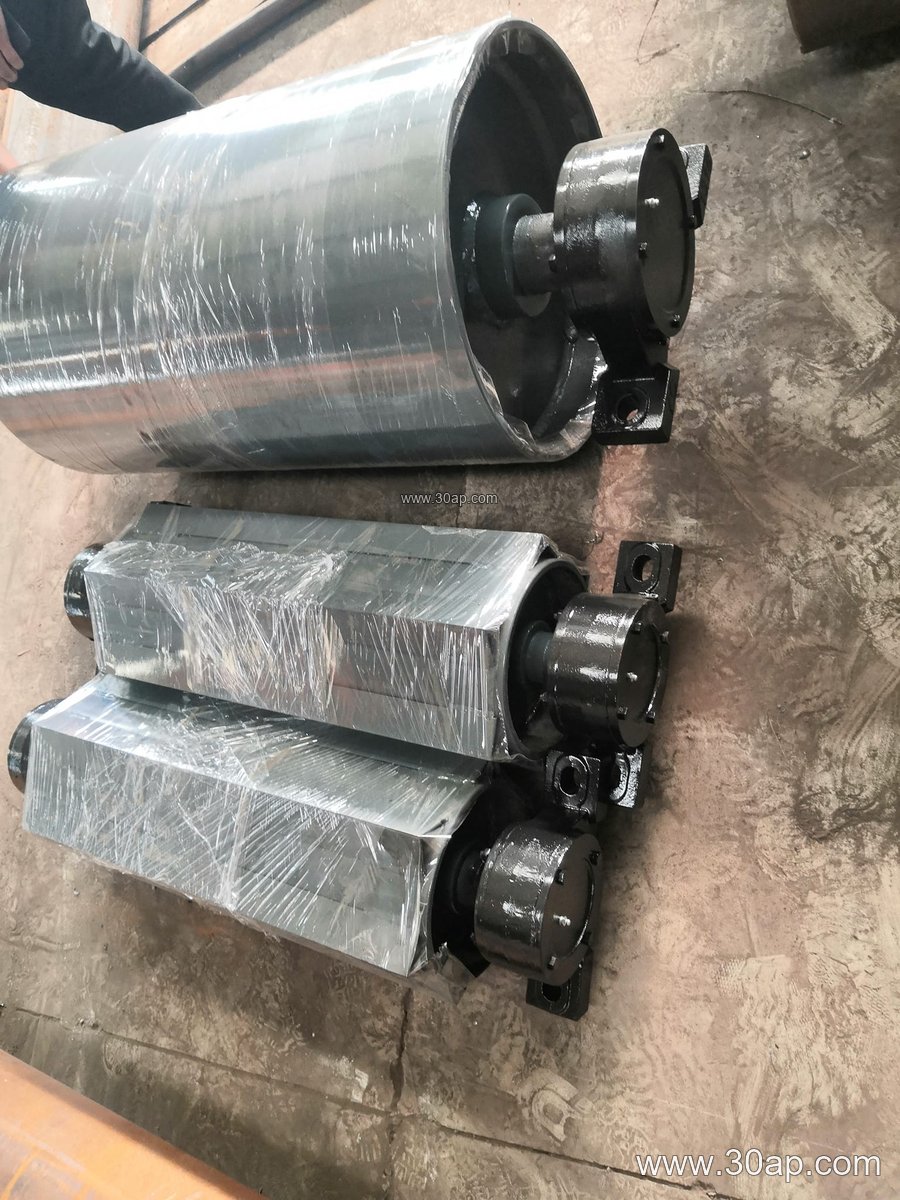
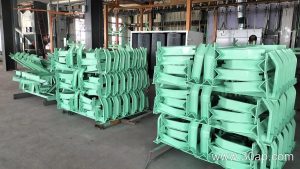
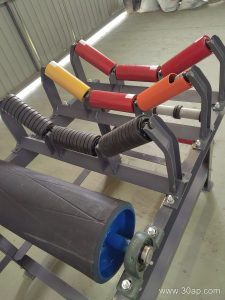
The pulley works together with the conveyor belt, conveyor pulley bearings, and the conveyor bracket that holds the shaft. Alignment of these parts affects how well the lagging grips. A misaligned bracket or worn bearing can cause uneven wear on one side of the lagging.
Buyer Checklist
- Confirm belt width, pulley face width, and required diameter
- State the drive position and expected wrap angle
- Choose lagging type for the material: plain, grooved, or ceramic
- Specify lagging thickness, commonly 8 to 20 mm
- Provide torque and belt tension so shaft size can be calculated
- Check that the conveyor bracket and bearing fit the shaft
- Ask about field repair options for cold bonded lagging
For abrasive service in an iron ore or limestone operation, ceramic lagging may be worth the cost. For a clean grain silo line, plain rubber is usually enough. The right anti-slip lagged pulley is the one sized to the actual duty, not the one copied from an old drawing.