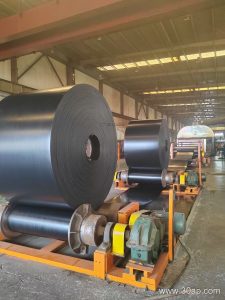
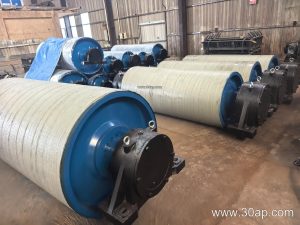
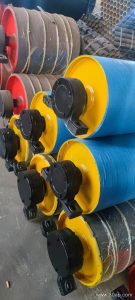
What a Plain Lagged Pulley Does
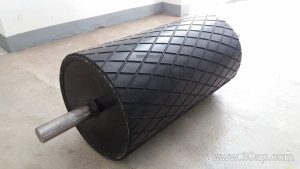
A plain lagged pulley is a conveyor pulley whose cylindrical shell is covered with a smooth rubber or elastomer layer, without grooves, dimples, or herringbone patterns. This plain lagging serves two practical purposes: it protects the pulley shell from abrasive wear and it raises the friction coefficient between the pulley face and the conveyor belt. In a typical conveyor drive, the pulley transmits torque to the belt through this friction, so the lagging directly influences start-up reliability and slip resistance. Unlike a drive pulley that may use patterned lagging for extra grip in wet conditions, the plain version keeps a continuous contact surface that suits many standard bulk handling duties.
The same product is also called a smooth lagged pulley or rubber-lagged pulley with a plain surface. These names describe the same item and are used interchangeably in specifications and maintenance planning.
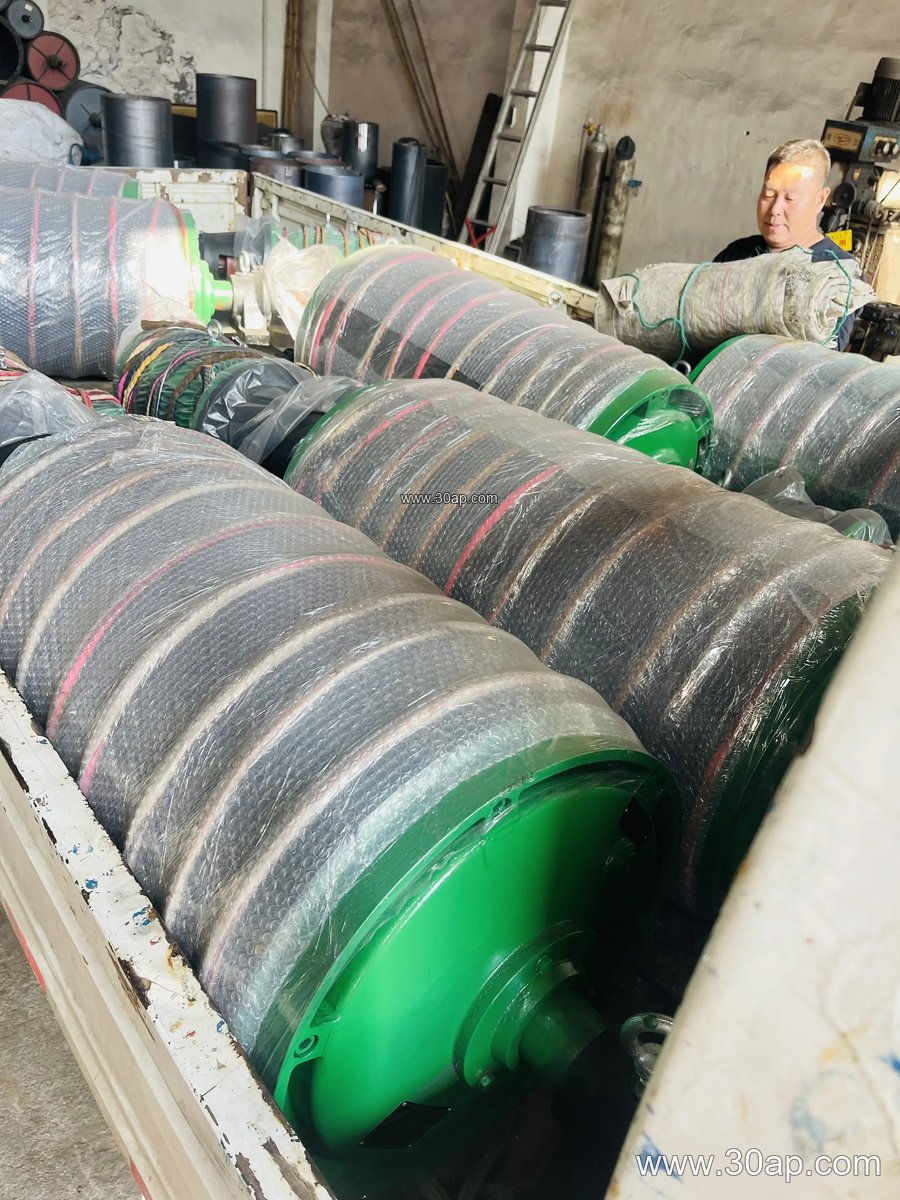
Construction and Surface Options
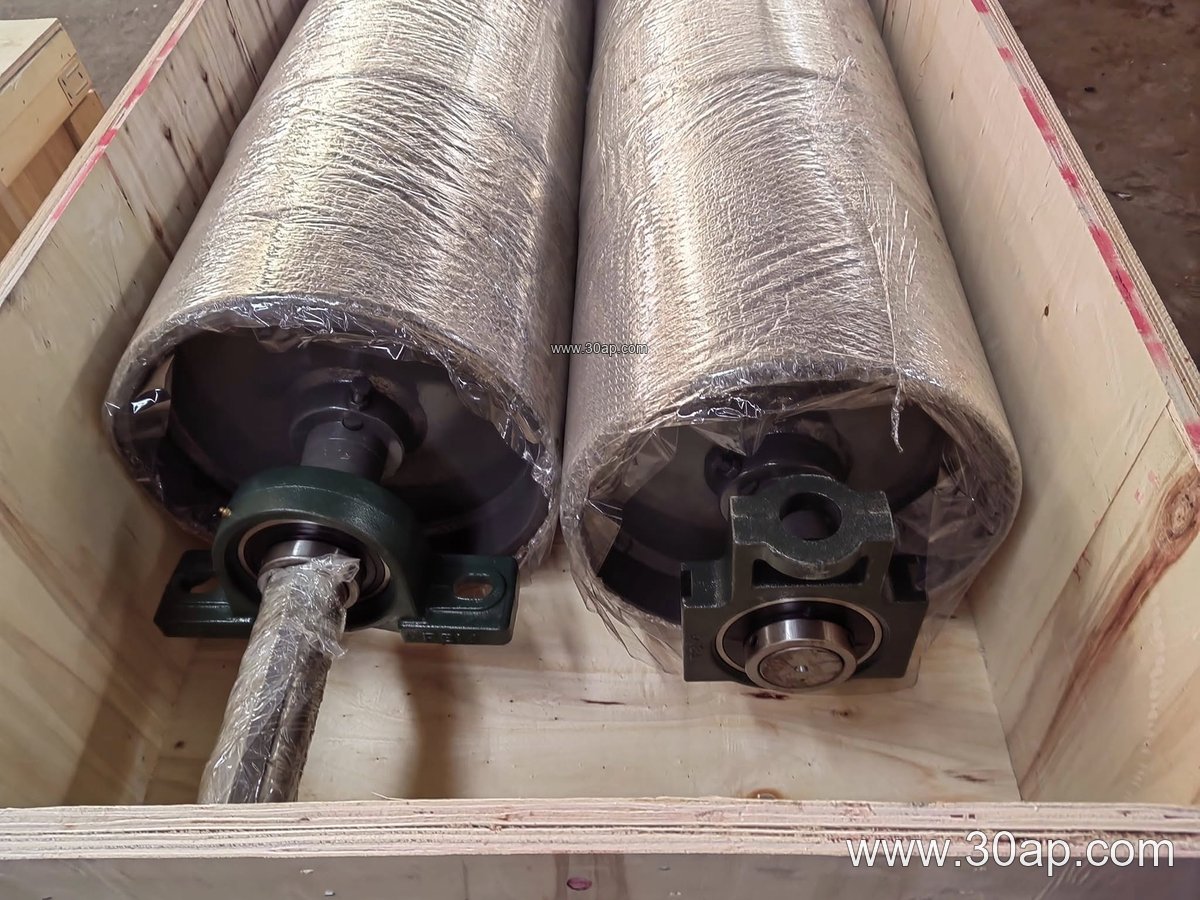
The base is a welded steel shell with end discs and a shaft, machined for balance and concentricity. Lagging is applied in several ways. Cold-bonded rubber sheets are common for general use, while hot-vulcanized rubber offers a stronger bond for higher tension applications. Cast rubber lagging is another option when a thicker, moulded cover is preferred. Plain lagging thickness commonly ranges from 8 mm to 20 mm, with 10 mm and 12 mm being frequent choices for medium-duty conveyors.
Surface form is a key distinction. A plain lagged pulley uses a smooth cover, whereas a grooved or diamond-patterned pulley is a different subtype intended for specific grip conditions. The plain surface is easier to clean and is less likely to trap fine material, which can be an advantage in dusty or wet service where material build-up on a patterned surface might cause belt tracking issues.
Where Plain Lagged Pulleys Are Used
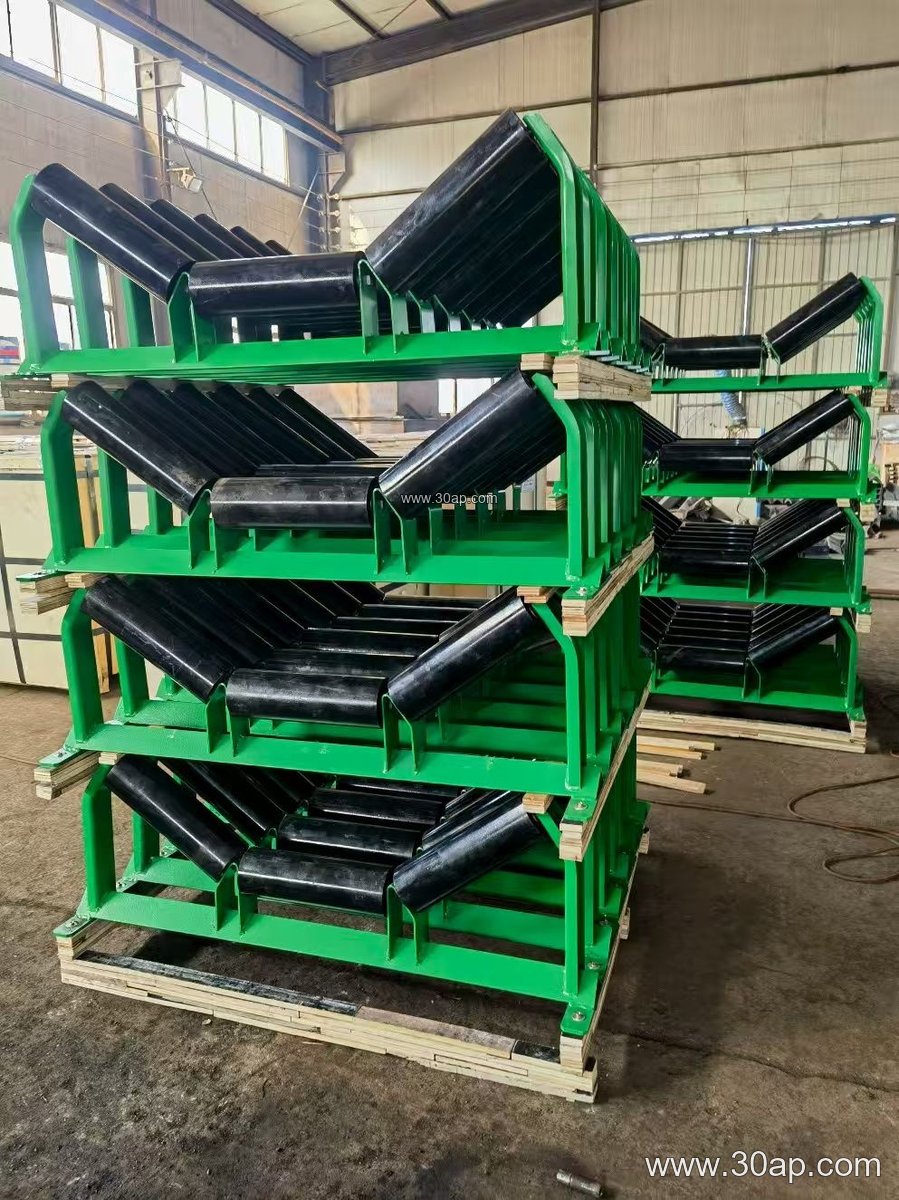
These pulleys appear in bulk material handling across many industries. In a quarry or aggregate line, they often serve as drive or tail pulleys on belts carrying crushed stone. In a coal mining operation, flame retardant conveyor belts and plain lagged pulleys may be paired to meet underground safety requirements. Cement plants use them on clinker and raw material conveyors, while power plants rely on them in coal handling systems. Port bulk terminals and steel plants also use plain lagged pulleys where a smooth, durable contact surface is preferred over a patterned one.
Common mounting positions include drive, tail, and bend locations. A bend pulley with plain lagging helps maintain belt tension without introducing a pattern that could affect belt training. The choice between plain and patterned lagging depends on belt speed, load, and environmental conditions rather than on a fixed rule.
Matching Belt Width and Pulley Dimensions
Pulley face width is usually greater than the belt width to allow for belt misalignment. The table below shows common reference combinations, but these are not mandatory pairings. A given belt width can work with more than one pulley diameter depending on torque and load.
| Belt Width | Typical Pulley Face Width | Example Diameter |
|---|---|---|
| B500 | 600 mm | Ø400 |
| B650 | 750 mm | Ø500 |
| B800 | 950 mm | Ø630 |
| B1000 | 1150 mm | Ø800 |
| B1200 | 1400 mm | Ø1000 |
| B1400 | 1600 mm | Ø1250 |
| B1600 | 1800 mm | Ø1400 |
Shaft diameter is determined by torque and load, not by belt width alone. Common shaft sizes include Ø80, Ø100, Ø120, Ø140, and Ø160, but the final value should come from the conveyor design calculation. For heavy-duty mining conveyor belts such as EP200 or ST1250, a larger shaft and thicker lagging may be specified, while a lighter aggregate conveyor belt might use a smaller combination.
Buyer Checklist
- Confirm the pulley’s role: drive, tail, or bend. A plain lagged pulley for a drive position may need a higher friction coefficient than one used as a bend pulley.
- Check lagging thickness and material compatibility with the conveyor belt. For heat resistant conveyor belts, verify that the lagging compound can tolerate the same temperature range.
- Review belt width and pulley face width together. Wide belts such as 1800 mm or 2000 mm need proportionally wider faces, but diameter remains a separate design decision.
- Ask for the shaft diameter basis. Do not accept a shaft size inferred only from belt width.
- Consider the environment. In a coal mining conveyor belt system, flame retardant properties may be required for both belt and lagging.
At www.beltconveyorparts.com, plain lagged pulleys are specified alongside conveyor brackets and idler rollers to complete a reliable conveyor assembly. A smooth lagged pulley is not automatically the right choice for every drive, but understanding its construction and limits helps buyers match it to the belt and duty at hand.