What a High Wear-Resistant Ceramic Pulley Is
A high wear-resistant ceramic pulley is a conveyor pulley whose outer shell carries a ceramic-based lagging instead of plain rubber or bare steel. In everyday plant language it is also called a ceramic lagged pulley or ceramic-coated conveyor pulley. The ceramic tiles sit in a rubber or polymer matrix and form a hard, abrasion-resistant surface that grips the conveyor belt while resisting the sliding wear that ordinary lagging cannot survive.
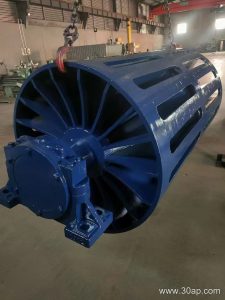
It is not a different kind of drive, tail or bend unit. It is a surface treatment applied to the shell of a standard conveyor pulley, so the same drum can serve as a drive pulley, a tail pulley or a bend pulley depending on where it is installed. That distinction matters, because those positions do different jobs and are not interchangeable.
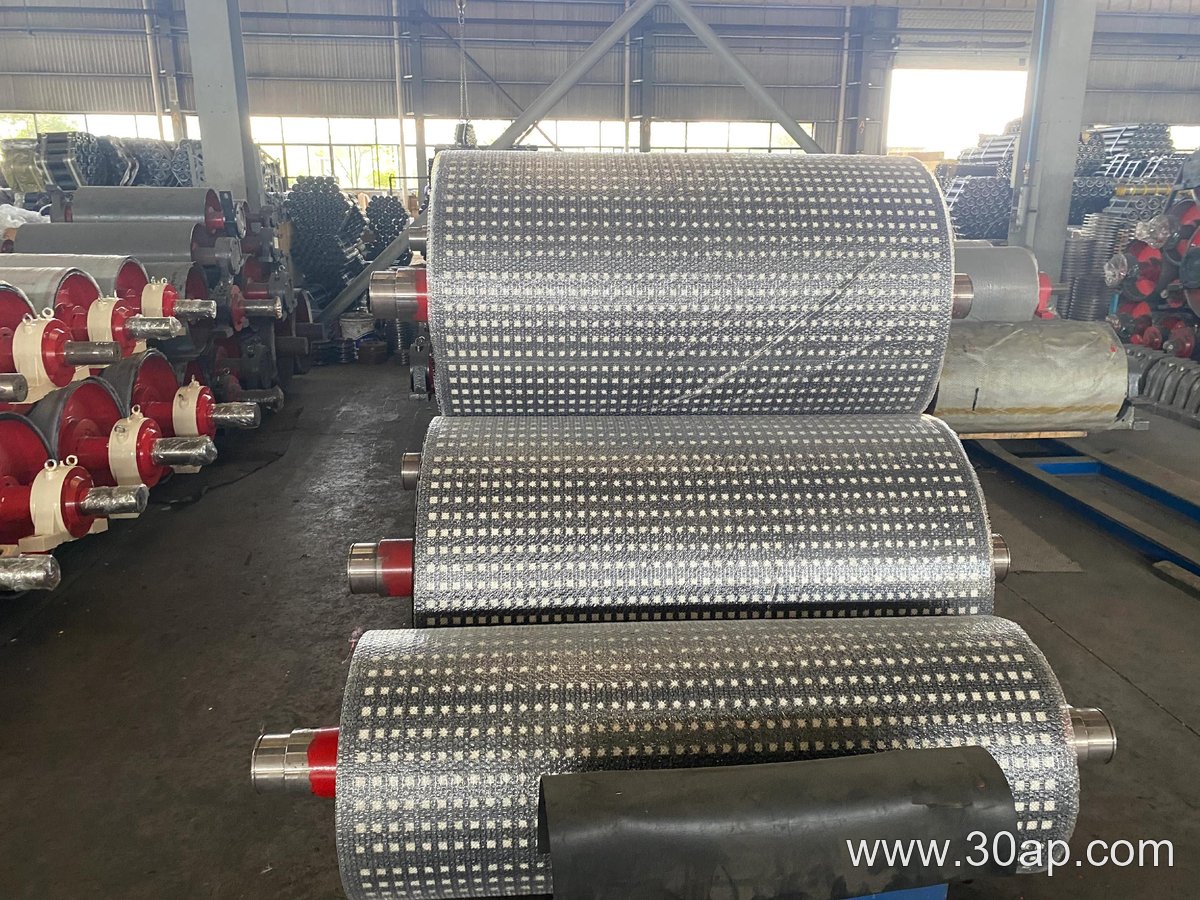
How the Ceramic Lagging Is Built
The shell is usually a seamless steel tube, machined and balanced before lagging. Ceramic tiles, often aluminium oxide, are bonded into a rubber or polyurethane layer that is then vulcanised or cold-bonded to the drum. The tiles protrude slightly above the rubber, so the belt contacts hard ceramic rather than soft rubber alone. This gives a high friction coefficient in wet, dusty or oily conditions.
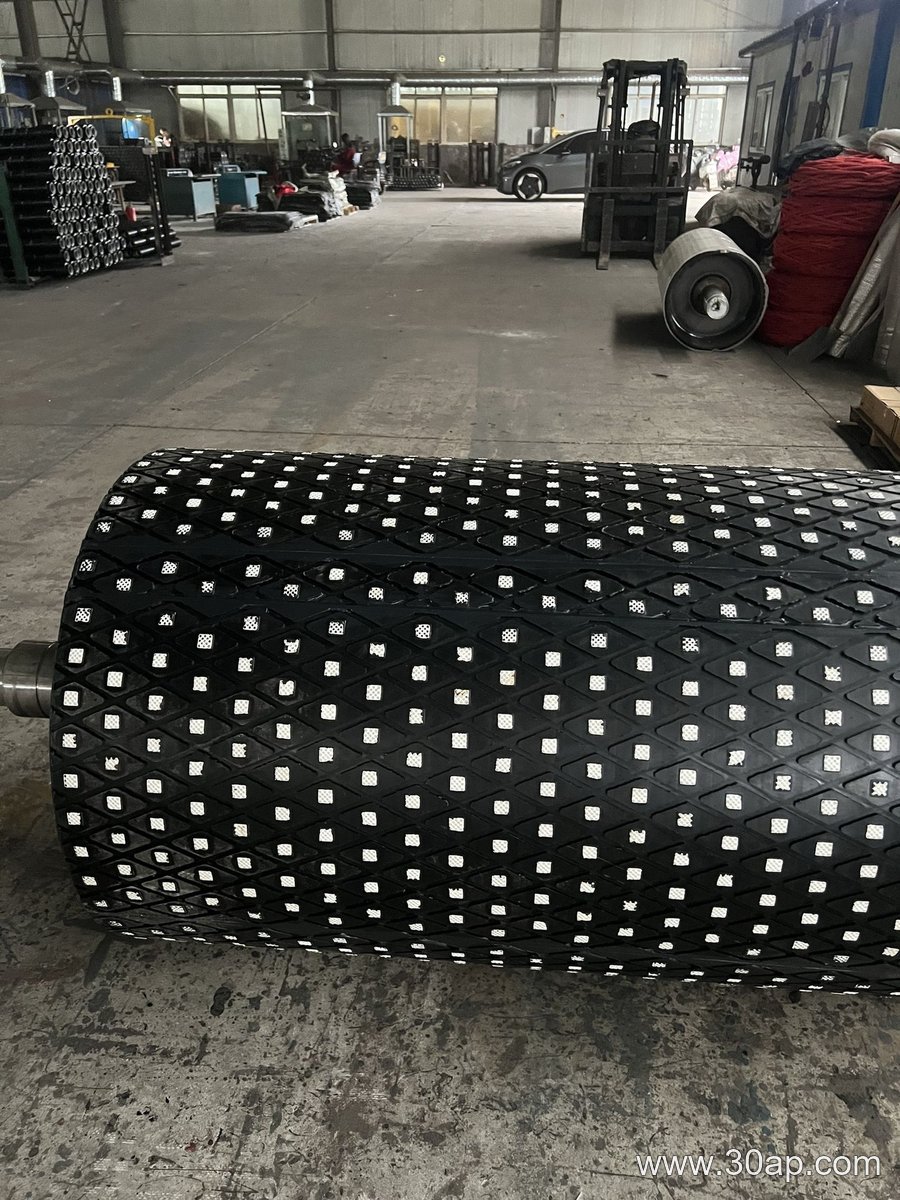
Surface patterns vary. A plain ceramic lagging is used where tracking is stable. Diamond or herringbone layouts help water and fines escape from under the belt. Grooved rubber with embedded ceramic is another common option. Lagging thickness commonly runs from 8 mm to 20 mm, and the ceramic tile size and spacing are chosen to suit belt tension and load.
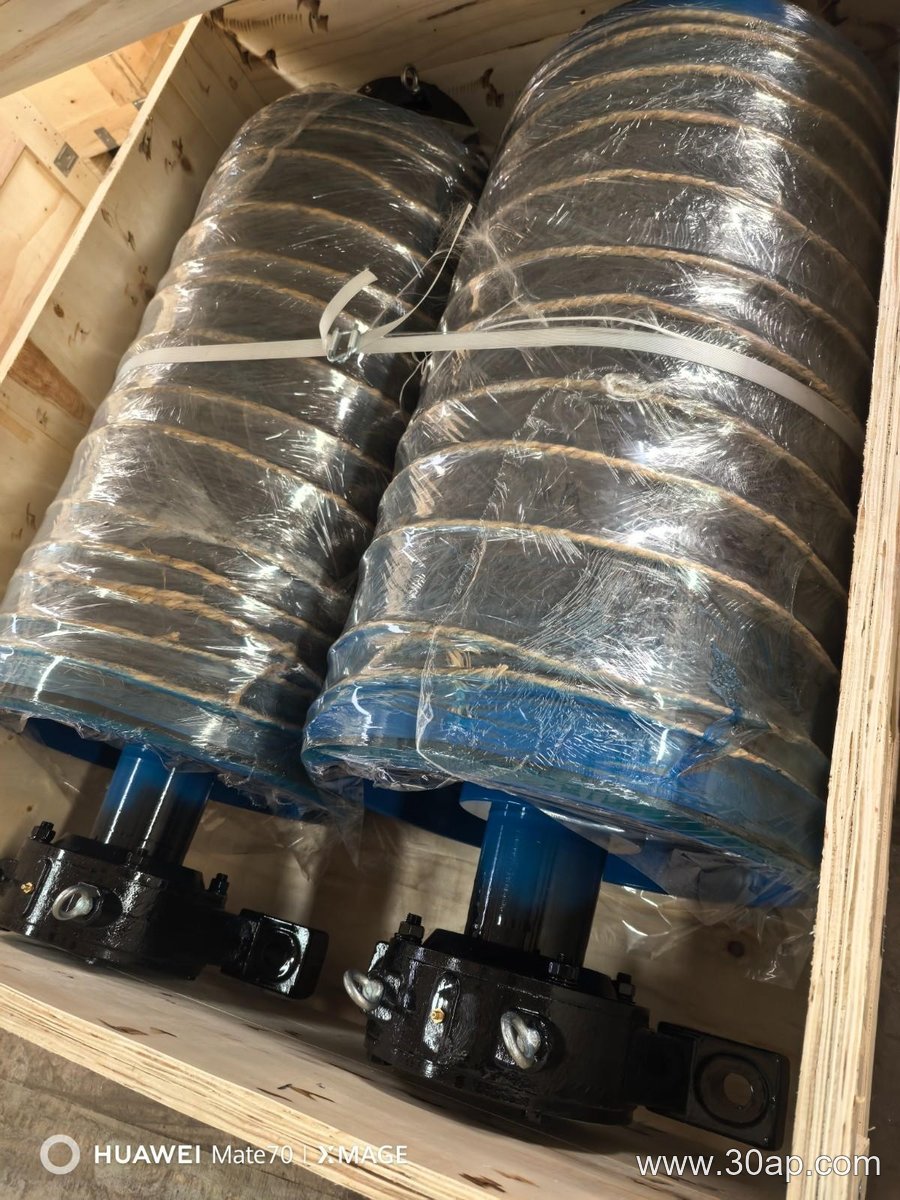
Where It Fits on a Conveyor
Ceramic lagging is most often specified for the drive pulley, where torque transfer and slip control matter most. It is also used on tail pulleys in abrasive service, and occasionally on bend or tension pulleys where belt wrap is high. A drive pulley and a tail pulley are not interchangeable names; they sit at opposite ends of the conveyor and see different loads. A bend pulley changes belt direction without driving the belt, so it is usually a lighter duty application.
Typical sites include limestone quarries, copper concentrators, coal preparation plants and crushing and screening lines. In these places the conveyor belt carries sharp, wet or sticky material, and a standard rubber lagging can polish and lose grip within months. A ceramic pulley keeps its bite longer, which reduces belt slip and the heat that comes with it.
Matching Diameter, Belt Width and Shaft
There is no single rule that ties one belt width to one pulley diameter. Diameter is selected from belt tension, wrap angle, speed and the space available. Common combinations include B800 x Ø500, B1200 x Ø1000 and B1400 x Ø800, but these are reference examples, not fixed pairings. The shell face is normally wider than the belt, for example B650 with roughly 750 mm face, or B1000 with about 1150 mm face.
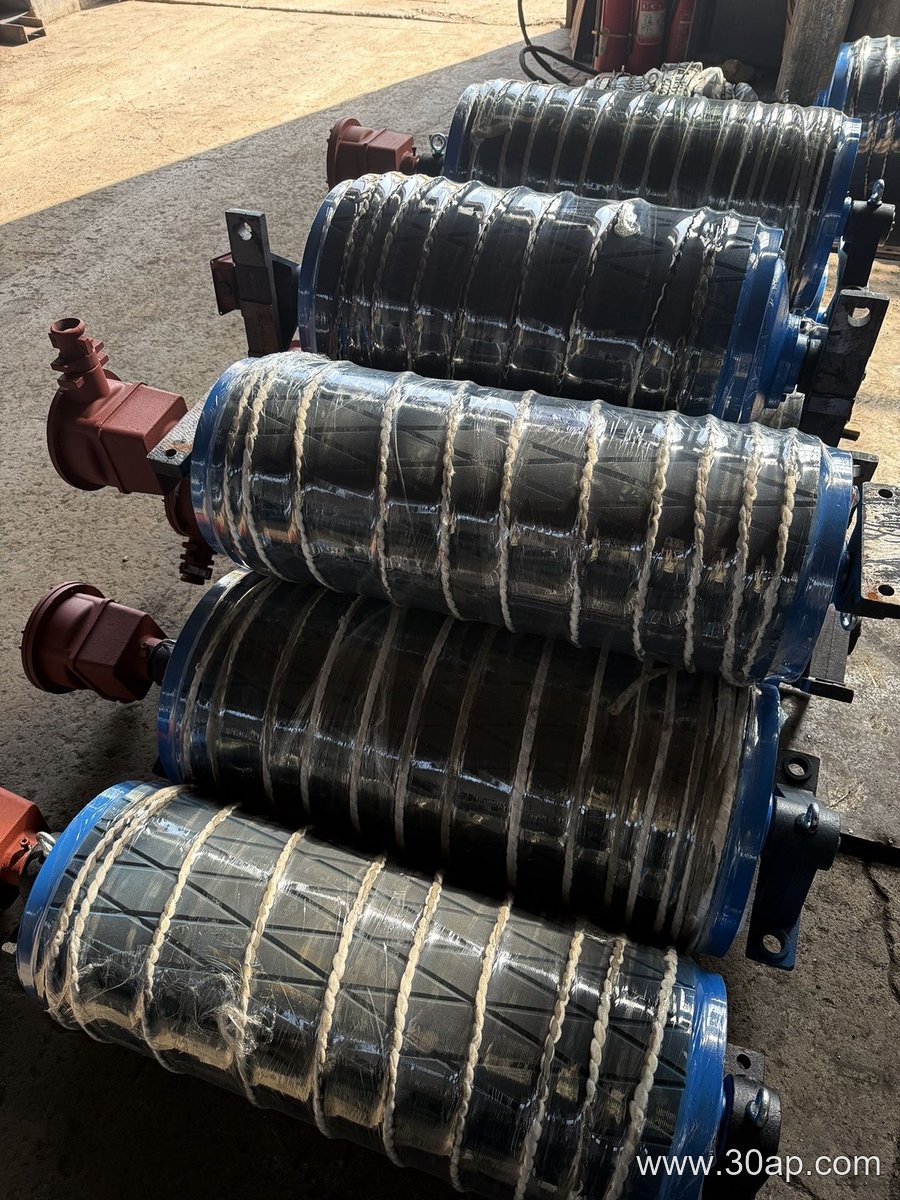
Shaft diameter is determined by torque and load, not by belt width alone. Common shaft sizes include Ø80, Ø100, Ø120, Ø140, Ø160 and Ø200. A buyer should confirm the required shaft, bearing centres and keyway from the conveyor design rather than copying a neighbouring installation.
What Buyers Should Check
- Confirm the pulley role first: drive, tail, bend, tension or take-up. These are different duties and cannot be swapped casually.
- Check lagging thickness and ceramic pattern against the material carried and the amount of water present.
- Verify face width against belt width, allowing for belt wander and edge clearance.
- Ask how the ceramic is bonded, since vulcanised and cold-bonded lagging behave differently under high load.
- Balance and true the finished drum before fitting, because a ceramic surface cannot be re-machined like plain rubber.
- Inspect the conveyor bracket and idler roller alignment as part of the same job, since poor tracking wears lagging fast.
A high wear-resistant ceramic pulley is a practical choice where abrasion and slip shorten the life of ordinary lagging. It is still a conveyor pulley, so the usual rules of pulley selection, belt compatibility and correct installation apply. Choose the role, the diameter and the surface form to match the duty, and the ceramic lagging will do the rest.