What a Conveyor Frame Does
A conveyor frame is the structural skeleton that holds every other component of a belt conveyor in alignment. It carries the idler rollers that support the conveyor belt, anchors the drive and tail pulleys, and keeps the entire system rigid under load. In a quarry, cement plant, or coal handling facility, the frame determines how smoothly material moves from one point to another. Without a properly engineered frame, even the best conveyor belt and pulleys cannot perform reliably.
How the Frame Is Built
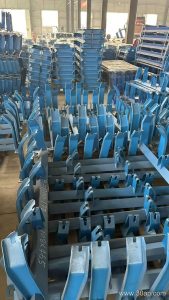
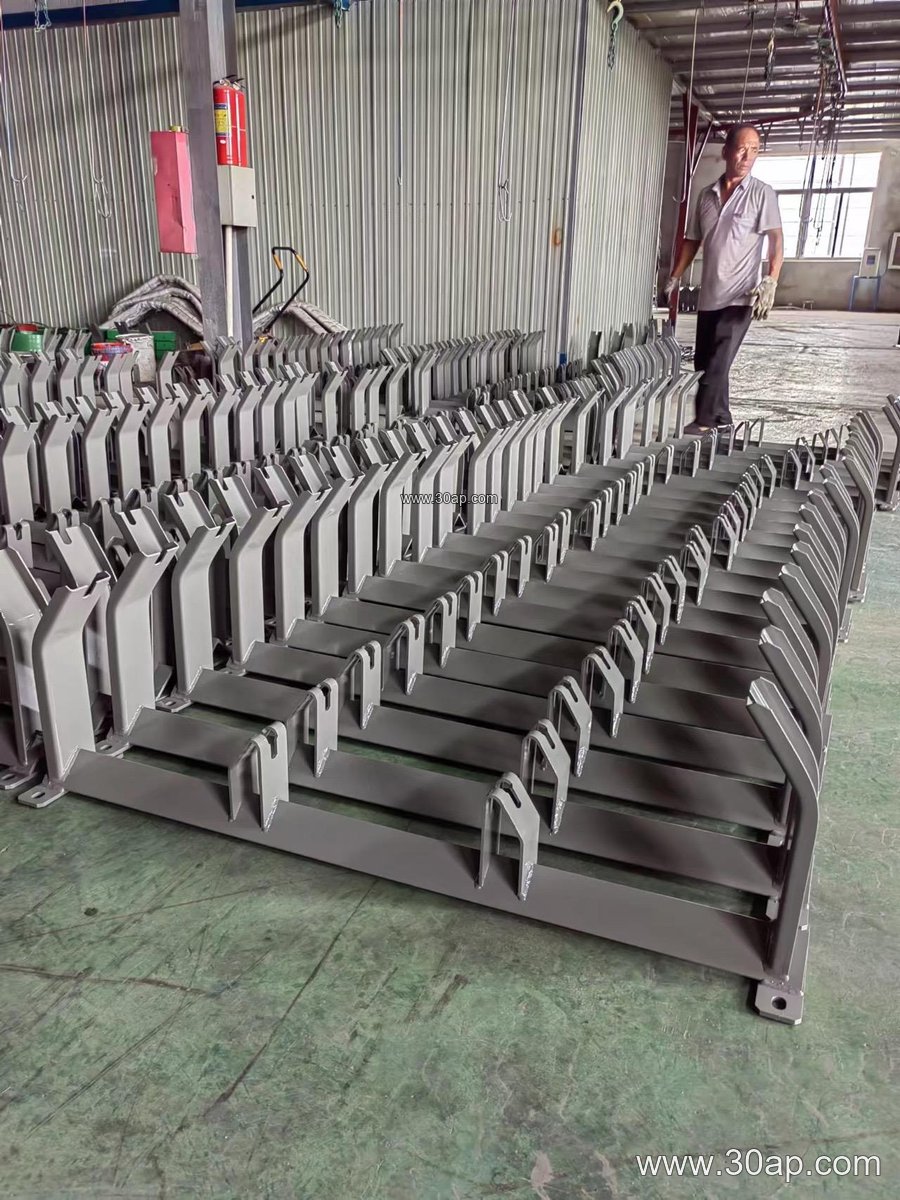
Most conveyor frames are fabricated from angle steel, channel steel, or folded steel plate. The choice depends on the load, span, and environmental conditions. A frame typically consists of longitudinal stringers, cross members, support legs, and mounting brackets for idlers and pulleys. The stringers run the length of the conveyor and provide the main load path. Cross members connect the stringers and support the idler brackets. Legs transfer the load to the ground or structure.
The frame must be stiff enough to prevent sagging between supports. Excessive deflection causes the belt to mistrack and the idlers to wear unevenly. In dusty environments such as a limestone mine or a fertilizer plant, the frame may include features to reduce material buildup, such as sloped surfaces or open profiles.
Frame Types and Idler Arrangements
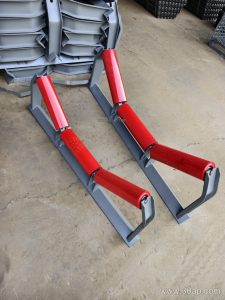
The conveyor frame is closely tied to the type of idler bracket it carries. Common arrangements include:
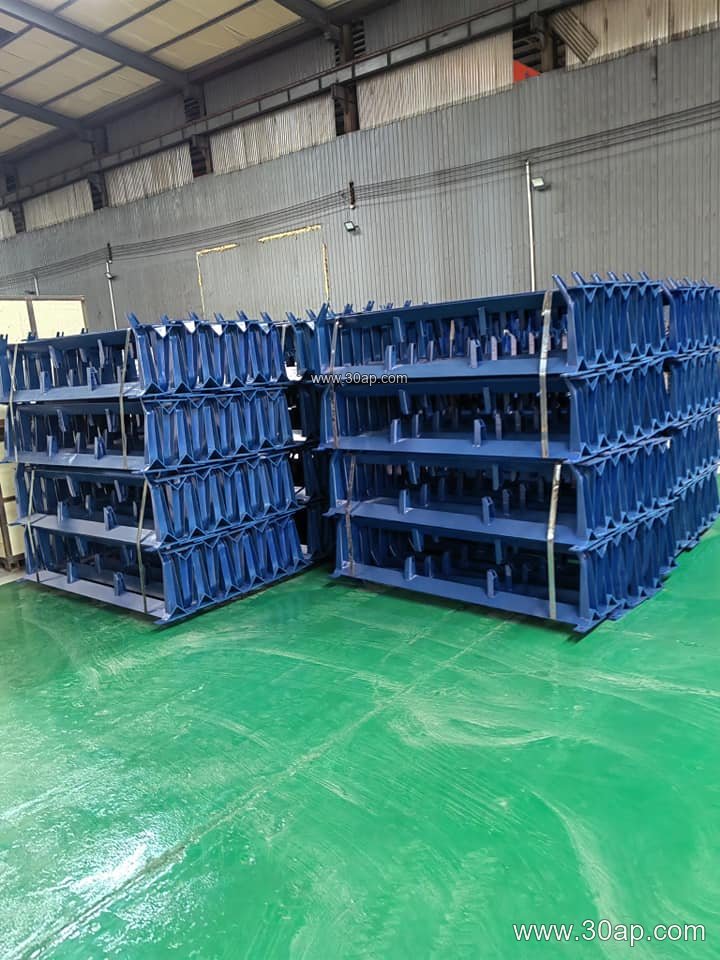
- Troughing idler brackets for the carrying side, with trough angles typically 20, 30, 35, or 45 degrees.
- Transition brackets near pulleys to gradually change belt shape.
- Return brackets and V-return brackets for the return belt.
- Impact brackets at loading points to absorb shock.
- Self-aligning brackets to correct belt mistracking.
- Adjustable brackets that allow the trough angle to be changed within a range.
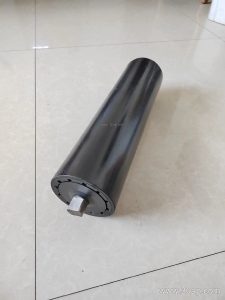
Each bracket type mounts to the frame at specific hole spacings. The frame design must accommodate the belt width and the selected idler roller diameter. For example, a frame for B800 belt with 35-degree trough and Ø108 idlers will have different cross member dimensions than a frame for B1200 belt with 45-degree trough and Ø133 idlers. Installation hole spacing and beam length are determined by the belt width, trough angle, and idler configuration, not by a single fixed number.
Typical Applications
Conveyor frames appear wherever bulk material must be moved continuously. In a sand and gravel line, the frame supports the belt through the crushing and screening stages. In a power plant coal yard, the frame carries the belt that feeds the boiler. In a tunnel boring project, the frame guides muck out of the excavation. The same structural principles apply, but the frame may be designed for different loads, corrosion protection, or portability.
What Buyers Should Consider
When specifying a conveyor frame, start with the belt width and the required trough angle. These determine the cross member length and the idler bracket positions. Next, select the idler roller diameter based on belt speed and load. The frame must have mounting holes that match the chosen brackets. Check the frame material and finish for the environment: a washdown area in a food plant needs different protection than a dry cement kiln feed line.
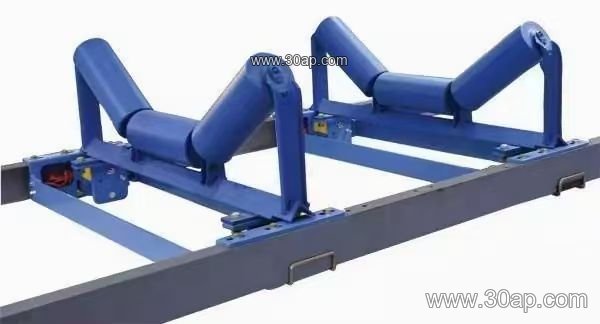
Consider whether the frame needs to be fixed or adjustable. Adjustable frames allow the trough angle to be tuned on site, which can help with belt training. Fixed frames are simpler and often more rigid. Also confirm that the frame includes provisions for the conveyor pulley bearings and any belt cleaner or skirtboard attachments.
Finally, review the frame drawings for deflection limits and support spacing. A frame that is too flexible will cause tracking problems and premature idler failure. The frame is not a commodity item; it should be engineered for the specific conveyor duty.
Keeping the Frame in Service
Inspect the frame periodically for loose bolts, bent members, and corrosion. Pay attention to the idler mounting brackets, as worn brackets can cause the idler rollers to sit unevenly and the belt to mistrack. In a coal mine or a foundry, impact damage at transfer points is common, so reinforced frames or impact brackets may be needed. A straight, rigid frame is the foundation of reliable conveyor operation.