What a Drive Lagged Pulley Does
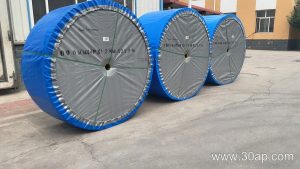
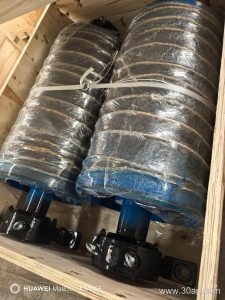
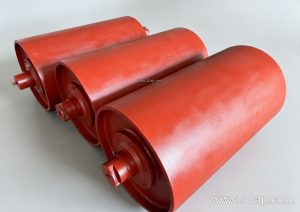
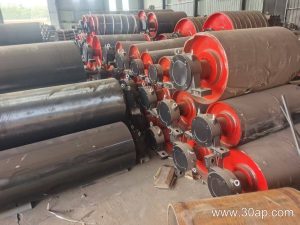
A drive lagged pulley is the powered head pulley that transmits motion to the conveyor belt. The lagging—a rubber or ceramic layer bonded to the drum surface—raises friction between pulley and belt, reducing slip under load. In quarries and aggregate lines, this component often works alongside a heavy-duty mining conveyor belt and impact idlers to keep material moving without interruption. The pulley is not a tail or bend pulley; those serve different positions and functions.
Construction and Surface Options
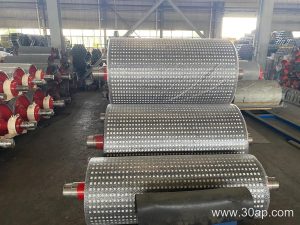
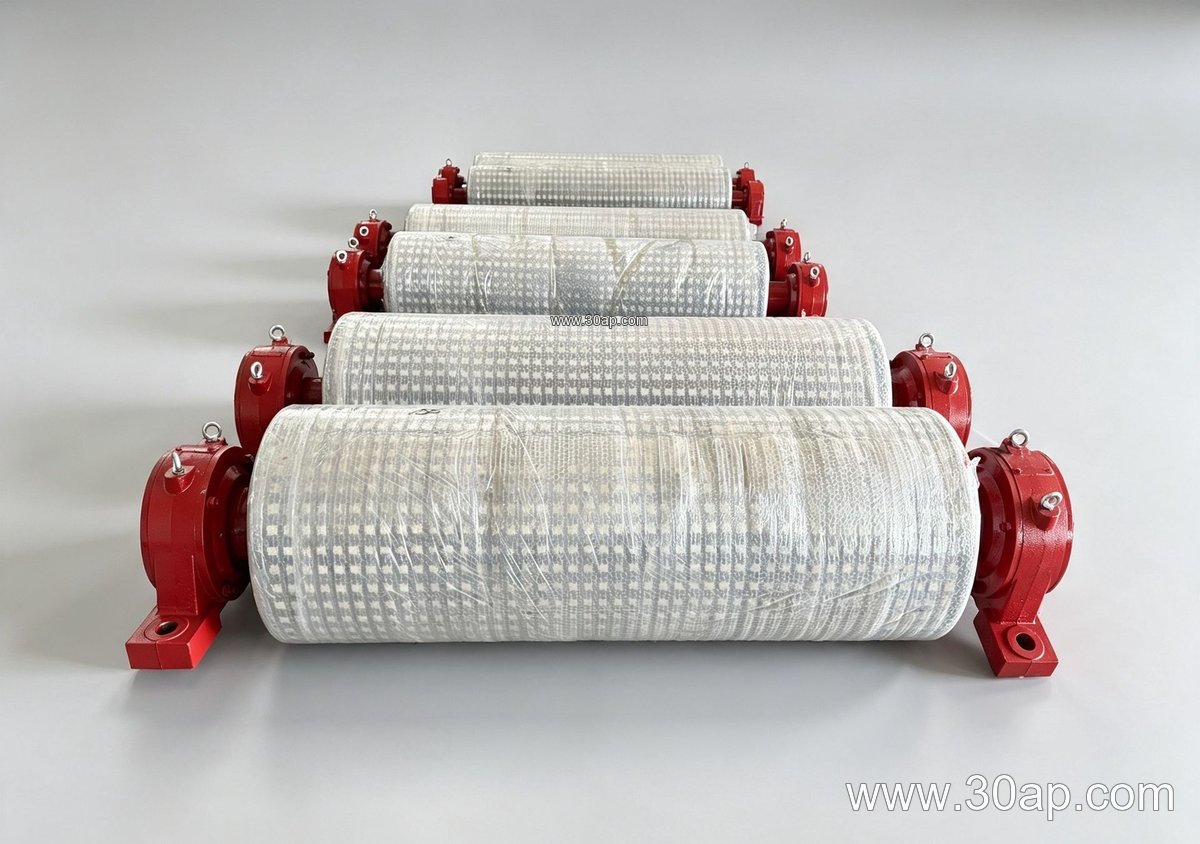
The drum body is typically welded steel, machined for balance, and fitted with a shaft sized by torque and load rather than belt width alone. Lagging can be plain rubber, diamond grooved, chevron grooved, or ceramic tile. Common lagging thicknesses include 8, 10, 12, 15, and 20 mm. For abrasive iron ore or copper ore, diamond rubber lagging is frequent; for wet or oily conditions, ceramic lagging may be preferred. A rubber conveyor belt with high abrasion resistance pairs well with these surfaces to extend service life.
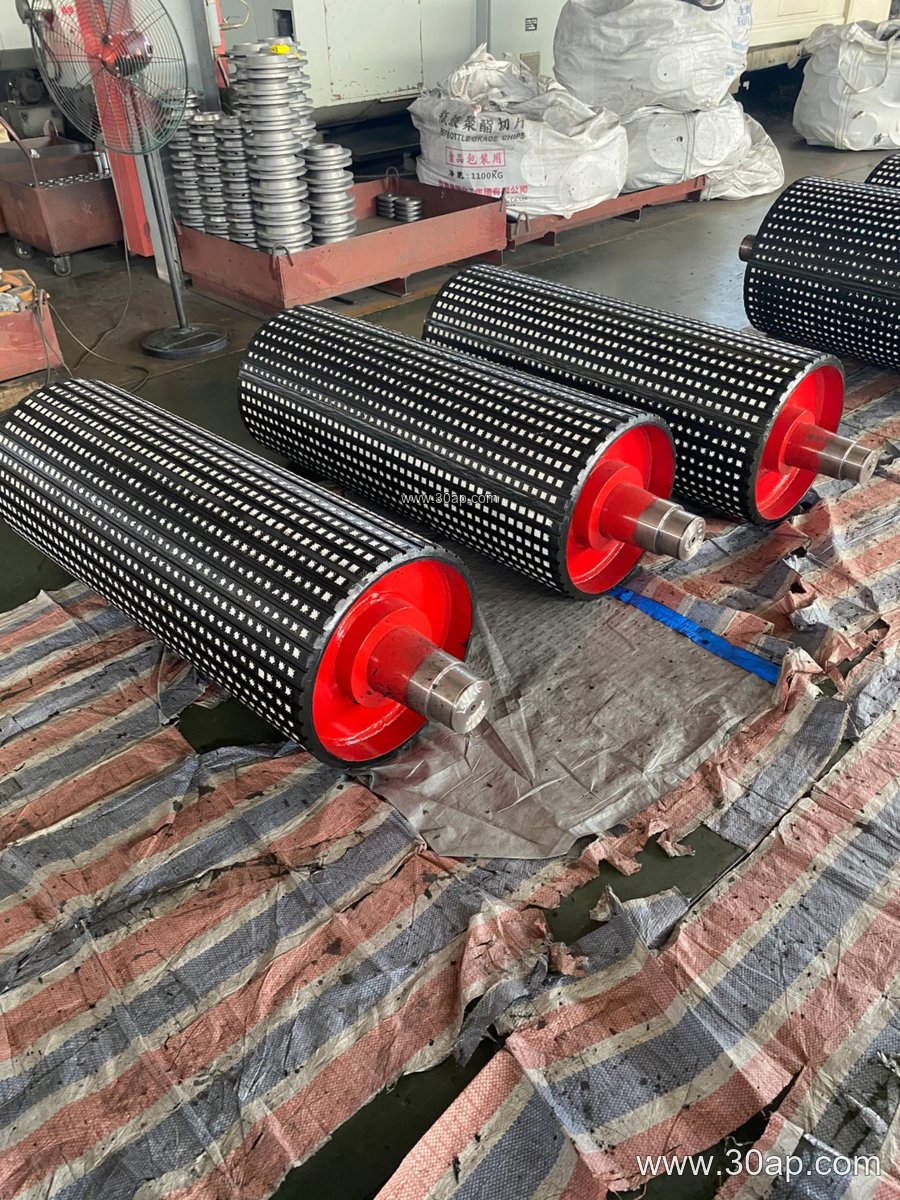
Typical combinations include B800 × Ø500, B1200 × Ø1000, and B1400 × Ø800. Pulley face width usually exceeds belt width—for example, B650 about 750 mm, B1000 about 1150 mm, B1200 about 1400 mm. Shaft diameters commonly range from Ø50 to Ø200, determined by drive torque and bearing load. These are reference values, not fixed rules for every conveyor.
Where It Fits in the System
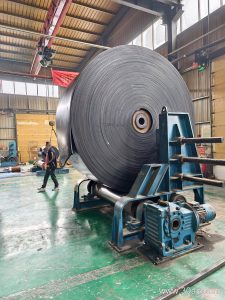
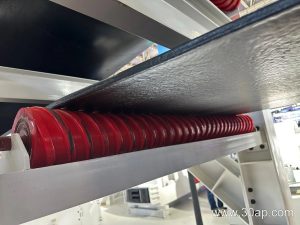
Drive lagged pulleys appear at the head of belt conveyors in cement plants, coal washing plants, and power plant coal handling. They also serve in ship loading and port bulk terminals. In a typical arrangement, the drive pulley pulls the loaded belt while a tail pulley and bend pulleys guide the return strand. Conveyor brackets and idler rollers support the belt along the route. The lagging is what separates a drive pulley from a plain bend pulley, which may have no lagging at all.
Selection Checklist for Buyers
- Confirm belt width and pulley face width; do not assume one width fits all diameters.
- Specify lagging type and thickness based on material abrasion and moisture.
- Provide shaft diameter and bearing size from the conveyor design, not from belt width alone.
- Match pulley diameter to belt tension and wrap angle; a larger diameter reduces bending stress on the belt.
- For underground coal mining, consider flame retardant conveyor belt and anti-static requirements.
- Check that the lagging groove pattern suits the belt surface and expected slip conditions.
Maintenance Notes
Inspect lagging for wear, glazing, or missing ceramic tiles. Worn lagging reduces friction and can cause belt slip, especially in cold or wet conditions. Keep the pulley face clean; material buildup changes the effective diameter and can damage the belt edge. Check shaft alignment and bearing condition during scheduled shutdowns. In sand and gravel plants, dust ingress is common, so bearing seals deserve attention. For coal mining conveyor belt systems, ensure that replacement lagging meets the same fire resistance and anti-static properties as the original.
Related Equipment and Coordination
The drive lagged pulley does not work alone. It relies on a compatible conveyor belt, properly aligned conveyor pulley components, and well-maintained idler roller sets. In a crusher conveyor belt line, the drive pulley must handle shock loads from lump feed. In a cement plant, heat resistant conveyor belt may be used near kilns, but the drive pulley itself typically stays in a cooler section. Matching lagging hardness to belt cover hardness helps avoid excessive wear on either side.