What a Conveyor Tail Pulley Does
The conveyor tail pulley sits at the return end of a belt conveyor, opposite the drive. Its main job is to support and guide the returning belt as it loops back to the loading zone. In a typical arrangement, the tail pulley also serves as the take-up point, so it can move along the frame to keep tension steady as the belt stretches or contracts. Without a well-matched tail pulley, a conveyor can mistrack, slip, or spill material at the load point.
It is a distinct component from the drive pulley, which transmits power, and from bend pulleys, which change belt direction elsewhere in the run. These parts are not interchangeable, even though they may look similar. A tail pulley is selected for its position, its role in tensioning, and the duty of the material being carried.
Construction and Surface Options
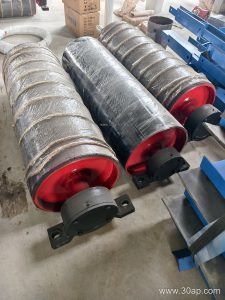
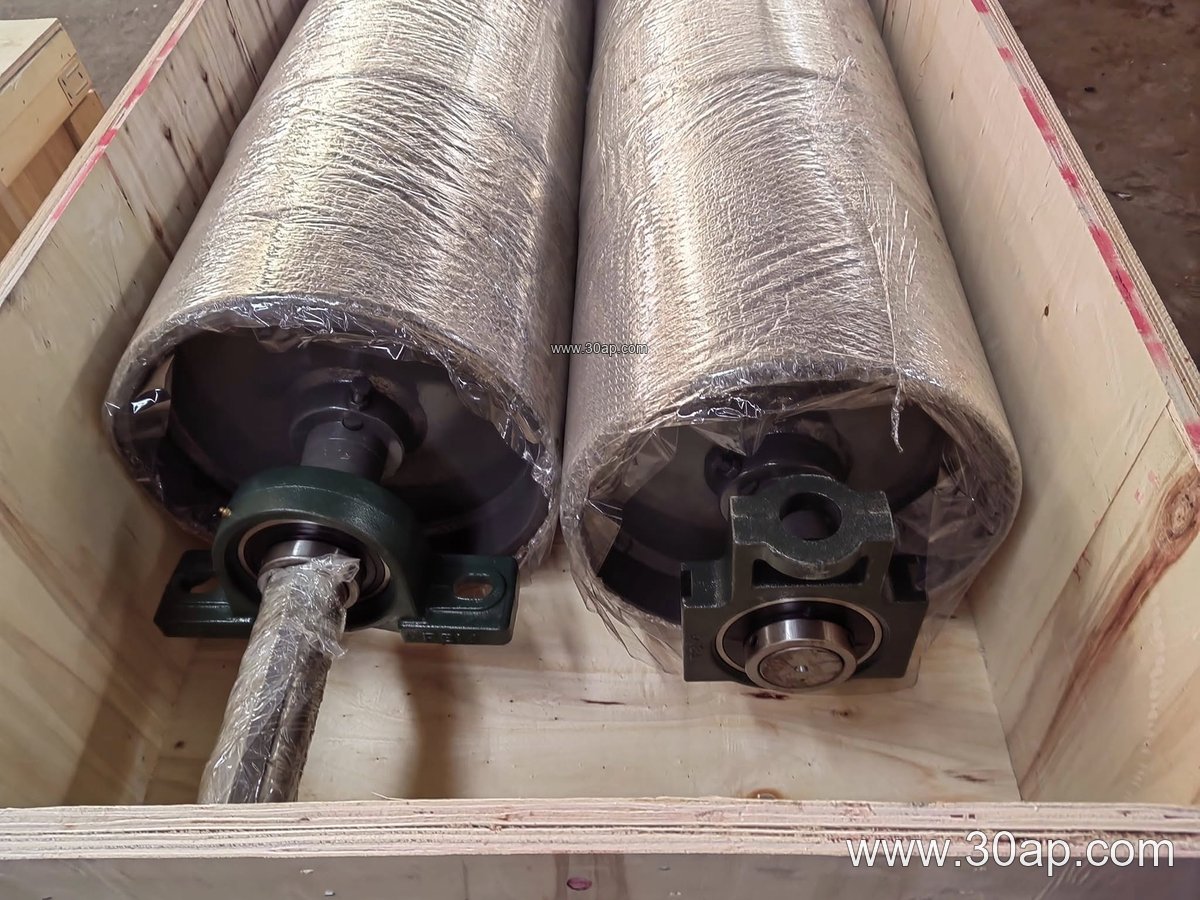
A standard tail pulley is built around a steel drum with welded end discs and a shaft that runs through pillow-block bearings mounted on the conveyor bracket. The shell is usually slightly wider than the belt so the belt edges are fully supported. Common shell widths track belt width, for example B800 with roughly 950 mm face, B1000 with about 1150 mm, and B1200 with around 1400 mm. Diameters are chosen by design, often ranging from Ø200 up to Ø1250 or more on large installations.
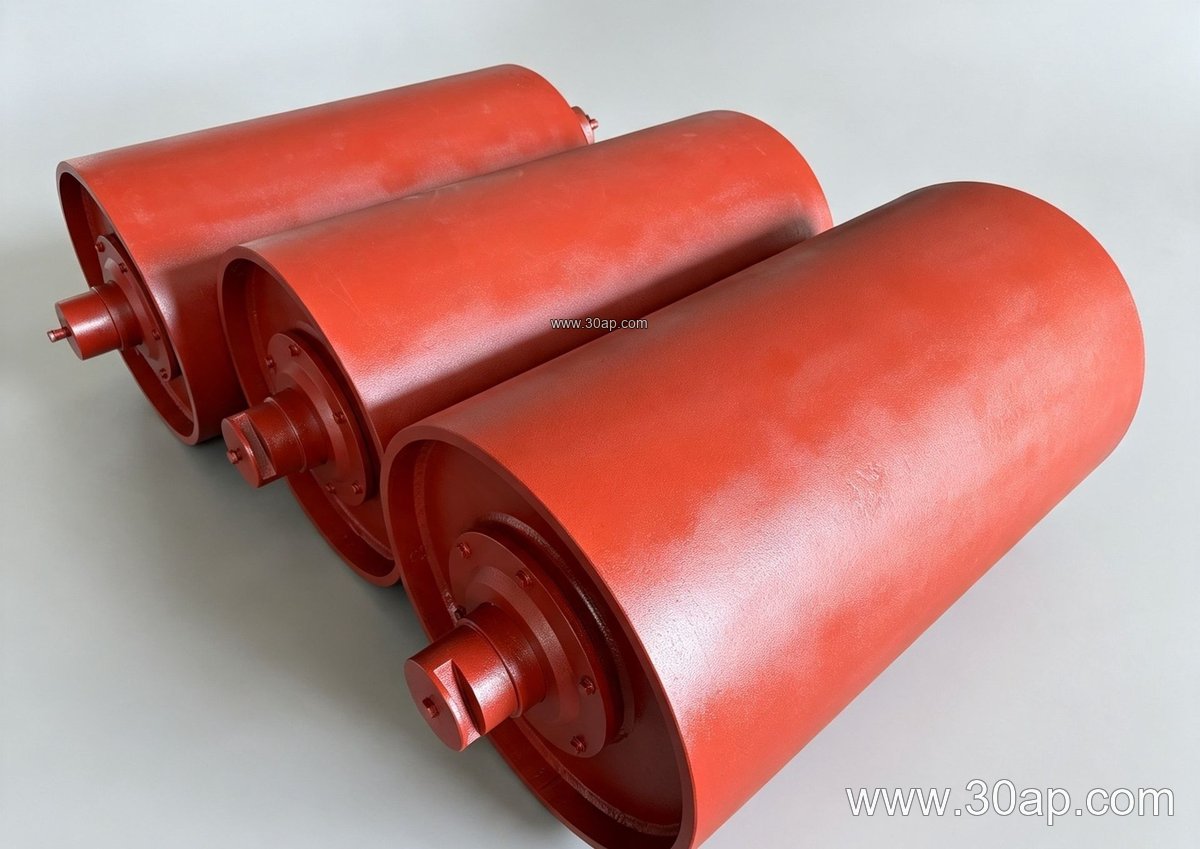
Surface treatment depends on the material and the environment. Plain steel is common in clean, light-duty service. Rubber lagging, applied as cold-bonded or hot-vulcanized sheet, improves grip and protects the shell. Diamond and herringbone patterns help shed water and fines, while ceramic lagging suits abrasive duty in a quarry or iron ore plant. Lagging thickness is often 8 to 12 mm for general work, with 15 or 20 mm used where impact and wear are heavy.
Where It Fits in the Plant
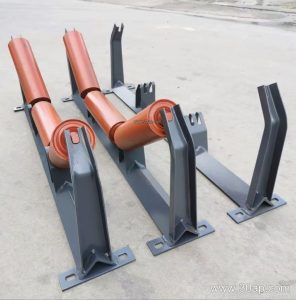
Tail pulleys appear across bulk handling: a limestone quarry feeding a crusher, a coal preparation plant moving product to the wash box, a cement plant transferring clinker, or a power station handling fuel. They are equally at home in a sand and aggregate line, a fertilizer granulation building, or a tunnel spoil conveyor. In each case the tail pulley works together with the conveyor belt and the carrying idler roller set to keep the load centered and the return strand clean.
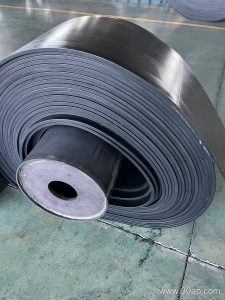
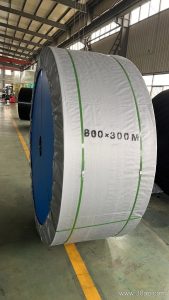
Because the tail end often receives material directly, the pulley must tolerate dust, moisture, and occasional impact. A rubber conveyor belt with good abrasion resistance, such as an EP Conveyor Belt or a multi-ply fabric core belt, pairs well with a lagged tail pulley. In coal mining, a flame retardant conveyor belt and an anti-static belt are common choices, and the tail pulley should be specified to match the same safety expectations.
Selection Notes for Buyers
Start with belt width and the required take-up travel, then confirm shaft diameter from torque and load rather than from belt width alone. A B650 belt does not automatically mean a fixed shaft size; the conveyor designer calculates it. Bearing type, bracket dimensions, and the method of tensioning (screw, gravity, or hydraulic) all affect the final specification. For reference, a mid-size arrangement might use B1200 × Ø1000, while a lighter line could use B800 × Ø500. These are examples, not rules.
- Check shell face width against belt width to avoid edge damage.
- Choose lagging by material: plain for clean service, diamond or ceramic for wet or abrasive duty.
- Confirm bearing seals suit dust and washdown.
- Verify that the tail pulley can move for take-up without fouling the conveyor bracket.
On a steel cord conveyor belt system or a heavy-duty mining conveyor belt line, the tail pulley should be sized for the higher tension and thicker belt. For a pipe conveyor belt or a corrugated sidewall belt, the tail pulley geometry may need special attention because the belt profile is not flat. Whatever the application, a correctly specified tail pulley keeps the return strand aligned and extends the life of both the belt and the idler roller set.