What a Stone Crushing Conveyor Belt Does
A stone crushing conveyor belt is the heavy-duty rubber belt that carries blasted rock, crushed aggregate, and screened stone between a primary crusher, secondary crusher, screens, and stockpiles. In a quarry, sand and gravel plant, or cement works, this belt is the continuous link that keeps material moving from the pit to the load-out point. Because the load is sharp, heavy, and often wet or dusty, the belt must resist cutting, impact, and abrasion while tracking reliably on a long, inclined structure supported by idler rollers and conveyor pulleys.
Buyers often describe the same product as a crusher conveyor belt, rock conveyor belt, or quarry conveyor belt. These are equivalent names for the same item; the construction and selection rules below apply to all of them.
Construction of the Belt
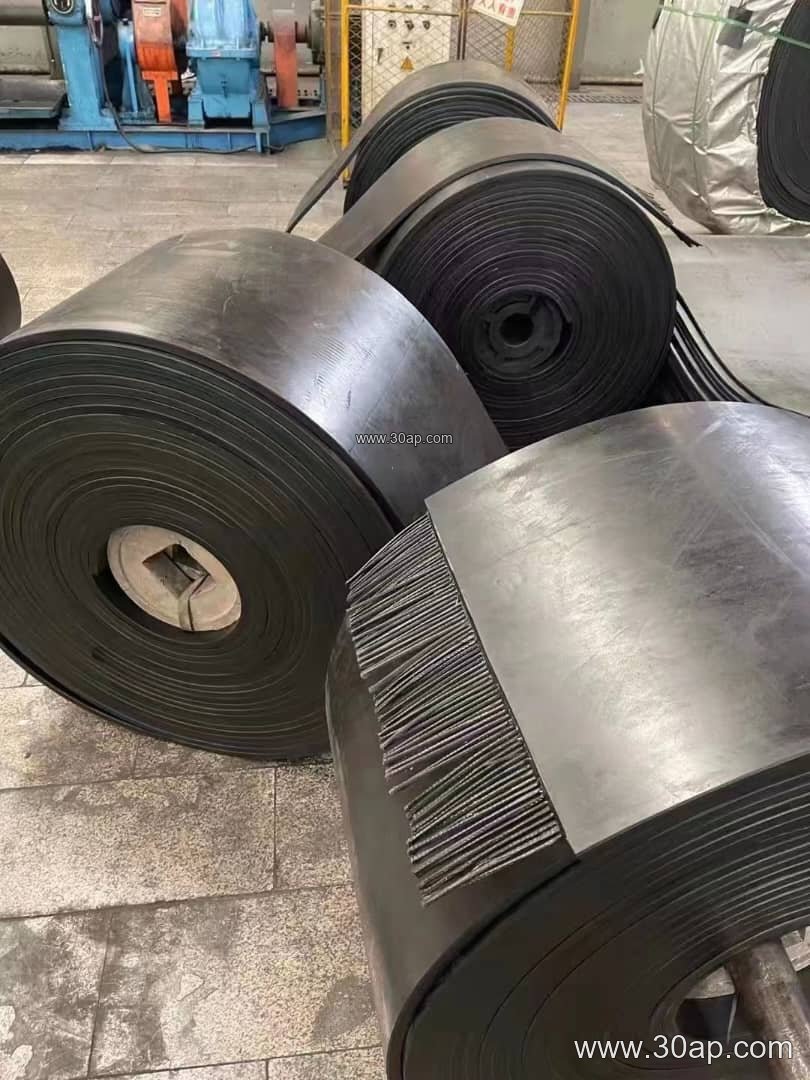
The belt is a composite: a fabric or steel cord carcass carries the tension, and rubber covers protect the carcass from the stone. For stone crushing duty, a multi-ply fabric core conveyor belt with EP or NN plies is a common choice, while very long or high-lift installations may use a steel cord carcass. The carcass is protected top and bottom by cover rubber, and the top cover is normally the thicker one because it faces the stone.
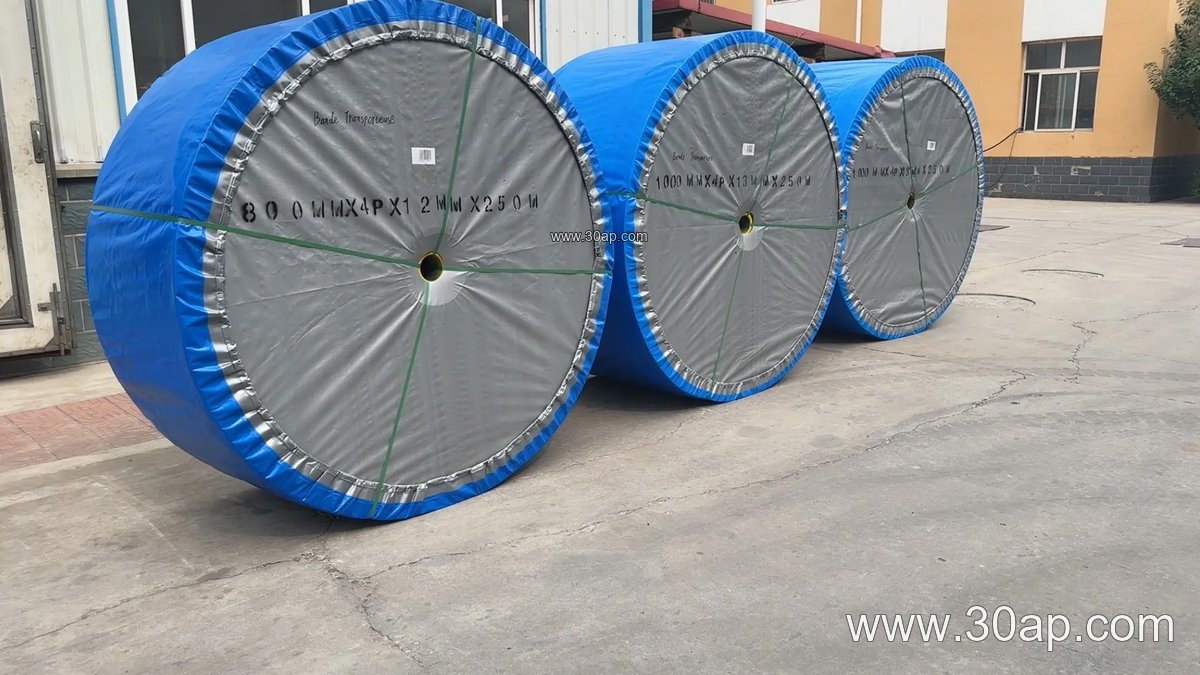
Typical cover and carcass reference data
Values below are common reference ranges, not fixed specifications. Final figures are confirmed by the belt manufacturer against the actual duty.
- Cover thickness, top + bottom: 3+1.5, 4+2, 5+2, 6+2, 8+3 mm
- Carcass plies: usually 2 to 6 layers for fabric belts
- EP strength grades: EP200, EP315, EP400, EP500, EP630, EP800, EP1000, EP1250, EP1600, EP2000
- Belt widths: B500, B650, B800, B1000, B1200, B1400, B1600, B1800, B2000
Belt Width and Pulley Matching
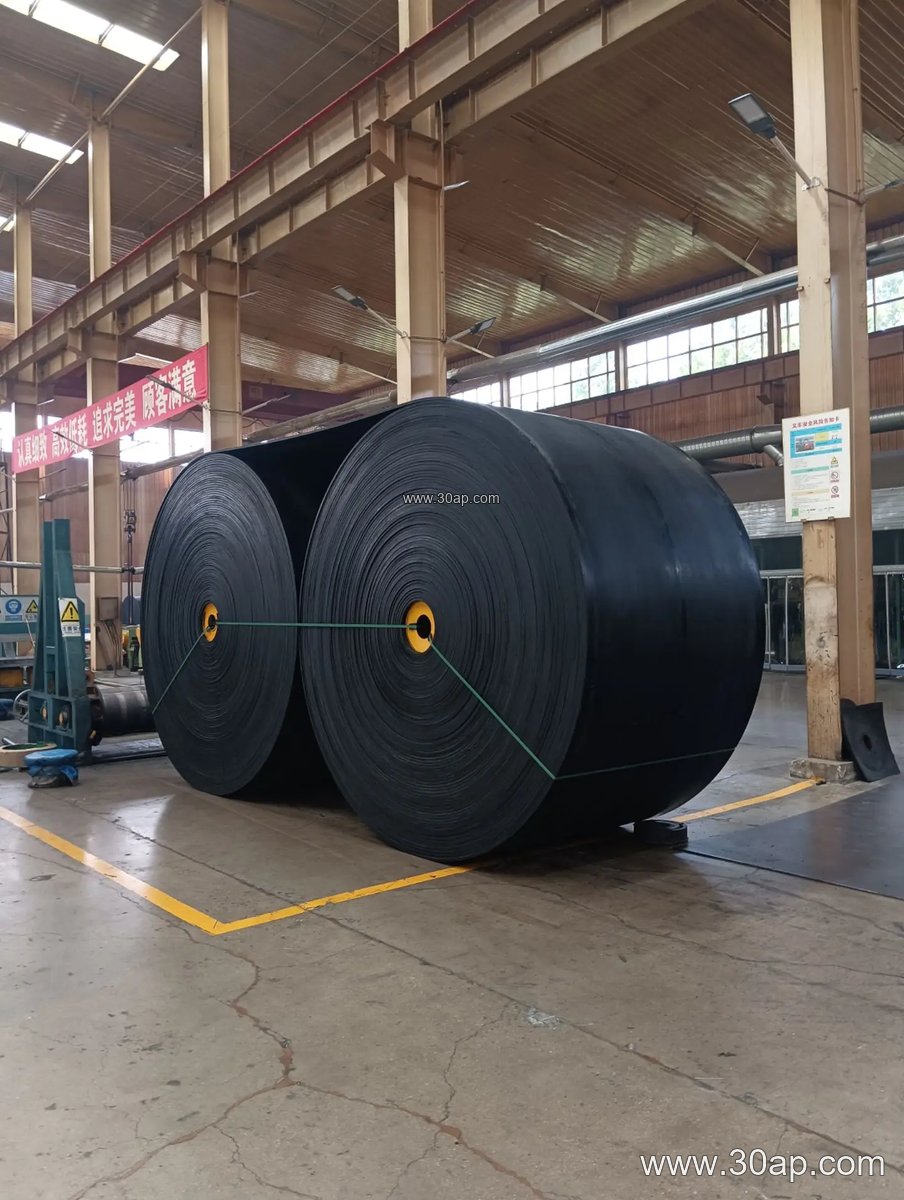
Width is set by the required capacity and the largest lump size, not by a single fixed rule. A 650mm or 800mm belt may suit a small secondary circuit, while a 1200mm or 1400mm belt is common on primary crusher discharge where tonnage and lump size are high. Wider belts such as 1600mm, 1800mm, and 2000mm appear on high-capacity plants and port or ship loading lines.
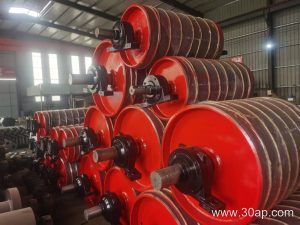
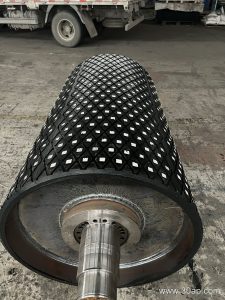
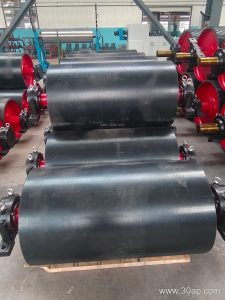
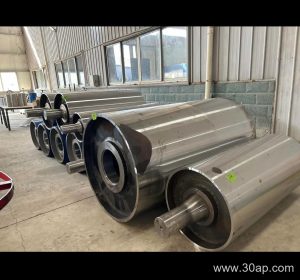
Belt width does not determine pulley diameter on its own. The drive pulley, tail pulley, and bend pulley are separate components with separate duties, and each diameter is calculated from belt tension, wrap angle, and shaft load. Never assume that one belt width can only match one pulley size, and never derive a shaft diameter from belt width alone.
Where the Belt Is Used
The same belt family serves many industries, with the cover compound adjusted to the environment:
- Quarry and aggregate plants: primary and secondary crusher discharge, screen feed, and stockpile conveyors
- Mining: ore conveyor belt duty in iron ore, copper ore, and gold mining circuits, including underground mining conveyor belt applications
- Coal handling: coal mining conveyor belt lines that require flame retardant and anti-static properties
- Cement and power plants: limestone, clinker, and fuel handling on long inclined routes
- Sand making and recycling plants: abrasive, mixed-size feed with frequent impact points
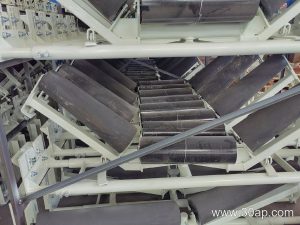
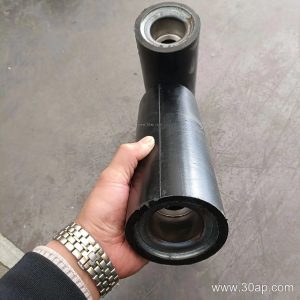
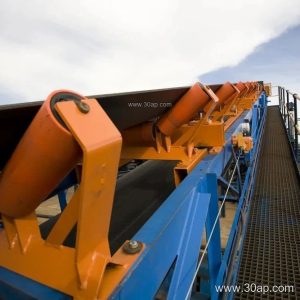
In these circuits the belt works together with idler rollers, conveyor pulleys, and conveyor brackets, so belt selection should always be checked against the whole conveyor, not the belt alone.
Cover Grades for Crushing Duty
Stone is abrasive and often hot or oily depending on the process. An abrasion resistant conveyor belt is the baseline for crusher discharge. Where material leaves a dryer or kiln, a heat resistant conveyor belt is needed. Coal and underground lines call for flame retardant conveyor belt grades, and dusty explosive atmospheres may also require anti-static construction. Cold climates need a cold resistant grade, and oily feed such as recycled material may call for an oil resistant cover.
For steep inclines, a chevron conveyor belt or a corrugated sidewall belt can hold material that would slide back on a smooth belt. On routes with tight curves or dust control requirements, a pipe conveyor belt is sometimes compared, but it is a different design and should not be treated as a drop-in replacement for an open troughed belt.
What a Buyer Should Check
- State the material, lump size, moisture, and temperature so the cover grade and thickness can be confirmed.
- Provide the conveyor capacity, incline angle, and center distance; these drive width and carcass strength.
- Confirm the pulley diameters and take-up arrangement with the conveyor designer before ordering.
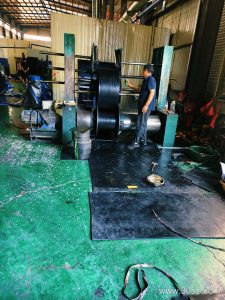
- Ask for the splice method, since a vulcanized splice is usual on permanent crushing lines.
- Check that the belt matches the trough angle and idler spacing to avoid edge damage and spillage.
On site, keep impact idlers under the crusher outlet in good condition, align the tail and bend pulleys, and inspect the belt edges for cuts. A stone crushing conveyor belt that is correctly specified and maintained will give far longer service than one chosen on width alone.