What a Conveyor Bend Pulley Does
A conveyor bend pulley is a directional change component in a belt conveyor, guiding the conveyor belt around corners or adjusting its path without driving the belt. Unlike the drive pulley that transmits power or the tail pulley that maintains tension at the loading end, the bend pulley simply redirects belt travel. It is often found in tensioning sections, snubber positions, or where the belt must snake through a tight layout. In quarry and aggregate lines, a well-placed bend pulley keeps the belt aligned and reduces wear on other components.
Construction and Surface Options
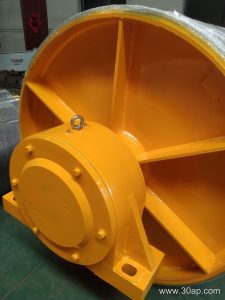
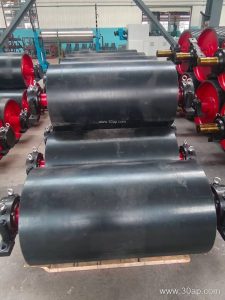
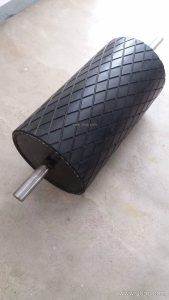
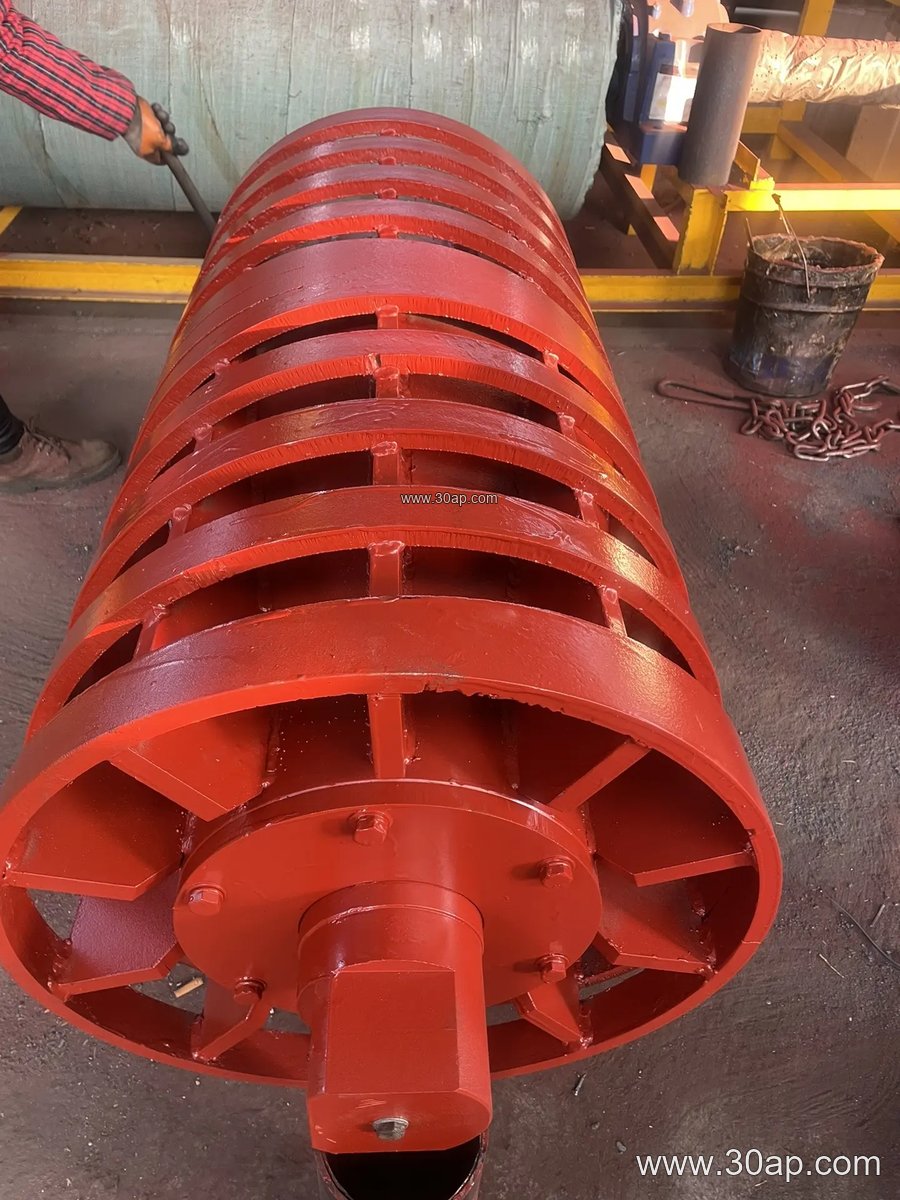
Most bend pulleys are built from a steel drum with welded end discs and a shaft, supported by bearing housings that mount to the conveyor bracket. The surface may be plain, or covered with rubber lagging for grip and protection. Common lagging types include cold-bonded rubber, hot-vulcanized rubber, diamond pattern, and ceramic tiles. For abrasive environments such as a limestone mine or cement clinker line, diamond lagging helps shed fines and improve tracking. Lagging thickness often ranges from 8 mm to 20 mm, depending on belt tension and duty.
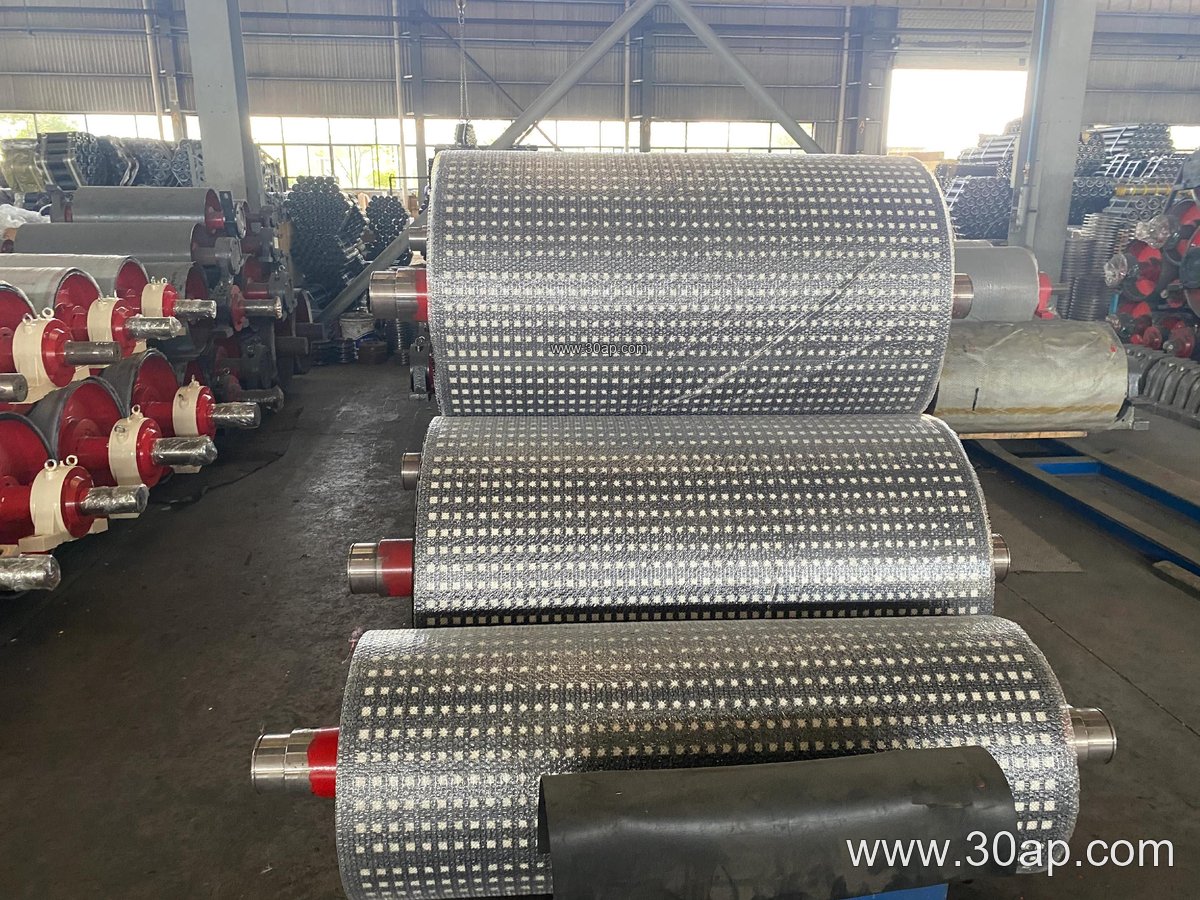
Typical pulley diameters for bend applications include Ø200, Ø250, Ø315, Ø400, Ø500, Ø630, Ø800, and larger sizes up to Ø1250 for high-tension systems. Face width is usually slightly wider than the belt; for example, a B800 belt may use a pulley face around 950 mm, and a B1200 belt around 1400 mm. Shaft diameters such as Ø80, Ø100, Ø120, Ø140, or Ø160 are selected by torque and load, not by belt width alone. These values are common references and should be confirmed against the actual conveyor design.
Where It Fits in the Conveyor
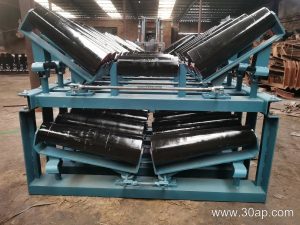
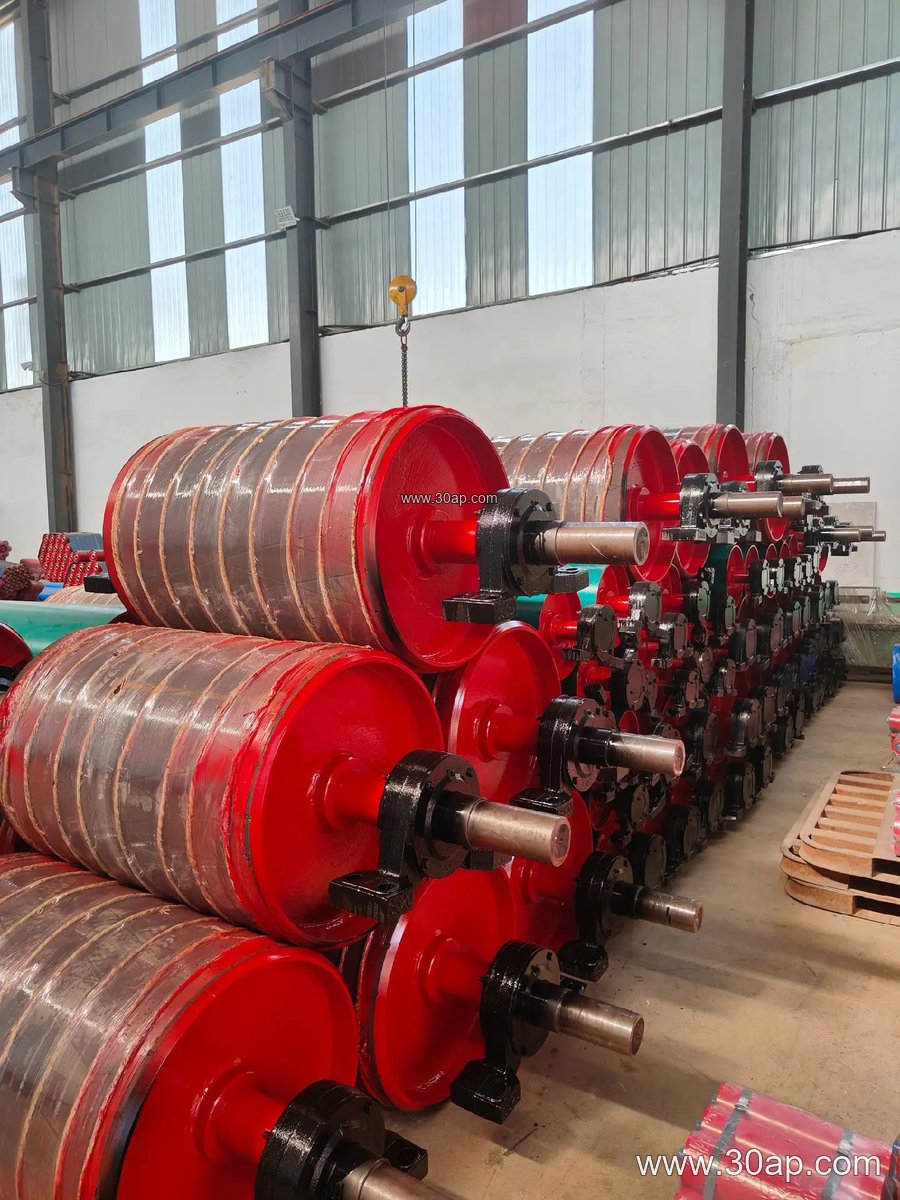
Bend pulleys appear in several locations. In a take-up system, they route the belt to the tensioning device. As a snub pulley, they increase wrap angle on the drive pulley for better traction. In a curved conveyor path, they guide the belt through changes in elevation or direction. Industries such as coal mining, power plant coal handling, and port bulk terminals rely on these pulleys to maintain belt stability. A bend pulley works together with the conveyor belt, idler rollers, and conveyor bracket to keep material moving smoothly from the loading point to the discharge.
Matching the Pulley to the Belt and Duty
Selection starts with the belt specification. A heavy-duty mining conveyor belt or steel cord conveyor belt may require a larger diameter bend pulley to limit bending stress and extend belt life. For a fabric core conveyor belt such as EP conveyor belt or NN conveyor belt, moderate diameters are often sufficient. In underground coal mining, flame retardant conveyor belt and anti-static properties are important, and the pulley lagging should be compatible with the belt cover. Abrasion resistant conveyor belt used in a crusher conveyor line may benefit from ceramic lagging on the bend pulley to resist wear.
Do not assume a fixed shaft size from belt width. A B1000 belt might use a Ø120 shaft in one conveyor and a Ø140 shaft in another, depending on load and safety factor. Similarly, a B1200 belt could pair with Ø500 or Ø800 pulleys depending on tension and space. Always refer to the conveyor designer’s calculation.
Buyer Checklist
- Confirm the pulley’s role: tension, snub, or direction change.
- Check belt width and pulley face width; for B650 belt, a face around 750 mm is common.
- Review lagging type and thickness for the material handled—e.g., 10 mm rubber lagging for general bulk, ceramic for high abrasion.
- Verify shaft diameter and bearing size against the conveyor bracket and load.
- Ensure balance and concentricity to avoid vibration and belt mistracking.
- For food or chemical applications, consider stainless steel or suitable lagging, and pair with food grade conveyor belt or chemical resistant conveyor belt as needed.
In short, the conveyor bend pulley is a simple but critical part of the belt conveyor system. Proper selection and maintenance help reduce downtime in mines, cement plants, power stations, and aggregate operations.