What a Conveyor Idler Bracket Does on a Belt Conveyor
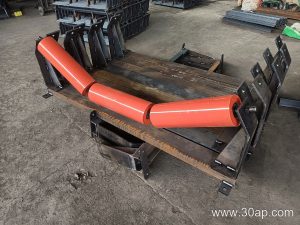
A conveyor idler bracket is the structural element that holds each idler roller at the correct position, height and angle under the conveyor belt. It is easy to overlook because it is not the part that turns, yet it decides whether the rollers stay aligned with the belt path or drift out of position under load. In a quarry or a cement plant, a single loose bracket can start a chain of problems: the roller sits crooked, the belt edge rubs, and spillage builds up along the frame.
In practice, the bracket is the interface between the roller and the conveyor frame. The roller carries the belt; the bracket carries the roller. That simple division of work explains why bracket choice is closely tied to belt width, roller diameter and trough angle rather than chosen in isolation.
Construction and Common Materials
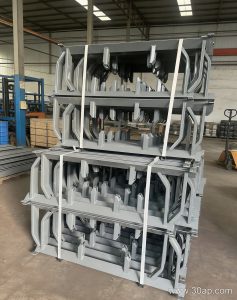
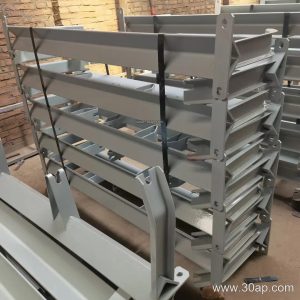
Most brackets are fabricated from angle steel, channel steel or folded steel plate, then drilled or punched so the roller shaft sits in a fixed or adjustable seat. Formed plate designs are popular where a smooth profile and consistent hole spacing matter, while channel sections suit heavier frames in primary crushing and ore handling.
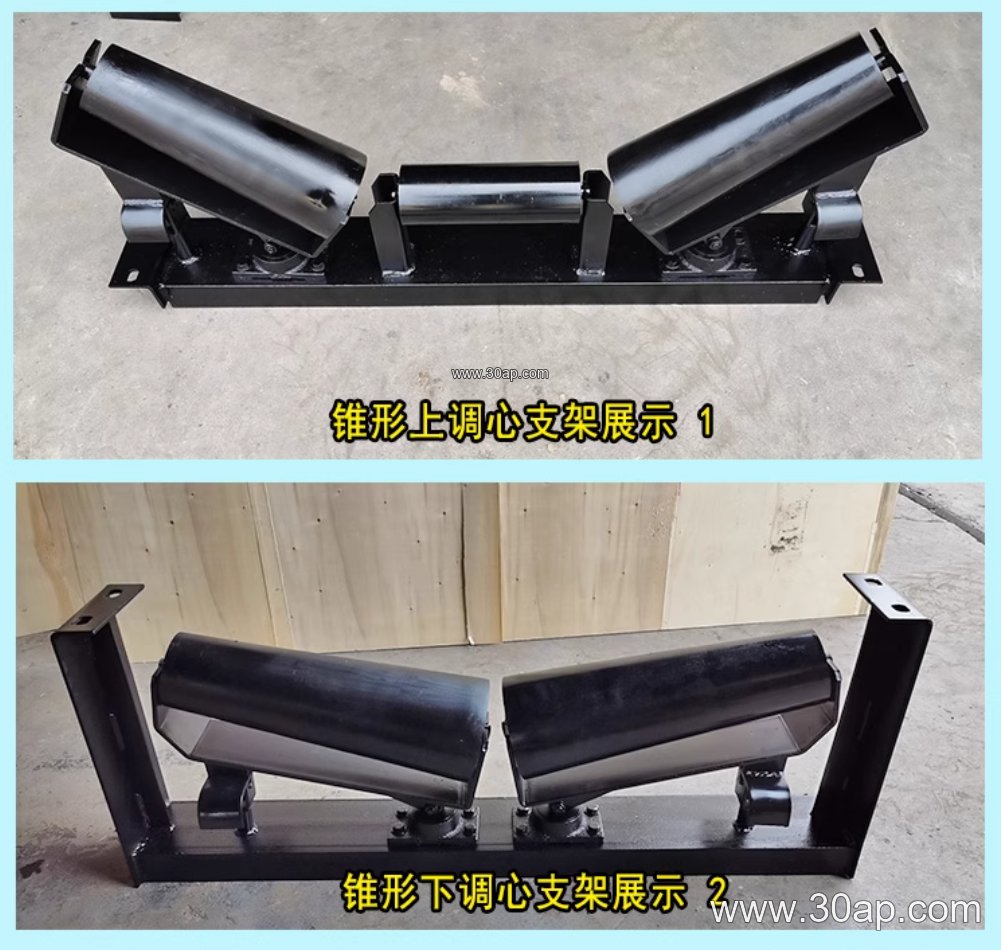
The main structural forms you will meet include:
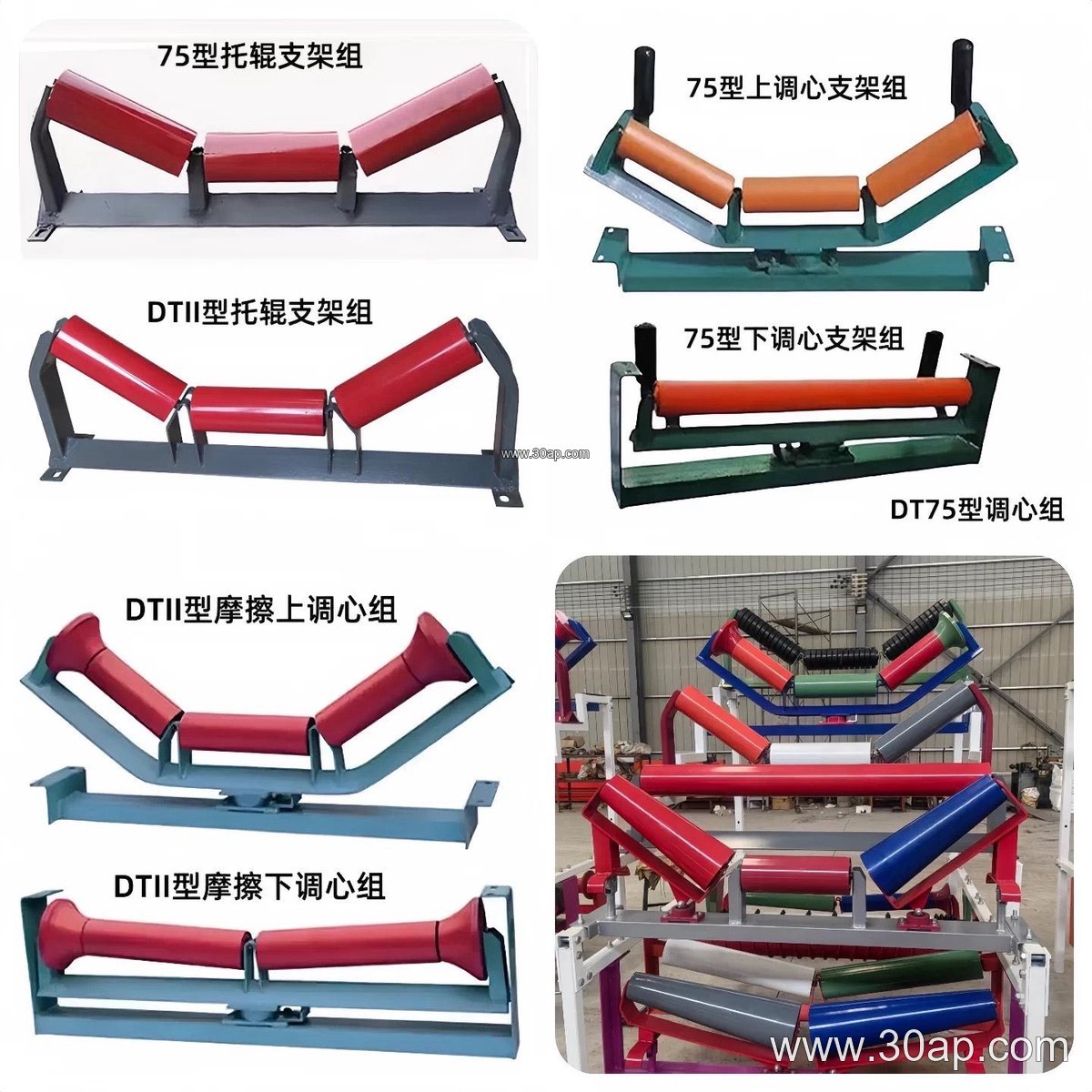
- Troughing bracket sets that hold three rollers in a trough shape
- Transition brackets at the loading and discharge ends
- Return brackets and V-return brackets under the carrying side
- Impact brackets with cushioning at transfer points
- Self-aligning and forward-tilted brackets for belt training
- Adjustable and suspended brackets for special frames
Hole spacing and crossbeam length are not universal. They follow the belt width, trough angle and frame design, so a bracket drawing should always be matched to the actual conveyor.
Matching Belt Width, Trough Angle and Roller Diameter
Buyers often ask for a bracket by belt width alone, but three values travel together. A B800 line with a 35 degree trough and Ø108 rollers is a typical combination; a B1200 conveyor may run 45 degrees with Ø133 rollers, and a smaller B650 unit might use 30 degrees with Ø89 rollers. None of these pairings is a rule. They are reference points that show how the numbers relate.
| Reference Item | Typical Range | Notes |
|---|---|---|
| Belt width | B500 to B2200 | Bracket length and hole pitch follow the width |
| Trough angle | 20, 30, 35, 45 degrees | Adjustable brackets can shift between angles |
| Roller diameter | Ø89, Ø108, Ø133, Ø159, Ø194 | Choose with belt load and roller series |
| Forward tilt | About 1.5 to 2 degrees | Used on training brackets, not a default |
| Material | Angle, channel, folded plate | Selected by frame and load case |
A wider belt does not force one particular trough angle, and belt width alone does not fix the shaft diameter. Those decisions come from the conveyor design, the material being carried and the roller series selected.
Where Brackets Matter Most in Service
Loading zones are the hardest duty. In a stone crushing line or a sinter plant, lumps hit the belt right above the impact brackets, so cushioning brackets and reinforced frames earn their place there. In a coal preparation plant or a power station coal yard, flame retardant and anti-static belt grades are common, and steady roller alignment helps keep the belt from edge wear. Port and ship loading conveyors run long spans where a small bracket error repeats hundreds of times.
The same logic applies on a pipe conveyor belt or a corrugated sidewall belt, where the frame geometry is less forgiving and bracket position must be set carefully during installation.
Adjustable or Fixed, Which to Specify
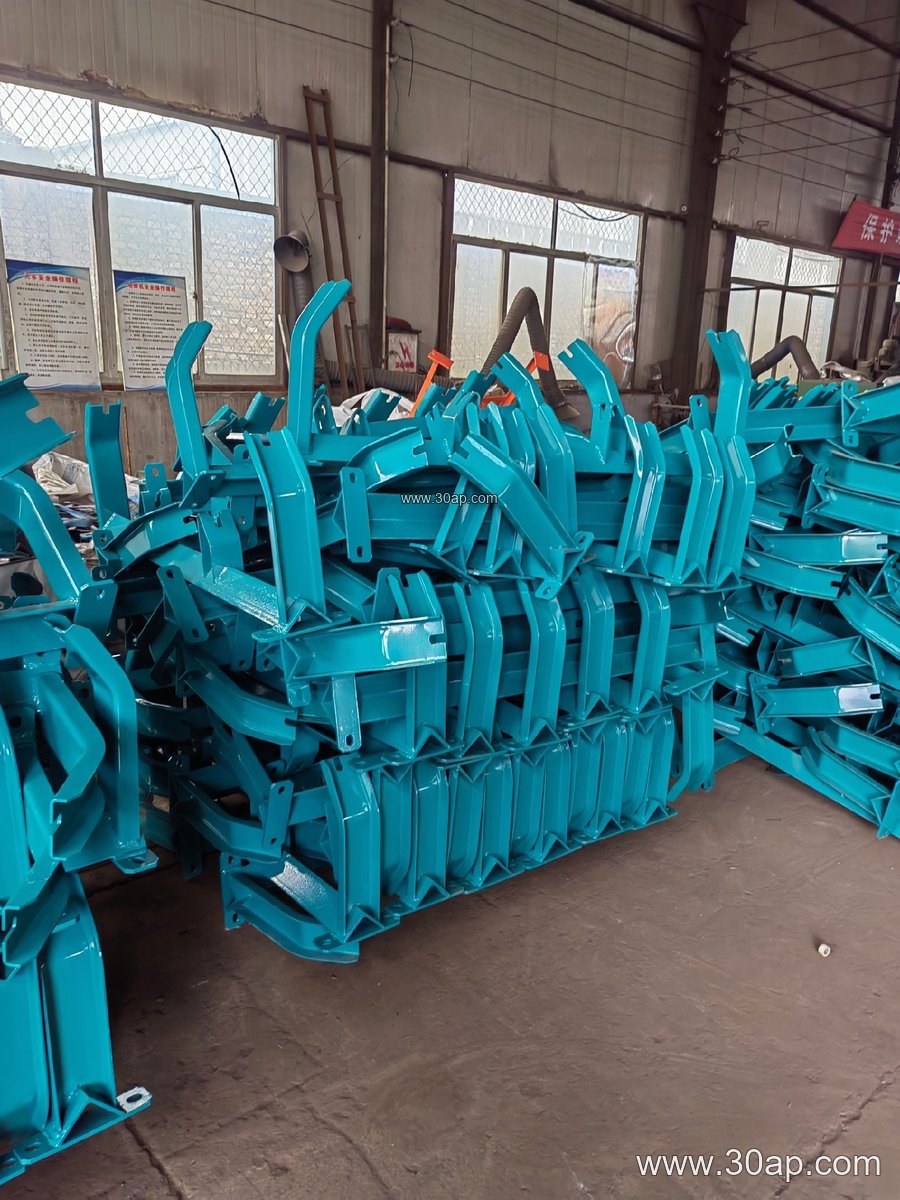
Fixed brackets are simple, rigid and repeatable, which suits long straight runs. Adjustable brackets allow the trough angle to be changed on site and are useful during commissioning or where the material profile changes. Self-aligning brackets add a training function, while forward-tilted designs use a small offset to encourage the belt to center itself.
When ordering, give the belt width, required trough angle, roller diameter and frame hole pattern. Ask whether the bracket is for the carrying side or the return side, and confirm the material and finish. For a full line, matching brackets with the correct idler roller and conveyor pulley set avoids mismatched mounting holes later. Spare brackets kept on site should match the installed pattern exactly, so maintenance crews are not forced to drill new holes during a shutdown.
Related searches such as conveyor bracket and idler frame often lead back to the same question: does the part fit the frame in front of you. Measure the existing hole spacing, note the trough angle and roller diameter, and the answer becomes straightforward.